Benefits of Changing Your Cabin Air Filter Regularly

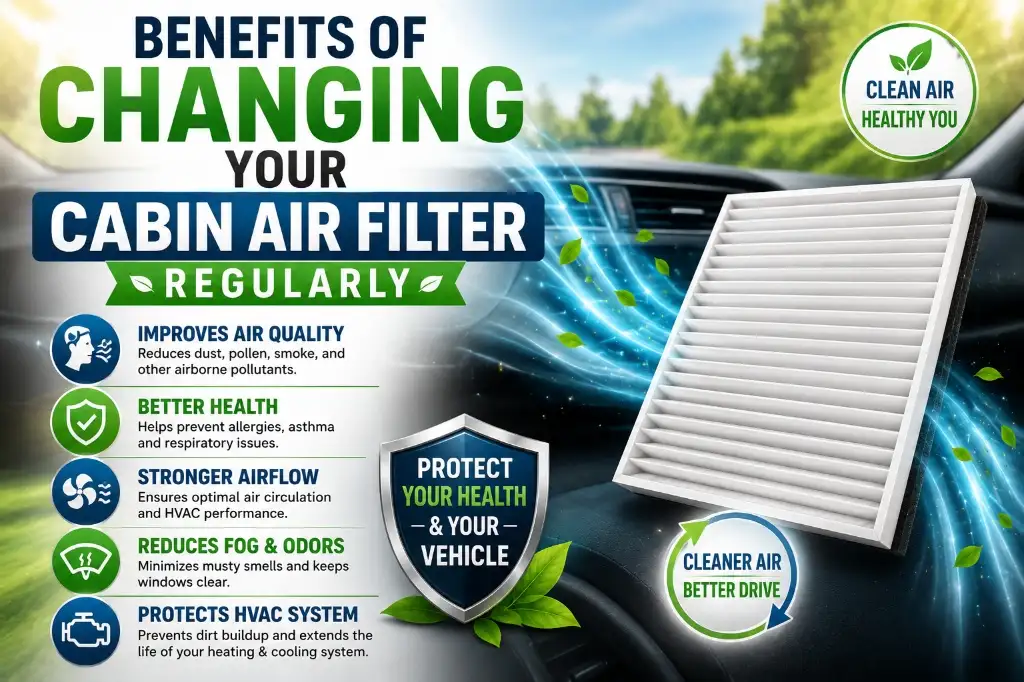
Changing your cabin air filter improves the air you breathe inside the car, restores full airflow from your vents, reduces strain on the blower motor, and keeps your HVAC system working efficiently. Most drivers notice cleaner air, stronger airflow, and less odor within minutes of installing a fresh filter.
What Happens When You Swap Out a Dirty Cabin Air Filter?
A cabin air filter works by trapping dust, pollen, mold spores, bacteria, and exhaust particles before they enter the passenger cabin through your ventilation system. Over 12,000 to 15,000 miles, that filter loads up with debris.


When you replace it, three things happen immediately:
- Airflow through the HVAC system increases because the obstruction is gone.
- The blower motor returns to its designed operating load.
- Incoming air passes through clean filtration media again instead of around a clogged filter.
The cumulative benefits build from there.

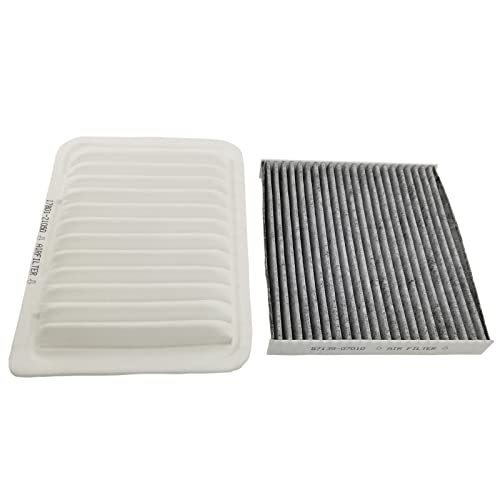

Cleaner Air Inside the Cabin
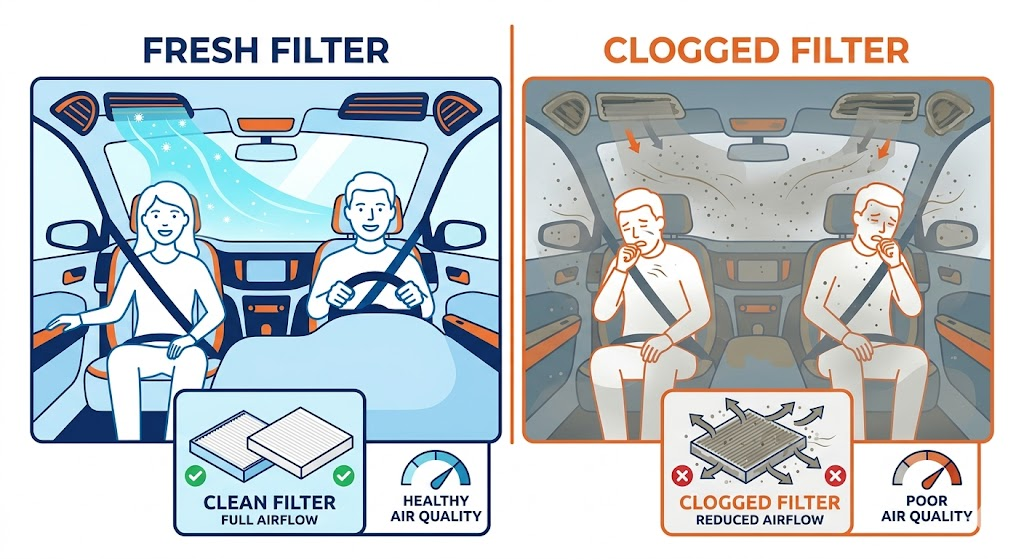
What pollutants does a cabin air filter actually block?
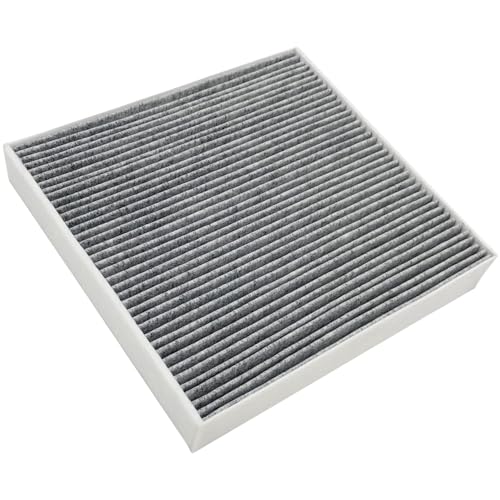
A fresh cabin air filter traps particles as small as 0.3 to 3 microns depending on the filter grade. That range covers most of what makes vehicle air quality poor: road dust, tire and brake debris, pollen, mold spores, and diesel exhaust particulates.
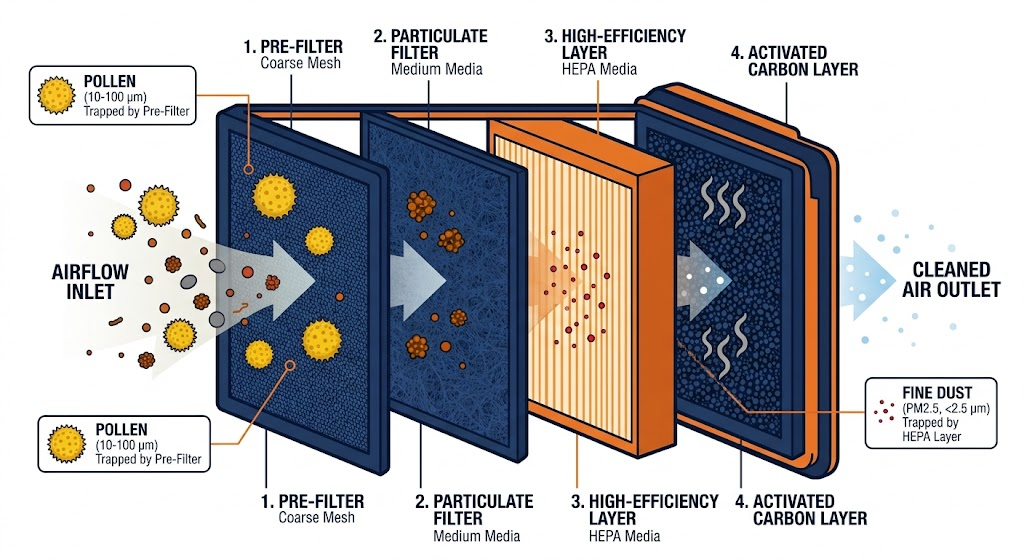
When the filter is clogged, particles bypass or push through compromised media. A clean filter restores that barrier.


Does changing the cabin air filter reduce allergens?
Yes, and this matters most in spring and fall when pollen counts peak. A saturated filter cannot hold additional pollen, so particles that would normally be trapped start entering the cabin.
Installing a fresh filter before allergy season is one of the highest-return, lowest-cost maintenance tasks a driver can do. For allergy sufferers, the difference between a new filter and a two-year-old one is often felt within the first drive.

What about odors?
A dirty cabin air filter holds moisture, mold, and decomposing organic matter. That combination produces the musty smell that drivers often blame on the AC system when the real source is the filter.
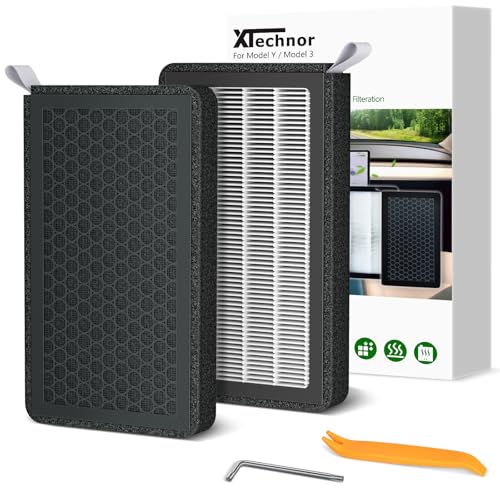
Replacing the filter removes the odor source. Upgrading to an activated carbon filter adds a layer of odor neutralization for exhaust fumes and traffic smells.


Stronger Airflow and Better Climate Control
Why does airflow improve after changing the cabin air filter?
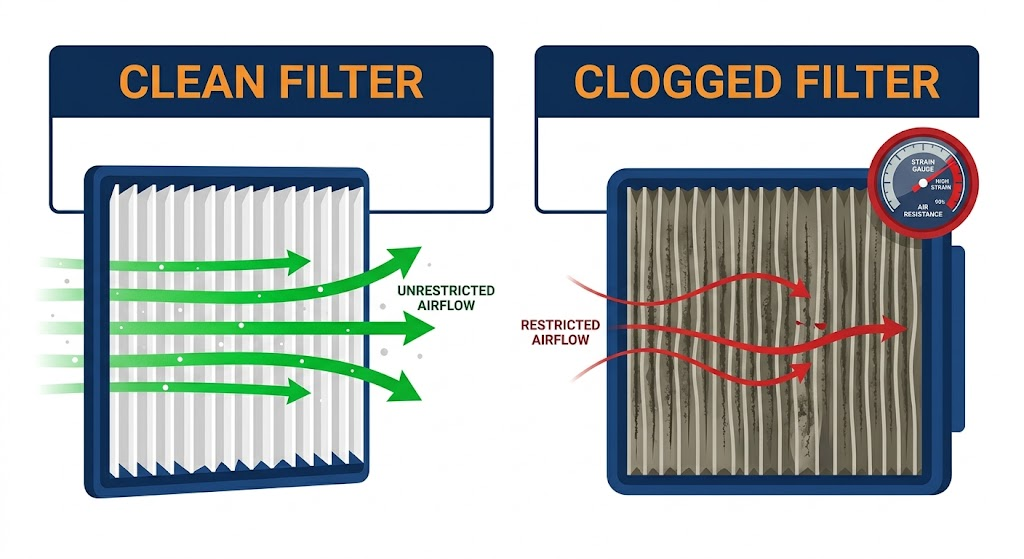
The blower motor pushes air through the filter before it exits the vents. A clogged filter creates resistance. The motor works harder but moves less air, so vents feel weak even at maximum fan speed.
A new filter removes that restriction. Airflow at every speed setting increases, and the cabin reaches your target temperature faster.
Does a clean cabin air filter make AC colder?
It does not change the refrigerant or compressor. What it changes is air delivery. If the evaporator coil cannot receive adequate airflow because a blocked filter is starving it, cooling efficiency drops noticeably.
With a clean filter, full air volume passes over the evaporator. The AC performs as designed because the airflow matches what the system expects.
What about heat in winter?
The same principle applies. Heat exchange in the heater core depends on airflow volume. A restricted filter means less warm air reaching passengers even when the system is working correctly. Replacing the filter restores full heating performance.
HVAC System and Blower Motor Protection
Can a dirty cabin air filter damage the blower motor?
Yes. The blower motor is designed to move air at a specific resistance level. A heavily clogged filter forces the motor to work harder to push the same volume of air. Running a motor above its intended load accelerates wear on the brushes, bearings, and windings.
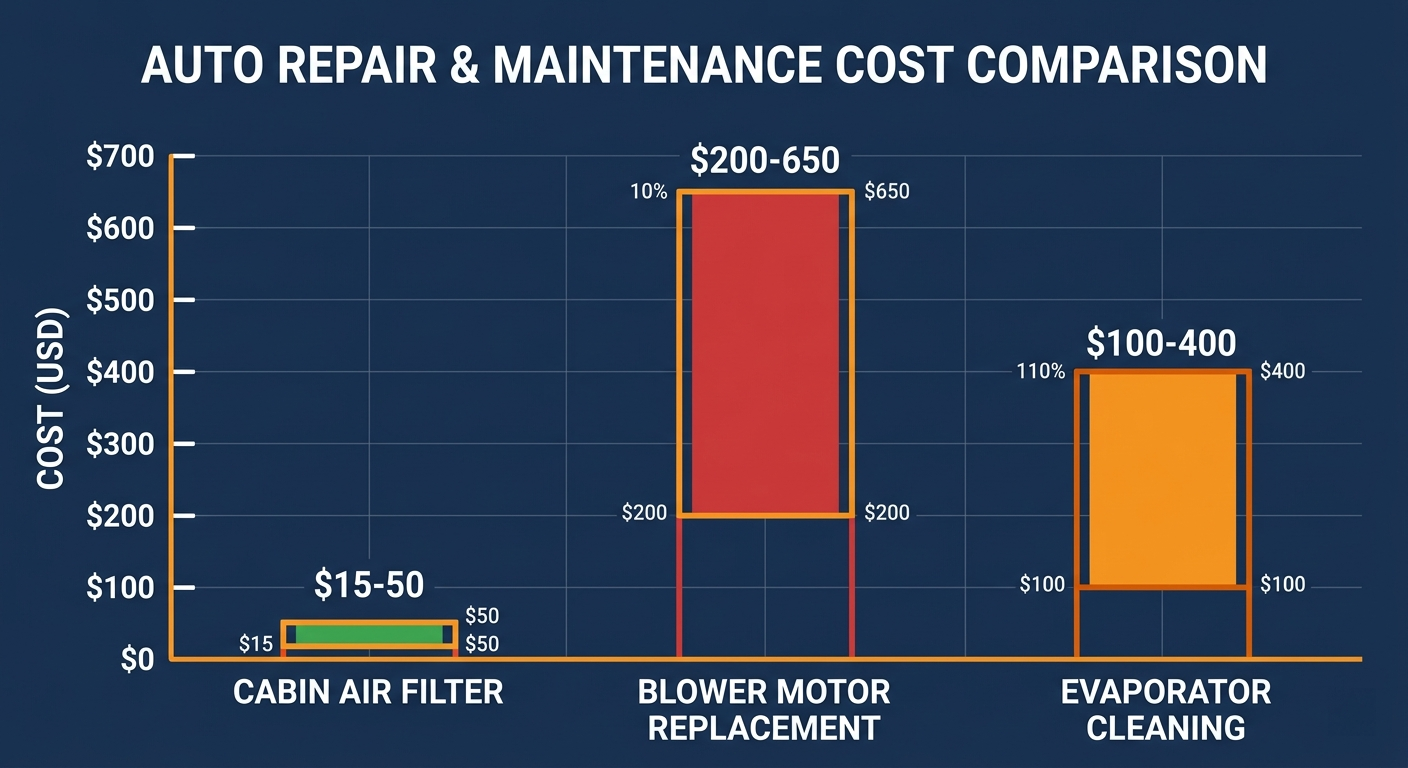
Blower motor replacement costs between $200 and $650 depending on the vehicle, not counting labor. A replacement cabin air filter costs $15 to $50. Changing the filter on schedule is genuinely protective maintenance, not just a comfort upgrade.
Does airflow restriction harm anything else?
A starved evaporator coil can freeze over when airflow drops below the threshold needed to keep condensation from building up. A frozen evaporator stops producing cold air entirely and can, over time, stress the compressor.
Keeping the filter clean prevents this cycle from starting.
Health Benefits of Regular Replacement
Is the air inside your car actually worse than outside?
Studies on in-vehicle air quality have found that pollution concentrations inside cars traveling in traffic can be higher than ambient outdoor levels, particularly for ultrafine particles and exhaust compounds that infiltrate through the ventilation system.
A functioning cabin air filter is the primary barrier between that outside pollution and the air passengers breathe. When the filter degrades, that barrier degrades with it.
Who benefits most from regular filter changes?
Anyone with respiratory sensitivities benefits, but the impact is most pronounced for:
- Allergy and asthma sufferers, for whom pollen and mold exposure triggers symptoms
- Drivers in urban traffic where exhaust and fine particle concentrations are high
- Families with young children, whose developing respiratory systems are more sensitive to particulate exposure
- Anyone who spends significant daily time commuting in their vehicle
A fresh filter is a small investment with outsized health returns for these groups.
Cost Comparison: Changing vs. Ignoring
What does it cost to change a cabin air filter?
Filter prices range from $15 for a standard cellulose filter to $50 for a premium activated carbon or high-efficiency synthetic filter. DIY installation takes 5 to 15 minutes on most vehicles.
Shop installation typically adds $20 to $50 in labor. Even at the high end, a complete filter change comes to around $100.
What does ignoring it cost?
Ignore the filter long enough and you risk:
- Blower motor replacement: $200 to $650 in parts, more with labor
- Evaporator coil service or cleaning: $100 to $400
- HVAC system inspection after a freeze event: $75 to $200
None of those outcomes are guaranteed by skipping one filter change. But running the filter years beyond its service life raises the probability of each. The math consistently favors replacing the filter on schedule.
How to Know Your Replacement Made a Difference
What should you notice after installing a new cabin air filter?
Most drivers notice at least two of the following immediately after a fresh installation:
- Stronger airflow at all fan speeds
- Faster cabin temperature change (cooling or heating)
- Reduced or eliminated musty smell from the vents
- Quieter blower motor operation (less strain noise)
If none of these improve after a filter change, the filter was not the only issue. A blower motor already damaged by years of clogged filtration may need attention separately.
How do you confirm the old filter was overdue?
Pull the old filter out and look at it. A filter at end of life is visibly gray or brown on the intake face, often holds leaf fragments or insect debris, and may smell musty when handled.
If the old filter looks nearly clean, you changed it ahead of schedule. That is never harmful. The risk runs the other direction: keeping a clogged filter too long.
FAQ
How much does changing a cabin air filter actually improve air quality?
A fresh standard cabin air filter captures more than 99% of particles above 3 microns, including most pollen, mold spores, and road dust. A degraded filter that is overloaded loses efficiency across that range. The improvement depends on how contaminated the old filter was, but the difference is measurable and often immediately noticeable.
Can I just clean my cabin air filter instead of replacing it?
Tapping out loose debris extends a filter by a short period in a pinch, but it does not restore filtration efficiency. The filter media degrades and loses its electrostatic charge over time regardless of particle load. Cleaning is a temporary measure, not a substitute for replacement.
Does replacing the cabin air filter void my warranty?
No. Under the Magnuson-Moss Warranty Act, vehicle manufacturers cannot void a warranty because you replaced a wear item like a cabin air filter with an aftermarket part, provided the replacement part did not cause the failure being claimed. Using a quality aftermarket filter carries no warranty risk.
How often should I change my cabin air filter if I live in a high-pollution city?
The standard interval is every 12,000 to 15,000 miles or once per year. In heavy urban traffic with high exhaust particulate concentrations, checking the filter at 10,000 miles and replacing it if visibly dirty is a reasonable adjustment. More frequent replacement costs little and protects more.
The Bottom Line
Changing your cabin air filter on schedule is one of the most cost-effective maintenance tasks available to any driver. Clean filtration improves what you breathe, restores climate control performance, protects the blower motor from premature wear, and costs a fraction of what deferred maintenance eventually demands.
Check your filter at every oil change. Replace it when it is visibly dirty or at the 12,000 to 15,000 mile interval, whichever comes first.