Signs of a Bad Cabin Air Filter: Symptoms & Fixes

Most drivers know when their engine is misbehaving. Few pay attention to the filter that controls the air they breathe inside the car.
The cabin air filter is one of the most neglected maintenance items on most vehicles. It does its job quietly until it cannot anymore. At that point, it announces the problem through symptoms that most people blame on something else: a weak AC, a strange smell, more sneezing on the commute.


I went through the engineering data, HVAC system documentation, and hundreds of owner reports to map out exactly what a failing cabin air filter does and does not cause. Here is what the evidence shows.
What Happens When a Cabin Air Filter Goes Bad?
A cabin air filter fails in a predictable way. It is filled with particles. Then it fills some more. The more it fills, the harder it is for the blower fan to push air through it.


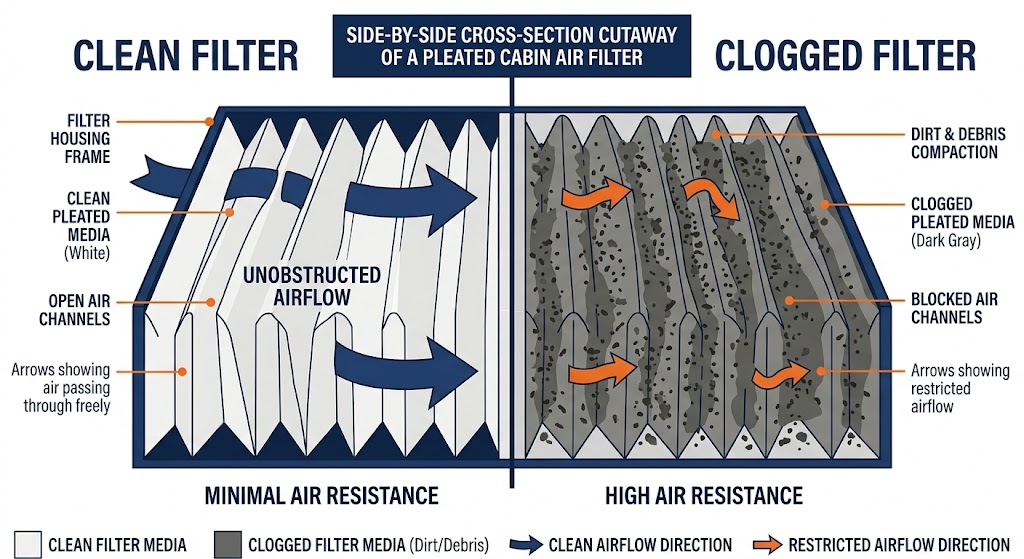
At a certain saturation point, two things happen at once. Airflow drops significantly because the media is too clogged to pass air freely. And filtration efficiency drops too, because particles begin to bypass or push through the saturated media.
The filter does not flip from "working" to "failed" suddenly. It degrades gradually. The symptoms start mild and become more obvious the longer the filter sits.


Understanding what those symptoms look like at each stage is how you catch the problem early.
Sign 1: Weak Airflow From the Vents
This is the clearest and most common symptom. You turn the fan to maximum speed and the air coming from the vents feels noticeably weaker than it used to.


Why a clogged cabin filter kills airflow
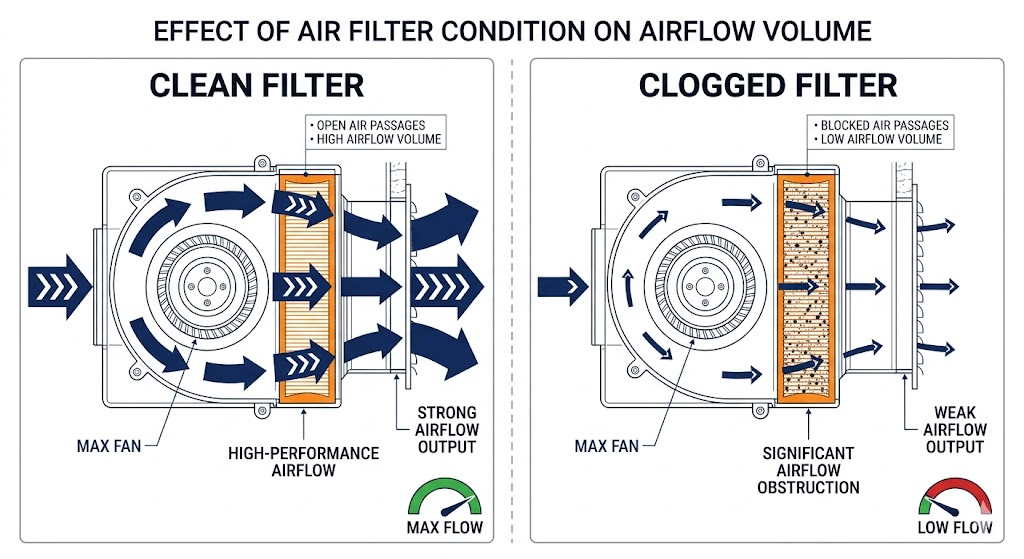
The HVAC blower fan pulls outside air through the cabin filter before it reaches your vents. A clean filter offers minimal resistance. A heavily clogged filter offers substantial resistance.
The fan is a fixed-output component. It does not automatically compensate for a blocked filter by spinning faster. The result is that less air makes it through, even when the fan dial is at maximum.
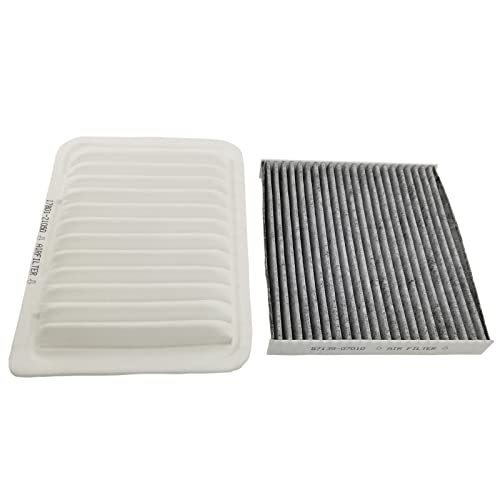

This symptom is often misdiagnosed as a failing blower motor. The motor runs, the fan spins, but output is weak. Replacing the motor does not fix the problem if the filter is still blocking the airflow.
If your vents feel weak, check the filter before assuming the blower motor is at fault.
What the fix looks like
Replace the filter. On most vehicles this takes under 15 minutes. After replacement, airflow should return to normal immediately. If airflow is still weak after a fresh filter is installed, the blower motor or a duct issue may be the actual cause.
Sign 2: Musty or Stale Odors From the Vents
A musty, damp, or stale smell when you turn on the climate control is a strong indicator that the cabin air filter is harboring mold or bacteria.
Why a dirty filter creates HVAC odors
The cabin air filter sits inside the HVAC airflow path, which is a naturally humid environment. Condensation from the air conditioning evaporator, combined with moisture in outside air, creates a damp microclimate inside the filter housing.
A clean filter dries relatively quickly between uses. A heavily loaded filter with trapped organic material, pollen, leaves, and dust stays damp longer. This creates the conditions for mold and bacterial growth directly on the filter media.
When the blower fan runs, air passes over or through that contaminated filter before reaching your vents. The result is the musty smell reaching your nose.
What makes this smell worse
The odor is typically worst in the first few minutes after startup, when the system is pushing air through a filter that has been sitting without airflow since the last drive. Hot, humid weather accelerates mold growth on a neglected filter.
Some drivers notice this smell only when the AC runs, because the AC cycle produces more moisture and feeds the growth.
What the fix looks like
Replace the filter. In some cases where mold has spread beyond the filter into the HVAC box itself, an HVAC sanitizing treatment may be needed in addition to a new filter. If the smell persists after a new filter is installed, the contamination is likely in the evaporator housing or ductwork.
Sign 3: More Dust Than Usual on Interior Surfaces
A functioning cabin air filter traps the particles that would otherwise float through your vents and settle on your dashboard, seats, and surfaces. When the filter fails, those particles make it through.
Why a bad filter lets more dust pass
Filtration media has a finite capacity. As the filter loads with particles, its efficiency does not drop linearly. Most filters remain fairly efficient until they are quite full, then efficiency drops sharply as the media becomes saturated and particles begin pushing through gaps or bypassing the filter edges.
There is also a secondary effect: a filter saturated beyond its capacity provides far less protection against the particles it was designed to stop. The effective filtration drops sharply, and some captured debris can dislodge with high-speed fan pressure.
The practical result: you start noticing a faster-than-normal buildup of dust on your dashboard and surfaces, particularly near the vent outlets.
How to distinguish this from other causes
Faster dust accumulation specifically near the vents, combined with any of the other symptoms on this list, is a reliable indicator. Dust accumulation that affects the whole interior equally and is not concentrated near vents is more likely from door and window seals.
Sign 4: Worsened Allergy or Respiratory Symptoms While Driving
If you or a passenger notice increased sneezing, itchy eyes, or respiratory irritation specifically when the car's climate control is running, the cabin air filter is worth inspecting.
The connection between a failing filter and allergy symptoms
A fresh cabin air filter captures the pollen, mold spores, and fine particles that trigger allergic reactions. A saturated filter no longer does this effectively.
In the worst case, a moldy filter actively releases biological particles into the airflow. Mold colonies on filter media can shed spores when disturbed by airflow, particularly during high-fan operation.
This symptom matters more in certain environments. High-pollen seasons, humid climates, and vehicles that are rarely driven (allowing more moisture and stagnation) all accelerate the conditions that make a neglected cabin filter a health factor.
What the fix looks like
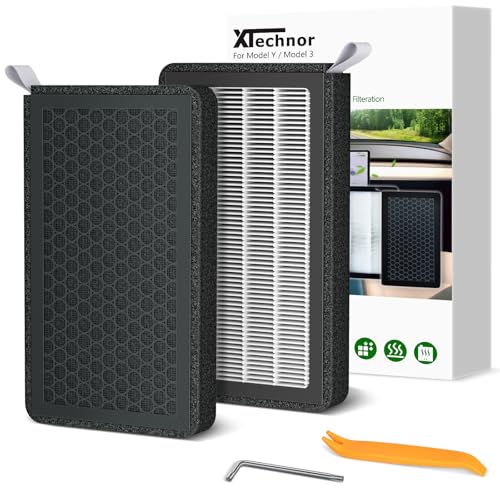
Replace the filter. For anyone with allergies or asthma, an activated carbon or HEPA-grade cabin air filter is worth the upgrade over a standard cellulose filter. These provide higher filtration efficiency across the particle sizes that matter most for respiratory health.
Sign 5: Unusual Noise From the Blower Fan
A whistling, rattling, or whining sound from behind the dashboard when the HVAC fan runs can be caused by a restricted cabin air filter.
Why a clogged filter causes fan noise
When the blower fan is forced to pull air through a heavily restricted filter, it runs under higher load. At certain restriction levels, this creates a whistling sound as air is forced through the remaining open media at higher velocity.
A rattling or crunching sound sometimes indicates a filter that has collected large debris: leaves, seeds, or small twigs that are vibrating against the filter media or housing when the fan runs.
What this does to the blower motor over time
Running the blower against sustained restriction puts the motor under higher electrical and mechanical load than it was designed for over normal intervals. Extended operation in this state can shorten motor life. This is a secondary concern, not an immediate failure risk, but it is one more reason not to let a severely clogged filter go for too long.
What the fix looks like
Remove the filter and inspect it before assuming a mechanical issue. If the filter contains visible debris or is heavily loaded, replacement will often eliminate the noise. If the sound persists with a fresh filter installed, the blower motor or a duct issue needs investigation.
Sign 6: Reduced Heating or AC Effectiveness
A clogged cabin air filter reduces airflow through the entire HVAC system. Less airflow means less heating and cooling capacity reaching the cabin.
Why restricted airflow affects temperature control
The AC evaporator and heater core transfer heat to or from the air passing through them. The more air that passes through, the more effectively they can condition the cabin temperature.
A restricted filter cuts that airflow. The evaporator and heater core still work, but they process less air. You get cooler or warmer air, but less volume of it. The cabin takes longer to reach the set temperature.
This symptom often leads drivers to suspect a refrigerant issue or a thermostat problem. If your AC seems less effective than usual but blows cold, the filter is worth checking first. It is the cheapest diagnosis to rule out.
How to Check Your Cabin Air Filter at Home
You do not need tools or a mechanic to inspect a cabin air filter. On the majority of vehicles, access takes under five minutes.
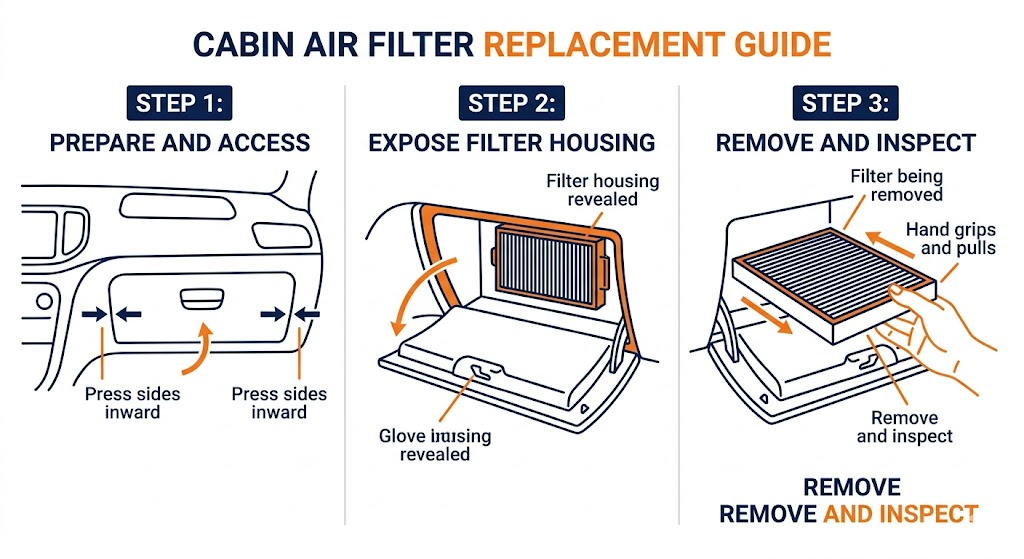
Step 1: Locate the filter
The three most common locations are:
- Behind the glove box: The most common location on modern vehicles. Open the glove box, press the sides inward to release the stops, and lower it fully to reveal the filter housing behind it.
- Under the dashboard: A panel on the passenger side near the floor conceals the housing on some models.
- Under the hood at the cowl: Less common. A housing near the base of the windshield on the engine side.
Check your owner's manual for your specific vehicle. If you do not have the manual, a quick search for "[year make model] cabin air filter location" will typically produce a short video showing the exact location.
Step 2: Remove and inspect the filter
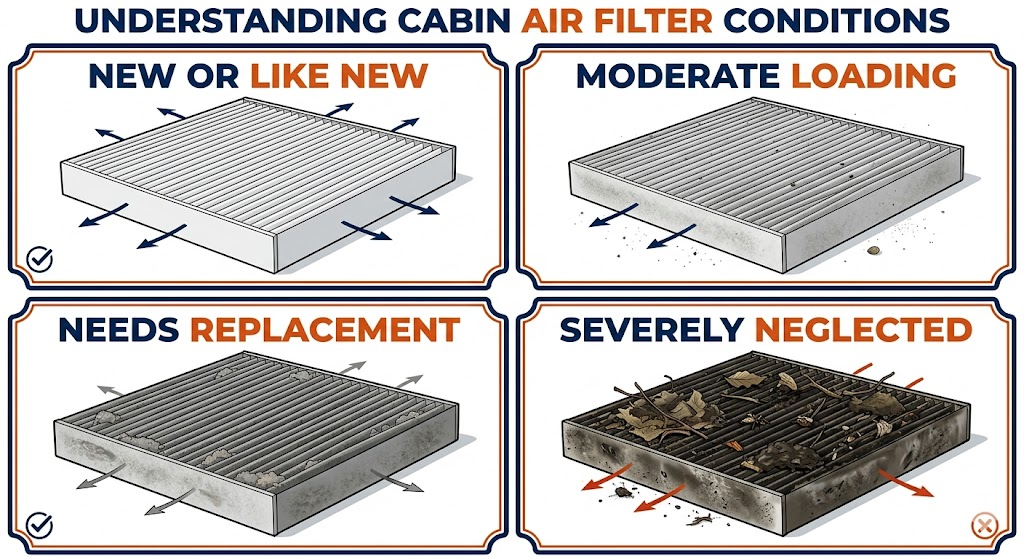
Pull the filter out of the housing. Hold it up against a light source.
Step 3: Install the replacement
Cabin air filters are inexpensive and installation requires no tools on most vehicles. Slide the new filter into the housing in the same orientation as the old one. Most filters have an arrow indicating airflow direction. Close the housing and reinstall the glove box or panel.
What to Do If Your Cabin Air Filter Is Bad
The fix for a failing cabin air filter is replacement. There is no cleaning procedure that restores a saturated filter to effective performance. Tapping it out, blowing it with compressed air, or rinsing it does not restore the filtration media. It only removes surface debris while the embedded fine particles remain.
A replacement filter for most vehicles costs between $15 and $50. If you do the replacement yourself, that is the entire cost. A shop will charge an additional $20 to $50 in labor, though the job is often done in under 15 minutes.
Which filter to buy
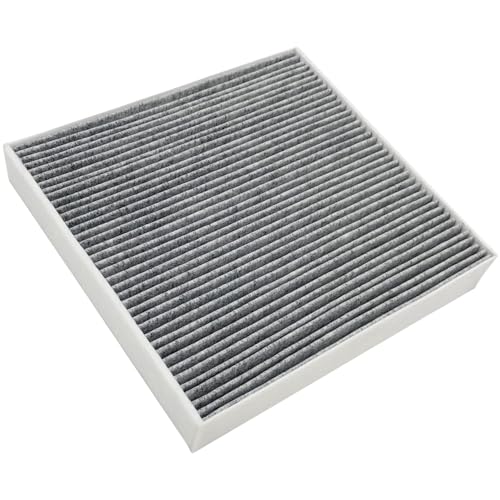
Standard cellulose filters are adequate for most drivers in average conditions. For allergy sufferers, high-pollution environments, or anyone who spends significant time in heavy traffic, an activated carbon or premium synthetic filter provides meaningfully better performance. These cost more, typically $30 to $80, but filter a broader range of particle sizes and also handle odors and gases that standard filters pass through.
Symptoms That Are NOT Caused by the Cabin Air Filter
Knowing what a cabin air filter does not cause saves you from misdiagnosis.
The cabin air filter does not affect:
- Engine performance or fuel economy (the cabin filter has no connection to the engine's air intake)
- AC refrigerant levels (a failing cabin filter reduces airflow, not cooling capacity: these are different problems)
- Fogging or condensation on windows (this is related to interior humidity, defrost function, and temperature differential, not filtration)
- Any warning lights on the dashboard (no modern vehicles have a sensor dedicated to cabin filter restriction)
If you are experiencing engine hesitation, fuel economy drops, or AC that does not get cold at all (not just weak airflow), those point to other systems. The cabin filter is only part of the interior HVAC airflow pathway.
FAQ
What are the signs of a bad cabin air filter?
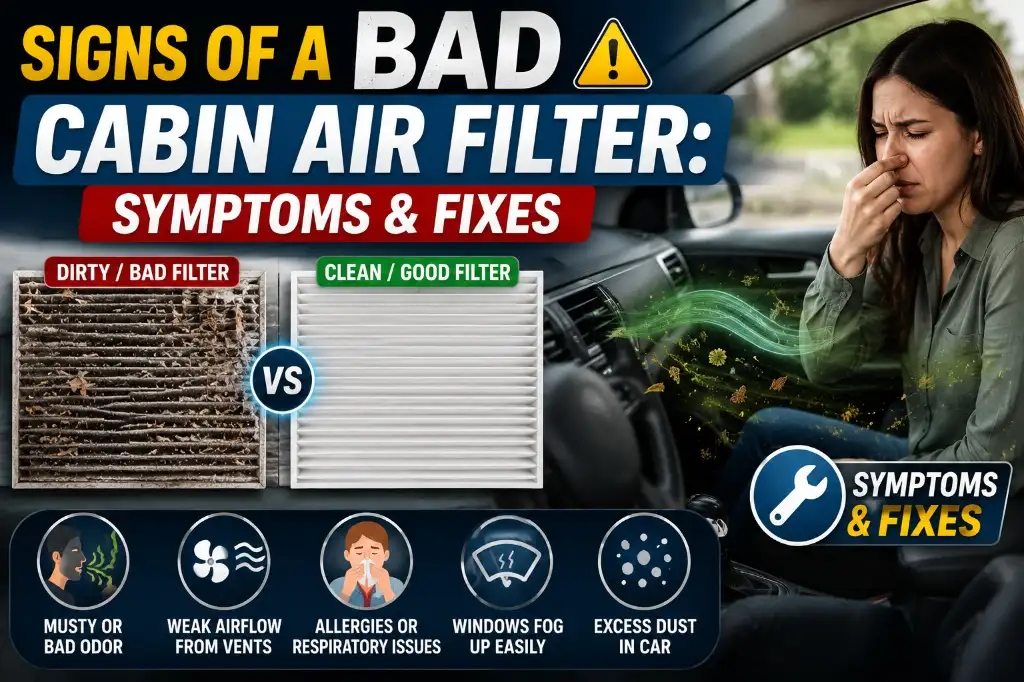
The clearest signs are weak airflow from the vents at high fan settings, musty or stale smells from the climate control, more dust than usual on interior surfaces, worsened allergy or respiratory symptoms while driving, unusual whistling or rattling from the blower fan, and reduced heating or AC effectiveness. You can confirm by pulling the filter out and inspecting it.
Can a dirty cabin air filter cause weak AC?
Yes. A clogged cabin air filter reduces the airflow through the HVAC system, which limits how much conditioned air reaches the cabin. The AC system may still be producing cold air but less of it is getting through. Replacing the filter is the first thing to check before diagnosing other AC issues.
What does a bad cabin air filter smell like?
A failing cabin air filter often produces a musty, stale, or damp smell when the climate control runs. This comes from mold and bacteria growing on the filter media, which is kept moist by HVAC system condensation. The smell is typically worst at startup.
Can I clean a cabin air filter instead of replacing it?
You can shake or tap out large surface debris, but this does not restore the filter. The fine particles embedded in the filter media cannot be removed by tapping or compressed air. Cleaning extends the filter's life slightly in a pinch but is not a substitute for replacement.
How often should I check my cabin air filter?
Inspect it every 10,000 to 12,000 miles or once per year. Drivers in high-pollen areas, dusty environments, or heavy urban traffic should check more frequently. The visual inspection takes under five minutes.
Does a clogged cabin air filter affect the blower motor?
Over time, yes. Running the blower fan against a heavily restricted filter puts it under greater electrical and mechanical load than normal. This does not cause immediate failure but can shorten the motor's lifespan if left uncorrected for a long time.
Catching a bad cabin air filter early is cheap and easy. Ignoring the symptoms long enough means restricted airflow, degraded air quality, and eventually strain on the blower motor. The fix is a $15 to $50 filter and 15 minutes of your time.
Pull it out and look at it. The filter will tell you everything you need to know.