Can You Clean a Cabin Air Filter? (What Actually Works)

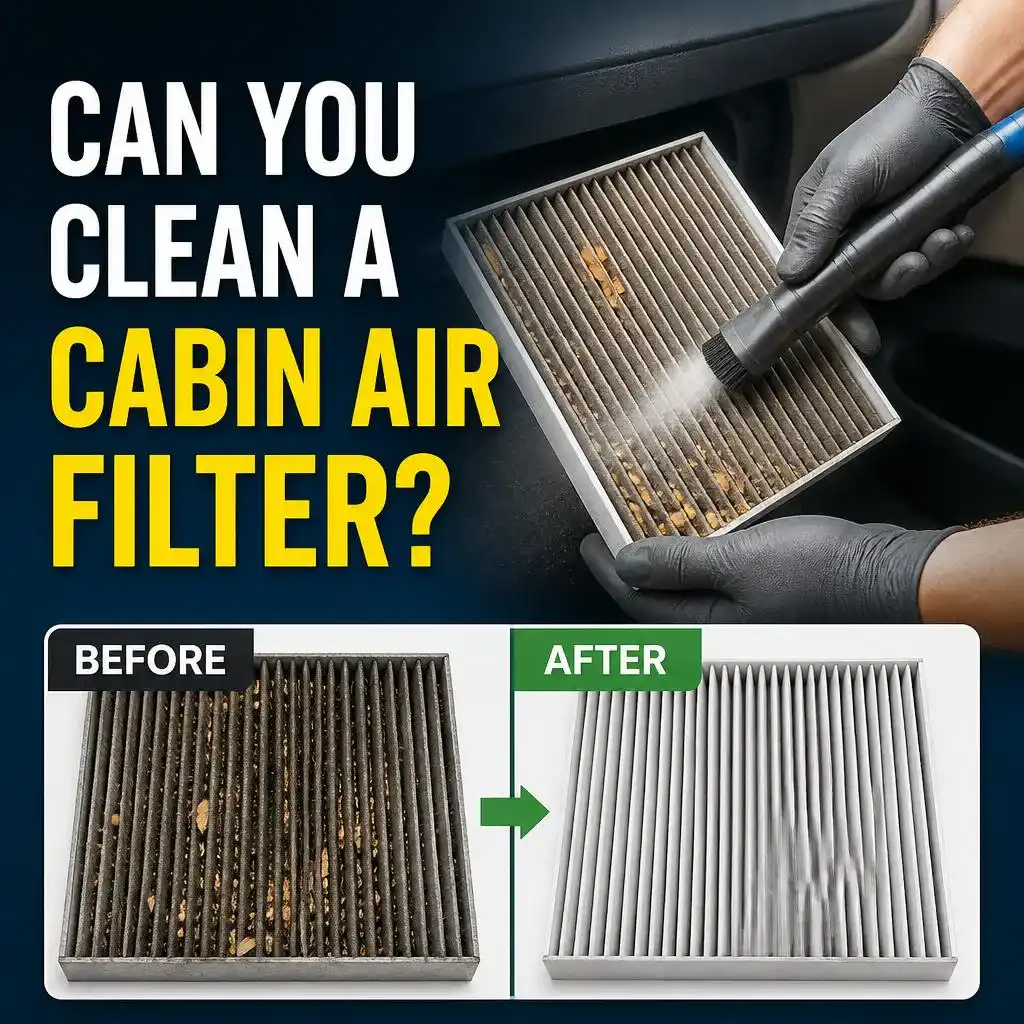
You can clean a cabin air filter, but only under the right conditions and with the right method. A light dust-out using compressed air or gentle vacuuming can extend a filter's useful life by a few weeks to a couple of months. But cleaning is a temporary fix. It does not restore full filtration efficiency,and it is not a substitute for replacement.
Can You Clean a Cabin Air Filter or Does It Need to Be Replaced?
The short answer is: sometimes you can clean it, but you usually need to replace it.


Cleaning works when the filter is lightly dusty but still structurally intact. The pleated media is still stiff. There are no tears, sagging folds, or embedded debris that won't shake loose. In this condition, a gentle clean buys you more time before the next replacement.
Cleaning does not work when:
- The filter is wet, moldy, or has a visible dark stain
- The media has collapsed pleats or tears
- There is embedded pollen, soot, or fine particulates packed into the media
- The filter has an activated carbon layer (see below)
If any of those conditions apply, replace the filter. Cleaning a saturated or structurally compromised filter makes the problem worse by forcing debris deeper into the media.


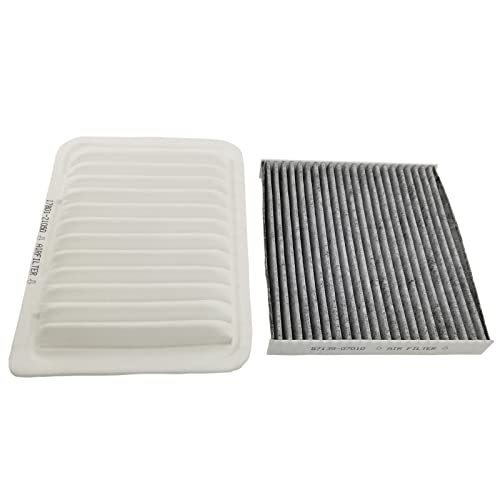
What Types of Cabin Air Filters Can Be Cleaned?
Standard Pleated Paper and Synthetic Filters
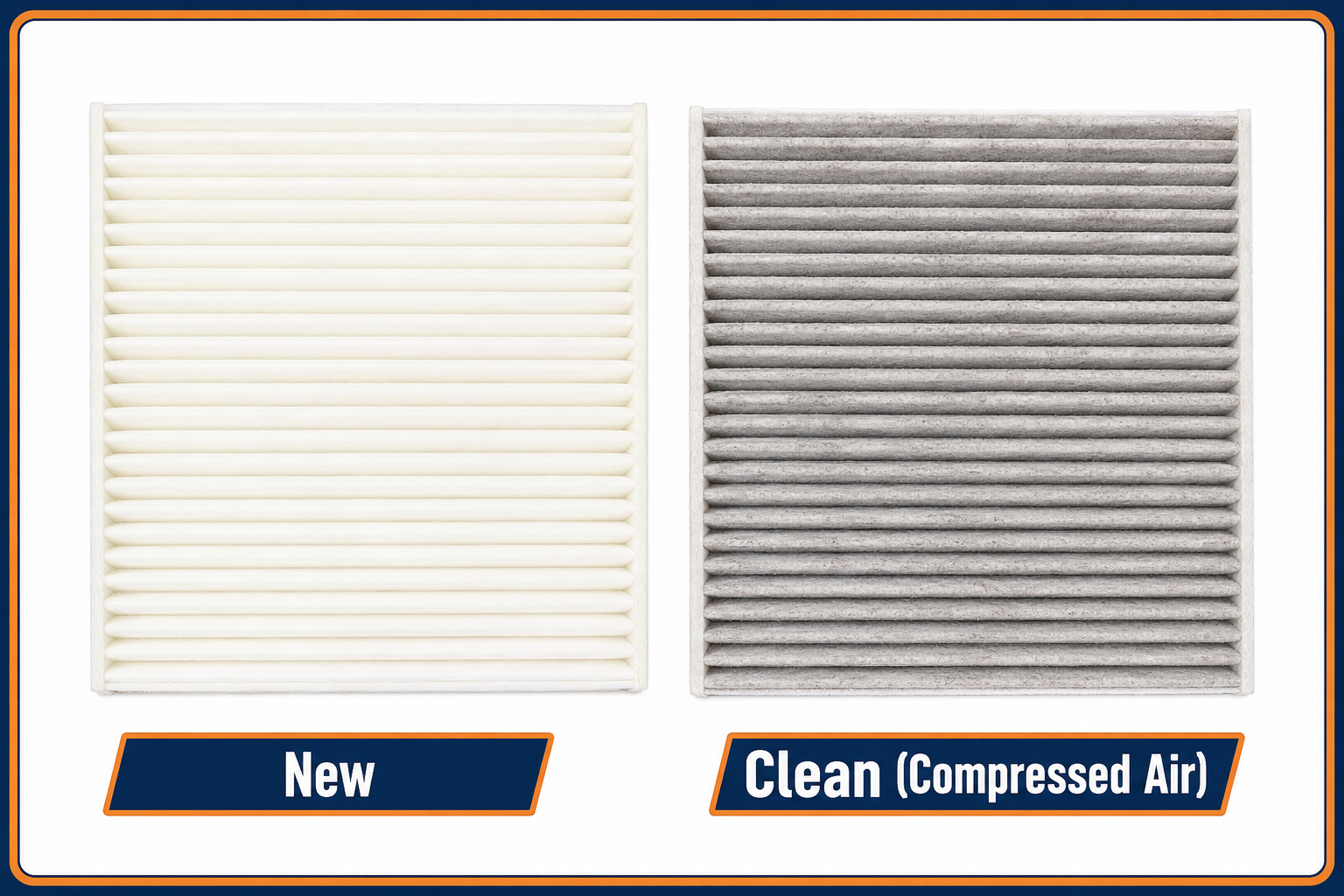
Most cabin air filters sold today use pleated cellulose (paper), synthetic fiber, or a blend of both. These can be carefully cleaned with compressed air or a gentle vacuum on a light dust load. They cannot be washed with water.
Activated Carbon Filters
Activated carbon cabin air filters have a layer of carbon pellets or carbon-impregnated media sandwiched between the pleated layers. This carbon layer adsorbs odors and certain gases.


Cleaning an activated carbon filter destroys what makes it work. The carbon pellets can dislodge. Compressed air can remove the carbon from the media entirely. Even light vacuuming can disrupt the carbon layer.
Do not attempt to clean an activated carbon or HEPA-style cabin air filter. Activated carbon filters cost more than standard filters and require more frequent replacement, but the cost is still minor compared to any HVAC repair. Replace it.
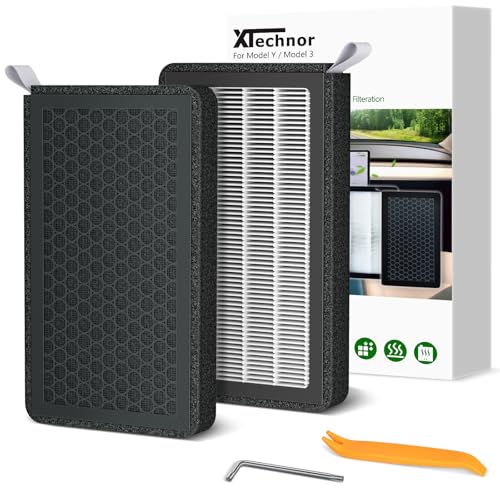


Reusable or Washable Filters
A small number of aftermarket cabin air filters are specifically marketed as washable and reusable. These use synthetic foam or cotton gauze media similar to high-performance engine air filters. If the packaging says "washable" or "reusable," follow the manufacturer's cleaning instructions exactly. These are the exception, not the rule.
How to Clean a Cabin Air Filter (Step-by-Step)
This method applies to standard pleated paper or synthetic filters with light to moderate dust buildup only.
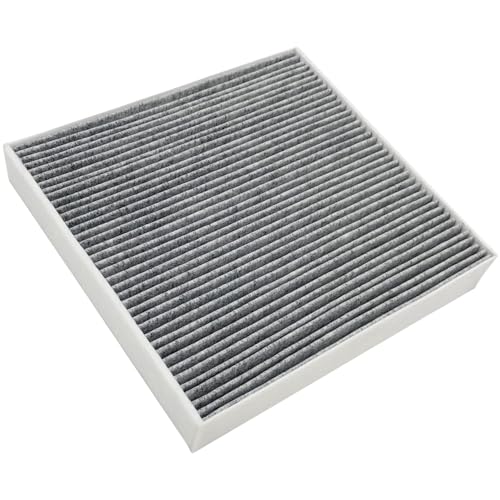

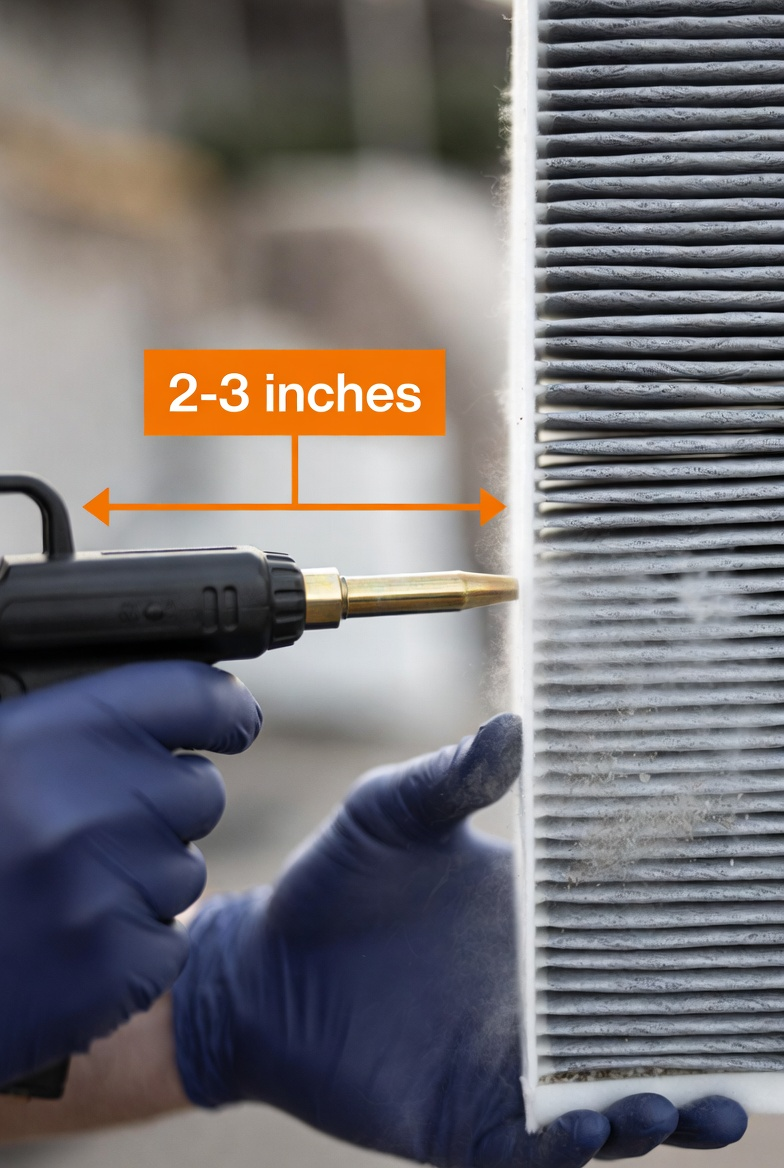
What you need:
- Compressed air can or air compressor with a blow gun
- Shop vacuum with a soft brush attachment (optional)
- Gloves and eye protection (dust and debris will come out)
Steps:
- Remove the cabin air filter from the housing. Most vehicles route it through the glove box, under the dashboard, or under the hood near the cowl. Consult your owner's manual for the exact location.
- Take the filter outside or to a well-ventilated area. You do not want to release accumulated pollen, dust, and particulates into your home.
- Hold the filter vertically so debris falls straight down and away from the media.
- Using compressed air, blow through the filter from the clean side (the side that faces the cabin) outward. Use short bursts. Keep the nozzle at least 2 to 3 inches from the media surface. Close contact can tear the pleats.
- Work along each fold of the pleated media from one end of the filter to the other.
- Optionally, use a soft brush vacuum attachment on the dirty side (the side that faces incoming air) to draw out loosened debris. Use low suction.
- Inspect the filter after cleaning. Hold it up to a light source. If you cannot see light passing through the media, or if there are visible tears, discoloration, or collapsed pleats, replace it.
- Reinstall the filter with the airflow arrow pointing in the correct direction (toward the cabin, toward the blower motor).
Total time: 5 to 10 minutes.
Can You Wash a Cabin Air Filter with Water?
No. Do not wash a standard cabin air filter with water.
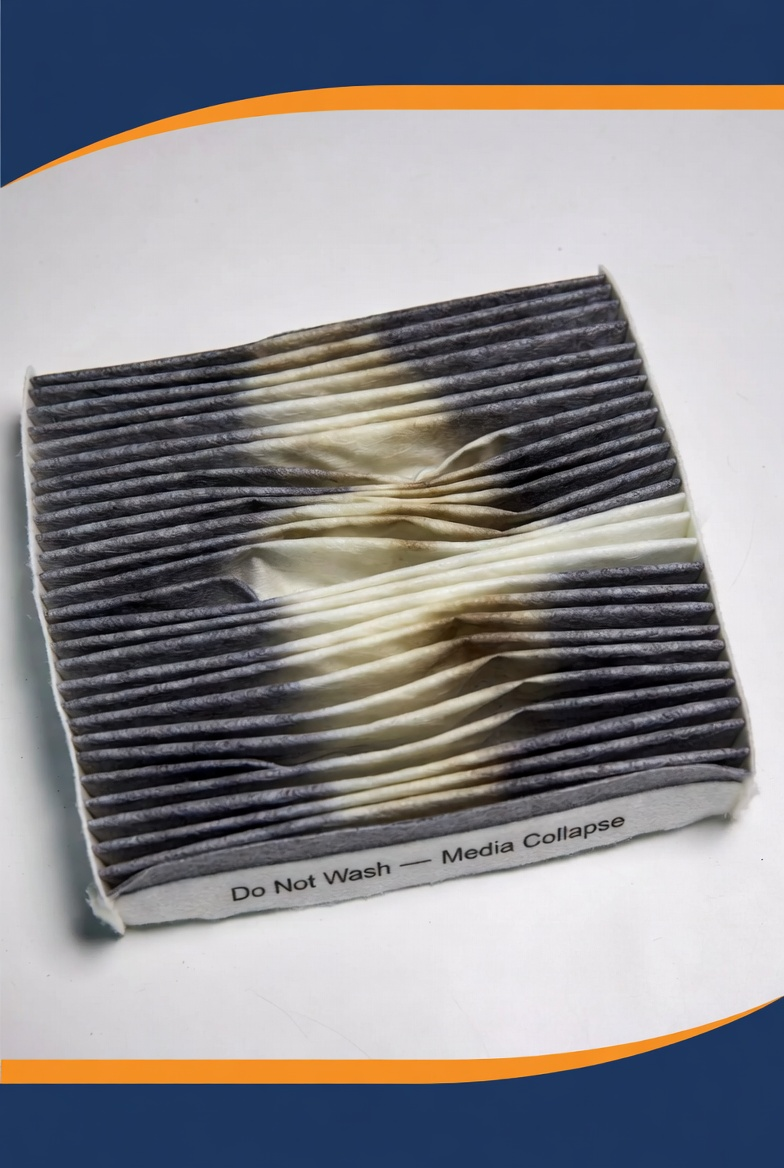
Pleated paper media is not designed to get wet. Water causes the cellulose fibers to swell, weaken, and clump together. Once dry, the media will not return to its original structure. The pleats collapse and filtration efficiency drops permanently.
Even synthetic fiber filters should not be washed unless they are specifically labeled as washable. The adhesive holding the media to the end caps can degrade with water exposure.
The rule: If the packaging does not say "washable" or "reusable," do not add water to it. Ever.
The only cabin air filters you should wash are those explicitly marketed as washable reusable units from brands like K&N or similar.
Does Cleaning a Cabin Air Filter Actually Work?
Cleaning removes loose surface dust and debris. That is all it does.
What cleaning cannot do:
- Restore the filter's original filtration efficiency. Fine particles that have penetrated the media remain there.
- Remove odors or gases absorbed into the media. Cleaning does not regenerate activated carbon.
- Repair torn or collapsed pleated media.
- Remove mold spores or bacteria.
I went through a range of owner discussions and automotive technician forums. The consistent finding is that cleaning delivers a temporary improvement in airflow — you may notice slightly better blower output after a clean — but filtration performance does not return to new-filter levels.
Think of it this way. A new filter has clean, open media. After 12,000 to 15,000 miles, the media is partially loaded with particulates. Compressed air removes the loose surface layer but does nothing for the embedded fine dust. The filter is cleaner but not clean.
Cleaning is most useful as a stopgap when you're a few weeks from your next service and the filter is causing noticeable airflow restriction.
How Long Does Cleaning a Cabin Air Filter Actually Last?
This depends entirely on how loaded the filter was before cleaning and your driving environment.
In a clean suburban environment with low dust and pollen, a cleaned filter may give you a few extra weeks before symptoms return. In a dusty, high-pollen, or urban environment, the improvement may only last a few hundred miles.
Cleaning is not a maintenance strategy. It is a bridge to your next replacement.
If you find yourself cleaning the filter more than once, you are past the point of diminishing returns. Replace it.
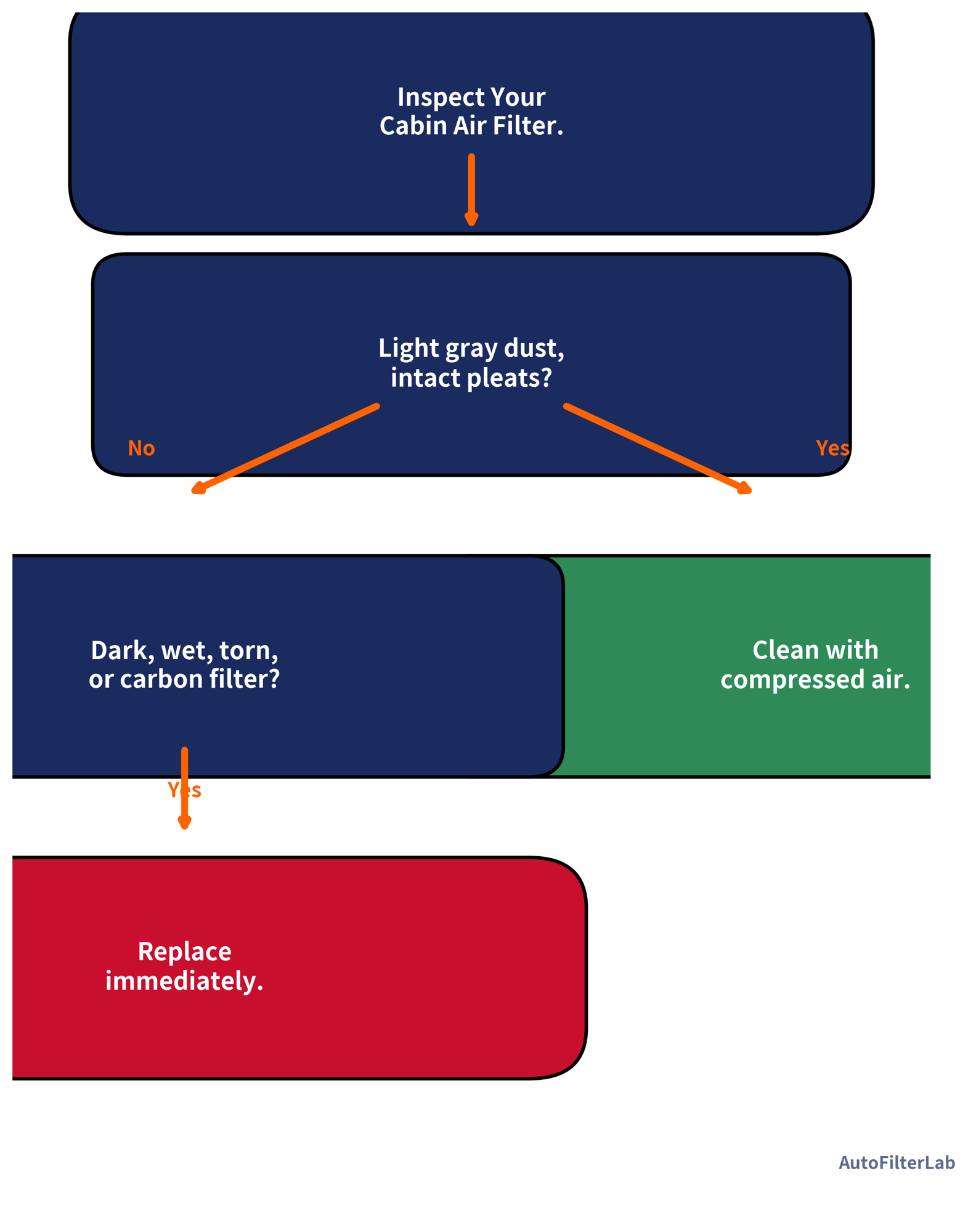
When to Clean vs. When to Replace
What Happens If You Don't Clean or Replace the Cabin Air Filter?
A neglected cabin air filter restricts airflow through the HVAC system. The blower motor has to work harder to pull air through the loaded media. Over time this shortens the motor's life.
Reduced airflow means your AC and heat both perform worse. The evaporator coil can ice over in AC mode because airflow is insufficient to prevent the coil from dropping below freezing.
Inside the cabin, you're breathing whatever the filter is failing to catch. A saturated filter can also release captured particulates back into the cabin air when the blower runs at high speed.
FAQ
Can I use a vacuum cleaner to clean my cabin air filter?
Yes, but use it carefully. A soft brush attachment on low suction, applied to the dirty side of the filter, can help remove loose surface debris. Do not apply high suction directly to the pleated media. The suction can pull the media apart or collapse the pleats.
How often should I check my cabin air filter?
Check it at every oil change interval, roughly every 5,000 to 7,500 miles. A quick visual inspection takes 30 seconds once you know where the filter is located. This lets you catch a heavily loaded filter before it causes airflow problems.
Can I extend a cabin air filter's life by cleaning it regularly?
Once. You can extend a filter's life with one cleaning when it is lightly dusty. Repeated cleaning is counterproductive. Each cleaning session removes more of the media structure. After the first clean, plan to replace at the next service.
Is it safe to drive without a cabin air filter?
Technically the vehicle will operate without one. But unfiltered air will carry dust, pollen, and road debris directly into the HVAC ducts and onto the evaporator coil. This makes the coil harder to clean and can introduce allergens into the cabin continuously. Always keep a filter installed.
Can I clean a carbon cabin air filter?
No. Carbon cabin air filters rely on the activated carbon layer to adsorb odors and gases. That layer cannot be restored by cleaning. Once the carbon is saturated or displaced, the filter needs replacement.
The Bottom Line
Cleaning a standard cabin air filter with compressed air or a gentle vacuum is worth doing when the filter is lightly loaded and you need to buy a few more weeks before a scheduled service. It takes under 10 minutes, costs nothing, and gives a modest improvement in airflow.
It is not a long-term strategy. Most filters should be replaced every 12,000 to 15,000 miles regardless of whether you have cleaned them in between. If your filter is dark, wet, torn, or has an activated carbon layer, skip the cleaning step entirely and go straight to replacement.
Replacement filters cost $15 to $50 depending on the vehicle and filter type. That cost is minor compared to blower motor repairs or an HVAC cleaning service.