Can a Dirty Air Filter Cause Engine Problems? (Rough Idle, Misfires & More)

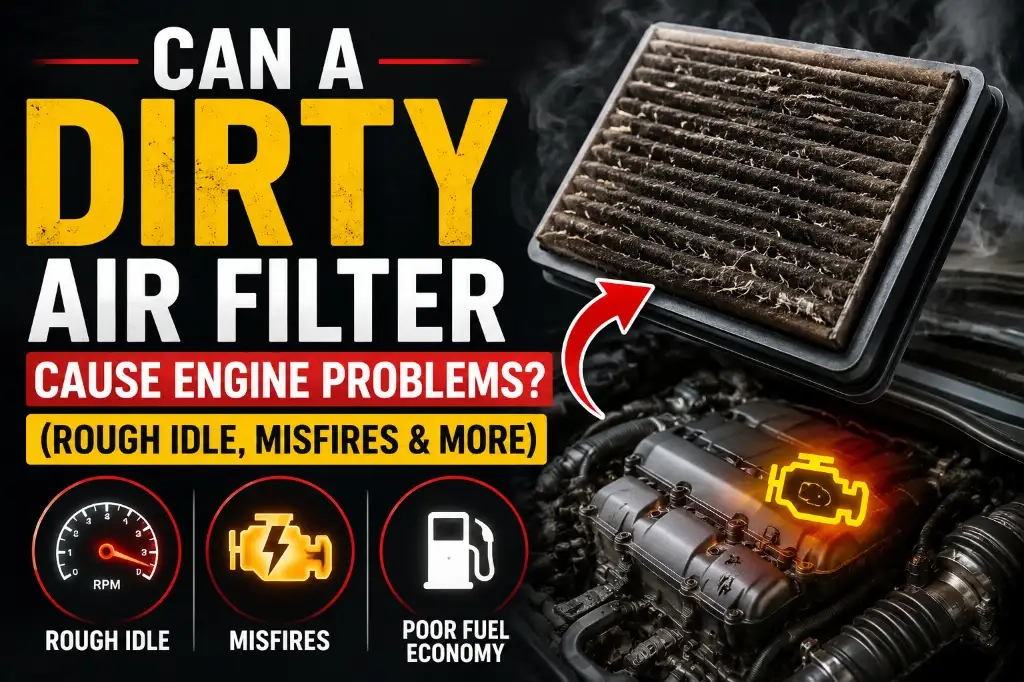
Yes, a dirty engine air filter can cause real engine problems. When the filter is clogged, it restricts airflow into the engine and disrupts the air-fuel mixture the engine needs to run cleanly. The result is a cascade of symptoms including rough idle, misfires, reduced power, worse fuel economy, and in some cases a check engine light.
How a Clogged Air Filter Disrupts Engine Operation
Your engine runs on a precise ratio of air and fuel. At idle and light throttle, that ratio is tightly controlled by the engine management system. When airflow is restricted, the system compensates by injecting more fuel to maintain combustion. Once the restriction becomes severe enough, the system cannot fully compensate and combustion becomes inconsistent.


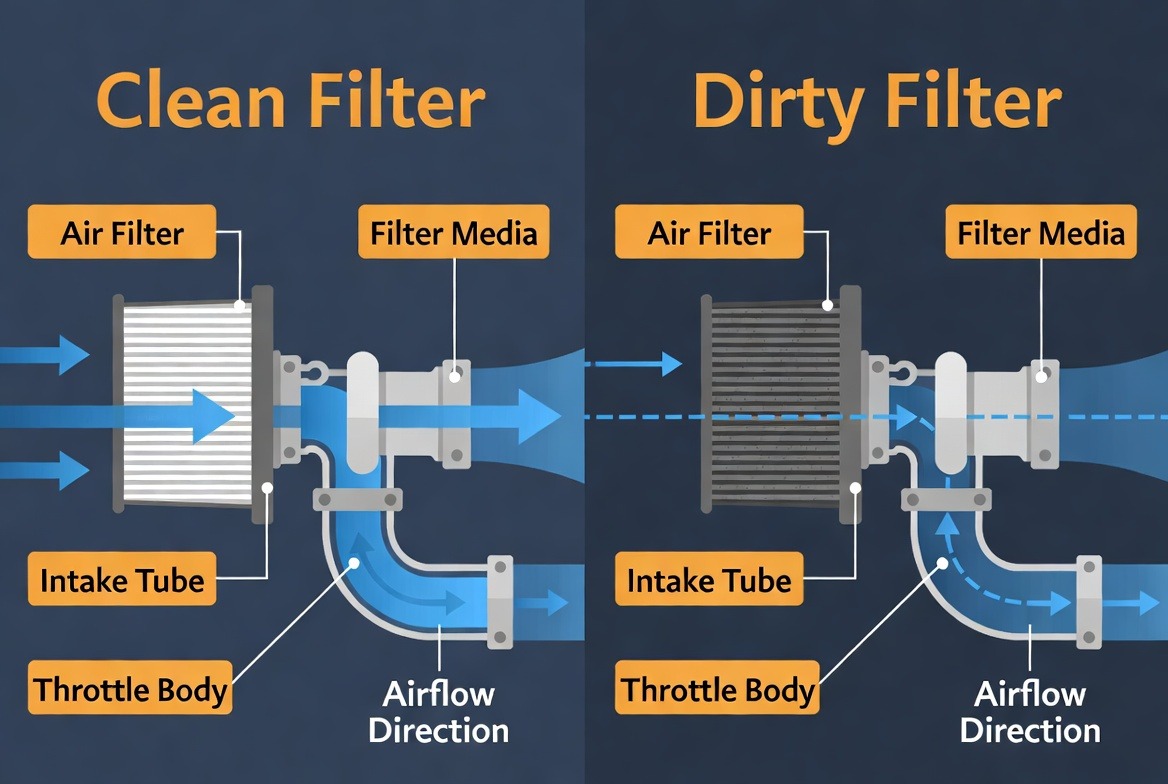
The problems that follow are not random. They are predictable consequences of an air-starved engine trying to run on a mixture it was not designed to tolerate.
Can a Dirty Air Filter Cause a Rough Idle?
Yes. A clogged air filter is one of the more common causes of a rough idle, particularly at startup or when the engine is cold.


At idle, the engine is drawing a small amount of air. Even a moderately restricted filter can have a noticeable effect at these low flow rates. The result is an uneven, choppy idle where the engine rpm fluctuates instead of holding steady.
The rough idle from a dirty filter often feels like a mild vibration through the steering wheel or seat. It may smooth out slightly once the engine warms up and fuel trim adjustments take effect. But it rarely disappears entirely until the filter is replaced.


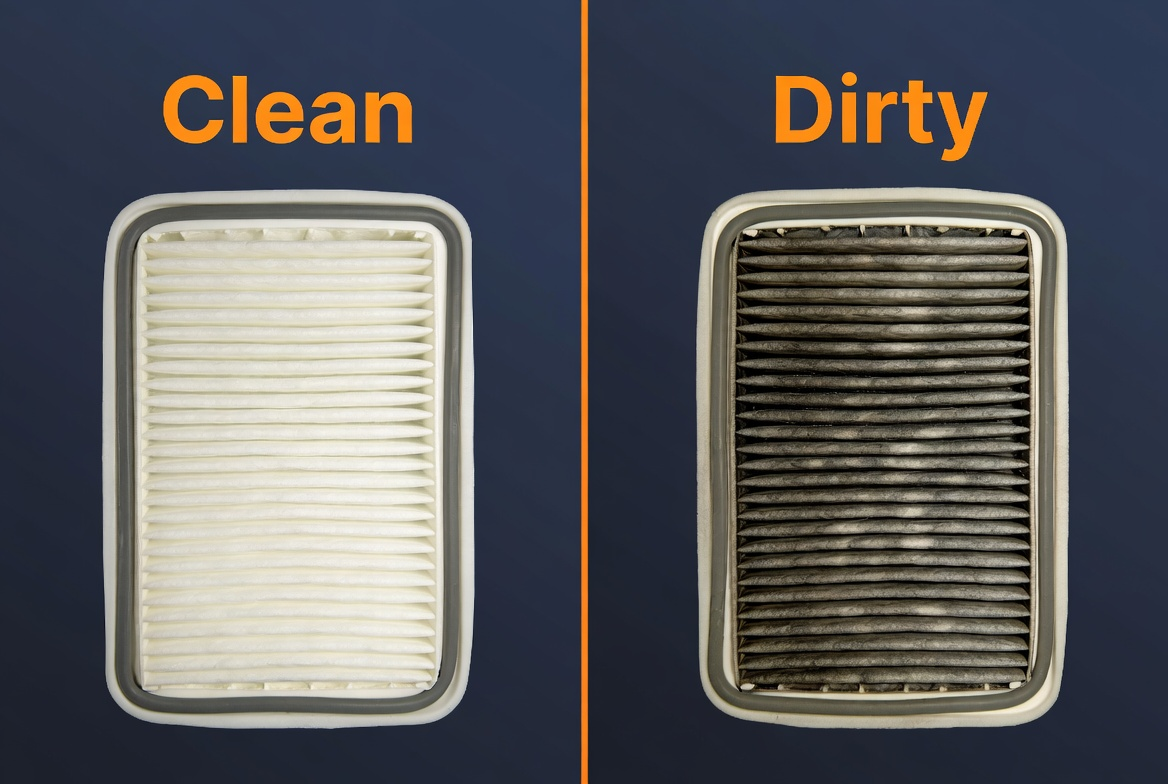
Quick test: If your idle is rough and you cannot identify a vacuum leak or bad sensor, pull the air filter and hold it up to a light. If you cannot see light through the media clearly, the filter is overdue.
Can a Dirty Air Filter Cause Engine Misfires?
Yes. A severely restricted filter can cause misfires, especially under load.
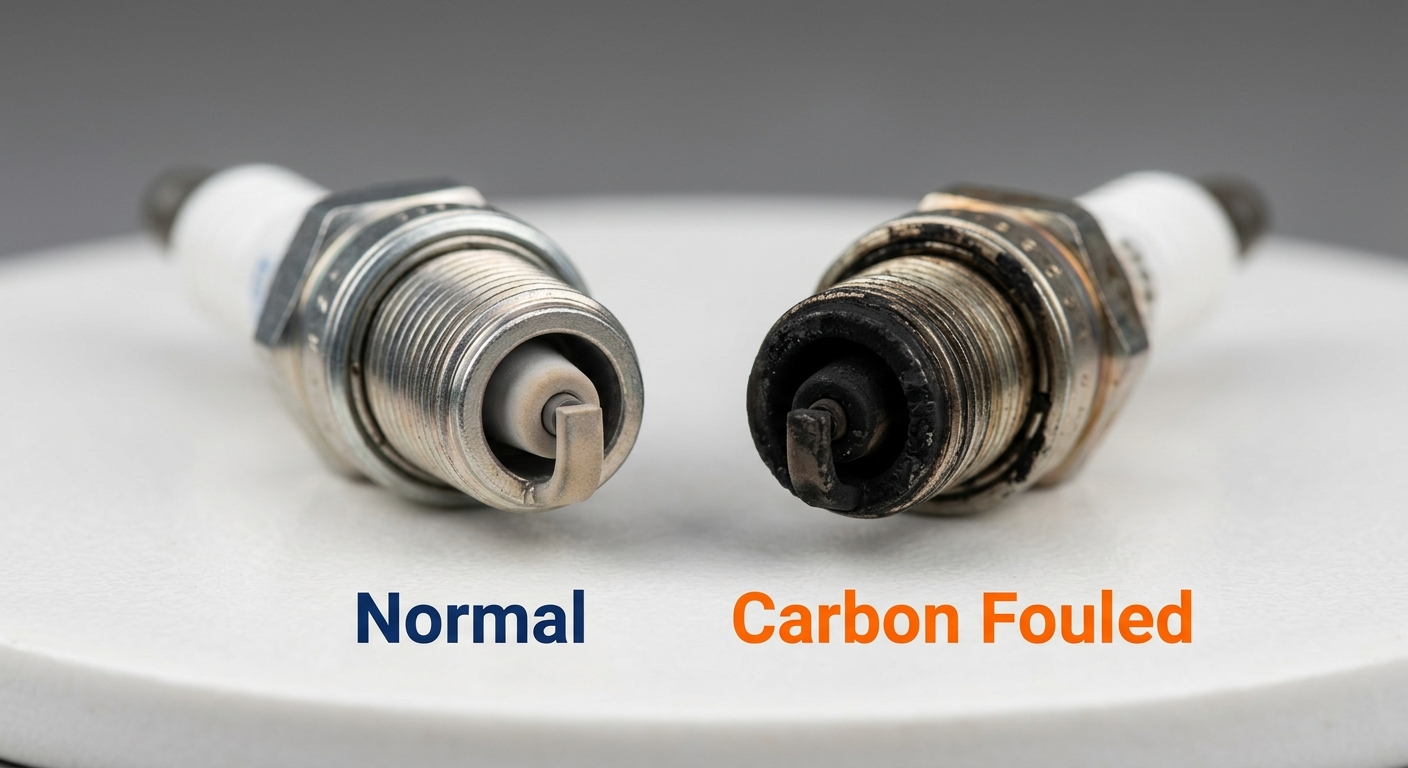
Misfires happen when a cylinder does not complete a proper combustion event. With a clogged air filter limiting airflow, the air-fuel mixture becomes overly rich. Rich mixtures burn incompletely, leaving unburned fuel in the cylinder. Over time, this fouls the spark plugs with carbon deposits.
Carbon-fouled spark plugs lose their ability to fire reliably. This creates a compounding problem: the dirty filter causes the rich mixture, which fouls the plugs, which then cause misfires independent of the filter. Replacing the filter alone may not fix the misfires if the plugs are already damaged.
If you are seeing random misfires paired with a rough idle and dark, sooty exhaust, check the air filter first. It is the simplest and cheapest item to rule out before moving to sensors or injectors.
Can a Dirty Air Filter Cause the Check Engine Light to Come On?
Yes, though it depends on how severely restricted the filter is.
A clogged air filter typically triggers check engine codes related to rich fuel mixture. The most common codes are P0172 (System Too Rich, Bank 1) and P0175 (System Too Rich, Bank 2). These codes fire when the oxygen sensors detect excessive unburned fuel in the exhaust.
In cases where the filter restriction is severe enough to contaminate the mass airflow (MAF) sensor, you may also see MAF-related codes such as P0100, P0101, or P0102. These indicate the MAF sensor is reading incorrectly, often because restricted airflow is creating abnormal flow patterns across the sensor element.
Clearing the code without replacing the filter will not fix the underlying cause. The light will return.
Can a Dirty Air Filter Cause Overheating?
Directly, no. A clogged air filter does not cause the engine coolant temperature to spike.
However, there is an indirect connection. A severely restricted filter causes the engine to run rich. Rich combustion produces more heat per cycle and can increase combustion chamber temperatures. Under sustained high load, such as towing or climbing a long grade, this additional heat adds to the thermal load the cooling system must manage.
The more important mechanism is this: an air-starved engine works harder to produce the same output. An engine that is laboring under a restricted air supply has less thermal headroom before the cooling system is overwhelmed. If your cooling system is already marginal, a clogged filter can contribute to running hotter than usual.
For a healthy cooling system with normal filter restriction, you will not see an overheating issue from the air filter alone. But if you are chasing a marginal overheating problem, the filter is worth checking as one variable among several.
Can a Dirty Air Filter Hurt Performance and Acceleration?
Yes, and this is often the first symptom drivers notice.
At wide-open throttle, your engine demands its maximum air volume. A clogged filter cannot deliver that volume. The engine makes less power because it is air-starved. Acceleration feels sluggish. The throttle response is slow and the engine feels flat at the top of the rev range.
The effect is most pronounced in turbocharged engines. A turbocharger multiplies airflow by compressing it, so any restriction upstream of the turbo is amplified. A moderately dirty filter that barely affects a naturally aspirated engine can cause a noticeable power loss in a forced induction setup.
Normally aspirated engines still feel the difference, but it is more subtle. Drivers often describe it as the engine feeling lazy or like something is slightly off, rather than a dramatic power drop.
Can a Dirty Air Filter Damage the Engine Long-Term?
Over a long enough period, yes.
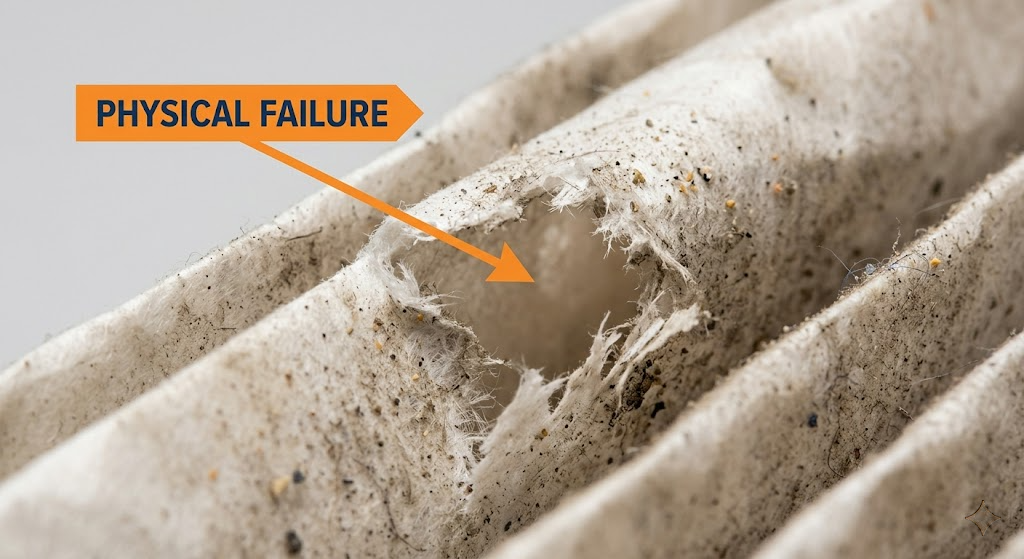
The more serious long-term risk is not from the restricted airflow itself but from a physically degraded filter. A filter that has gone beyond its service life can develop tears, holes, or collapsed sections in the filter media. At that point, unfiltered air carrying abrasive particles can pass through directly into the intake.
Abrasive particles entering the engine accelerate wear on cylinder walls, piston rings, and valve seats. This type of damage accumulates silently over thousands of miles and is not reversible without major engine work.
A filter that is simply dirty but structurally intact causes performance problems, not mechanical damage. A filter that has physically failed causes wear. The distinction matters: high mileage filters should always be inspected for physical integrity, not just visual dirtiness.
How Does a Dirty Air Filter Affect Fuel Economy?
Measurably. An engine compensating for restricted airflow injects extra fuel to maintain combustion quality. More fuel burned per mile means worse fuel economy.
For carbureted engines, a restricted air filter can reduce fuel economy by up to 14%. Modern fuel-injected engines are better at compensating through closed-loop fuel trim, so the effect is smaller. But at a certain level of restriction, even the ECU cannot fully compensate and fuel economy begins to drop.
The practical reality is that a severely clogged filter over months of neglect can noticeably increase how often you visit the pump.
Which Engine Problems Go Away After Replacing the Air Filter?
Problems caused solely by restricted airflow typically resolve fully and quickly after the filter is replaced.
You should expect to see improvement in:
- Rough idle (often resolves within the first drive cycle)
- Sluggish acceleration and power loss
- Rich fuel mixture codes (P0172, P0175), assuming no other cause
- Fuel economy (gradual improvement over several fill-ups)
Problems that may not fully resolve with a filter change alone:
- Misfires caused by carbon-fouled spark plugs (plugs may need replacement)
- MAF sensor codes caused by a contaminated sensor element (sensor may need cleaning or replacement)
- Any mechanical wear caused by a filter that failed physically and allowed debris into the engine
Replacing the filter is always the correct first step because it eliminates the primary cause. If symptoms persist after a fresh filter, investigate the downstream effects.
FAQ
Can a dirty air filter cause rough idle and stalling?
Yes. A severely restricted air filter creates an overly rich mixture at idle, causing rough, unsteady idle. In extreme cases, the mixture can become too rich for sustained combustion and the engine may stall, particularly at low RPM or when coming to a stop.
How do I know if my air filter is causing my check engine light?
Read the stored codes with an OBD-II scanner. If you see P0172 or P0175 (rich mixture codes) without other obvious causes like a faulty oxygen sensor, a clogged air filter is a logical culprit. Replace the filter, clear the code, and see if it returns.
Can a dirty air filter cause a car to run rough only at high speeds?
This pattern points to a filter that is borderline rather than severely clogged. At low RPM the engine's air demand is manageable and the restriction is less impactful. At high RPM the engine demands maximum airflow and the restriction becomes the limiting factor, causing rough running or power loss.
Will replacing the air filter fix a misfire?
It depends. If the misfire is caused solely by a rich mixture from restricted airflow, a fresh filter resolves the cause. But if the spark plugs have been fouled by extended running on a rich mixture, they may need to be replaced as well for the misfire to clear completely.
The Bottom Line
A dirty engine air filter does not just reduce performance. It creates a specific chain of problems: restricted airflow leads to a rich mixture, which causes rough idle, misfires, and eventually check engine codes.
Leave it long enough and a physically degraded filter can allow debris into the engine.
The air filter is a small, inexpensive component. Inspecting it at every oil change takes 60 seconds. The engine problems it prevents can cost thousands to fix once they take hold.