Dirty vs Clean Air Filter: What Does a Clogged Air Filter Look Like?

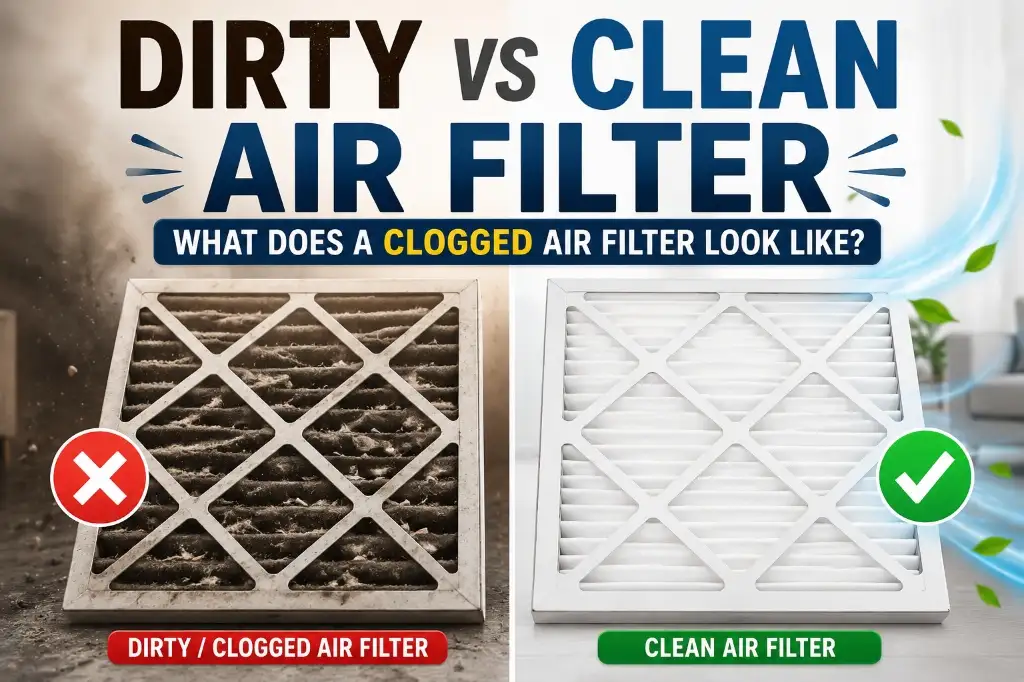
A new engine air filter is white or off-white and lets light pass through it easily. A dirty one ranges from light grey to solid black depending on how far past due it is. The color and feel of the filter media tell you almost everything you need to know about whether the filter still belongs in your engine.
What Does a Clean Engine Air Filter Look Like?
A brand-new engine air filter is white, off-white, or very light cream in color. The pleated paper or synthetic media looks uniform. Hold it up to a light source and you can see the light coming through clearly.


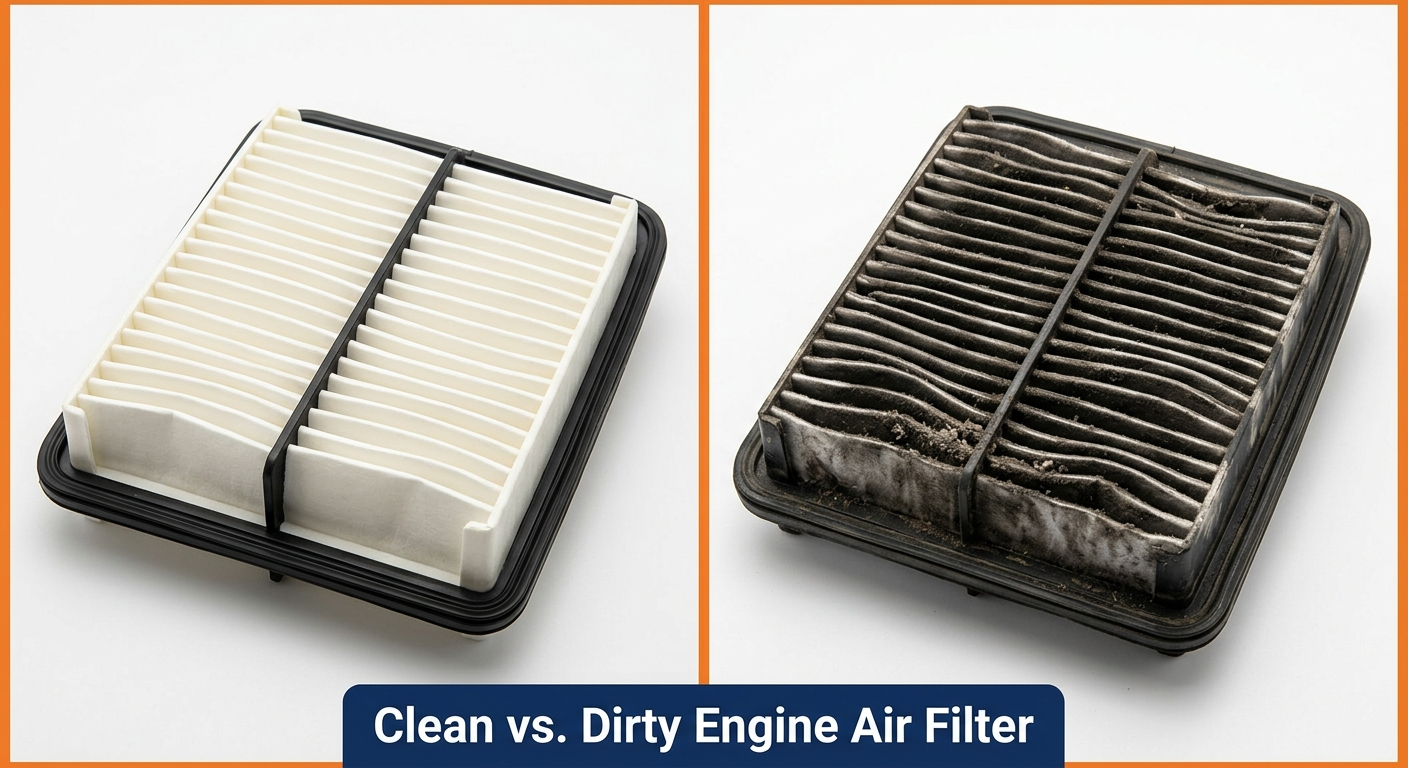
The pleats are crisp and evenly spaced. There is no visible debris caught in the folds. The end caps are sealed cleanly. The gasket around the perimeter is soft and compressible.
This is the baseline. Everything else is a comparison against this.


What the Media Color Tells You
The filter media color is your fastest indicator of filter condition:
Light grey is not cause for alarm. The filter is doing its job by catching particles. It turns grey because it is collecting fine road dust. Solid black or dark brown means the filter has reached or exceeded its useful capacity.


What Does a Dirty Engine Air Filter Look Like?
A dirty engine air filter shows several clear visual signs. These are not subtle once you know what to look for.
Color Change
The most obvious sign is color. A filter that started white is now grey, brown, or black. The darkening starts at the edges of the pleats and works inward. Heavy dust loads create a thick, felt-like layer on the intake side of the media.


Visible Debris Caught in the Pleats
Hold the filter horizontally and look directly into the pleated folds. You should be able to see through them toward the light on the clean side. If the pleats are packed with grey or brown material and you cannot see through them, the filter is loaded.
Common debris caught in the folds includes:
- Fine road dust and silica
- Insect fragments
- Pollen and plant matter
- Leaf debris
- Small sand particles
In rural and dusty environments, a filter can look heavily loaded in as few as 10,000 miles.
The Light Test
Remove the filter from the airbox. Hold it up to direct sunlight or a bright work light. On a clean filter, light passes through visibly.
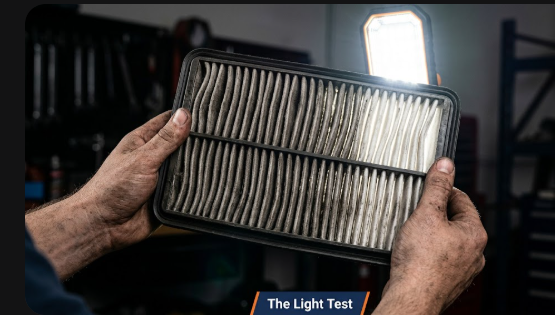
On a dirty filter, the light is blocked. The darker and more opaque the media, the more loaded it is. A filter that blocks light almost completely should come out.
Pro tip: Do the light test every time you change your oil. It takes five seconds and will catch a filter that needs replacing before it starts affecting engine performance.
Physical Deformation
A filter that has been running too long can show physical damage beyond just color. Look for:
- Collapsed pleats that have folded in on themselves from airflow restriction
- Holes or tears in the media from debris impact or improper removal
- Cracked or hardened end caps
- A gasket that has compressed flat and no longer seals
A filter with any of these conditions has compromised structural integrity. Even if it were cleaned perfectly, it should be replaced.
Dirty vs Clogged: Is There a Difference?
Yes, and the distinction matters for your engine.
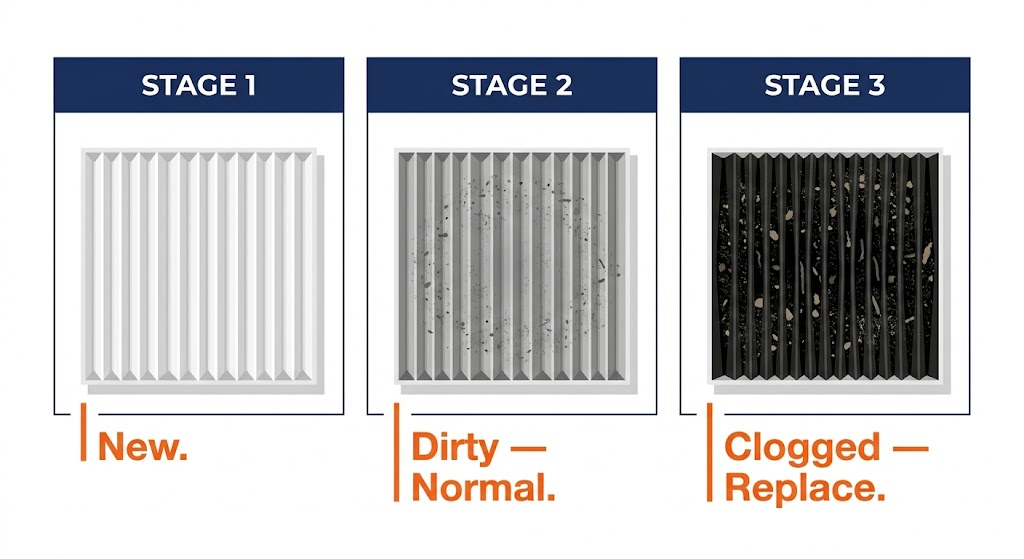
Dirty means the filter is accumulating particles but still passing adequate airflow. This is normal operation. A dirty filter is still doing its job.
Clogged means the filter media is so packed with debris that airflow is meaningfully restricted. At this point, the filter's bypass valve may be forced open, or the engine may be running lean from insufficient air. Either condition harms the engine.
The tricky part: you cannot always tell from visual inspection alone whether a filter is merely dirty or actually clogged. A moderately grey filter on a high-performance engine in a dusty environment might be clogging, while a darker filter on a low-output engine in clean air might still be flowing adequately.
Visual inspection gives you a strong signal. But following the manufacturer's replacement interval prevents you from relying on guesswork.
Can You Clean a Dirty Air Filter Instead of Replacing It?
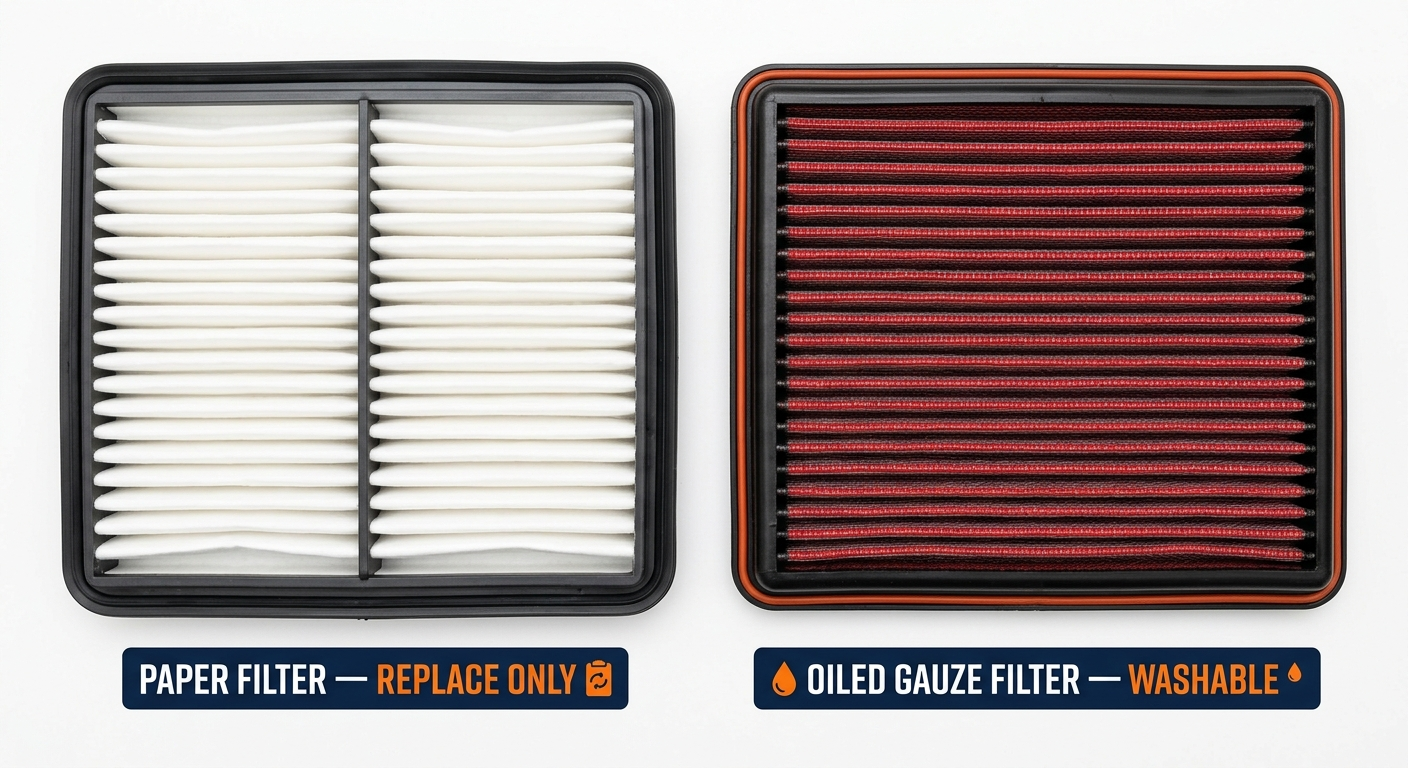
It depends on the filter type.
Paper / Cellulose Filters: Do Not Wash
Standard OEM-style paper filters cannot be washed. Water destroys the paper media. Attempting to wash a paper filter collapses the fibers and eliminates its filtering ability. Even after drying, it will not filter adequately.
You can tap a paper filter gently against a hard surface to knock loose surface dust. Some light blowing with compressed air from the inside out (clean side to dirty side) can extend the filter's usable life temporarily. But this is a short-term measure, not a substitute for replacement.
Oiled Cotton Gauze Filters (K&N Style): Washable
Reusable performance filters made from layered oiled cotton gauze can be cleaned with the manufacturer's cleaning kit. These filters use oil as the primary filtration mechanism, not restriction. Washing removes the accumulated debris, and re-oiling restores the filtration.
Follow the manufacturer's cleaning process exactly. Applying too much oil during the re-oiling step risks oil reaching the MAF sensor, which can trigger airflow codes. Use only enough oil to lightly coat the cotton layers.
Synthetic Dry Filters (Certain Aftermarket Brands): Check the Specs
Some synthetic dry filters are rated for multiple cleaning cycles. Others are single-use. Check the manufacturer's specification for your specific filter model before attempting any cleaning.
What Happens When a Filter Is Too Dirty?
The engine air filter is the only thing standing between the engine and unfiltered ambient air. When it is clogged, a chain of problems follows.
Airflow restriction means the engine cannot pull in the volume of air it needs for proper combustion. The MAF sensor reads reduced airflow and adjusts fuel trim accordingly. Fuel economy drops. The engine runs richer or pulls less air than it should.
If you want a full picture of the downstream effects, the article on dirty engine air filter symptoms covers each symptom in detail, including what codes you may see and how acceleration and fuel economy are affected.
Does a Visually Clean Filter Mean It Is Still Good?
Not always.
Paper filters degrade even without visible contamination. Moisture exposure causes the paper fibers to stiffen and lose flexibility. The pleats can compress slightly over time. The end caps can dry out and begin separating from the media.
A filter that looks clean but has been in service for 45,000 miles in a humid climate may have compromised integrity that no visual inspection will catch.
This is why mileage matters as much as appearance. Use visual inspection to catch filters that need early replacement. Use mileage to catch filters that have exceeded their service life even when they still look acceptable.
How to Inspect Your Engine Air Filter
- Open the airbox. Most modern vehicles use a simple latch or single screw. Consult your owner's manual for the exact location.
- Remove the filter carefully. Keep it oriented so any loose debris falls away from the clean side.
- Check the color. Use the table above as reference.
- Do the light test. Hold the filter up to a bright light source.
- Inspect the pleats. Look for debris packing, collapsed folds, or tears in the media.
- Check the gasket. It should be soft and compressible. A hardened or cracked gasket will not seal properly.
- Check the airbox itself. Look for debris that bypassed the filter or accumulated in the housing.
If the filter passes all five checks and you are under the replacement interval, reinstall it. If it fails any check, replace it.
FAQ
What color is a bad engine air filter?
A bad engine air filter ranges from dark grey to solid black, depending on the contamination level. A filter that started off-white and is now dark grey to black, blocks light when held up to a bulb, or shows collapsed or packed pleats should be replaced. Light to medium grey is normal wear and does not always mean the filter is failing.
Can I use compressed air to clean my engine air filter?
You can blow light surface dust off a paper filter with compressed air directed from the inside (clean side) outward. This is a temporary measure and does not restore the filter to new condition. If the filter is dark or heavily loaded, replace it. Never blow compressed air from the outside in, as this embeds debris deeper into the media.
How often should I check my air filter visually?
Inspect it every oil change interval. This costs nothing and takes less than a minute. It catches early degradation before performance symptoms develop.
Does a clogged air filter always throw a check engine light?
Not always. Airflow restriction reduces engine performance gradually. A check engine light from a restricted air filter typically comes from MAF sensor codes triggered by abnormal airflow readings, not directly from the filter itself. Many engines run with a significantly degraded air filter for thousands of miles before tripping a code.
Can I drive with a visibly clogged air filter?
You can, but the engine is working harder than it should. Fuel economy suffers, acceleration is reduced, and in severe cases the bypass valve opens and allows partially filtered air into the engine. Replace a clogged filter as soon as possible. Most paper replacement filters cost $15 to $50 depending on the vehicle and filter brand.
The Bottom Line
A clean air filter is white to light grey and lets light through. A dirty one is dark grey to black, blocks light, and may have debris visible in the pleats. When in doubt, do the light test.
Visual inspection is a useful tool, but it works best alongside mileage tracking. A filter that looks acceptable but has run past its service life should still come out. A filter that looks heavily loaded before the interval is up should come out even earlier.