How Often Should You Change Your Engine Air Filter?

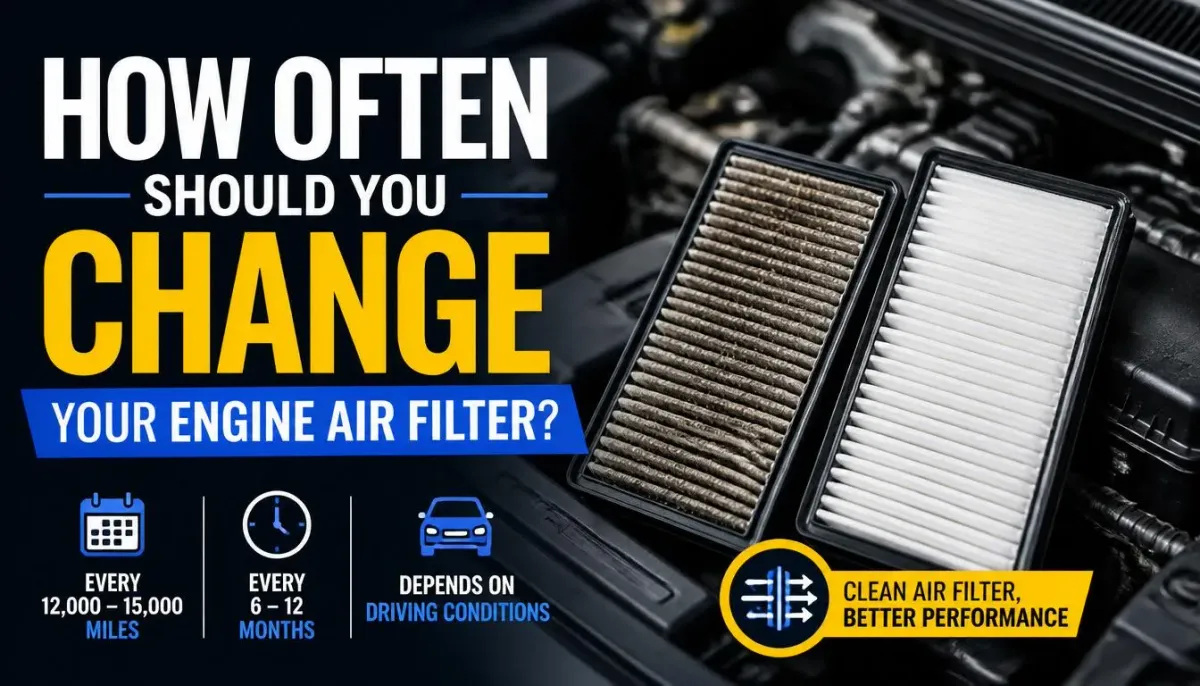
Most vehicles need a new engine air filter every 15,000 to 30,000 miles. That range is wide on purpose. Driving conditions, engine size, and filter media type all shift the actual number. If you drive in dusty environments, do most of your miles on unpaved roads, or live in an area with heavy pollen or pollution, your filter will load up faster than the manufacturer's baseline assumes.
The short answer: check your owner's manual for the official interval, then inspect the filter yourself at every oil change and replace it whenever it looks more than half-loaded with debris.


What Is the Standard Engine Air Filter Replacement Interval?
Most manufacturer service schedules list the engine air filter replacement at every 15,000 to 30,000 miles for normal driving conditions. Some manufacturers, like Toyota on several models, recommend closer to 30,000 miles. Others, particularly trucks with large diesel engines used for heavy towing, may call for shorter intervals.
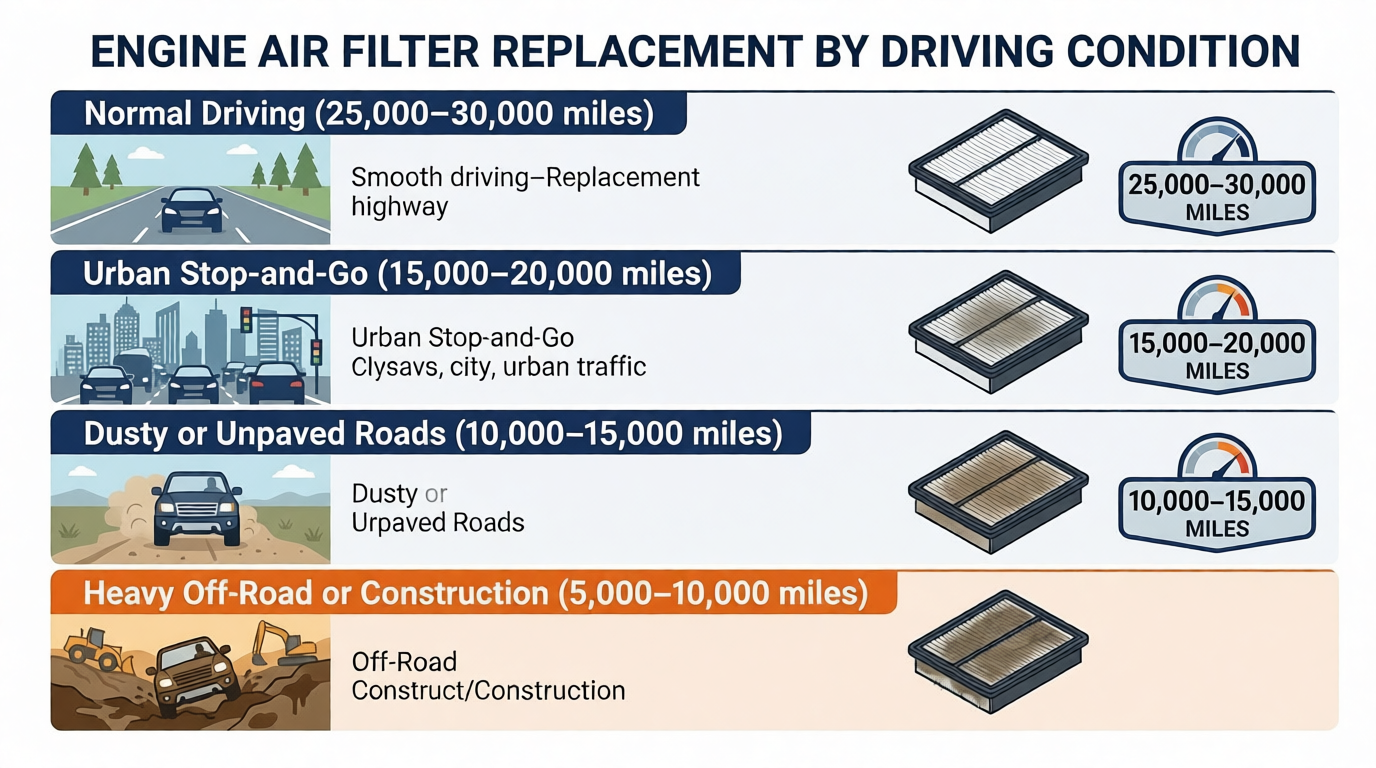
The baseline assumes a mix of highway and city driving in a relatively clean environment. That covers most suburban and urban drivers reasonably well.


Here is a general breakdown by driving condition:
These are guidelines, not hard rules. The filter itself is the most reliable indicator of when it needs to go.


Does the Owner's Manual Always Give the Right Answer?
The manufacturer interval is a starting point, not a guarantee
Manufacturer intervals are built around an assumed average driving environment. If your conditions differ from that average, the interval will be off.
I've seen owners follow a 30,000-mile schedule in a dusty desert region and pull out a filter that looked like it had done 60,000 miles. I've also seen 25,000-mile filters in clean highway environments that could have gone another 10,000 miles without any performance impact.


The manual gives you a ceiling. Visual inspection gives you the real answer.
Severe service conditions cut the interval roughly in half
Most owner's manuals include a "severe service" schedule alongside the standard one. If you regularly drive in any of these conditions, use the severe service interval:
- Frequent short trips under 5 miles
- Extreme heat or cold climates
- Extended idle time (fleet vehicles, delivery routes)
- Dusty, unpaved, or sandy roads
- Heavy towing or hauling on a regular basis
Under severe conditions, the engine pulls more air per mile to compensate for lower efficiency and additional load. More air means more particles pass through the filter in the same number of miles.


How to Tell When Your Engine Air Filter Needs Replacing
Look at it
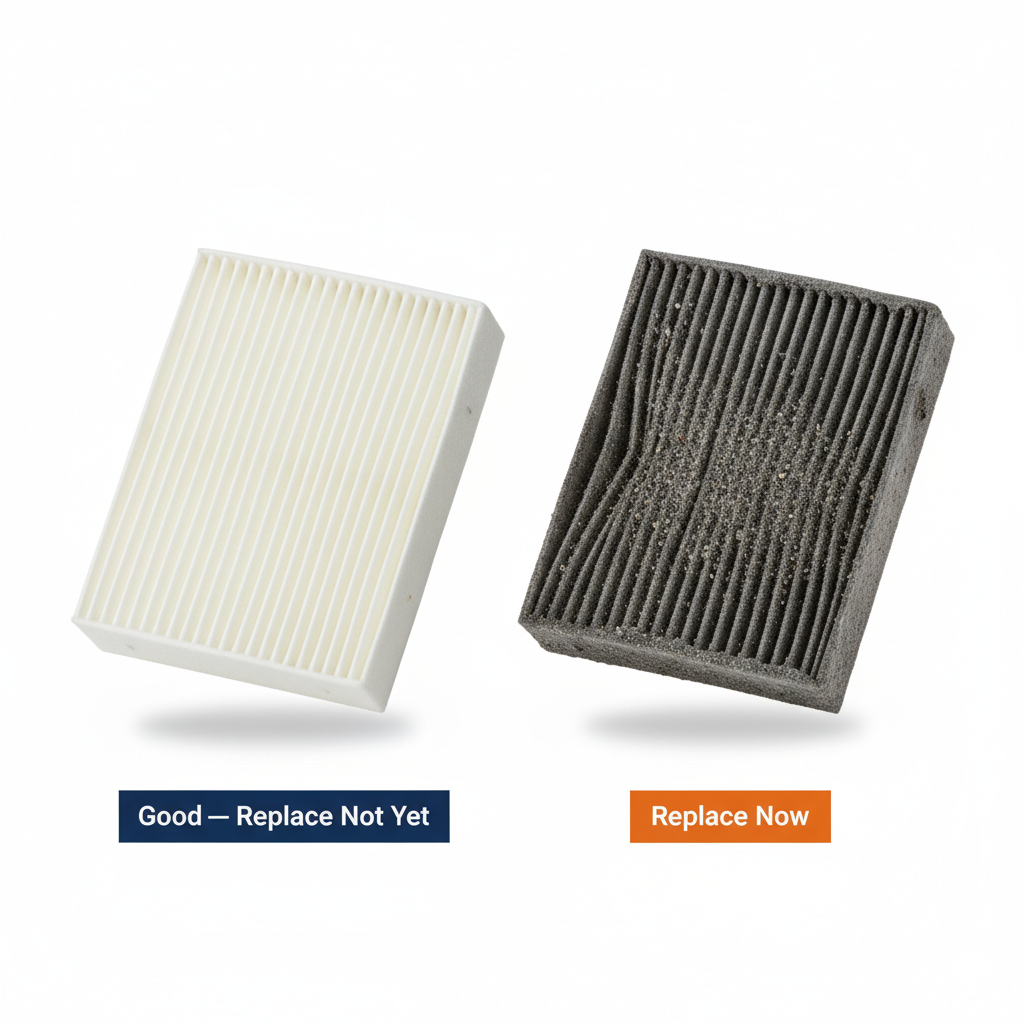
The most reliable check is a visual inspection. Pull the filter out of the airbox and hold it up to a light source. Here is what you are looking at:
- Light passes through freely: Filter has life left.
- Light is partially blocked, filter is gray or tan: Getting close. Replace within the next oil change.
- Filter is dark gray to black, light barely passes: Replace immediately.
A new filter is typically white or off-white. The color shifts toward gray, then brown, then black as it accumulates debris.
Tap test
Take the filter outside and tap it firmly on a hard surface. If a noticeable amount of fine dust or debris falls out, the filter is past its prime. If almost nothing comes out, it still has filtering capacity remaining.
Quick rule: If the filter looks like it is 50% dirty, it is time to replace it. Don't wait for it to look completely black. A heavily loaded filter restricts airflow before it looks completely spent.
Check for physical damage
Beyond dirt load, look for tears, holes, or collapsed pleating in the filter media. Any physical breach means unfiltered air is reaching the engine. Replace it regardless of how clean the rest of the filter looks.
What Happens If You Don't Change the Engine Air Filter?
Reduced engine performance
A clogged air filter restricts the volume of air reaching the combustion chamber. Engines need a precise air-to-fuel ratio to combust efficiently. When air is restricted, the engine either runs rich (too much fuel relative to air) or pulls harder to compensate. Either way, you notice it as sluggish acceleration and reduced throttle response.
Lower fuel economy
The fuel economy impact of a severely clogged filter is real, though modern fuel-injected engines compensate better than older carbureted ones did. Older carbureted engines saw fuel economy drops of around 14% from a clogged air filter. Fuel-injected engines manage the mixture electronically, so the impact is smaller but still measurable.
Accelerated engine wear
The engine air filter's only job is to keep abrasive particles out of the engine. Fine particles of dirt, dust, and sand that pass a failed filter end up in the oil, embedding in cylinder walls and scoring bearings. This kind of wear accumulates invisibly over time.
You won't feel it for tens of thousands of miles, but the damage is compounding with every mile driven on a spent filter.
Check engine light or misfires
A severely restricted air filter can cause a rich-running condition that triggers an oxygen sensor reading out of range. In some cases, this sets a check engine light. It can also contribute to misfires under load if the air restriction is extreme.
Does Diesel vs. Gasoline Engine Type Affect the Interval?
Diesel engines are more demanding of their air filters
Diesel engines run at significantly higher compression ratios than gasoline engines, typically 14:1 to 25:1 compared to 8:1 to 12:1 for gasoline engines. They also ingest more air per power stroke to compensate for the excess air strategy diesels use for combustion control.
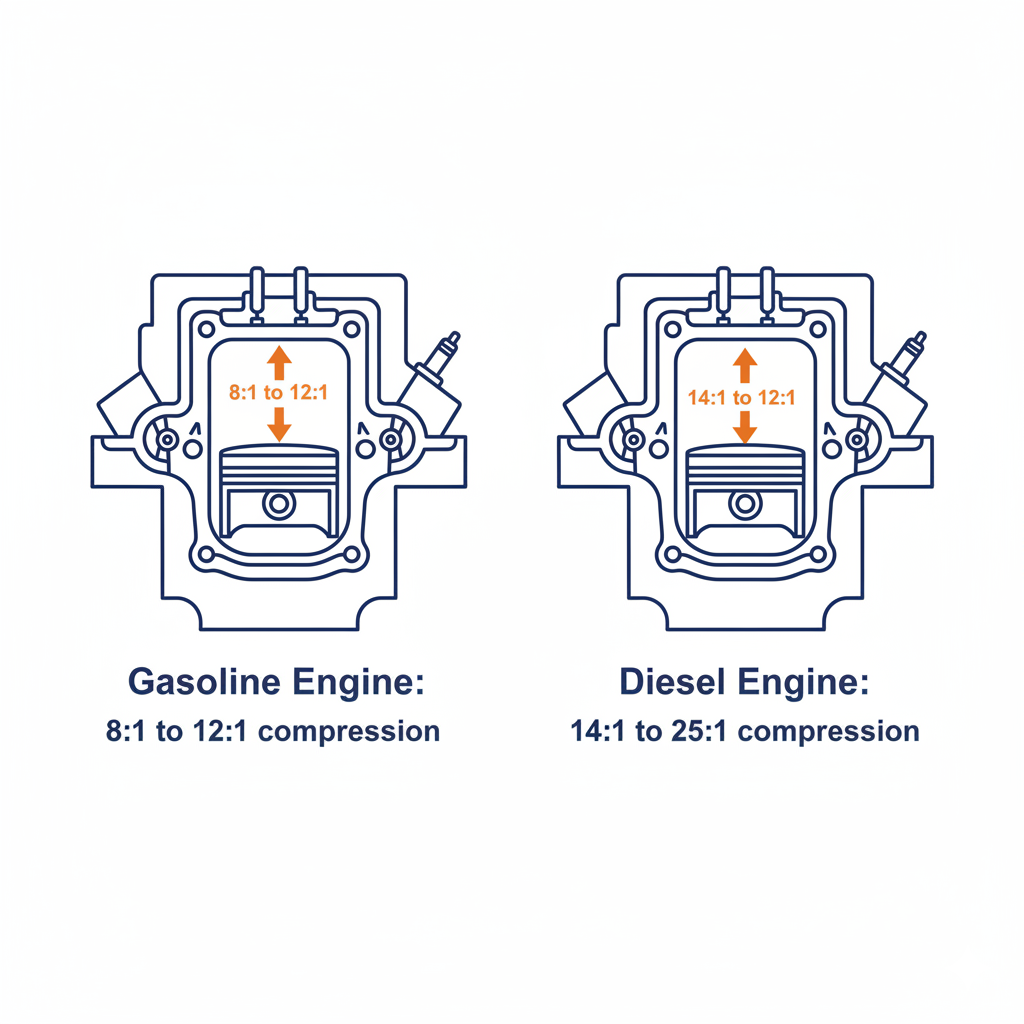
More air throughput means the filter loads up faster per mile. Heavy-duty diesel trucks used for towing or hauling will typically need air filter replacement more often than the manufacturer's standard interval suggests.
Turbodiesel engines have even less tolerance for restriction
Turbocharged diesel engines (nearly all modern diesel trucks) draw air through the filter before it reaches the turbocharger. Any restriction raises the pressure drop across the filter, which the turbo has to work harder to overcome. A partially clogged filter on a turbodiesel doesn't just hurt fuel economy. It puts additional stress on the turbo itself.
For turbo diesel trucks used in dusty environments or for regular towing, I'd check the filter every 10,000 miles regardless of the manufacturer's stated interval.
Common Vehicle Engine Air Filter Intervals
Here are the manufacturer-stated replacement intervals for some frequently searched vehicles. These apply to normal driving conditions:
Note: Always verify against your specific year and trim's owner's manual. These figures reflect factory service schedules but can vary by model year and market.
Can You Clean a Paper Engine Air Filter to Extend Its Life?
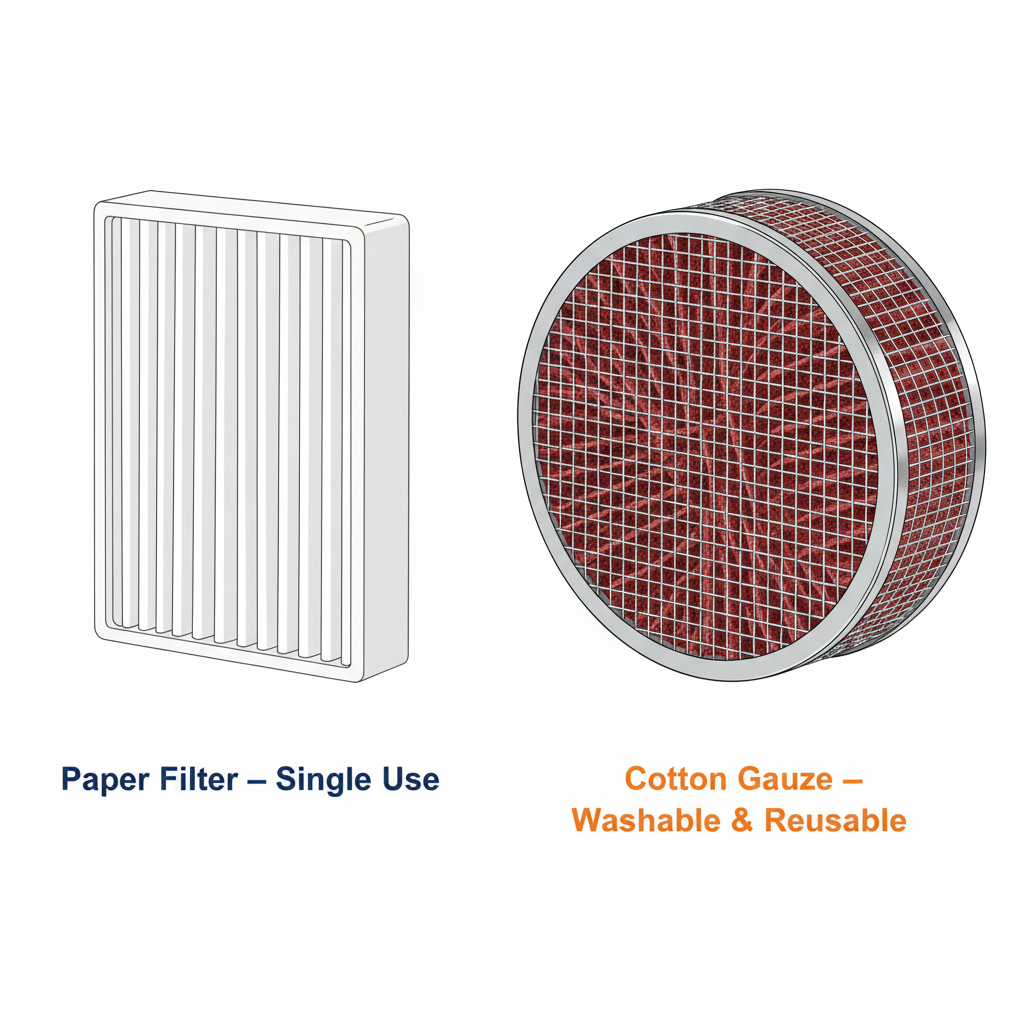
For paper/cellulose filters: no
Paper and cellulose engine air filters are single-use components. The filtering media is a dense matrix of fibers that traps particles as air passes through. Tapping out loose debris removes some surface contamination, but it does not restore filtration efficiency and it does not remove the fine particles embedded deep in the media.
Attempting to clean a paper filter with compressed air risks tearing the media or blowing debris back through in the wrong direction, defeating the entire purpose of the filter.
When a paper or cellulose engine air filter is dirty, replace it. They typically cost $15 to $50 depending on the vehicle and brand. That is not an expense worth avoiding at the cost of engine wear.
For oiled cotton gauze filters (K&N and similar): yes
Reusable cotton gauze filters from brands like K&N are designed to be cleaned and re-oiled. They come with cleaning kits and can be serviced every 50,000 miles or more under normal conditions. The trade-off is a more involved maintenance process: the filter must be cleaned, allowed to dry completely, and then re-oiled before reinstallation.
How Often Should You Actually Inspect the Filter?
I recommend a quick visual check at every oil change, regardless of where you are in the replacement interval. This takes about two minutes.
Here is the logic: an oil change forces you to get under the hood anyway. The airbox is typically accessible without tools. Pulling the filter for a visual check costs you nothing.
If you catch a filter that is running ahead of schedule due to a dusty summer or a stretch of unpaved driving, you can replace it before it starts affecting performance. If it still looks clean, you put it back and check again in another 5,000 miles.
FAQ
How often should you change an engine air filter?
Most vehicles need a new engine air filter every 15,000 to 30,000 miles under normal driving conditions. Vehicles driven frequently in dusty environments or under severe service conditions may need replacement every 10,000 to 15,000 miles. Check your owner's manual for the baseline and inspect the filter visually at each oil change.
What are the symptoms of a dirty engine air filter?
A dirty engine air filter typically causes sluggish acceleration, reduced throttle response, and slightly lower fuel economy. In severe cases it can trigger a check engine light or contribute to rough running. The most reliable check is a visual inspection: a filter that looks dark gray or black and blocks light needs to be replaced.
Can a dirty air filter damage the engine?
Yes. A filter that has failed physically, or one so clogged that the bypass valve opens regularly, allows unfiltered air and fine abrasive particles into the engine. Over time this causes accelerated wear on cylinder walls, piston rings, and bearings. The damage accumulates invisibly but permanently.
Is it OK to drive with a dirty air filter?
A moderately dirty filter that is still intact and filtering reduces performance but is not an immediate emergency. A filter that is visibly black, structurally compromised, or past the manufacturer's interval should be replaced as soon as possible. The cost of a new filter ($15 to $50) is far less than the cost of engine damage from neglecting it.
Does changing the air filter improve fuel economy?
On modern fuel-injected engines, a clogged air filter causes a measurable but modest reduction in fuel economy compared to the dramatic impact seen on older carbureted engines. Replacing a genuinely clogged filter restores normal performance. Replacing a filter that still has service life remaining produces no measurable gain.
How long does it take to change an engine air filter?
For most vehicles, replacing the engine air filter takes 5 to 15 minutes. The airbox is typically secured by a few clips or screws and accessible without special tools. Some performance and turbocharged vehicles have more complex intake configurations that may take longer.