What Does an Engine Air Filter Do? (Complete Explanation)

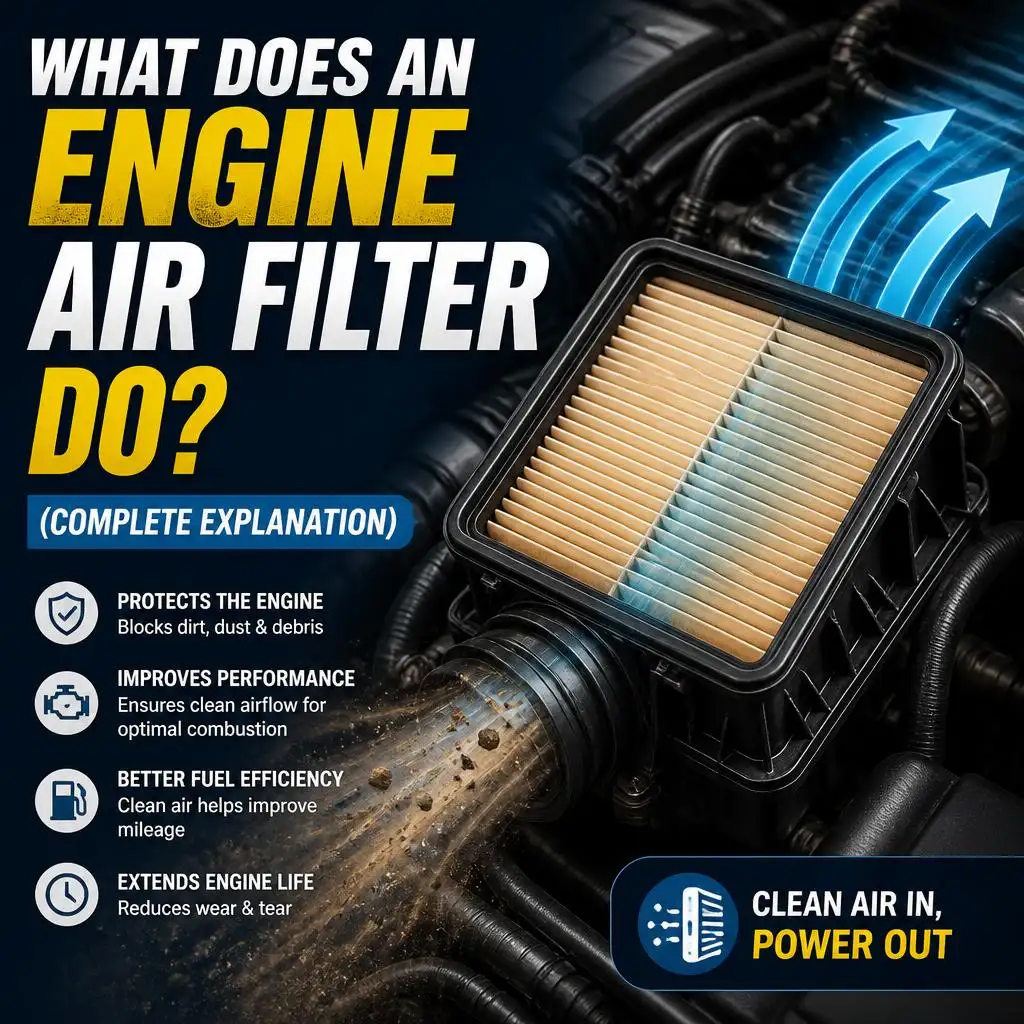
Your engine air filter keeps dirt, dust, and debris out of the combustion chamber. Without it, abrasive particles would enter the engine with every breath of air it takes, grinding away cylinder walls, pistons, and rings over time. A clean filter protects the engine. A dirty one starves it.
How Does an Engine Air Filter Work?
An engine needs a precise mix of air and fuel to combust. For every gallon of gasoline burned, the engine draws in roughly 14.7 parts of air by mass. That air passes through the filter before it reaches the intake manifold, throttle body, and combustion chamber.


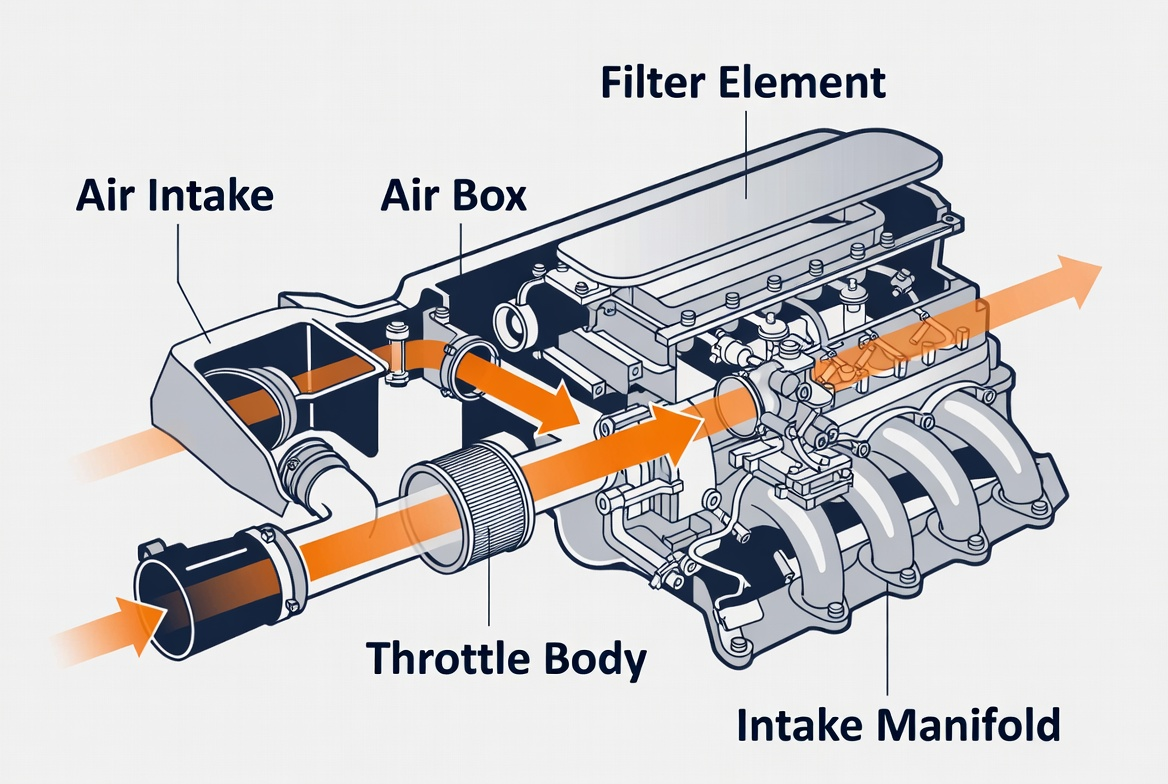
The filter medium captures particles suspended in that incoming air. Depending on the filter type, it traps contaminants as small as 5 to 6 microns, with high-quality filters capturing 99% or more of particles in that range. Dust, pollen, sand, and road grit are all stopped at the filter. Clean air passes through. Contaminants stay behind.
This is what makes the filter a consumable part. It fills up with trapped material over time. Once it becomes too clogged, airflow drops, and the engine can no longer breathe efficiently.


Where Is the Engine Air Filter Located?
The engine air filter sits inside the air box, a plastic housing connected to the intake ducting. On most vehicles, the air box is in the engine bay, near one of the front corners.
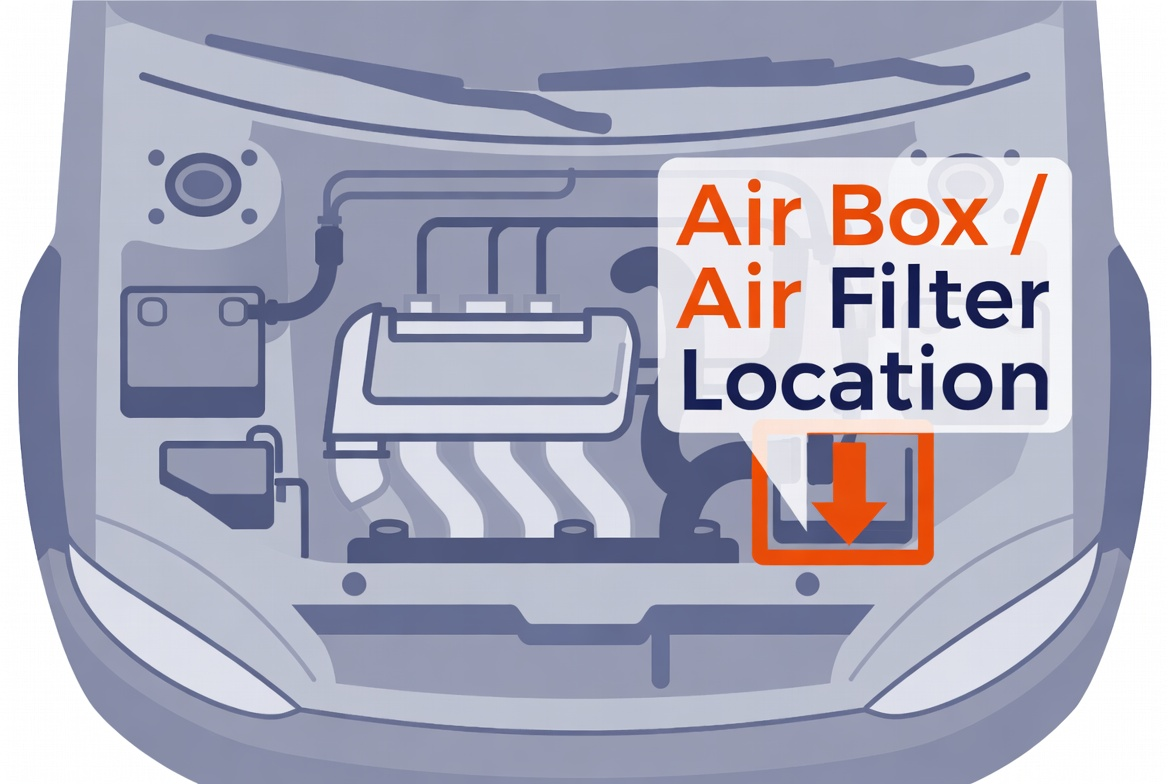
Follow the large plastic duct running toward the throttle body and you will find the air box at one end. Open the housing and the filter element sits inside it.


On older carbureted vehicles, the filter sits in a round canister mounted directly on top of the carburetor. The design changed as fuel injection became standard, but the function did not.
What Types of Engine Air Filters Are There?
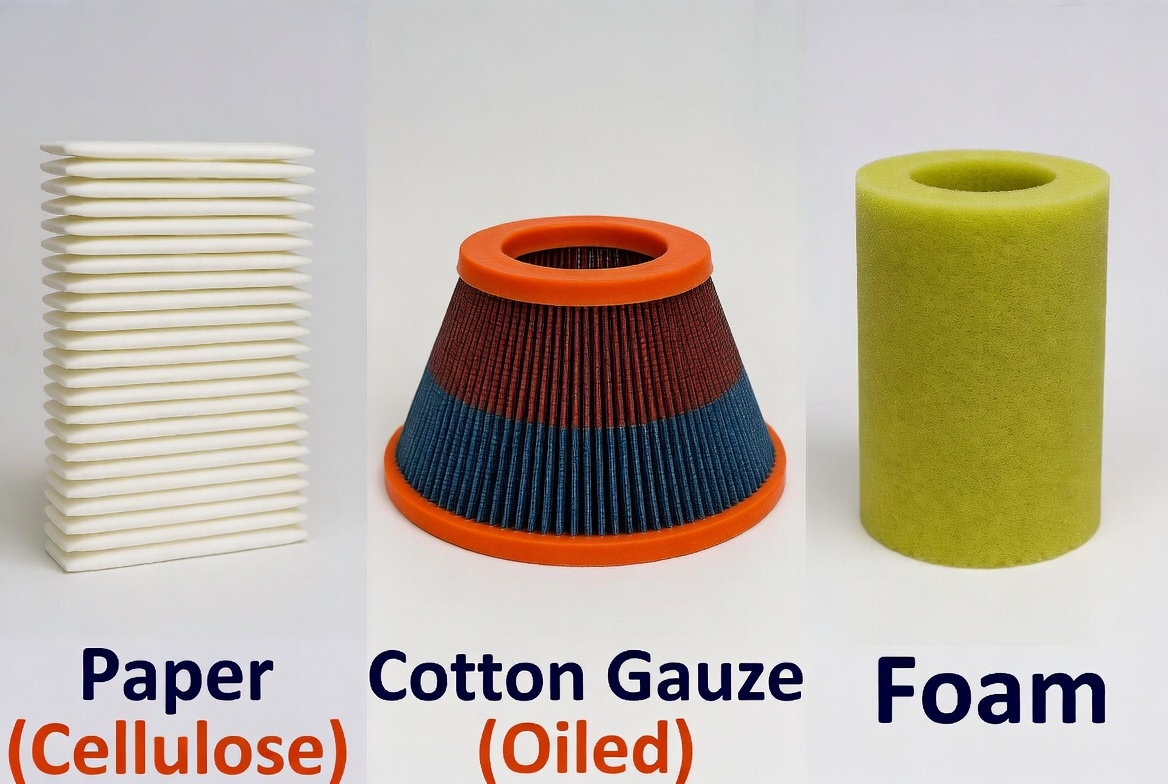
The filter medium is what separates one type from another. Each material has different filtration efficiency, airflow characteristics, and service life.


Pleated Paper (Cellulose)
This is the standard OEM filter type on most production vehicles. The medium is a dense cellulose fiber, pleated to increase surface area within a compact housing. Paper filters offer excellent filtration efficiency for everyday driving conditions.
They are single-use. Once clogged, they are thrown away and replaced. Most owners never need anything else.


Oiled Cotton Gauze (Performance Filters)
Brands like K&N use layered cotton gauze saturated with filter oil. The oiled medium captures particles through a combination of mechanical filtration and oil adhesion. Cotton gauze filters are reusable: wash them, re-oil them, and reinstall.
They are often marketed for increased airflow and are popular in performance applications. The tradeoff is that they require periodic maintenance and, if improperly oiled, can transfer oil onto the mass airflow sensor.
Foam
Foam filters are common on powersport equipment: dirt bikes, ATVs, and small engines. They offer good airflow in dusty off-road conditions and are also washable and reusable. Most passenger vehicles do not use foam filters from the factory.
Dry Synthetic
Some premium filters use a dry synthetic medium instead of cellulose or oiled cotton. These are sometimes marketed as high-efficiency alternatives to paper with better filtration of fine particles, without the oil-related risks of cotton gauze.
What Happens When an Engine Air Filter Gets Dirty?
A clogged filter restricts airflow into the engine. The effects are gradual at first. As restriction increases, symptoms become more noticeable.
Reduced fuel economy. The engine management system compensates for a lean condition caused by restricted air by adjusting fueling. An older vehicle with a carburetor may actually run rich, burning more fuel. Either way, the efficiency penalty is real.
Loss of power and throttle response. The engine cannot produce full power without adequate airflow. Acceleration feels sluggish. Throttle response slows.
Rough idle or misfires. In severe cases, a badly clogged filter can cause the engine to idle roughly or misfire under load. The air-fuel ratio is disrupted enough to affect combustion stability.
Check engine light. On modern vehicles, a restricted air filter can trigger codes related to mass airflow sensor readings or oxygen sensor readings, depending on how the ECU interprets the lean condition.
The engine itself is not damaged by a dirty air filter alone. But run the engine long enough with an extremely restricted filter, and you risk overheating and accelerated wear from an excessively rich mixture.
How Is an Engine Air Filter Different From a Cabin Air Filter?
These are two completely separate filters with two different jobs.
The engine air filter protects the engine. It filters air going into the combustion chamber. The cabin air filter protects the passengers. It filters air coming through the HVAC system into the interior of the vehicle.
They are in different locations, have different shapes, and are replaced at different intervals. Replacing one does not affect the other. Most vehicles have both, though some older or base-trim vehicles omit the cabin filter.
How Often Should You Change an Engine Air Filter?
Most manufacturers recommend replacing the engine air filter every 30,000 miles under normal driving conditions, though some specify as low as 15,000 miles for certain models and driving environments. The exact interval depends on the vehicle and the driving environment.
City driving, dusty roads, construction areas, and unpaved surfaces load the filter faster than highway miles in clean air. If you regularly drive in heavily polluted or dusty conditions, inspect the filter more frequently and replace it earlier than the manufacturer's standard interval.
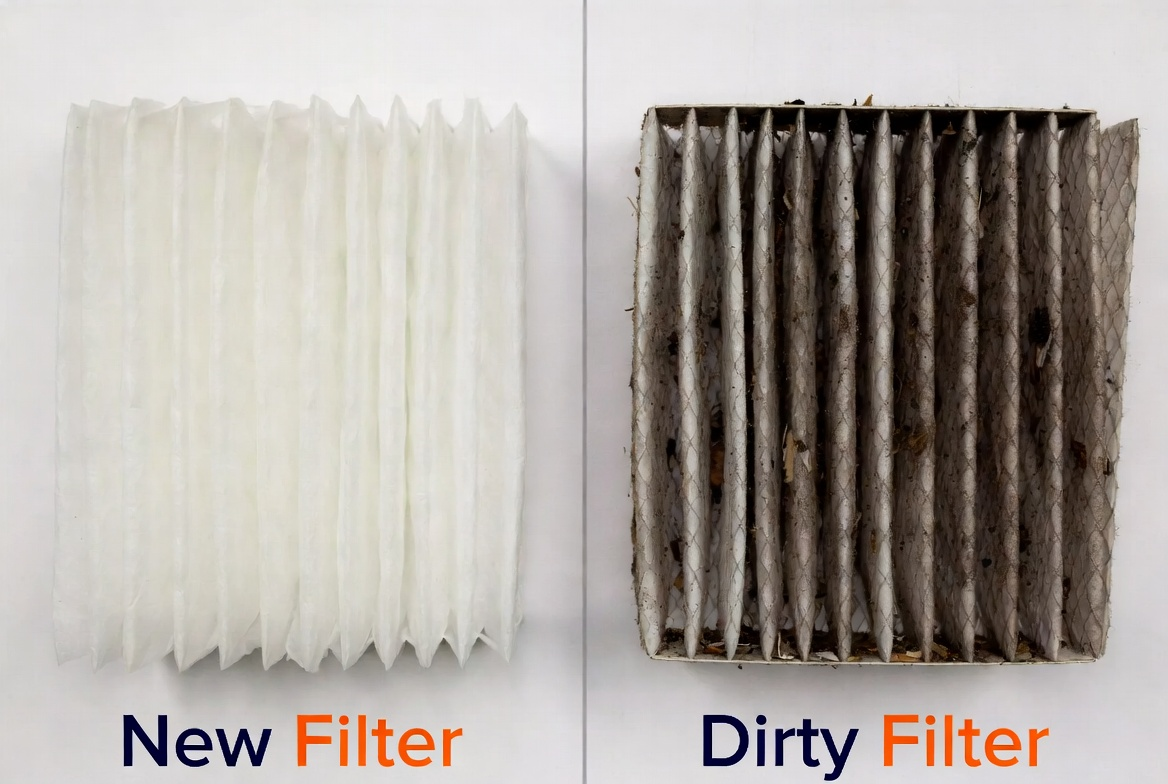
Visually, a new filter is white or light gray. A filter that needs replacing is dark brown to black, noticeably dirty, and may show visible debris lodged in the pleats. Some filters reach the end of their service life by appearance before they hit the mileage interval.
Others look surprisingly clean even at 25,000 miles, depending on driving conditions.
Does a Clean Engine Air Filter Improve Fuel Economy?
Replacing a severely clogged filter with a new one can restore fuel economy that was lost due to restriction. An Oak Ridge National Laboratory study found that on older carbureted engines, a severely clogged air filter reduced fuel economy by up to 14%.
Modern fuel-injected engines handle air restriction differently. The engine management system adjusts fueling to maintain the target air-fuel ratio, which reduces the direct fuel economy loss compared to older carbureted engines. But performance and power loss are still measurable on fuel-injected vehicles.
The short answer: if your filter is genuinely dirty, replacing it will restore performance. Do not expect a dramatic improvement if the old filter was only moderately used.
Does a Performance Air Filter Add Power?
This depends heavily on what else is done to the vehicle. Swapping to a high-flow cotton gauze filter on a stock vehicle typically produces minimal gains. The factory air box and intake ducting are already engineered to provide adequate airflow for the engine's power level.
Where a performance filter makes a measurable difference is in modified vehicles with upgraded camshafts, larger throttle bodies, or other flow-improving modifications. In those cases, the stock filter may genuinely be a restriction.
The honest answer: for a bone-stock daily driver, a K&N or similar filter is unlikely to produce a noticeable performance improvement. It will, however, last far longer than a disposable paper filter if properly maintained.
FAQ
What does an engine air filter do?
An engine air filter removes dust, dirt, pollen, and debris from the air before it enters the combustion chamber. Without it, abrasive particles would cause accelerated wear on cylinder walls, pistons, and piston rings. It is a sacrificial part that gets dirty so the engine stays clean.
How do I know if my engine air filter is dirty?
Pull the filter out and hold it up to a light source. A clean filter is white or pale gray with clearly visible pleats. A dirty filter is brown to black and the pleats may be packed with debris. If you cannot see light passing through the medium, it needs replacing.
Can I drive with a dirty engine air filter?
Short term, yes. Long term, a severely restricted filter will cause reduced power, worse fuel economy, and potentially rough running. It will not cause immediate catastrophic damage, but leaving it too long is not worth the gradual performance loss and risk of debris ingestion if the filter degrades.
Does the engine air filter affect the cabin air?
No. The engine air filter and cabin air filter are completely separate systems. The engine air filter only affects air going into the combustion chamber. The cabin air filter is a different part in a different location and handles air entering the passenger compartment through the HVAC system.
Can I clean and reuse a paper engine air filter?
Gently tapping out loose debris from a paper filter can extend its life briefly in an emergency. It is not a substitute for replacement. Paper filter media is not designed to be washed. Washing a paper filter destroys the filter medium and creates a risk of particles bypassing the filter entirely after reinstallation. Reusable filters like oiled cotton gauze are designed for washing and reuse.
The Bottom Line
The engine air filter is one of the cheapest parts on your vehicle and one of the most important. It keeps abrasive particles out of the combustion chamber and protects the engine's internal surfaces from premature wear.
Check it at every oil change. Replace it on schedule — typically every 30,000 miles — and earlier if you drive in dusty or heavily polluted conditions. It takes five minutes and costs less than a dinner out.