What Is an Air Filter Element? Types and How They Work

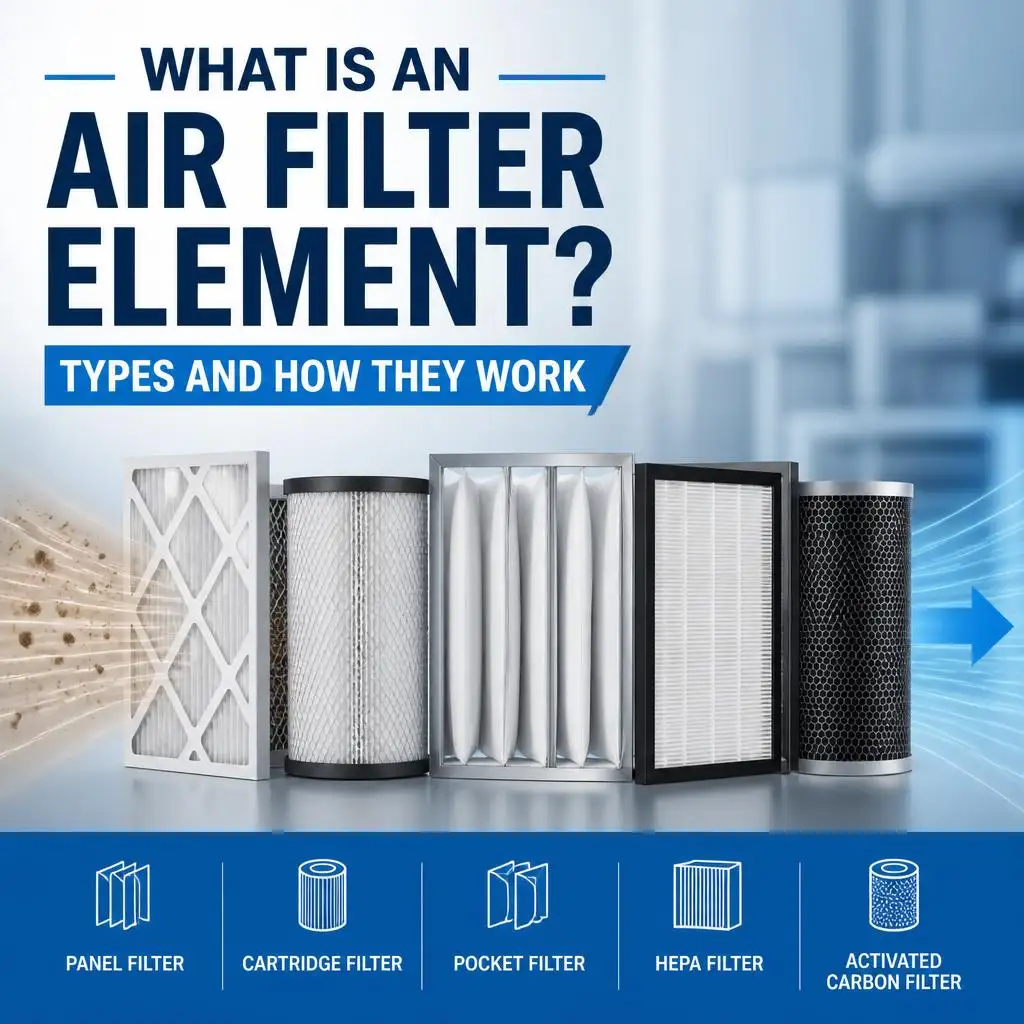
An air filter element is the physical filtration media inside your engine's air filter housing. It is the part that actually traps dust, dirt, pollen, and debris before they can enter the engine. When people say they need to "replace the air filter," the element is what they're replacing.
What Does "Air Filter Element" Mean?
The term "air filter element" refers specifically to the replaceable or cleanable media component inside the air intake system. It is distinct from the housing, which is the plastic box or tube that holds it in place.
In most vehicles, the housing stays in the car permanently. The element comes out for inspection, cleaning, or replacement. This is why some manufacturers call it the "filter element" or "replaceable element" on their parts diagrams.
The word "element" comes from how it functions. It is one element within a larger filtration assembly. Some drivers use "air filter" and "air filter element" interchangeably, and in practice, that's fine. Technically, the element is the media only.
How an Air Filter Element Works
Air from outside the vehicle enters the intake system and passes through the filter element before reaching the engine. As air flows through the media, particles too large to pass through the material's pores get trapped on the surface or within the depth of the media itself.
The key to effective filtration is balancing two competing demands: capturing small particles and allowing enough airflow. A filter that captures everything would also block all air. Engineers design each element to hit a specific balance point based on the engine's needs.
Most elements work through a combination of three mechanisms:
- Impaction: Larger particles traveling in the airstream can't follow the air's path around fibers and collide into them.
- Interception: Medium-sized particles follow the airflow but graze a fiber and get caught.
- Diffusion: Ultra-small particles move erratically (Brownian motion) and bump into fibers by chance.
The Pleated Design
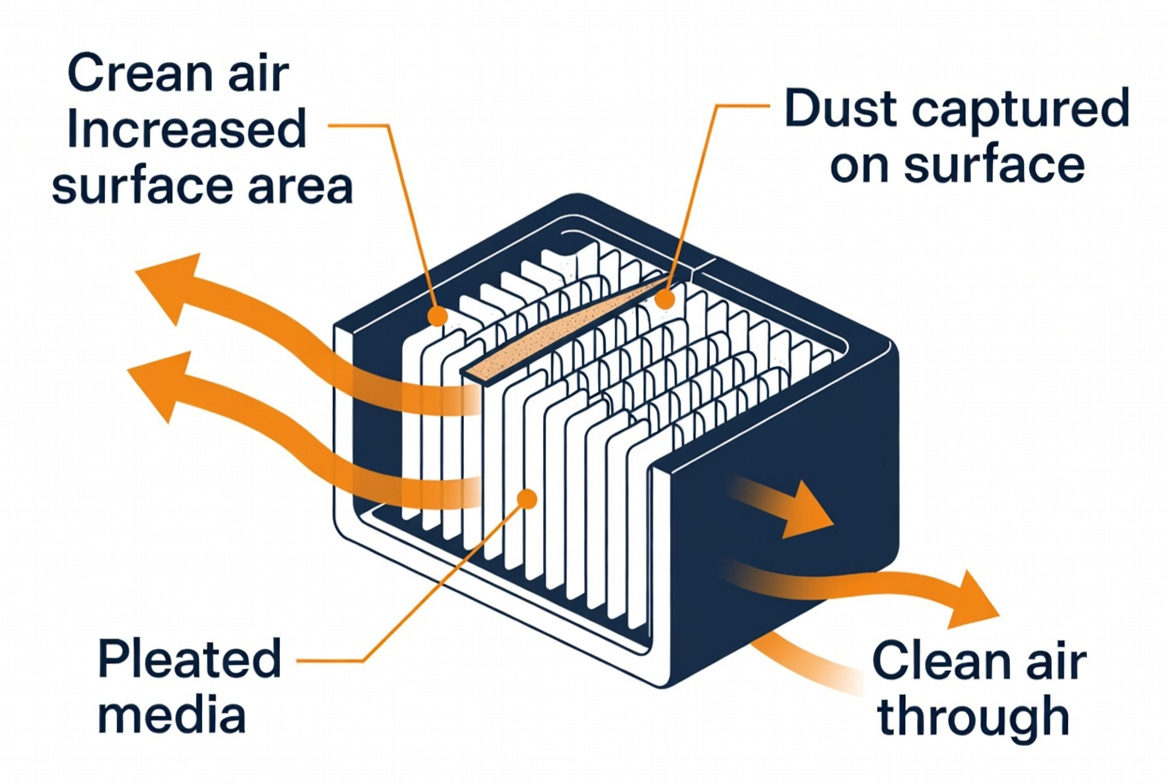
Almost all modern air filter elements use a pleated structure. The media is folded back and forth in accordion-style pleats. This dramatically increases the total surface area of the filter without increasing its footprint.
More surface area means more filtration capacity and longer service life before the element becomes clogged. A flat sheet of filter media the same size as a pleated element would clog far faster under the same conditions.
Types of Air Filter Elements
Not all elements are built from the same material. The type of media determines filtration efficiency, airflow restriction, service life, and whether the element is disposable or reusable.
Which Car Air Filter is Best? Let's find out! Fram, K&N, Wix, Purolator, & AC Delco showdown
Paper (Cellulose) Air Filter Elements
Paper elements are the most common type used in factory-fitted vehicles. Despite the name, automotive filter paper is not office paper. It is a specially engineered cellulose fiber media treated to maintain its structure when wet and to hold a specific pore size distribution.
The advantages of paper elements are consistency and cost. They are inexpensive to manufacture, reliably effective, and designed to last a specific interval before replacement. Most manufacturers specify replacement every 15,000 to 30,000 miles.
The drawback is that paper elements are single-use. Once they reach capacity or get wet, they must be replaced.
Cotton Gauze Air Filter Elements
Cotton gauze elements use multiple layers of cotton fabric sandwiched between two wire mesh screens. The media is oiled to improve particle capture. As air passes through, dust and particles stick to the oiled cotton strands.
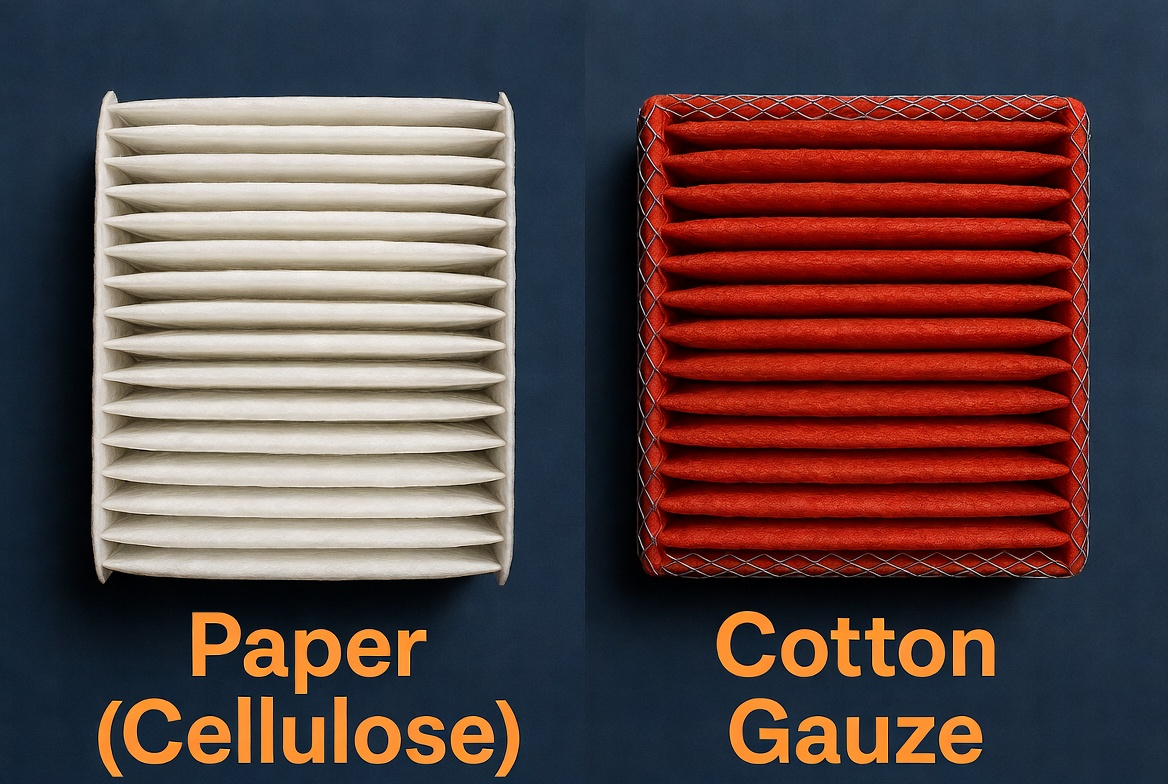
K&N is the most well-known manufacturer of cotton gauze elements. The key claimed advantage is longevity. K&N states their filters are designed to last up to 50,000 miles between cleanings in normal conditions, which is significantly longer than paper.
Cotton gauze elements are also reusable. When they become dirty, you clean them with a dedicated cleaning kit, re-oil them, and reinstall them.
The tradeoffs: cotton gauze elements cost significantly more upfront ($50 to $75 vs. $15 to $50 for paper). They also require periodic maintenance. And there is ongoing debate about whether they provide meaningful power gains in stock, naturally aspirated engines.
Synthetic (Polyester) Air Filter Elements
Some premium replacement filters use synthetic polyester fibers instead of cellulose. Manufacturers like FRAM and Purolator use synthetic blends in their higher-tier products.
Synthetic media is more moisture-resistant than cellulose and can maintain its structure better in humid or high-precipitation environments. Some synthetic elements are also rated for extended service intervals compared to standard paper.
The filtration efficiency of synthetic elements can vary widely. Check the micron rating before assuming a synthetic filter is automatically better than a paper one.
Foam Air Filter Elements
Foam elements are most common in powersports (ATVs, dirt bikes, motorcycles) and older vehicles. They consist of open-cell polyurethane foam, usually pre-oiled.
Foam filters offer good filtration in dusty, off-road environments because the foam can hold a high volume of debris before airflow is compromised. They are also easy to clean and re-oil in the field.
For street vehicles, foam elements are less common because pleated paper and cotton gauze typically offer better filtration consistency and are easier to engineer to exact specifications.
Panel vs. Cone vs. Cylindrical Elements
The shape of the element depends on the housing it's designed to fit.
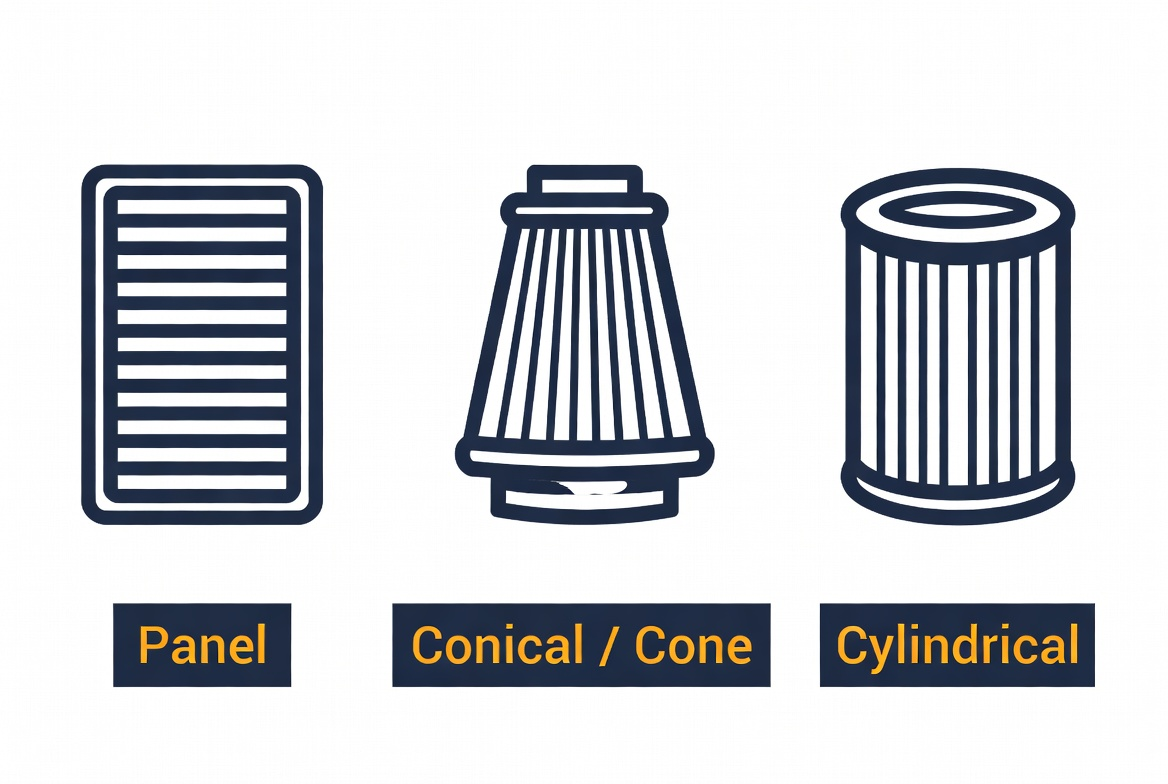
Panel elements are flat, rectangular filters that fit inside a flat airbox. This is the most common form factor for factory replacements in modern cars and trucks.
Cone or conical elements are used in performance cold air intake and short ram intake systems. They sit at the end of an intake tube rather than inside a box. K&N, aFe, and Injen make popular cone filters.
Cylindrical elements are round tube-shaped filters used in some older vehicles and certain aftermarket intake setups. They were also common in older British and European vehicles with SU or Weber carburetors.
The shape affects airflow dynamics and how the element interfaces with the housing. Replacing a panel element with a cone filter requires a full intake system replacement, not just a filter swap.
What Air Filter Elements Are Rated For
When comparing elements, three specifications matter most:
A filter that is 99% efficient at 20 microns will capture 99 out of every 100 particles 20 microns or larger. That remaining 1% passes through. For context, engine cylinder bore tolerances are typically in the range of a few microns, so fine particle infiltration over time contributes to wear.
Paper vs. Cotton Gauze: Which Air Filter Element Is Better?
This is the question most readers arrive with. The answer depends on what you want from a filter.
Are K&N Filters ACTUALLY An Upgrade? Why I'm Switching Back To Paper:
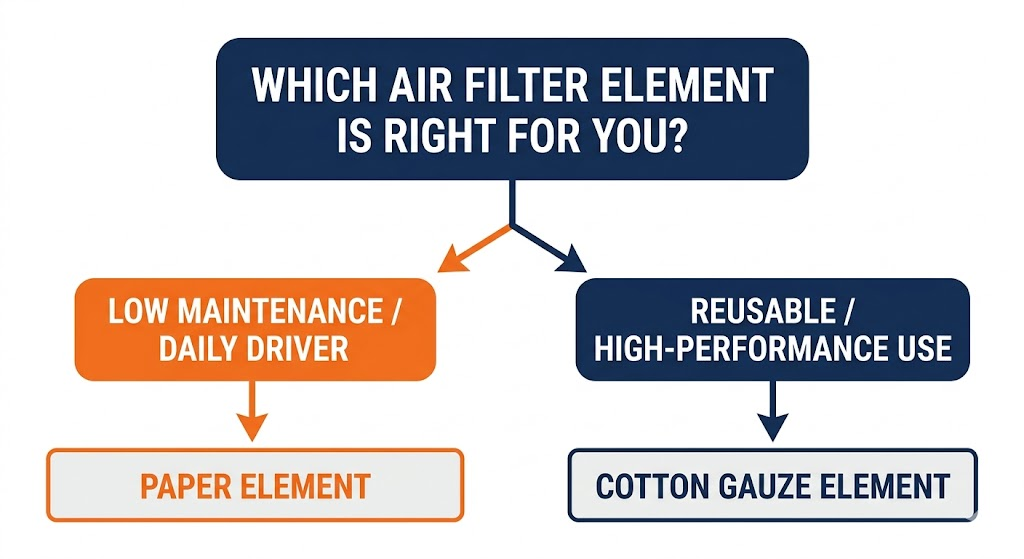
Choose paper if:
- You want the simplest, lowest-maintenance solution
- Your vehicle is used for normal daily driving
- You change the filter on schedule and don't want to think about it again
Choose cotton gauze if:
- You want a long-service reusable filter
- You're comfortable cleaning and re-oiling it every 50,000 miles
- You have a modified engine or forced induction where airflow matters more
For the vast majority of stock, naturally aspirated daily drivers, a quality paper element from a reputable manufacturer provides excellent engine protection at the lowest cost and effort.
The performance gains marketed for cotton gauze filters are real in certain high-demand applications. In a stock engine at normal driving loads, the difference is small enough to be irrelevant.
What Happens If You Drive Without an Air Filter Element?
Without a filter element, unfiltered air flows directly into the engine. Dust, sand, pollen, and road debris enter the intake manifold, mix with fuel, and pass through the combustion chamber.
Abrasive particles score the cylinder walls, accelerate piston ring wear, and contaminate the oil. The damage is progressive. In light use on clean roads, the impact in the short term may be minimal. In dusty conditions or over extended distances, significant wear can accumulate quickly.
Driving without a filter element even briefly is not recommended. If an element is due for replacement and you don't have a new one, it is better to reinstall the old dirty element than to drive with none at all.
When to Replace vs. When to Clean an Air Filter Element
The answer depends entirely on the type of element:
Paper elements: Replace, never clean. Water, compressed air, or chemicals damage the media structure and reduce filtration effectiveness. Replace at the manufacturer's interval or sooner if visually very dirty.
Cotton gauze elements: Clean and re-oil at the manufacturer's recommended interval. Do not use generic cleaners. Use the kit designed for the brand (K&N 99-5050 kit for K&N filters, for example). Allow to fully dry before re-oiling and reinstalling.
Foam elements: Clean with mild soap and water, allow to dry completely, then re-oil with foam filter oil before reinstalling.
If you're unsure what type of element is in your vehicle, check the part number against the manufacturer's website or your vehicle's owner's manual.
FAQ
What is an air filter element in a car?
An air filter element is the replaceable filtration media inside your engine's air intake system. It traps dust, pollen, and debris before they can enter the engine. The element is the part that gets replaced or cleaned at service intervals. The housing it sits in typically stays in the vehicle permanently.
What are the different types of air filter elements?
The main types are paper (cellulose), cotton gauze, synthetic polyester, and foam. Paper elements are the most common factory-fit type and are disposable. Cotton gauze elements, like those made by K&N, are reusable and cleanable. Synthetic elements are used in some premium replacement filters. Foam elements are mostly found in powersports and older vehicles.
Can you clean a paper air filter element?
No. Paper air filter elements should not be cleaned and reused. Compressed air, water, or cleaning agents damage the cellulose media structure, reducing filtration efficiency. A paper element that looks dirty should be replaced, not cleaned.
How long does an air filter element last?
Standard paper elements typically last 15,000 to 30,000 miles under normal driving conditions. Dusty or harsh environments shorten that interval significantly. Reusable cotton gauze elements can last up to 50,000 miles between cleanings when properly maintained.
Does the air filter element affect fuel economy?
A severely clogged air filter element can reduce fuel economy by restricting airflow to the engine. The engine compensates by drawing harder, which can enrich the fuel mixture and reduce efficiency. Replacing a heavily contaminated filter restores normal airflow. The impact of a new, free-flowing performance element on a stock engine is typically minimal.
Keeping the air filter element in good condition is one of the most cost-effective forms of engine protection available. Whether you prefer a simple paper element changed on schedule or a reusable cotton gauze filter maintained every 50,000 miles, the goal is the same: clean air in, cleaner engine over time.