How to Drain Water From a Diesel Fuel Filter

Water in a diesel fuel system is one of the fastest ways to destroy expensive injectors. The fix is simple: open the drain valve on your fuel filter water separator, let the water out, and close it again. The whole process takes under five minutes. This guide walks you through exactly how to do it, why it matters, and how to tell when it needs doing.
Why Does Water Get Into a Diesel Fuel Filter?
Diesel fuel picks up water at almost every point in its journey to your tank. Condensation forms inside storage tanks as temperatures swing between day and night. Water settles to the bottom of underground fuel tanks at filling stations, especially during wet seasons. Fuel itself is hygroscopic at trace levels, meaning it absorbs moisture from humid air over time.


Once water enters the tank, it sinks. Diesel and water do not mix. Water sits below the fuel layer and gets drawn into the fuel lines first. That is why diesel engines have a dedicated water separator built into the fuel filter system.
How Does a Diesel Fuel Water Separator Work?
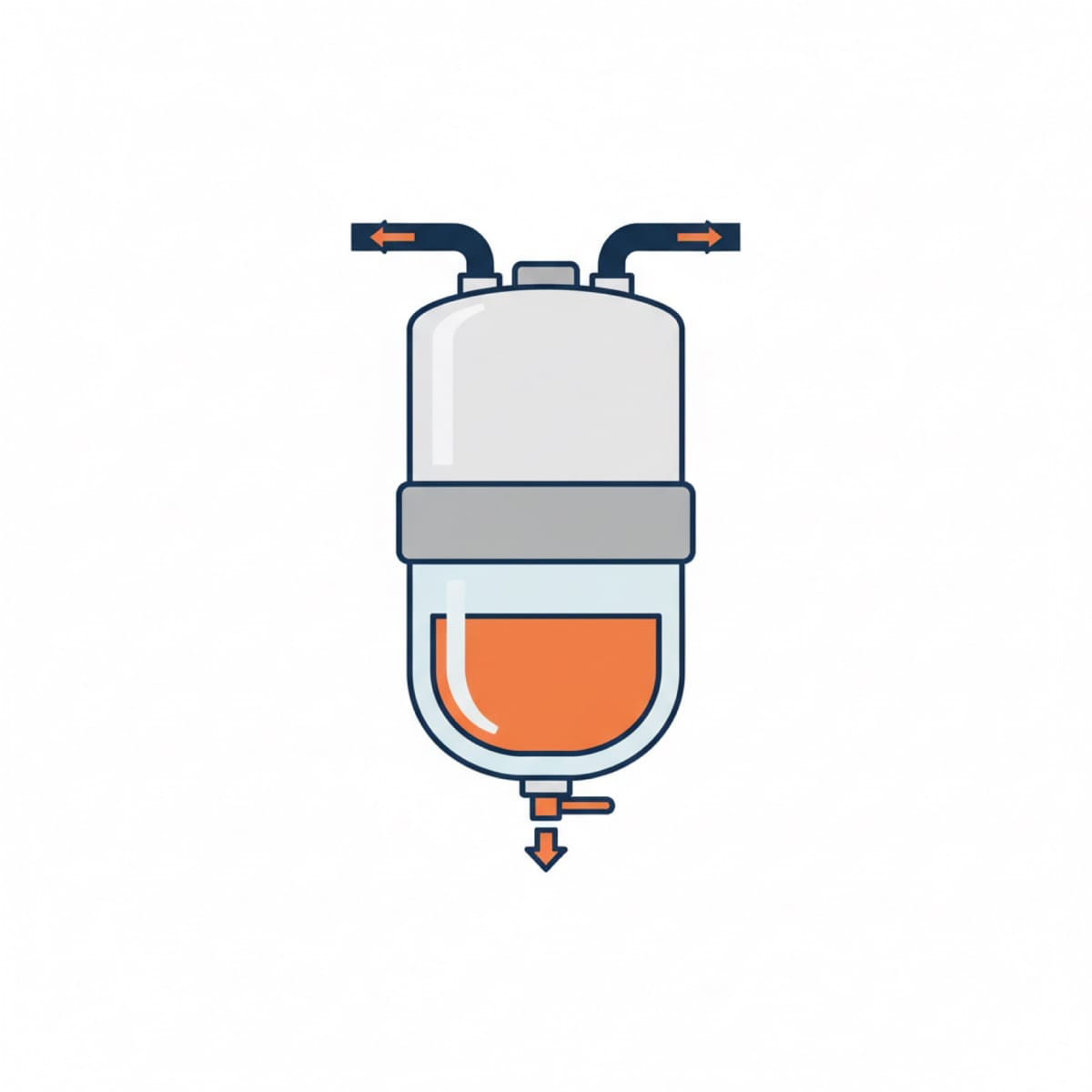
A diesel fuel water separator is either a standalone canister or a chamber integrated into the main fuel filter housing. Fuel flows in from the top or side. The centrifugal flow pattern and gravity do the separation work: water molecules are denser than diesel, so they drop to the bottom of the bowl while clean fuel continues toward the engine.


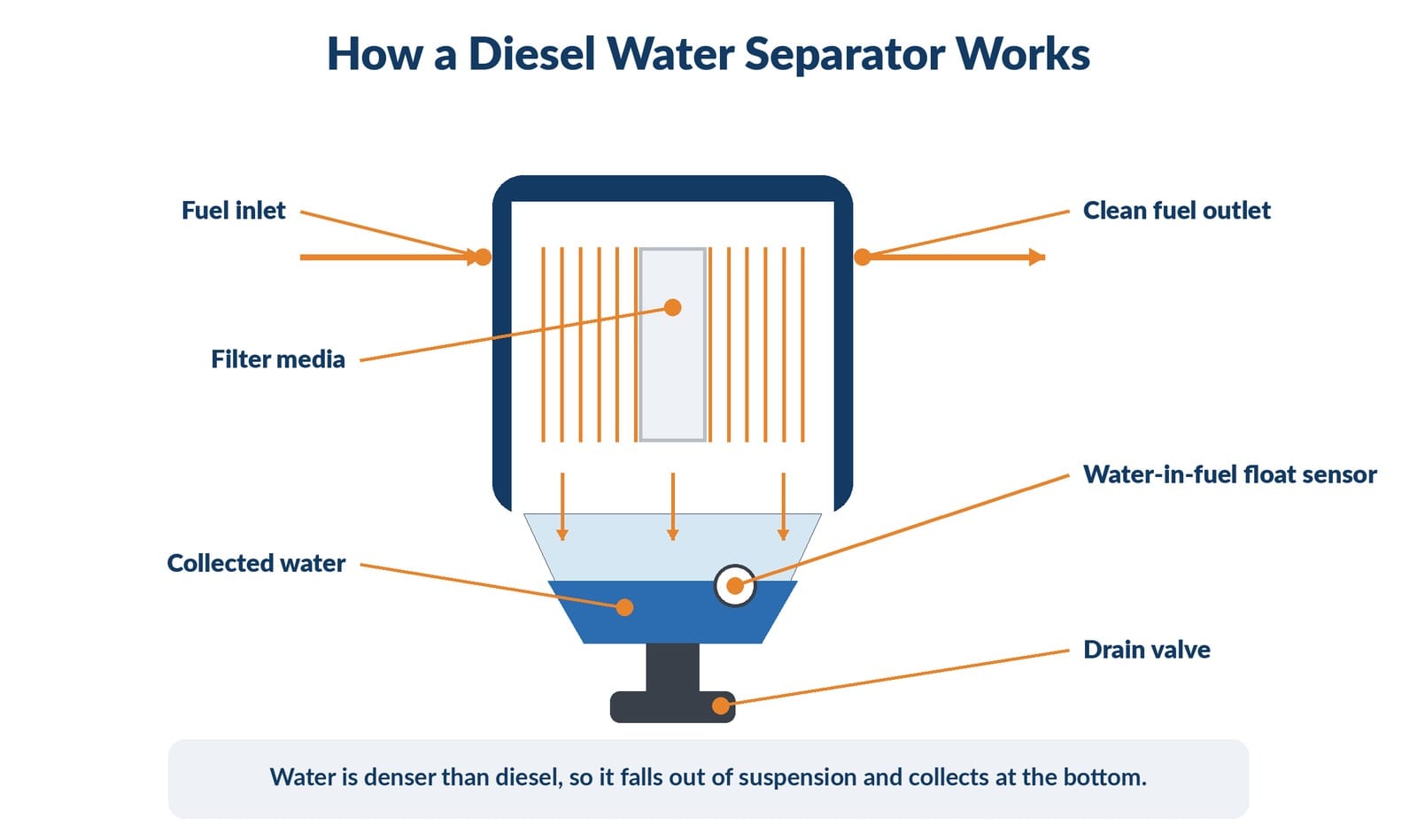
The bowl accumulates water until it reaches a sensor or a fill line. A float-type sensor triggers the warning light when water hits a set level. The drain valve at the bottom of the bowl lets you remove that collected water without opening any fuel lines.
What Does the Water in Fuel Warning Light Mean?
The water in fuel warning light, sometimes labeled WIF, means your fuel filter's water separator bowl has accumulated enough water to trigger the float sensor. On most diesels this light appears on the instrument cluster. It may look like a filter with water droplets, or it may just say "Water in Fuel" in text.


When this light comes on, stop driving as soon as safely possible. Continuing to run the engine after the WIF light triggers pushes water past the separator and into the fuel lines, high-pressure pump, and injectors.
Should You Drive With the Water in Fuel Light On?
No. The light exists precisely because water damage to diesel injectors is both fast and expensive. Even a small amount of water reaching a common rail injector can cause scoring, corrosion, and loss of spray pattern precision. Draining the water separator is a five-minute roadside fix. Replacing a diesel injector is not.
What You Need Before You Start
- A drain pan or catch container
- Shop rags or paper towels
- Nitrile gloves (diesel fuel irritates skin)
- Optionally: a small wrench if your drain valve is bolt-style rather than hand-turn
Most light-duty diesel pickups (Ford Power Stroke, Ram/Dodge Cummins, GM Duramax) have a hand-turn drain valve at the bottom of the filter housing. Heavy-duty and commercial applications often use a bolt-style drain plug. Check your owner's manual for your specific setup.
How to Drain Water From a Diesel Fuel Filter: Step-by-Step
Step 1: Turn the Engine Off
Turn off the ignition and let the fuel system pressure drop. On most diesel systems this happens in under 30 seconds. There is no need to bleed pressure manually for a drain procedure. The water separator bowl is below the high-pressure circuit.
Step 2: Locate the Water Separator Bowl
The fuel filter and water separator are typically found near the engine on the firewall side, or integrated into the fuel filter housing mounted to the engine block. On Ford Power Stroke engines, the housing is on the driver's side of the engine bay near the valve cover. On Cummins B-series engines, it is usually mounted on the engine block itself. On Duramax engines, it is in the filter canister housing near the top of the engine.
If you are unsure, follow the fuel line from the tank toward the engine. The filter housing is the first large canister it enters.
Step 3: Position Your Drain Pan
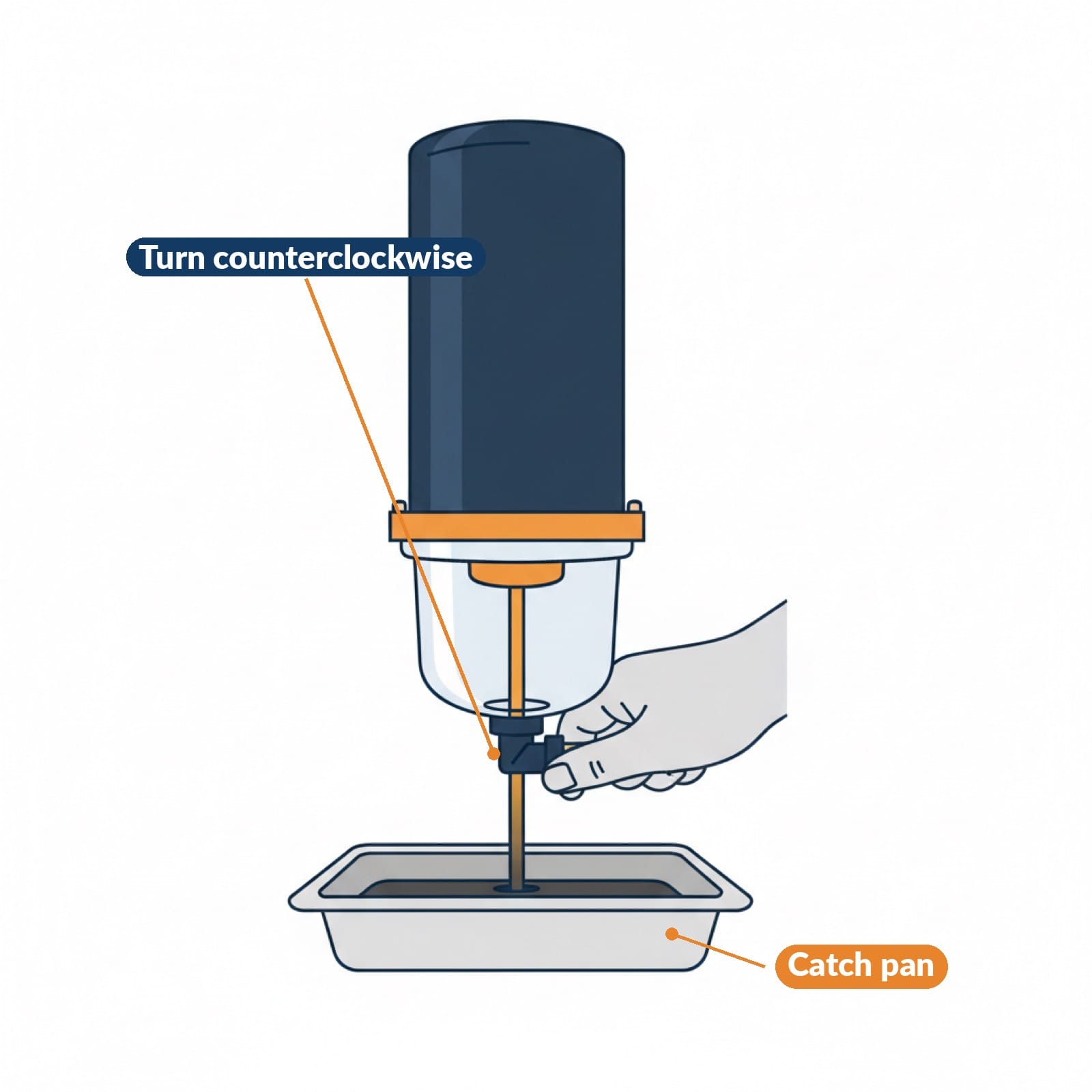
Place the drain pan directly under the drain valve at the bottom of the separator bowl. The bowl on most factory housings holds between 100 and 250 ml of fluid. Have rags ready.
Step 4: Open the Drain Valve
Hand-turn valve: Rotate the valve counterclockwise 2 to 3 full turns. Do not remove it completely. Fluid will begin draining immediately.
Bolt-style drain plug: Use a wrench to loosen the plug 2 to 3 turns counterclockwise. Keep the plug in place. Fluid will drain around the threads.
Let the fluid drain until it runs clear diesel. When it first starts draining you will likely see darker or milky fluid. That is the water and water-diesel emulsion. Once the stream runs clear amber, the water is gone.
Step 5: Close the Drain Valve
Turn the valve clockwise until snug. Hand-turn valves do not need tools. Bolt-style plugs should be snugged with a wrench but not torqued aggressively. Most diesel filter housings use plastic threads on the drain. Overtightening cracks them.
If your valve has a factory-specified torque, it will be listed in your owner's manual. For most hand-turn drain valves, finger-tight plus a quarter-turn is the correct spec.
Step 6: Prime the Fuel System
Some diesel engines require priming after any fuel system service. If your vehicle has a manual primer pump (a small button or bulb on or near the filter housing), pump it until you feel resistance. This is usually 10 to 20 pumps.
On vehicles without a manual primer, cycle the ignition key to the "on" position (without cranking) for 15 to 20 seconds, then switch off. Repeat 2 to 3 times. This runs the lift pump and refills the filter housing before you start the engine.
Step 7: Start the Engine and Check for Leaks
Start the engine. Watch the drain valve for any drips for the first 60 seconds. If the valve weeps, tighten it slightly. The water in fuel warning light should go off within the first minute once the float sensor drops below the trigger threshold.
If the WIF light stays on after draining, the bowl may have refilled quickly (indicating a contaminated fuel supply) or the sensor itself may be faulty. Repeat the drain and check again.
How Often Should You Drain a Diesel Fuel Water Separator?
Drain the water separator every time the warning light comes on. Between light triggers, many manufacturers recommend inspecting or draining the separator on the same schedule as the fuel filter replacement. Some recommend a monthly drain regardless of the WIF light. The exact schedule varies by engine, so the table below and your owner's manual are your best references.
If you regularly fuel from the same station, you will get a feel for how quickly the bowl fills. Rural diesel stations with high tank turnover tend to have cleaner fuel. Older or less-trafficked stations accumulate more water at the bottom of their storage tanks. In wet climates, condensation contributes more year-round.
Draining for Diesel Trucks: Specific Intervals
| Truck | Filter / WIF Drain Interval | Notes |
|---|---|---|
| Ford 6.7L Power Stroke | Drain monthly or when WIF light illuminates; replace filter every 22,500 miles (normal) / 15,000 miles (severe service) | Manual primer pump on housing |
| Ram 6.7L Cummins | Primary filter every 15,000 miles or when WIF light illuminates | Dual-filter system; secondary filter at 30,000 miles |
| GM 6.6L Duramax | Every 22,500 miles (2011+) or when WIF light illuminates | 2001–2010 models: every 15,000 miles |
| Ford 7.3L & 6.0L Power Stroke | Every 15,000 miles or when WIF light illuminates | Check both primary and secondary filter on 6.0L |
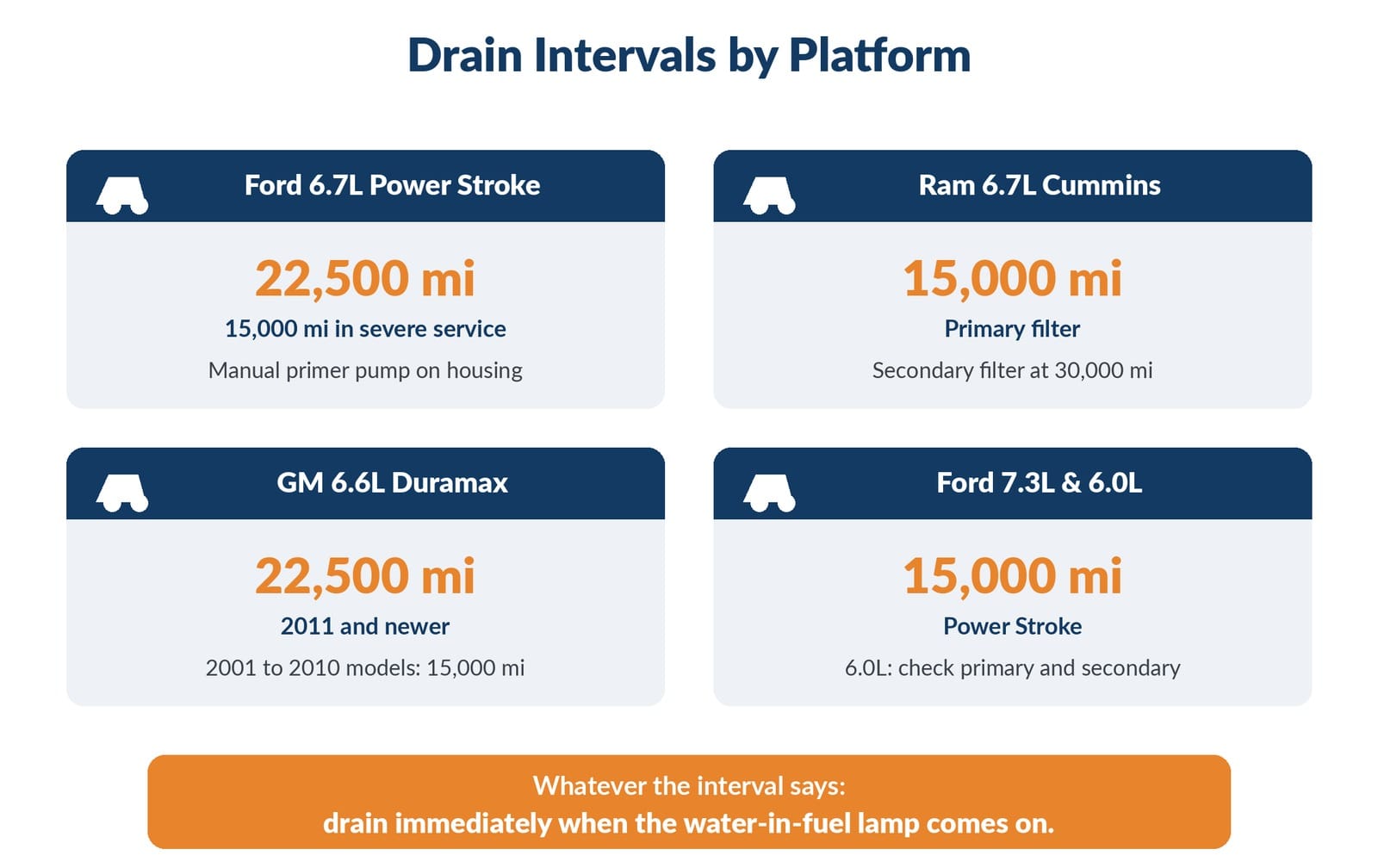
These are baseline intervals. Consult your owner's manual for your model year's exact specification.
What Happens If You Don't Drain Water From a Diesel Fuel Filter?
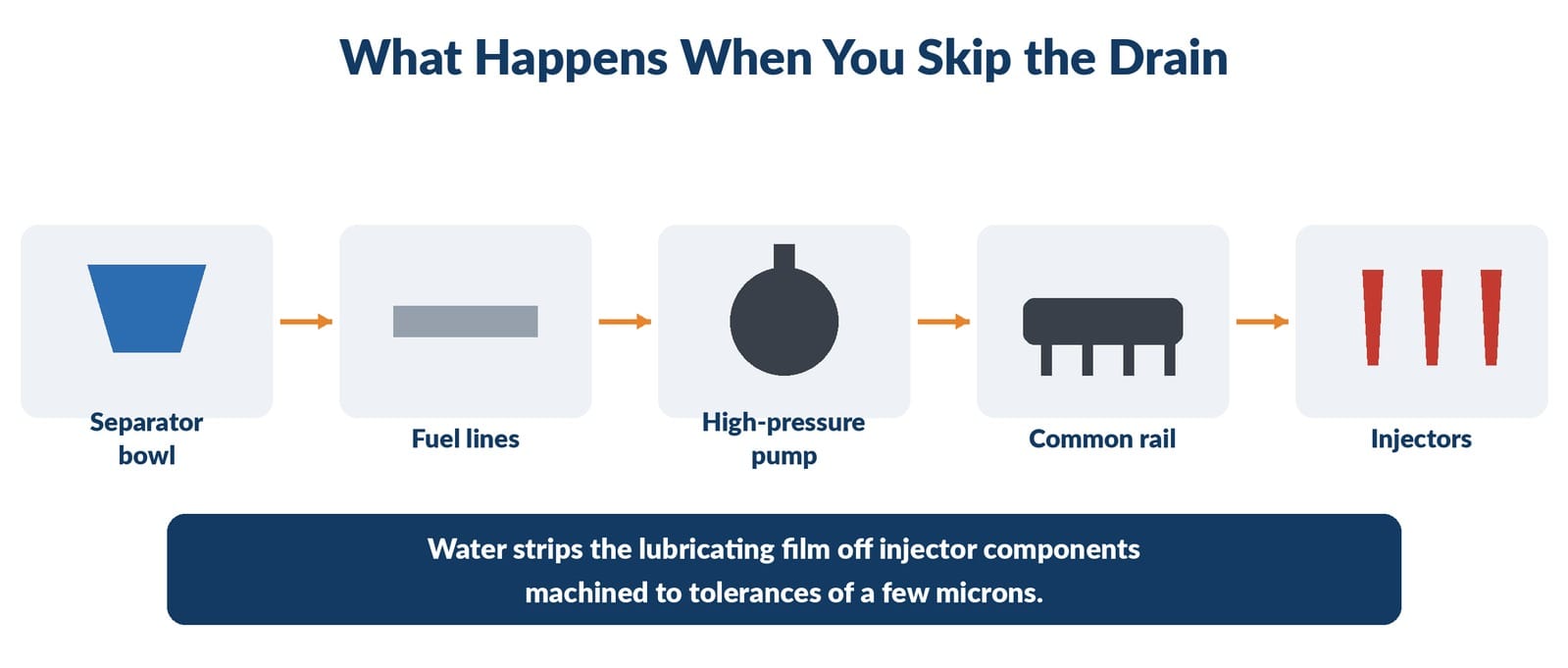
Water that is not drained continues to accumulate until the separator bowl overflows. Once it overflows, water enters the fuel lines and moves through the system with every engine cycle. The engine symptoms that follow often look identical to a clogged fuel filter.
Water Damage to Diesel Fuel Injectors
Diesel fuel injectors are precision components with internal tolerances measured in microns. Water is not a lubricant. When water reaches common rail injectors operating at pressures up to 36,000 PSI, it causes immediate cavitation damage to the nozzle tips and internal control valves. Corrosion follows quickly.
A single injector replacement on a common rail diesel typically runs $500 to $1,200 per injector including labor, and a full set of six or eight injectors can reach $3,000 to $6,000 or more. Draining a $5 separator bowl is not optional maintenance.
Water Damage to the High-Pressure Fuel Pump
The high-pressure fuel pump in a common rail diesel relies on diesel itself for lubrication. Water strips that lubrication and accelerates wear on pump internals. On vehicles like the 6.7L Power Stroke with a CP4 high-pressure pump, a failure from water contamination can trigger a full fuel system flush and injector replacement, with total repair bills reaching $5,000 to $10,000. On some Power Stroke and Duramax applications, pump failure contaminates the entire fuel system with metal debris, requiring full injector replacement at the same time.
Microbial Growth
Water sitting in a diesel fuel tank creates an environment for microbial growth, commonly called diesel bug. Bacteria and fungi breed at the fuel-water interface and produce acidic waste that corrodes tank walls, fuel lines, and injector components. Treating a contaminated system requires biocide additives and a full tank drain, which is far more involved than regular separator maintenance.
Can You Drive While Draining a Diesel Water Separator?
No. The drain procedure requires the engine to be off. More practically, you would lose fuel out the open drain valve immediately. This is a parked, engine-off service. It takes under five minutes and can be done at a truck stop if the WIF light comes on during travel.
What If the Drain Valve Is Stuck or Leaking?
Stuck valve: Apply penetrating oil to the base of the valve and let it sit for 10 minutes before attempting to turn again. Do not use excessive force. Many factory drain valves are plastic. Broken drain valves require housing replacement or a threaded repair insert.
Leaking valve after service: If the valve weeps after closing, check that the threads are fully engaged. On bolt-style plugs, check the sealing washer. A copper washer that has been reused too many times will not seal properly. Replace the washer before reinstalling.
Valve that will not stop leaking: Replace the drain valve. Factory valves are available from dealers and are typically under $20. Do not apply thread sealant to a hand-turn drain valve. It is not designed for it and will make future draining impossible.
FAQ
What does milky or dark fluid mean when I drain my diesel fuel filter? Milky fluid means water has emulsified with diesel, creating a cloudy mixture. Dark fluid often means the accumulated water has pulled contaminants down from the fuel. Both are normal during the drain. Keep draining until the fluid runs clear amber. If the fluid is consistently milky in large amounts, your fuel supply may have a significant water contamination problem.
Can I drain the water separator while the engine is running? No. Turn the engine off before opening the drain valve. Diesel fuel systems maintain pressure in the supply lines, and while the low-pressure side of the separator is not high-pressure, opening any fuel fitting on a running engine risks fuel spray and fire.
How long does it take to drain a diesel fuel water separator? The drain typically takes 1 to 3 minutes. Most separator bowls hold under 250 ml of fluid. If yours is taking much longer, you have a very full bowl or a restricted drain valve.
Do I need to bleed air after draining the water separator? Some diesel systems require priming after the drain if air entered the housing. Vehicles with a manual primer pump (a small button on the filter housing) should be pumped until resistance is felt. Those without should cycle the key on and off 2 to 3 times before cranking to allow the lift pump to prime the system.
Why does my water in fuel light keep coming back on? Frequent WIF light triggers mean your fuel supply contains consistent water contamination. Common causes: a cracked or corroded fuel tank allowing rainwater intrusion, extreme daily temperature swings causing condensation in a near-empty tank, or a fuel station with a compromised storage tank. Fuel additives with demulsifiers can help short-term, but the root cause needs to be addressed.
Keeping Water Out of Your Diesel Fuel
The best long-term strategy is a combination of regular draining when prompted, keeping your fuel tank reasonably full to reduce condensation space, using a quality diesel fuel additive with a demulsifier on a seasonal basis, and fueling from high-turnover diesel stations that cycle their underground tanks frequently.
Regular separator maintenance is the single cheapest thing you can do to protect a diesel fuel system. The cost of ignoring it is always measured in injectors.