What Does a Fuel Filter Do and How Does It Work?

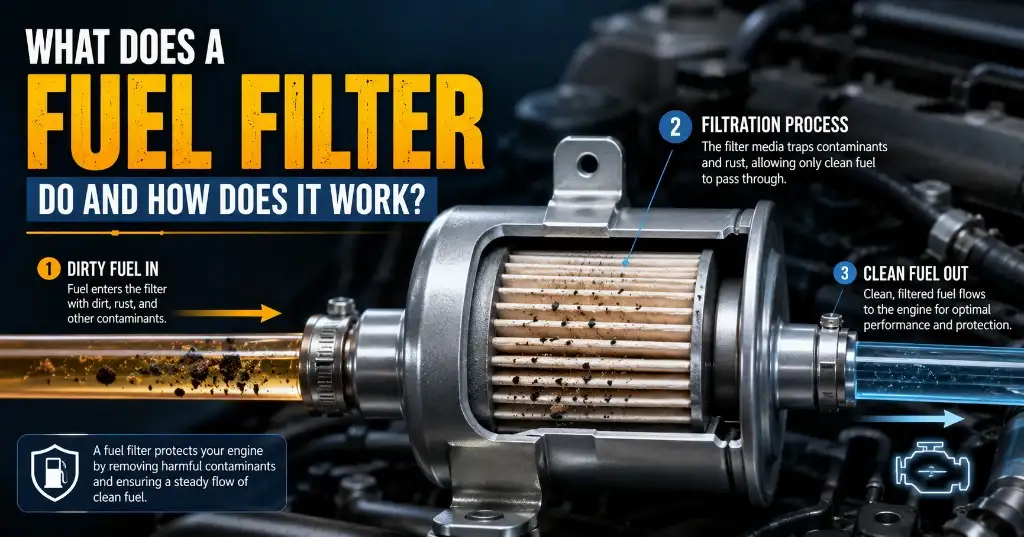
A fuel filter removes contaminants from gasoline or diesel before it reaches the engine. It catches rust particles, dirt, water, and manufacturing debris that enter the fuel supply. Without it, those particles would reach the fuel injectors and fuel pump, causing misfires, power loss, and expensive component failures.
What Does a Fuel Filter Actually Do?
The fuel filter sits in the fuel line between the fuel tank and the engine. Every drop of fuel that reaches the injectors passes through it first.
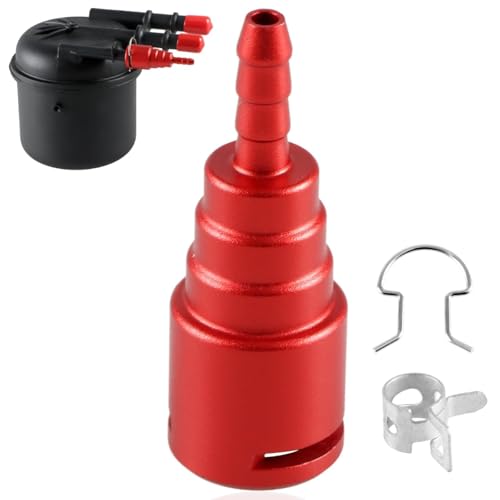


Its job is simple: trap particles so they never reach precision fuel system components. Fuel injectors spray through openings as small as a few microns. Any debris that reaches those openings causes restriction, misfires, or permanent damage.
The filter does this continuously, for thousands of miles, without moving parts. It is one of the most straightforward components on the car, and one of the most consequential when neglected.


What Contaminants Does Fuel Contain?
Gasoline and diesel are not perfectly clean liquids. They pick up contamination from multiple points along the supply chain.
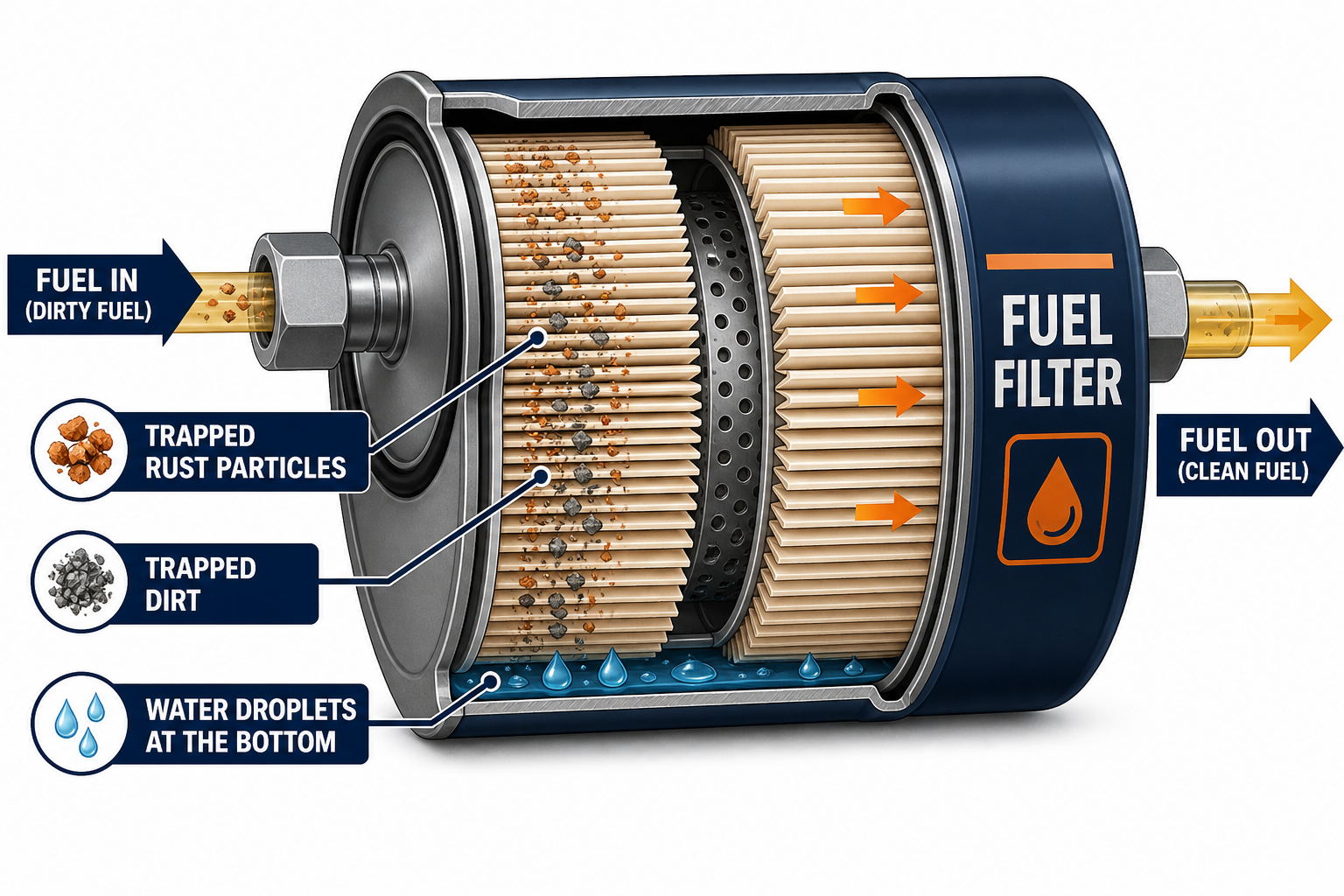
Rust and scale form inside steel fuel tanks, especially as cars age and moisture cycles in and out. Small rust flakes break free and travel with the fuel.


Dirt and dust enter at the pump nozzle during refueling. Even a brief exposure introduces particles that settle into the tank.
Water enters through condensation inside the fuel tank. Temperature swings cause moisture from the air to condense on the tank walls and mix into the fuel. Water is especially damaging in diesel systems, where it causes corrosion and microbial growth.


Manufacturing debris from metal fuel lines, fittings, and tank components can shed small particles, especially on newer vehicles in the break-in period.
Fuel degradation byproducts form as gasoline oxidizes over time, producing varnish deposits and gum that can clog passages.


How Does a Fuel Filter Work?
A fuel filter is a sealed canister containing a filter element. Fuel enters through one port, passes through the element, and exits through the other port in a cleaner state.
The Filter Element
The element inside the canister is typically made from pleated cellulose paper, synthetic fiber, or a combination of both. The pleating maximizes surface area in a compact space. More surface area means more capacity to hold trapped particles before the filter becomes restrictive.
As fuel flows through the element, particles larger than the filter's rated pore size get trapped in the media. The fuel passes through. The particles stay behind.
Micron Ratings in Fuel Filters
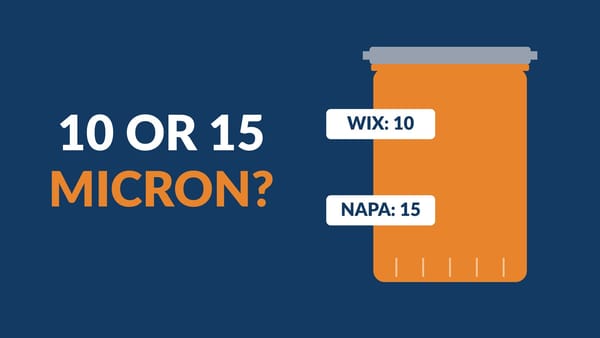
Fuel filters are rated in microns. A 10-micron filter captures particles 10 microns and larger. A 30-micron filter has coarser filtration.
Finer is not always better. A 10-micron filter offers more protection but clogs faster. Many OEM fuel system designs use a two-stage approach: a coarser pre-filter (often inside the fuel tank as part of the pump assembly) handles large debris, and a secondary inline filter provides finer filtration downstream.
Diesel systems typically require finer filtration than gasoline systems because diesel fuel injection operates at far higher pressures. Modern common rail diesel injection systems operate at pressures up to 36,000 PSI, and tolerances at the injector tip are extremely tight.
What Happens When Flow Is Restricted?
Unlike oil filters, fuel filters do not typically include a bypass valve. When a fuel filter becomes severely clogged, the restriction simply grows until flow drops below what the engine demands.
The fuel pump compensates by working harder to push fuel through the blocked element. This sustained strain damages the pump over time. Eventually, the engine starves of fuel entirely. There is no safety bypass that keeps fuel flowing around a clogged filter element, which is why timely replacement matters.
Where Is the Fuel Filter Located?
Fuel filter location varies by vehicle generation and fuel system design. There are two main configurations.
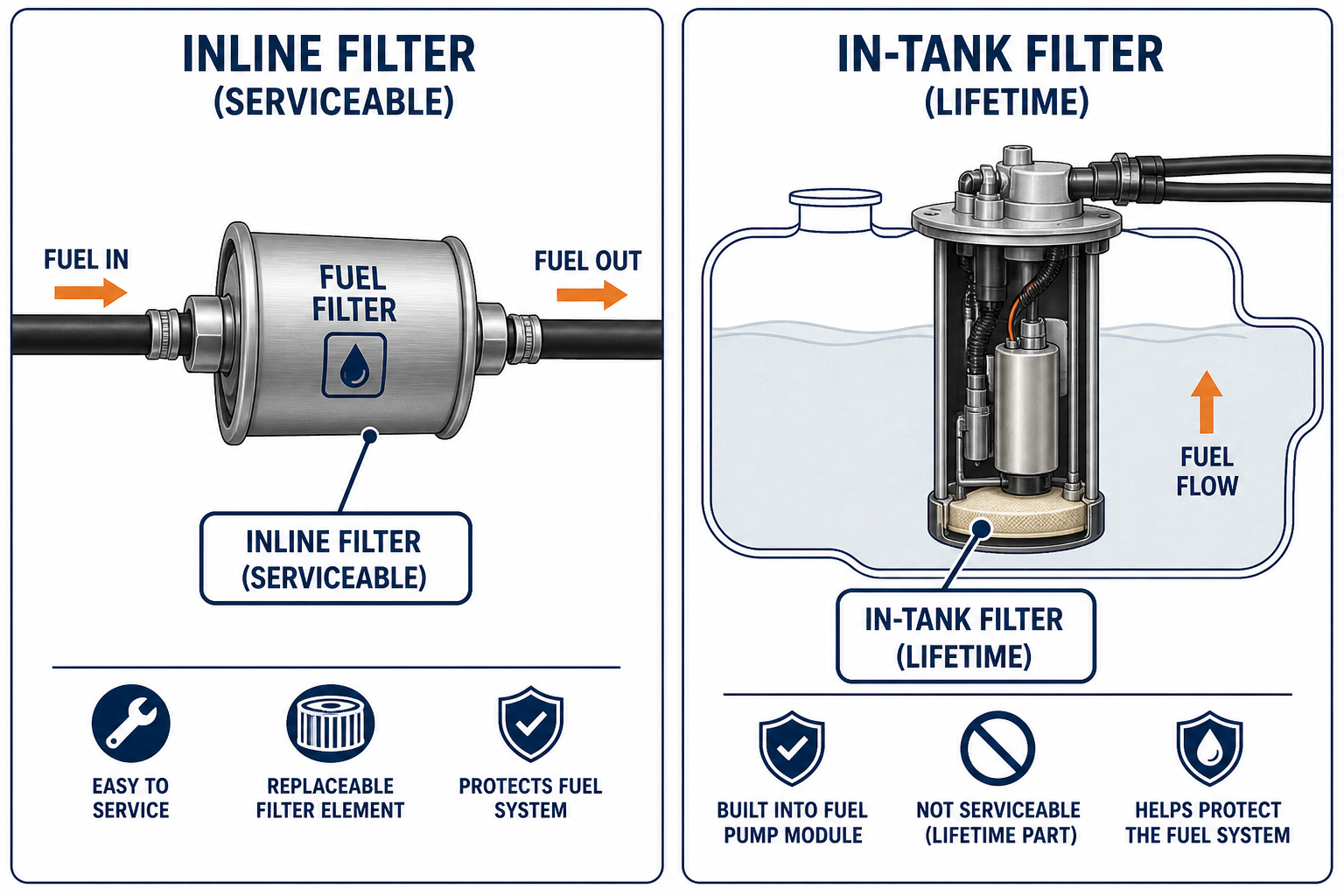
Inline Fuel Filter (External)
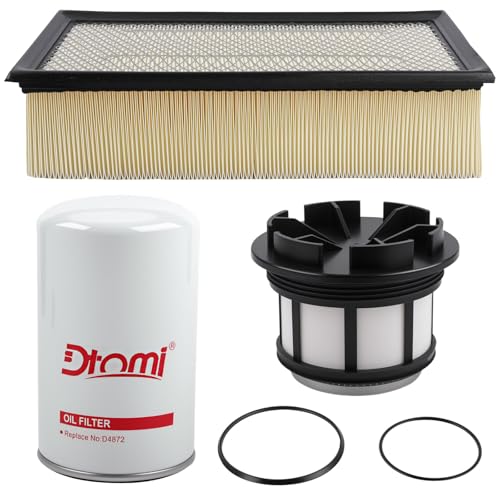
On older vehicles and many trucks, the fuel filter is an external inline component. It sits somewhere in the fuel line between the tank and the engine, often along the frame rail, under the hood near the firewall, or beneath the vehicle near the tank.
Inline filters are the traditional design. They are accessible, relatively easy to service, and replaced as a standalone component at a known interval.
In-Tank Fuel Filter (Integrated with the Pump)
On most vehicles built since the late 1990s and 2000s, the fuel filter is integrated into the fuel pump module inside the fuel tank. The filter is part of the fuel pump assembly and is often described as a "lifetime" filter by the manufacturer.
This design reflects improved fuel quality standards and cleaner fuel delivery systems. The filter is not meant to be serviced independently. If it becomes clogged, the entire fuel pump module is typically replaced.
Some vehicles in this category also include a strainer or sock filter on the pump inlet, which is a coarse mesh screen that catches large particles before they reach the pump impeller.
What Happens When a Fuel Filter Gets Clogged?
A clogged fuel filter restricts fuel flow. The fuel pump works harder to push fuel through the restricted element. This strains the pump, which is one of the more expensive components in the fuel system to replace.
As restriction increases, the engine receives less fuel than it demands under load. The symptoms progress in a predictable pattern.
Early stage: Hesitation under hard acceleration. The engine has enough fuel at idle and light throttle but cannot keep up with demand when you push hard.
Middle stage: Rough idle, difficulty starting, occasional stalls at low speed. The restriction is now significant enough to affect fueling even at light load.
Late stage: The engine may start and immediately stall, fail to start at all, or run extremely rough across all conditions. At this stage, the filter is likely completely blocked and the pump is failing from the sustained strain.
Throughout this progression, the fuel pump is under continuous strain. In many cases, a neglected fuel filter causes premature fuel pump failure. The fuel pump is an $800-$1,500 repair depending on the vehicle and whether it is an inline pump or an in-tank module.
Inline vs. In-Tank: Which Does Your Car Have?
This depends primarily on the age and make of the vehicle.
Vehicles likely to have an external inline filter:
- Most vehicles from the 1970s through mid-2000s
- Many diesel pickup trucks (Ford Super Duty, Ram 2500/3500, GM HD trucks) still use serviceable inline or under-hood filters
- Many European brands with separate filter service intervals
Vehicles likely to have an integrated in-tank filter:
- Most passenger cars and crossovers from approximately 2000 onward
- Japanese brands tend to integrate earlier than American and European brands
- Manufacturers that describe the fuel filter as "non-serviceable" or "lifetime"
The owner's manual is the most reliable reference. If the maintenance schedule lists a fuel filter replacement interval with a mileage number, the vehicle has a serviceable external filter. If there is no fuel filter listed in the maintenance schedule, the filter is likely integrated into the pump module.
Gasoline vs. Diesel Fuel Filters: Key Differences
Diesel fuel filters carry additional responsibilities compared to gasoline filters. Diesel fuel is more prone to water contamination and microbial growth, and diesel injection systems operate at much higher pressures.
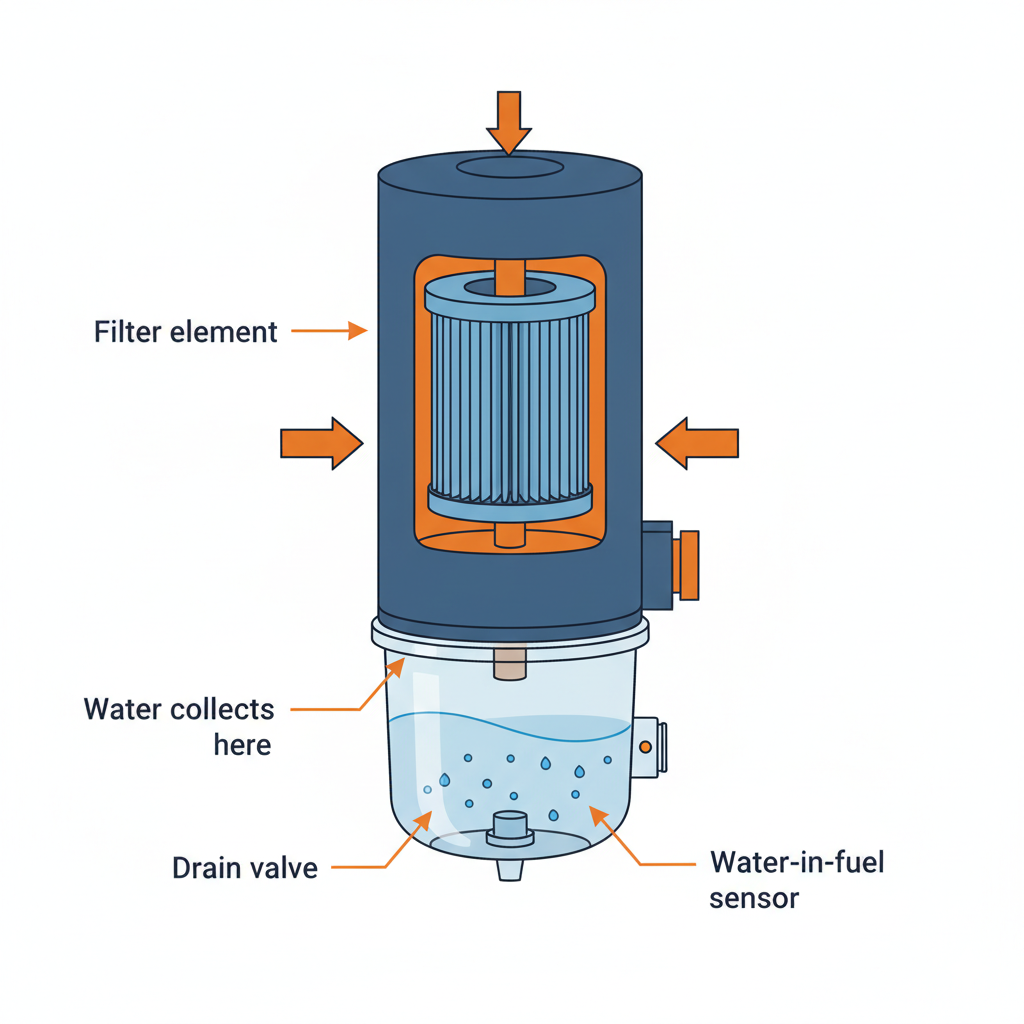
Most diesel fuel filters include a water separator. As fuel passes through the filter, water settles out due to density differences and collects in a bowl at the base of the filter housing. A drain valve allows the water to be purged without replacing the filter.
Many diesel fuel filter housings also include a water-in-fuel sensor that triggers a dashboard warning when the water separator bowl is full.
Diesel fuel filters are typically replaced more frequently than gasoline filters, and the water separator bowl is drained between filter changes as part of routine maintenance.
Why the Fuel Filter Matters More Than Most Drivers Think
Modern fuel injection systems operate at tolerances measured in microns. Gasoline direct injection (GDI) systems inject fuel directly into the combustion chamber at pressures up to 2,900 PSI. Port fuel injection systems operate at 40 to 60 PSI.
At those pressures, even a small particle reaching an injector tip causes wear. Repeated wear changes the spray pattern. A distorted spray pattern causes incomplete combustion, carbon deposits, and over time, misfires and cylinder-specific issues.
The fuel filter is the only barrier between whatever enters the fuel tank and the precision components of the injection system. Replacing it at the correct interval is one of the highest-value maintenance actions available on any vehicle that has a serviceable filter.
FAQ
What does a fuel filter do?
A fuel filter removes particles, rust, dirt, and water from fuel before it reaches the fuel injectors and fuel pump. It protects precision fuel system components from contamination that causes wear, misfires, and component failure.
How do I know if my car has a serviceable fuel filter?
Check the owner's manual maintenance schedule. If a fuel filter replacement interval is listed with a mileage recommendation, the vehicle has an accessible inline filter. If no fuel filter appears in the maintenance schedule, the filter is likely integrated inside the fuel pump module and is not serviced independently.
Can a fuel filter affect engine performance?
Yes. A partially clogged fuel filter restricts fuel flow, causing hesitation under acceleration, rough idle, hard starting, and reduced power. A severely clogged filter can stall the engine or prevent it from starting at all.
Does a fuel filter remove water from fuel?
Gasoline fuel filters trap some water, but diesel fuel filters are specifically designed with water separators that actively collect and hold water so it can be drained. Diesel systems are more susceptible to water contamination, which is why water separation is built into the filter design.
What is a fuel filter micron rating?
A fuel filter's micron rating indicates the smallest particle size the filter captures. A 10-micron filter traps particles 10 microns and larger. Finer ratings offer more protection but require more frequent replacement. Diesel injection systems typically require finer filtration due to higher operating pressures and tighter tolerances.
How long does a fuel filter last?
External inline fuel filters typically last 20,000 to 40,000 miles, though some manufacturers specify longer intervals. Integrated in-tank filters are marketed as lifetime components but can still degrade, particularly in vehicles with older tanks or fuel quality issues.
If a vehicle has no listed fuel filter interval, the pump module filter condition is evaluated when the pump is inspected or replaced.
The next step on most vehicles with a serviceable filter is knowing when to replace it. See the replacement interval guide for mileage recommendations by fuel type and driving condition.