Fuel Filter Before or After the Pump? Location Explained

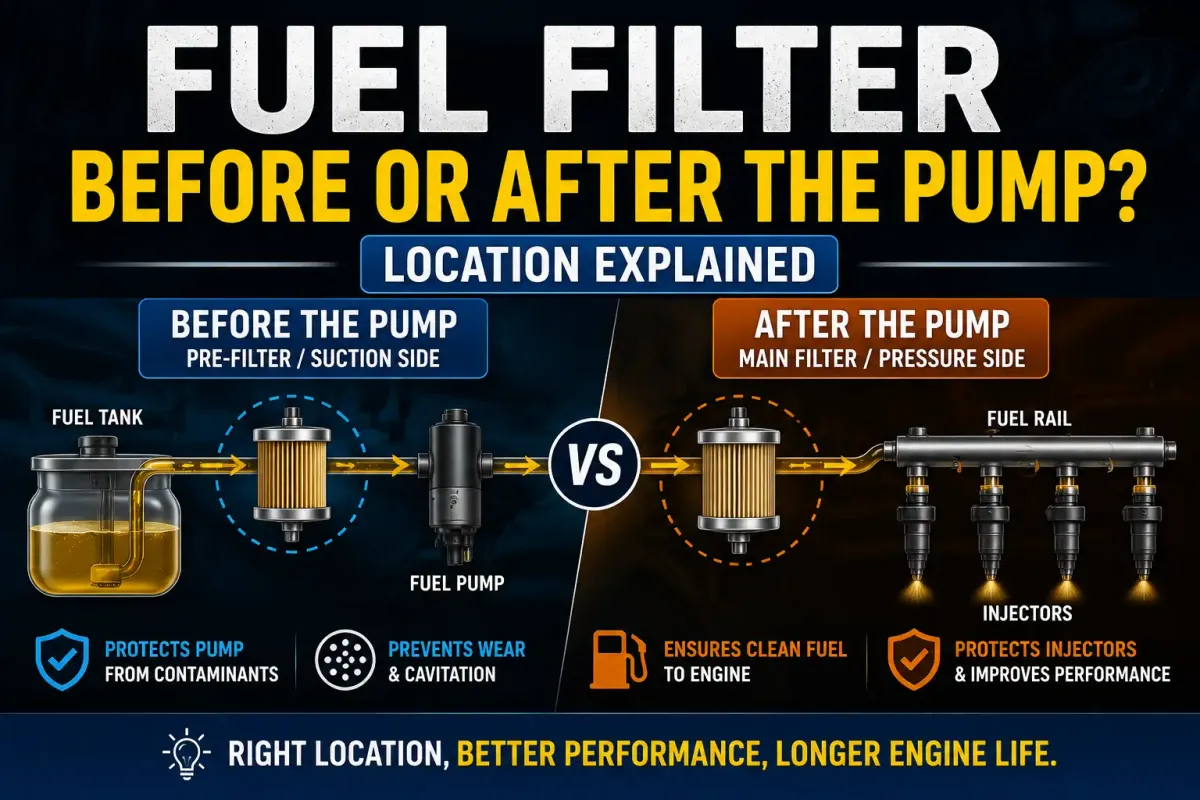
On most modern fuel-injected vehicles, the fuel filter sits after the fuel pump. The pump pulls fuel from the tank and pushes it through the filter before it reaches the injectors. However, location varies by vehicle design, and older carbureted cars often placed the filter after the pump but before the carburetor in a different arrangement.
Is the Fuel Filter Before or After the Fuel Pump?
The short answer: after.
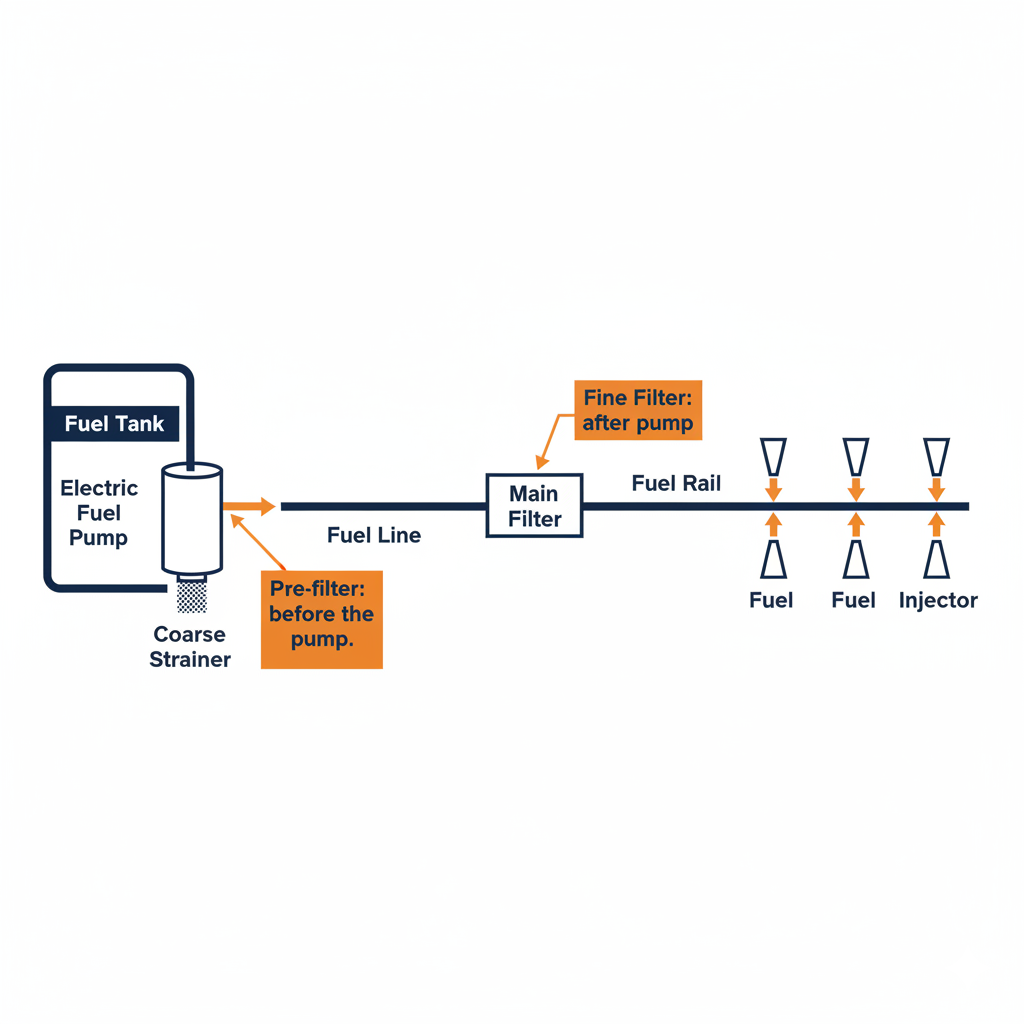
On the vast majority of fuel-injected vehicles built in the last two decades, the fuel pump is inside the fuel tank. It draws fuel up from the bottom and pushes it under pressure toward the engine. The filter sits downstream of the pump, between the pump outlet and the fuel rail.


This placement makes sense when you understand how fuel delivery works. The pump generates pressure. The filter needs that pressure to push fuel through its media. If you placed the filter before the pump, the pump would be working against a restriction on the suction side, which strains the motor and reduces flow.
There is one important exception: every in-tank fuel pump has a coarse pre-filter (also called a strainer or sock) mounted directly on its inlet. That strainer catches large debris before it enters the pump. So technically,that coarse strainer is before the pump, but it is not the main serviceable fuel filter.


Why Fuel Filter Placement Relative to the Pump Matters
Placement affects both filtration quality and pump longevity.
The pump needs clean fuel to stay lubricated
Fuel is not just a combustion ingredient. It also lubricates and cools the electric fuel pump motor. If contaminated fuel reaches the pump, abrasive particles wear down the pump's internal components.


The coarse inlet strainer catches particles large enough to physically jam the pump. The fine downstream filter then catches the smaller particles that could accelerate wear on injectors and fuel system components.
Suction-side restriction damages pumps
When the main fuel filter is placed before the pump (on the suction side), the pump must work harder to draw fuel through the restriction. This increases heat and electrical load on the pump motor.


A partially clogged filter on the suction side creates cavitation, a condition where fuel vaporizes inside the pump due to low pressure. Cavitation causes significant pump damage in a short period.
This is why modern designs place the fine filter after the pump, on the pressure side, where a restriction simply reduces downstream flow without creating a vacuum on the pump inlet.


Where Is the Fuel Filter Located on a Modern Vehicle?
Location depends on whether the filter is serviceable or integrated.
In-tank integrated filters (most modern vehicles)
On the majority of vehicles built after 2000, the fuel filter is integrated into the fuel pump module assembly inside the tank. You cannot replace the filter independently. When the filter eventually clogs, or when the pump fails, you replace the entire pump module.
This design became common as manufacturers moved to in-tank pumps for quieter operation and better vapor pressure control. The filter sits either on the pump outlet or is built into the pump housing itself.
Inline filters (older vehicles and some trucks)
Older vehicles, and some heavy-duty trucks and diesels, use a serviceable inline fuel filter. These sit in the fuel line, usually under the vehicle along the frame rail, in the engine bay near the fuel rail, or sometimes accessible through the trunk or under a rear seat in certain sedans.
On most carbureted vehicles from the 1970s and 1980s, the fuel filter was in the engine bay, threaded directly into the carburetor inlet or sitting in a short section of rubber fuel line before the carb.
Diesel trucks
Most diesel trucks, including the Ford Power Stroke, GM Duramax, and Ram Cummins, use a serviceable fuel filter mounted in the engine bay or on the engine block. These are designed to be changed at regular intervals, typically every 15,000 to 22,500 miles depending on the engine.
Diesel fuel filter placement varies by generation. On many Power Stroke engines, there is both a primary filter (often in the engine bay) and a secondary filter (on or near the injection pump). The primary catches larger particles, the secondary fine-filters before the high-pressure pump.
The In-Tank Strainer: The Filter Before the Pump
Every in-tank fuel pump has a mesh strainer on its inlet. This is technically a pre-filter.
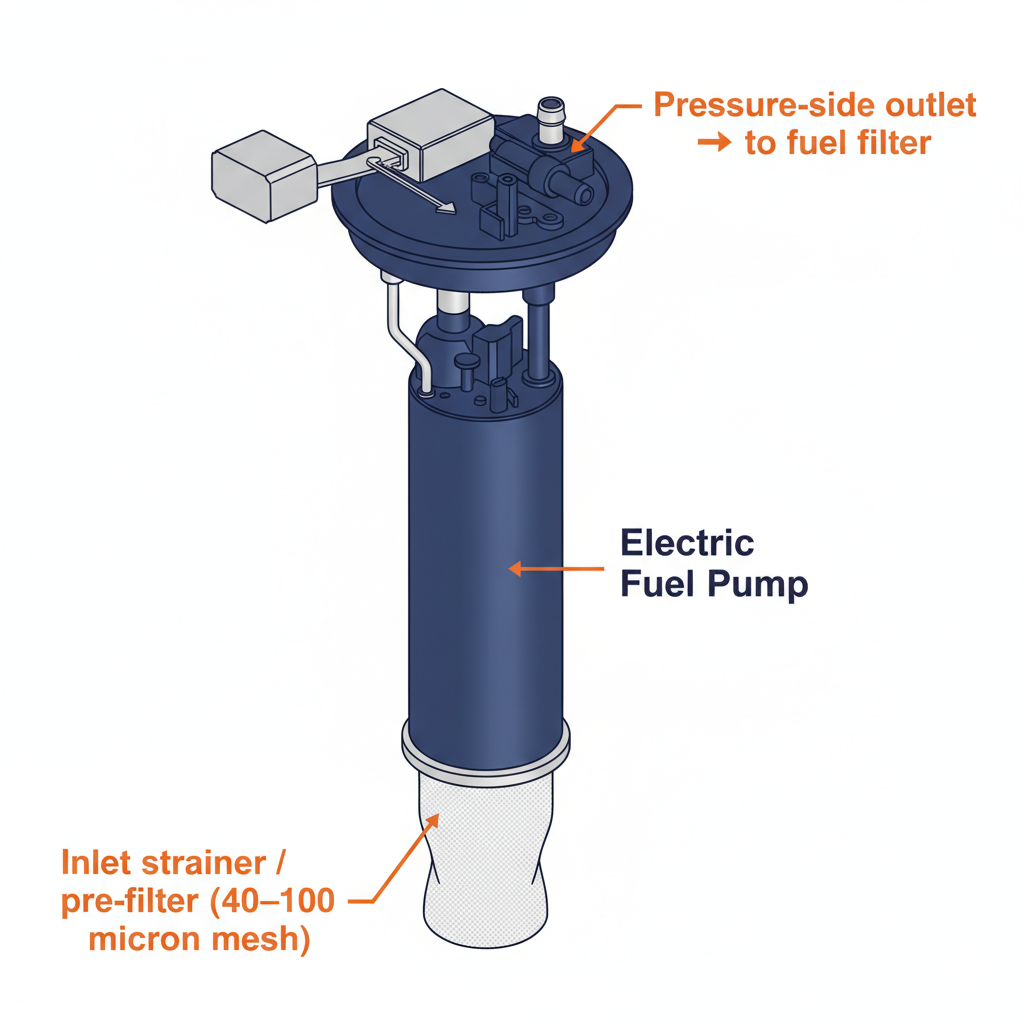
It is made of fine nylon mesh, typically 40 to 100 microns. It catches particles large enough to damage the pump internals. Rust flakes, sediment, and tank debris stop here before they enter the pump.
The strainer is usually not sold or replaced separately. It comes attached to the pump and is replaced as part of the pump module. Under normal conditions, it does not clog to the point of causing problems. Severely corroded tanks or contaminated fuel are the exception.
This strainer is why you rarely hear about pump-inlet damage from debris. The coarse pre-filter does its job quietly for the life of the pump in most cases.
Does a Clogged Fuel Filter Damage the Fuel Pump?
Yes, eventually.
A clogged filter on the pressure side restricts fuel flow to the injectors. The pump responds by working harder to maintain rail pressure. Higher workload means more heat generated inside the pump motor.
Over time, that added heat and strain shortens the pump's life. Fuel pump replacement costs between $1,000 and $1,500 on average at a shop. A $20 to $30 inline fuel filter replacement, when applicable, is a worthwhile preventive measure.
On vehicles with integrated filters, there is no separate filter to replace. When the pump module eventually fails, it is replaced as a unit.
Modern vs. Older Vehicles: How Filter Location Has Changed
Fuel filter location has shifted substantially over the decades.
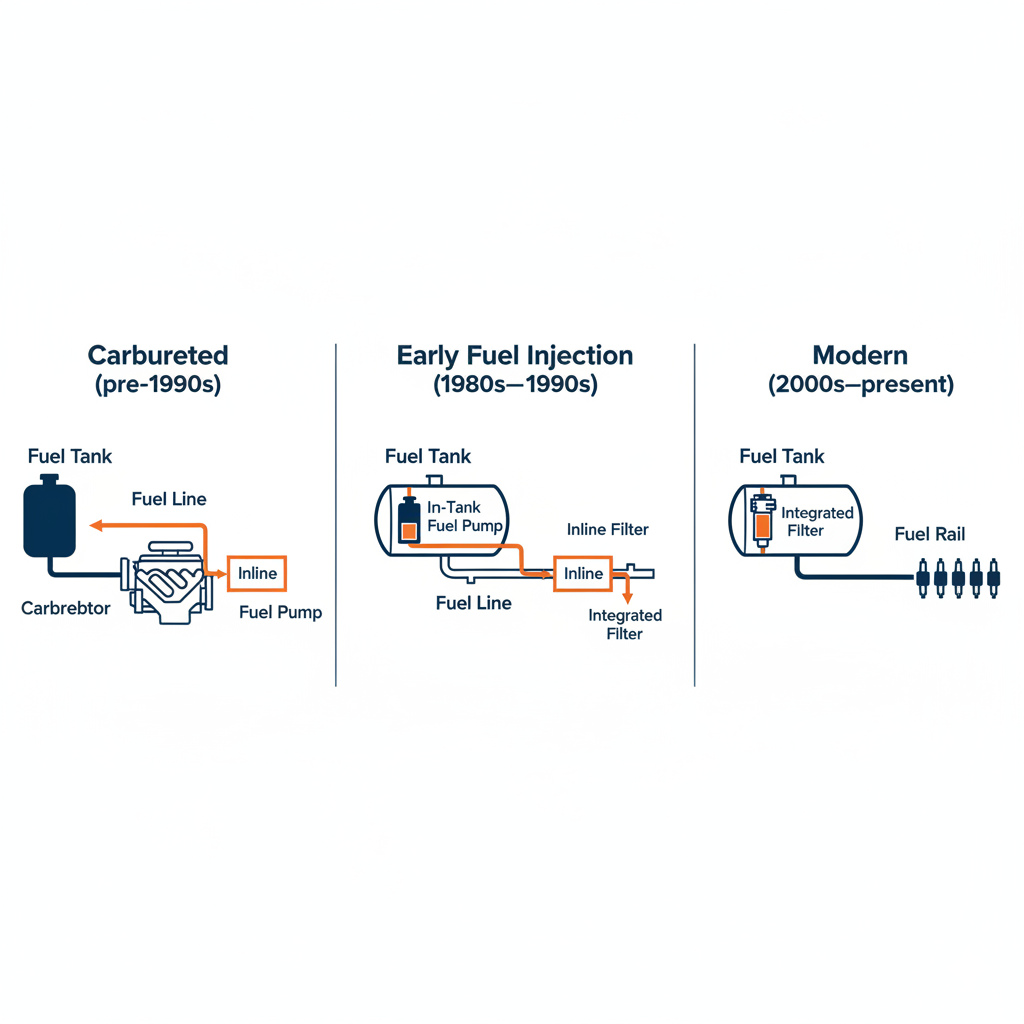
Carbureted vehicles (pre-1980s to early 1990s): The mechanical fuel pump sat on the engine block and pulled fuel from the tank. An inline filter typically sat between the pump outlet and the carburetor. The filter was on the pressure side of a mechanical pump, easily accessible in the engine bay.
Early fuel-injected vehicles (1980s to mid-1990s): Electric in-tank pumps became standard. Inline serviceable filters in the engine bay or under the vehicle were common. These were designed to be replaced every 30,000 miles or so.
Modern fuel-injected vehicles (2000s to present): Integrated filter-in-module designs dominate. No serviceable inline filter. Filter replacement is bundled with pump replacement. Maintenance schedules often say "no replacement required" or "replace at 100,000 miles" for the module.
This shift means most drivers today never replace a fuel filter as a standalone item. The filter lives inside the tank, doing its job invisibly.
How to Find Where Your Fuel Filter Is Located
The fastest way: check your owner's manual or a free service like your vehicle manufacturer's maintenance portal.
A few practical shortcuts:
- Search your year, make, model + "fuel filter location" to find forum posts from owners of the same vehicle
- Check under the hood near the fuel rail for a cylindrical canister in the fuel line (inline filter)
- Look along the driver's side frame rail for a filter mounted to the chassis
- Check the fuel pump module if your vehicle uses an integrated design: there is no separate filter to find
If you own a diesel truck, check the engine bay. The filter is almost always mounted and accessible for service.
FAQ
Is the fuel filter before or after the fuel pump?
On modern fuel-injected vehicles, the main fuel filter is after the fuel pump. The pump pushes fuel from the tank through the filter toward the engine. Most in-tank pumps also have a coarse mesh strainer on their inlet, which is technically before the pump, but this is not the serviceable fuel filter.
Can I replace just the fuel filter on my modern car?
On most vehicles built after 2000, the fuel filter is integrated into the fuel pump module inside the tank. It cannot be replaced separately. When the pump module is replaced, the filter comes with it. If your car has an inline fuel filter, that filter can be replaced independently.
What happens if the fuel filter is installed backwards?
Installing an inline fuel filter backwards restricts or blocks fuel flow. The filter media is designed to capture particles flowing in one direction. Reversed installation can cause hard starting, stalling, or a no-start condition. Most inline filters have an arrow indicating flow direction. Always install with the arrow pointing toward the engine.
How do I know if my fuel filter is clogged?
Common signs include hard starting, hesitation or stumbling under acceleration, stalling at low speeds, and loss of power when the engine is under load. These symptoms worsen progressively as the filter clogs further. The fuel pump may become audibly louder as it works harder to push fuel through the restriction.
Does filter location affect replacement difficulty?
Yes significantly. Inline filters in the engine bay or along the frame rail are straightforward to access and replace. In-tank integrated filters require dropping the fuel tank or accessing the pump module through an access panel (when one exists). Diesel truck filters are typically the easiest: mounted in the engine bay, designed for routine service.
The Bottom Line
On modern fuel-injected vehicles, the fuel filter sits after the pump, between the pump outlet and the fuel rail. This placement protects both the injectors and the pump itself. Most vehicles today use integrated filter-in-module designs that are not separately serviceable.
If you drive a diesel truck or an older vehicle with an inline filter, that filter is both accessible and worth replacing on schedule.