Fuel Filter Micron Ratings: 10 Micron vs 30 Micron Explained

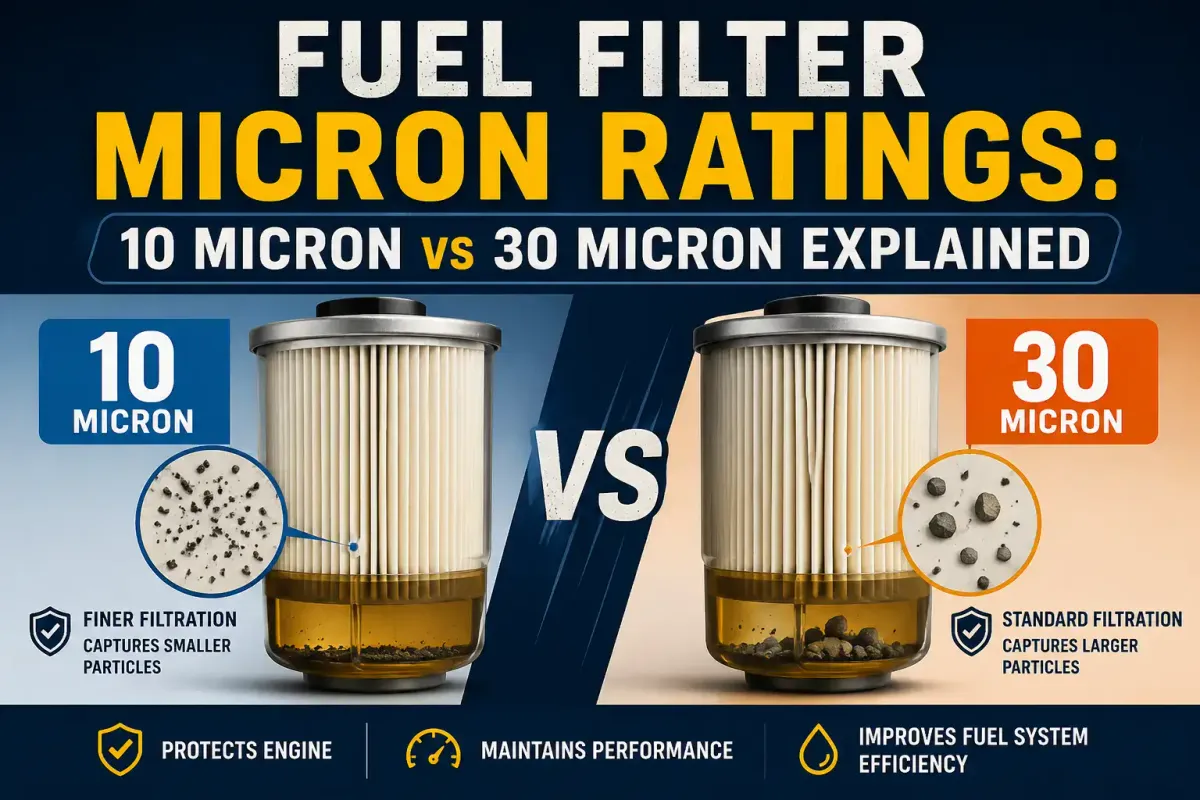
A fuel filter's micron rating tells you the size of particles it stops. A 10 micron filter catches particles 10 micrometers and larger. A 30 micron filter only catches particles 30 micrometers and larger. The lower the number, the finer the filtration. But finer is not always better.
What Does Micron Rating Mean on a Fuel Filter?
A micron is one millionth of a meter. In fuel filtration, the micron rating describes the size threshold at which the filter stops particles from passing through.


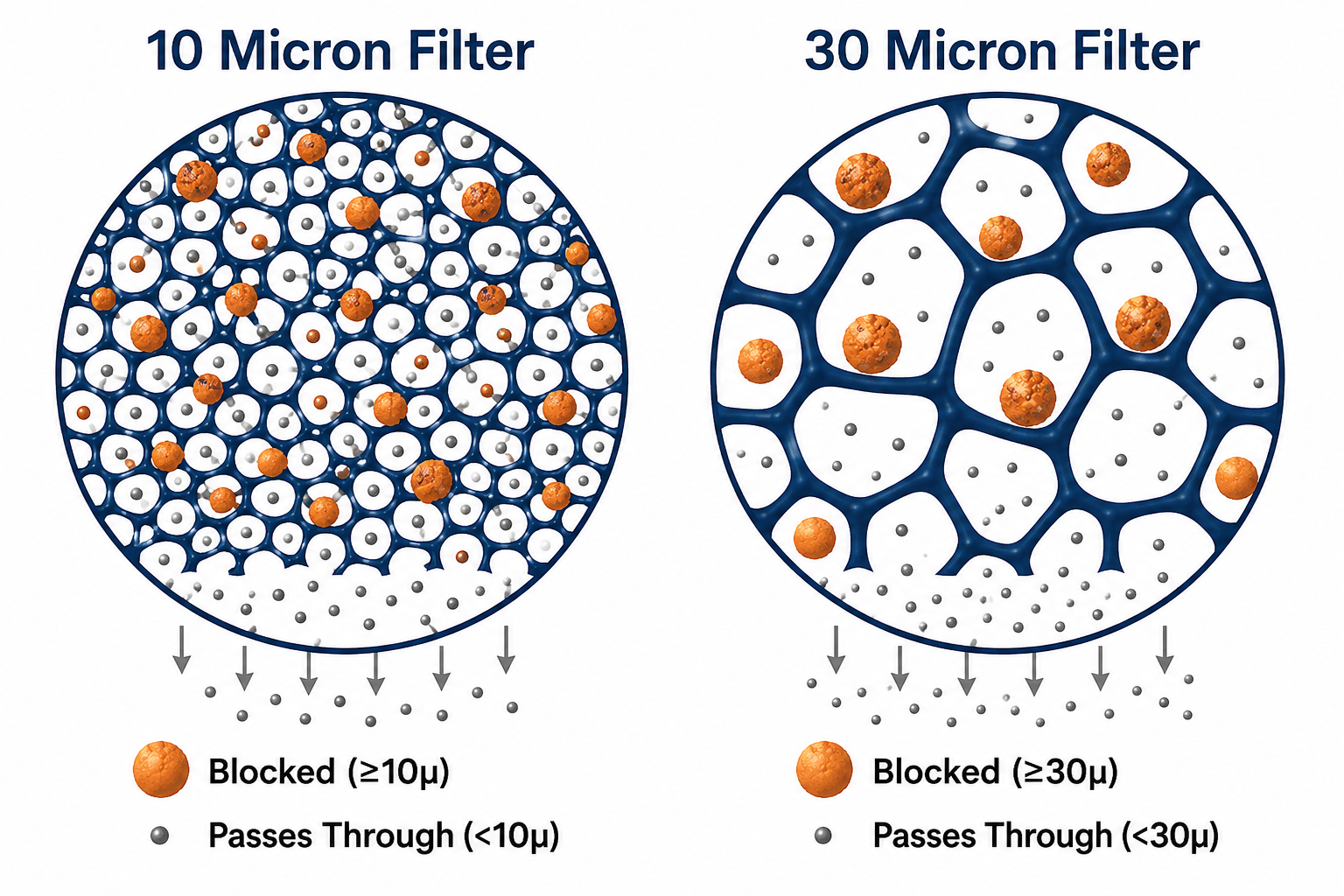
A filter rated at 10 microns removes particles 10 microns and larger from the fuel. A filter rated at 30 microns only removes particles 30 microns and larger. Anything smaller than the rated size passes through freely.
Absolute vs Nominal Micron Ratings
There are two ways manufacturers express micron ratings, and they mean very different things.


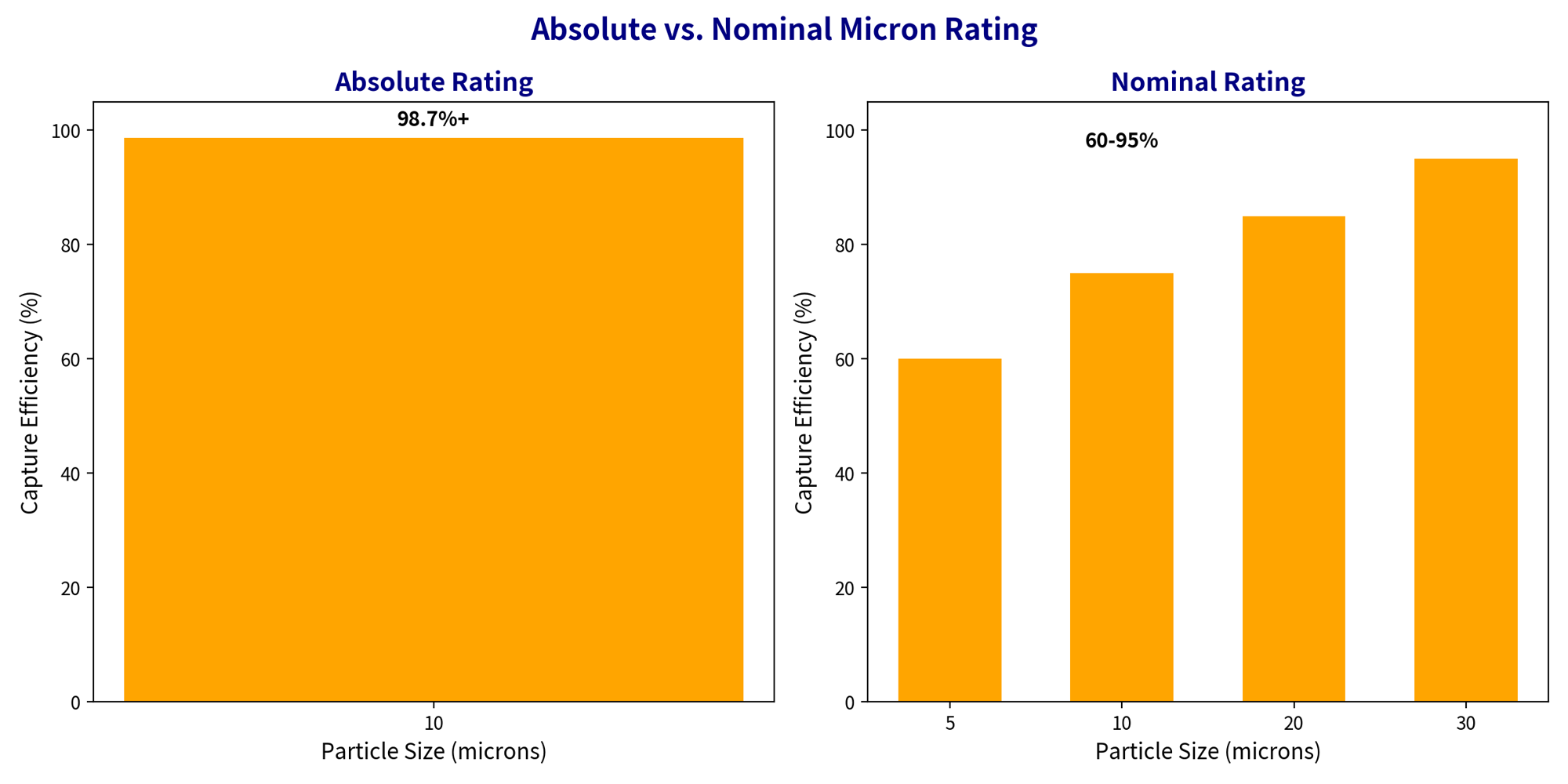
An absolute rating means the filter stops 98.7% or more of particles at that stated size, verified under the ISO 16889 test standard. If the spec sheet says "10 micron absolute," the performance claim has been independently tested.
A nominal rating is looser. It typically means the filter stops between 60% and 95% of particles at the stated size, with no universal test standard behind the number. Two filters can both say "10 micron" on the box but perform completely differently if one is absolute and one is nominal.


When comparing filters, always look for the absolute rating on the spec sheet. Nominal ratings can be misleading in direct comparisons.
What Is the Difference Between a 10 Micron and 30 Micron Fuel Filter?
A 10 micron filter has tighter pores than a 30 micron filter. It catches smaller particles.


A 30 micron filter has larger pores. It lets smaller particles through, but it also creates less restriction to fuel flow.
Here is a direct comparison:
The key trade-off is filtration fineness versus fuel flow. A 10 micron filter protects more sensitive fuel system components, but it also clogs faster and creates more resistance for the fuel pump to work against.

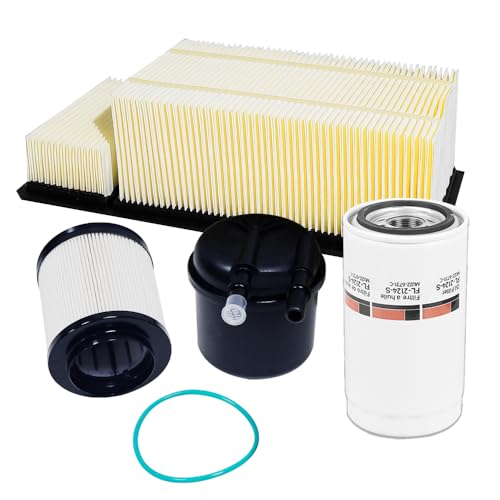
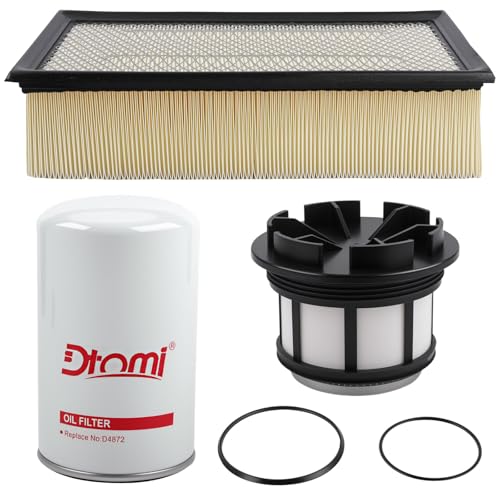
Which Micron Rating Is Better: Finer or Coarser?
Neither is universally better. The right micron rating depends entirely on what your fuel system requires.
Modern gasoline direct injection (GDI) engines use high-pressure fuel injectors with very tight internal tolerances. Debris particles that would pass harmlessly through an older carbureted system can damage or seize a GDI injector. These systems need finer filtration.
Older carbureted engines and port-injected engines with lower fuel pressure operate with more tolerance for small particles. A 30 micron filter is often sufficient and puts less strain on the fuel pump.
Diesel systems add another layer of complexity. They often use a two-stage filtration approach: a primary filter at 30 microns to catch large particles, and a secondary filter at 2 to 10 microns to protect the high-pressure injection pump and injectors. The micron ratings in these systems are carefully engineered for the system's pressure and component tolerances.
The rule: Use the micron rating specified by the vehicle manufacturer. Finer is not automatically better, especially if your system's fuel pump was not sized to push fuel through tighter filtration.
What Micron Rating Does My Car's Fuel Filter Use?
For most modern gasoline vehicles, the fuel filter is integrated into the fuel pump module inside the tank. These in-tank filters are typically rated between 10 and 30 microns depending on the injection system type.
GDI engines commonly use filters in the 5 to 10 micron range. Port-injected engines often use filters closer to 10 to 30 microns.
Diesel vehicles typically run a 30 micron primary (or pre-filter) and a finer secondary filter between 2 and 10 microns. The secondary filter sits between the lift pump and the high-pressure injection pump.
The best source for your vehicle's specific specification is the owner's manual or the OEM filter part number's spec sheet. Third-party filter manufacturers like FRAM, WIX, and Bosch publish filtration specs for their replacement filters, and these will match or improve on the OEM specification.
Can You Use a 10 Micron Filter Where a 30 Micron Is Specified?
Technically yes. But it may cause problems.
A finer filter creates more flow restriction. If your fuel pump was sized to deliver fuel pressure against a 30 micron filter, adding a 10 micron filter increases the pump's workload. Under normal conditions this may not cause an immediate issue. Under high demand conditions like wide-open throttle, hard acceleration, or hot ambient temperatures, the added restriction can cause fuel pressure to drop.
Low fuel pressure starves the injectors. The engine runs lean, hesitates, or misses under load.
There is also a service interval concern. A 10 micron filter will load up with contaminants faster than a 30 micron filter in the same fuel environment. If you install a finer filter and maintain the OEM replacement schedule, you may be running a partially clogged filter well before the next service.
For performance builds that are already upgrading the fuel pump to a higher-flow unit, stepping down to a finer filter makes sense and improves injector protection. For a stock fuel system on a stock engine, use the specification the manufacturer engineered for it.
What Happens If You Use the Wrong Micron Fuel Filter?
Using a filter that is too coarse means contaminant particles pass through to the injectors or carburetors. Injector orifices are precision-machined to tight tolerances. Abrasive particles accelerate wear on the needle and seat. Over time this causes injectors to drip or spray unevenly, leading to misfires, rough idle, and increased fuel consumption.
Using a filter that is too fine starves the engine of fuel under high demand. The symptoms look like a failing fuel pump: hesitation at wide-open throttle, power loss under load, hard starting when hot, and stalling.
Both failures are progressive and easy to misdiagnose. A mechanic troubleshooting fuel pressure issues rarely suspects the micron rating of the filter first.
Using the correct specification avoids both failure modes entirely.
How Does Micron Rating effect Fuel Flow and Fuel Pressure?
Fuel filters work by forcing fuel through a porous media. Smaller pores mean more resistance. More resistance means the fuel pump has to work harder to maintain fuel pressure.
Fuel pressure is the critical variable. Most gasoline port-injection systems operate between 40 and 60 PSI. GDI systems run the high-pressure circuit between 500 and 2,900 PSI, depending on load. Any filter that reduces fuel volume below what the injectors need at peak demand will cause fuel pressure to drop.
As a filter accumulates contaminants, its effective flow restriction increases even if the micron rating has not changed. A 10 micron filter that started at low restriction will eventually reach a point where fuel pressure begins to drop under load. This is why replacement intervals exist.
The relationship between micron rating, flow, and pressure is why diesel secondary filters are carefully matched to the high-pressure pump's minimum inlet pressure requirement. Installing a finer filter than specified can cavitate the pump.
What Micron Rating Do Diesel Fuel Filters Use vs Gasoline?
Diesel systems have stricter filtration requirements than gasoline systems. Diesel injection components operate at extremely high pressures and have tighter internal clearances than their gasoline counterparts.
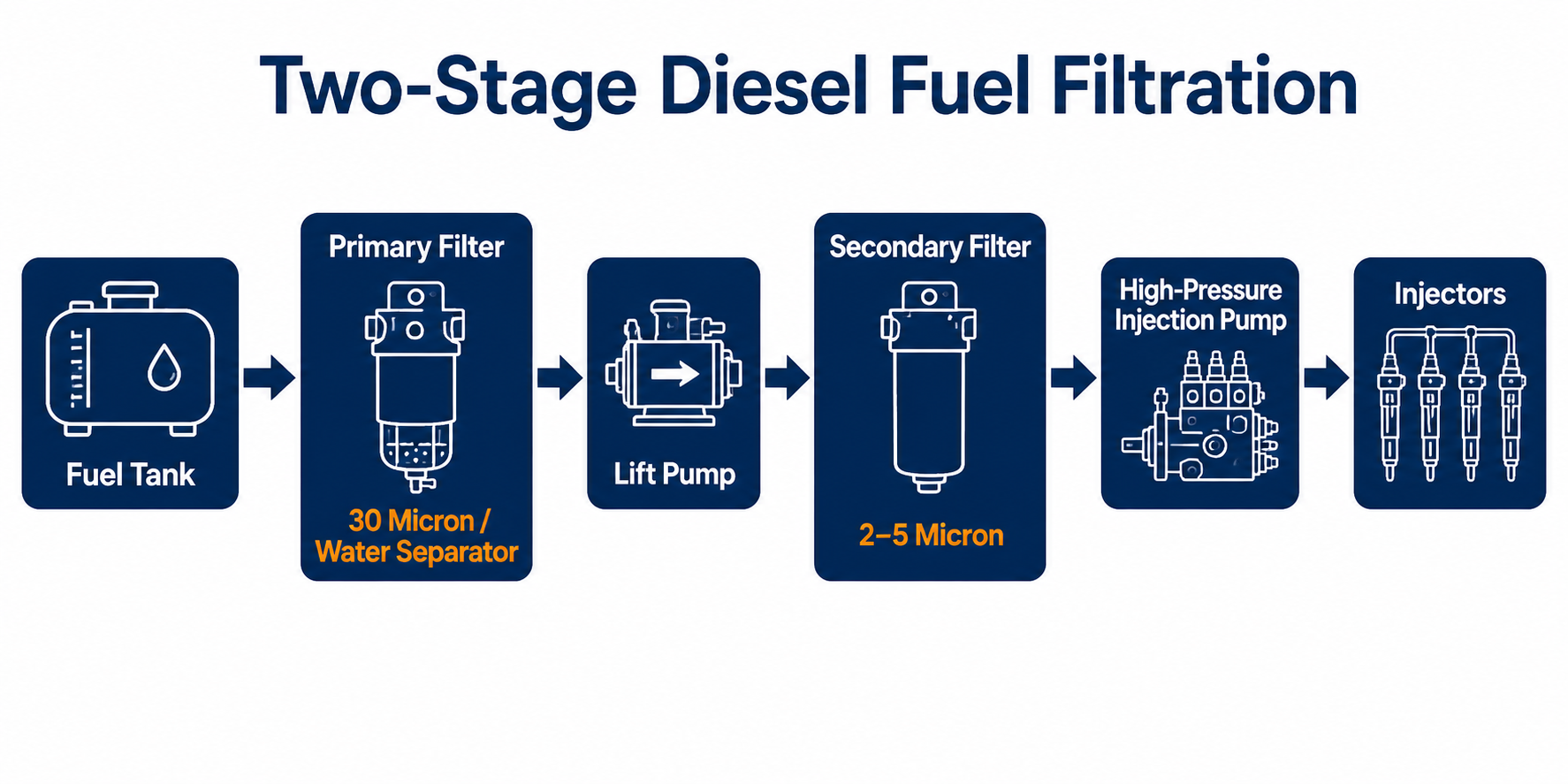
Common rail diesel injection pumps and injectors are extremely sensitive to particulate contamination. Bosch diesel injection data shows injector components can be damaged by particles as small as 2 to 4 microns. This is why secondary filters in modern common rail systems are rated down to 2 to 5 microns.
Gasoline systems are less demanding. Most passenger car gasoline filters operate adequately in the 10 to 30 micron range, with GDI engines sitting at the finer end and carbureted or port-injection engines sitting at the coarser end.
Diesel vehicles often use two separate filters:
- Primary filter (pre-pump): 30 microns. Catches large particles and often includes a water separator.
- Secondary filter (post-lift pump / pre-high-pressure pump): 2 to 10 microns. Provides final-stage protection for the injection system.
Combining both stages is standard engineering practice on modern diesel vehicles. The primary filter extends the life of the secondary filter by removing the bulk of contamination before it can load up the finer media.
FAQ
What does 10 micron mean on a fuel filter?
A 10 micron fuel filter stops particles that are 10 micrometers (0.00001 meters) in diameter and larger from passing through to the fuel system. It provides finer filtration than a 30 micron filter and is typically used in gasoline direct injection engines and diesel secondary filtration stages where injector tolerances demand cleaner fuel.
Is a 10 micron fuel filter better than a 30 micron?
Not universally. A 10 micron filter provides finer filtration and better injector protection, but it creates more flow restriction and clogs faster. A 30 micron filter flows more freely and suits systems that do not require ultra-fine filtration. The right choice is always the micron rating specified by your vehicle manufacturer.
What micron is a factory fuel filter?
Factory fuel filters vary by vehicle and fuel system type. GDI gasoline engines typically use 5 to 10 micron filters. Port-injected engines often use 10 to 30 micron filters. Diesel vehicles use a 30 micron primary filter and a 2 to 10 micron secondary filter. Check your vehicle's owner's manual or the OEM filter spec sheet for the exact rating.
Can a fuel filter micron rating affect fuel pressure?
Yes. A finer micron rating creates more flow restriction than a coarser rating, which means the fuel pump has to work harder to maintain the same pressure. A filter that is too fine for the system can cause fuel pressure to drop under high demand, leading to lean conditions, hesitation, and power loss. Always match the micron rating to the manufacturer's specification.
What is the difference between absolute and nominal micron ratings?
An absolute micron rating means the filter stops 98.7% or more of particles at the stated size, verified under ISO 16889. A nominal rating typically means 60% to 95% capture efficiency with no standardized test behind the number. Absolute ratings are the more meaningful specification when comparing filter performance, but many consumer-grade filters only publish nominal ratings.
The Bottom Line
Micron rating is one of the most misunderstood specs in fuel filtration. Going finer is not going better unless your system requires it.
For GDI engines and diesel secondary stages, precise finer filtration is non-negotiable. For older port-injection or carbureted systems, a coarser rating protects the pump and extends service life without sacrificing injector health.
Check the spec on your filter's box. If it says absolute, that means something. If it only says nominal, dig deeper before assuming it matches your system's requirement.