Which Way Does a Fuel Filter Flow? (Arrow Direction Explained)

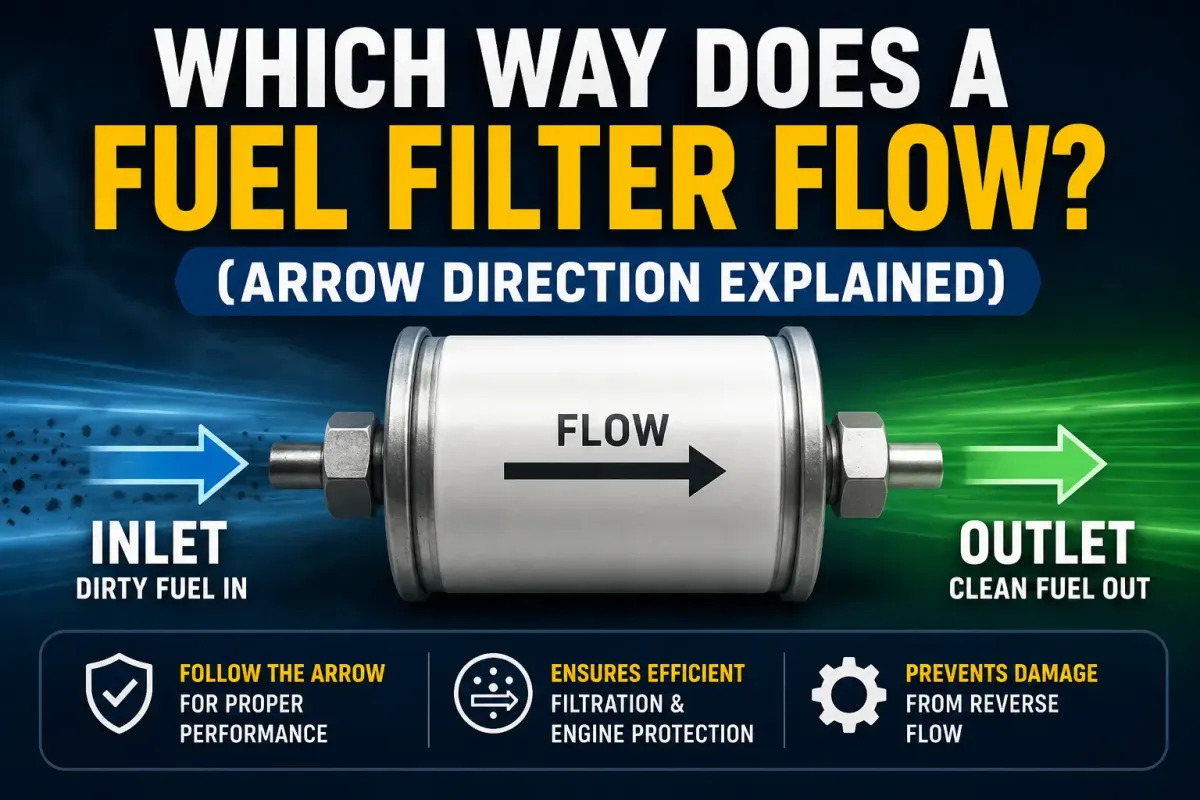
The arrow on a fuel filter points in the direction fuel travels through it. Install the filter so the arrow points toward the engine and away from the fuel tank. Fuel flows from the tank, through the filter, and on to the engine. The arrow tells you which end is the outlet.
What Does the Arrow on a Fuel Filter Mean?
The arrow stamped or printed on an inline fuel filter shows the direction of fuel flow through the filter element. It is not decorative. It is a required installation guide.


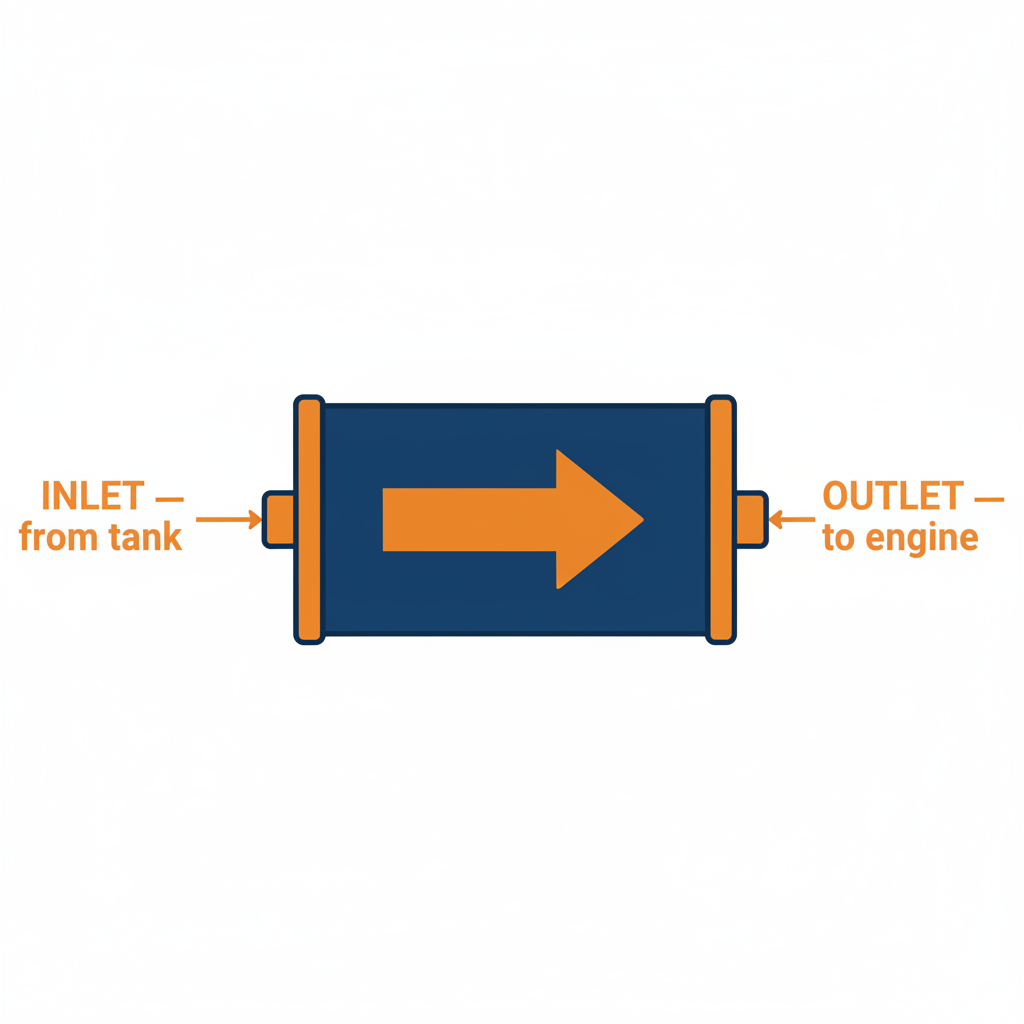
Fuel filters are directional because the filter media inside is engineered to trap contaminants on one specific face. The inlet side receives unfiltered fuel. The outlet side delivers clean fuel to the engine. Flipping the filter reverses which face bears the contamination load, which changes how the filter performs and ages.
Think of it like a coffee filter. The grounds collect on one side. If you poured from the wrong direction,the grounds would bypass the paper or tear through the wrong layer.


Which Direction Does the Arrow Point: Toward the Engine or the Tank?
The arrow always points toward the engine.
That means:
- The end the arrow points at is the outlet (clean fuel exits here, heading to the engine)
- The end the arrow points away from is the inlet (unfiltered fuel enters here, coming from the tank)
Quick mental model: fuel travels in the same direction as the arrow. Tank to filter to engine. The arrow is your guide for that last segment.


When you are holding the filter and about to install it, ask yourself: which side of this filter faces the engine? That side gets the arrow end.
What Happens If You Install a Fuel Filter Backwards?
Installing a fuel filter backwards does not always cause an immediate breakdown. But it creates real problems over time.
Reduced filtration efficiency
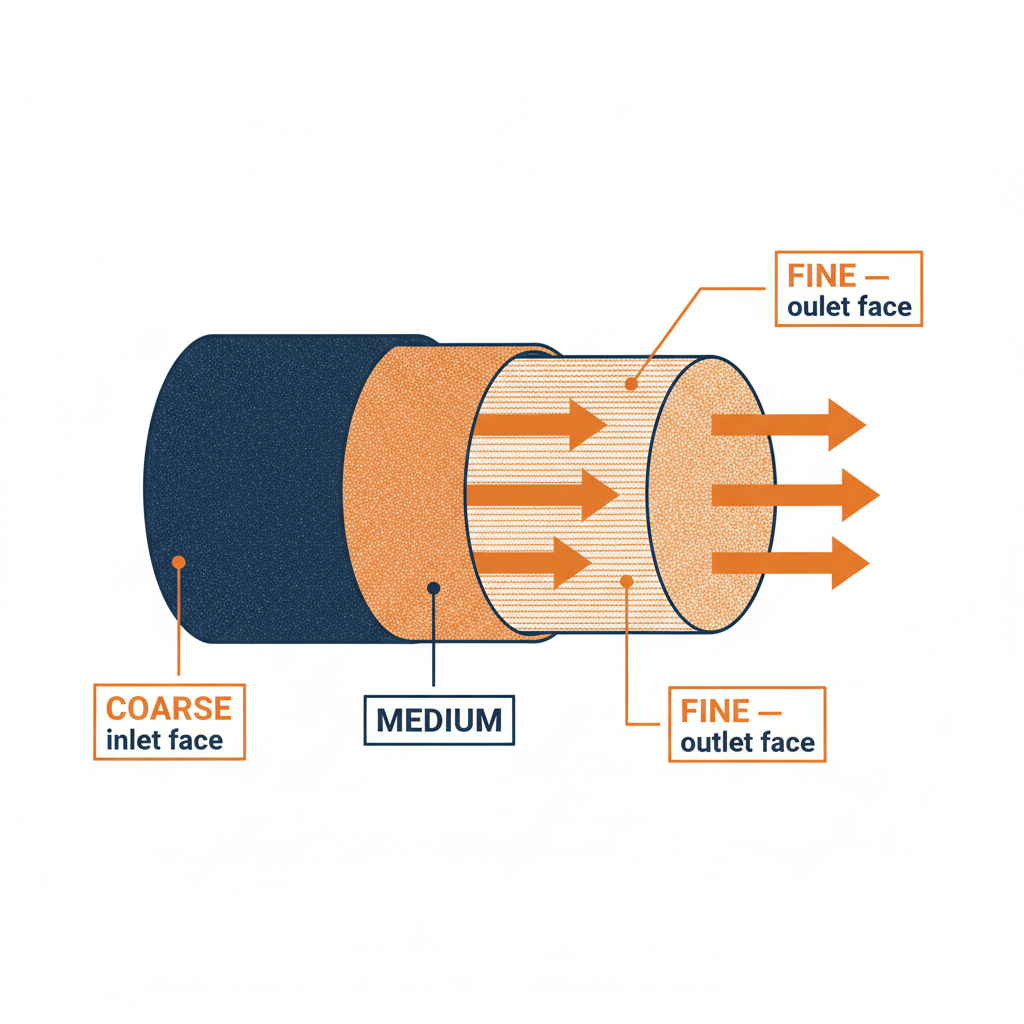
The filter media is layered. The outermost layer, which faces the inlet, is typically coarser. It handles the bulk of the contamination. The inner layers get progressively finer. When you reverse the filter, fine media faces the unfiltered side first. Fine layers clog faster than coarse ones because they were not designed to handle the initial contamination load.
The result: a backwards-installed filter reaches full restriction much sooner than it should.
Premature pressure drop
As the filter element clogs faster on the wrong side, fuel pressure at the injectors drops. Early symptoms look like a partially clogged filter: hesitation under load, rough idle at startup, sluggish acceleration. These are the same symptoms you would see with a filter at end of life, but arriving far ahead of schedule.
Potential bypass or backflow in some designs
Some filters include a one-way check valve at the outlet end. This valve prevents fuel from draining back to the tank when the engine is off, which keeps the fuel rail primed. If the filter is installed backwards, this valve now sits at the inlet. It may block normal fuel flow or behave unpredictably under fuel pump pressure cycles.
Not all filters have this valve, but those that do are particularly sensitive to installation direction.
How to Read the Arrow on a Fuel Filter
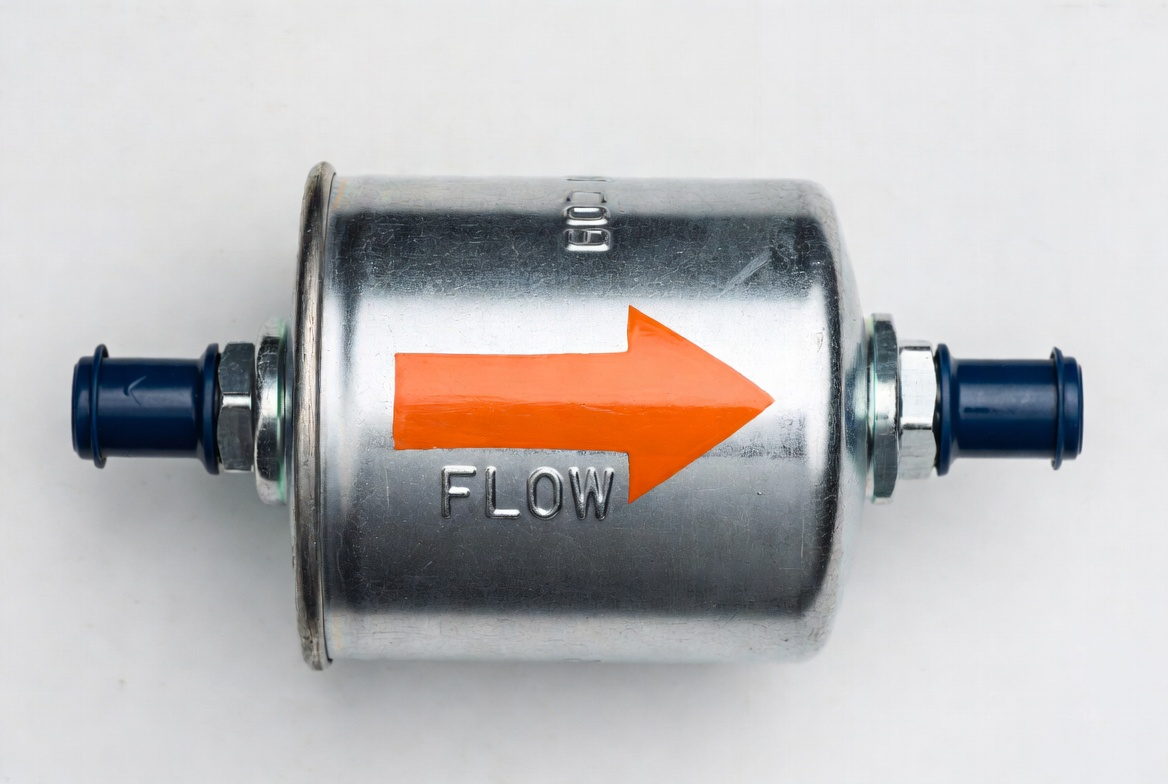
Most fuel filters make this straightforward. The arrow is either:
- Stamped into the metal housing of an inline canister filter. Look along the body of the filter for an embossed or etched arrow.
- Printed on the label of plastic-bodied inline filters. The label usually shows a bold arrow with the word "FLOW" or "OUT" next to the outlet end.
- Molded into the plastic end cap of cartridge-style in-housing filters. The arrow may be on the cap itself or on the housing.
If the arrow is hard to read because of grime, clean the housing before installation. Never guess. Wipe the body down and confirm you can read the direction clearly.
What If My Fuel Filter Has No Arrow?
Some aftermarket and older-style filters omit the arrow entirely. When this happens, look for these orientation clues instead:
End fitting size: On many inline filters, the outlet fitting (pointing toward the engine) is slightly larger in diameter or uses a different thread pitch than the inlet. This is not universal, but it is worth checking against the vehicle's fuel line sizes.
Barb or nipple markings: Some filters label one end "IN" and the other "OUT." These labels substitute for the arrow and tell you the same thing.
Filter documentation: The package or manufacturer spec sheet will always specify orientation. If you no longer have the packaging, search the filter's part number on the manufacturer's site. FRAM, Purolator, and WIX all publish installation direction data for their filter lineup.
Thread direction on the inlet: A few designs use reverse threads on the inlet to prevent backwards installation entirely. If the fitting will not thread on smoothly, you may have the wrong end.
When in doubt, find the part number and confirm orientation before installing. A two-minute check is better than a premature filter failure or a fuel system diagnosis later.
Does a Fuel Filter Have to Be Directional? (Can It Work Either Way?)
Inline fuel filters are directional by design. The filter media layers are optimized to receive contaminated fuel on the inlet face. Reversing the filter does not destroy it immediately, but it does compromise its performance and service life.
In-tank fuel filter socks attached to the fuel pump module are not directional in the same way. They sit submerged in fuel and filter from all sides. But these are not serviceable on most modern vehicles and are replaced as part of the pump assembly.
The only inline filters designed to be non-directional are certain coarse pre-filter screens used in carbureted systems, where the media is uniform and there are no layered stages. Even then, manufacturers typically mark an orientation because the check valve, if present, makes one direction correct.
For any modern inline fuel filter with a stamped or labeled arrow, treat it as directional. Always install it with the arrow pointing toward the engine.
How Do You Know If You Installed It Correctly?
After installation, do a quick functional check before driving:
- Prime the fuel system. Turn the ignition key to the "on" position (not start) and hold it there until the fuel pump stops running (typically 15 to 20 seconds). Turn it off, then repeat this cycle two to three more times. This builds fuel pressure in the line before cranking the engine.
- Check for leaks at the fittings. Inspect both ends of the filter where it connects to the fuel line. No fuel should be seeping at the connections.
- Start the engine. It may take one extra crank to fully prime after a filter change. Once started, listen for smooth idling.
- Snap-connect filters: If your vehicle uses push-lock quick-connect fittings, confirm both ends are fully seated. You should hear a click and feel the connector lock. A partially seated fitting can allow air into the system or cause a lean condition.
- Check fuel pressure if you have a gauge. Consult your vehicle's service manual for the specified fuel pressure at idle. A reading within spec confirms the filter is flowing correctly and is seated in the right direction.
If the engine hesitates, surges, or shows unusual behavior after a filter change, the direction is the first thing to recheck.
Inline vs. In-Tank Fuel Filters: Does Direction Apply to Both?
Inline filters: Yes. These are the serviceable filters found on the fuel line outside the tank. They always have a directional arrow and must be installed correctly.
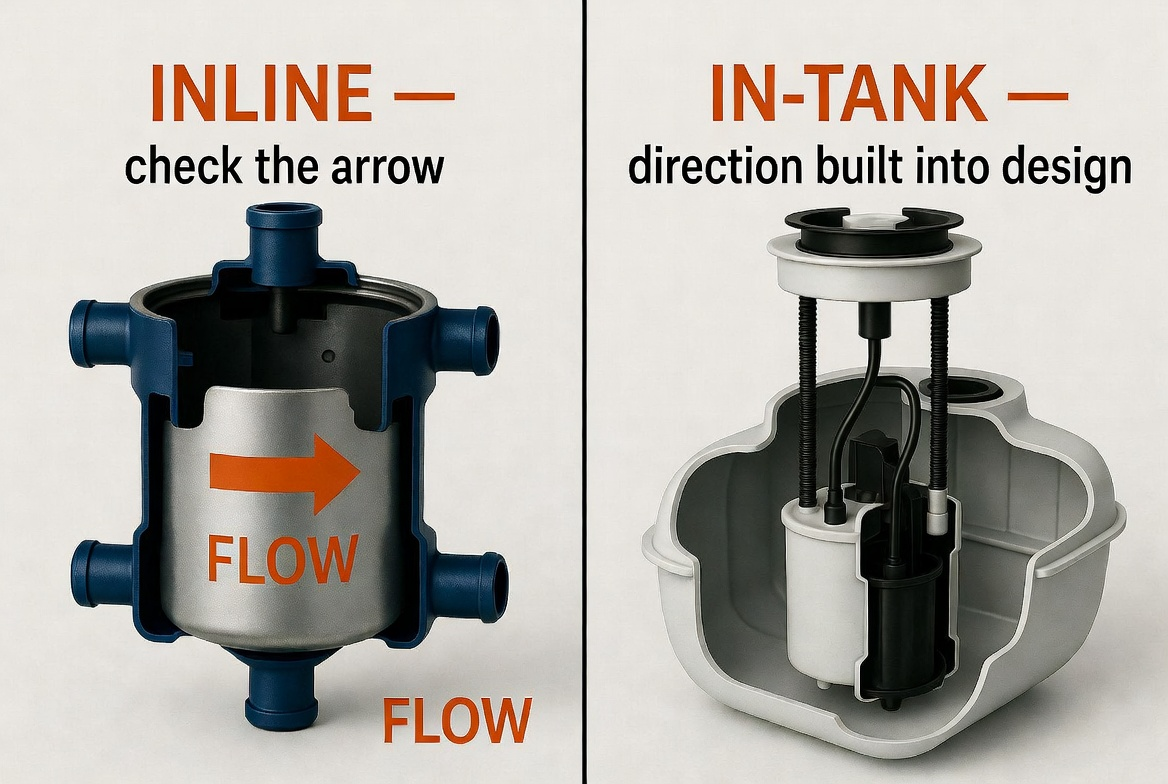
In-tank filters: These are integrated into the fuel pump module assembly. They are submerged filters, generally not user-replaceable as standalone parts. The assembly is installed as a unit with a defined orientation, so direction is handled by the design of the pump module itself. You do not need to worry about arrow direction when replacing a complete pump assembly.
In-line diesel secondary filters: These sit between the fuel tank and the injection system and are always directional. Diesel systems use multiple filtration stages, and each filter in the sequence has its own arrow. Check every filter in the system when servicing a diesel fuel circuit.
FAQ
Which end of a fuel filter is the inlet?
The inlet is the end the arrow points away from. It receives unfiltered fuel from the tank. The outlet, which the arrow points toward, delivers clean fuel to the engine.
Can a backwards fuel filter cause a no-start?
Unlikely at first. A backwards filter will function initially but may restrict flow faster than expected. A severely clogged filter from premature loading can eventually cause hard starting, rough running, or a no-start condition once fuel pressure drops below the injectors' minimum operating pressure.
Do I need to relieve fuel pressure before changing the filter?
Yes. Most fuel-injected systems maintain residual pressure in the fuel rail even after shutdown. Consult your service manual for the correct pressure relief procedure before disconnecting the fuel lines. This prevents fuel from spraying under pressure when you remove the old filter.
How do I confirm the arrow direction on my specific filter?
Check the filter body directly for stamped or printed markings. If none are visible, search the filter's part number on the manufacturer's website. FRAM, WIX, and Purolator all publish installation instructions that specify flow direction.
Does a fuel filter need to be installed vertically or horizontally?
Most inline fuel filters can be mounted in any orientation (horizontal, vertical, or angled) as long as the flow direction is correct. Some filters with internal check valves perform best in a horizontal orientation. Check the manufacturer's spec sheet for your specific filter if you are unsure.
The Short Answer
Arrow points toward the engine. That is the rule. Every inline fuel filter is directional, and reversing it shortens its service life and degrades fuel system performance. Before tightening the fittings, confirm the arrow faces the engine, prime the system, and check for leaks.