Signs of a Clogged or Bad Oil Filter (And What to Do)

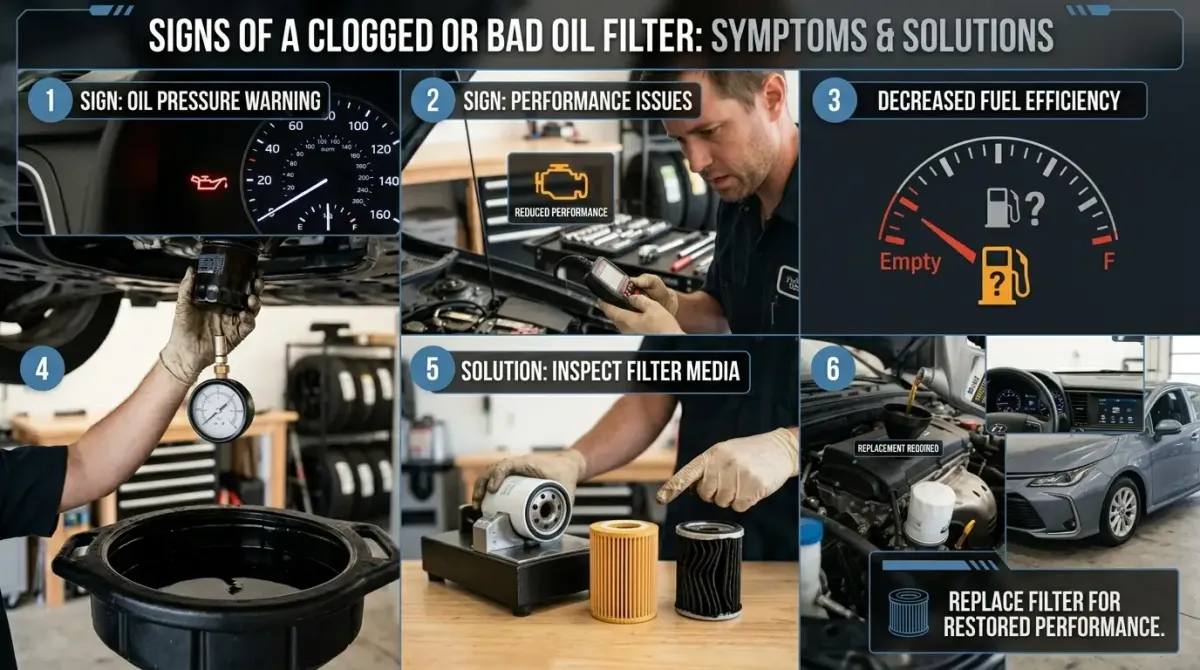


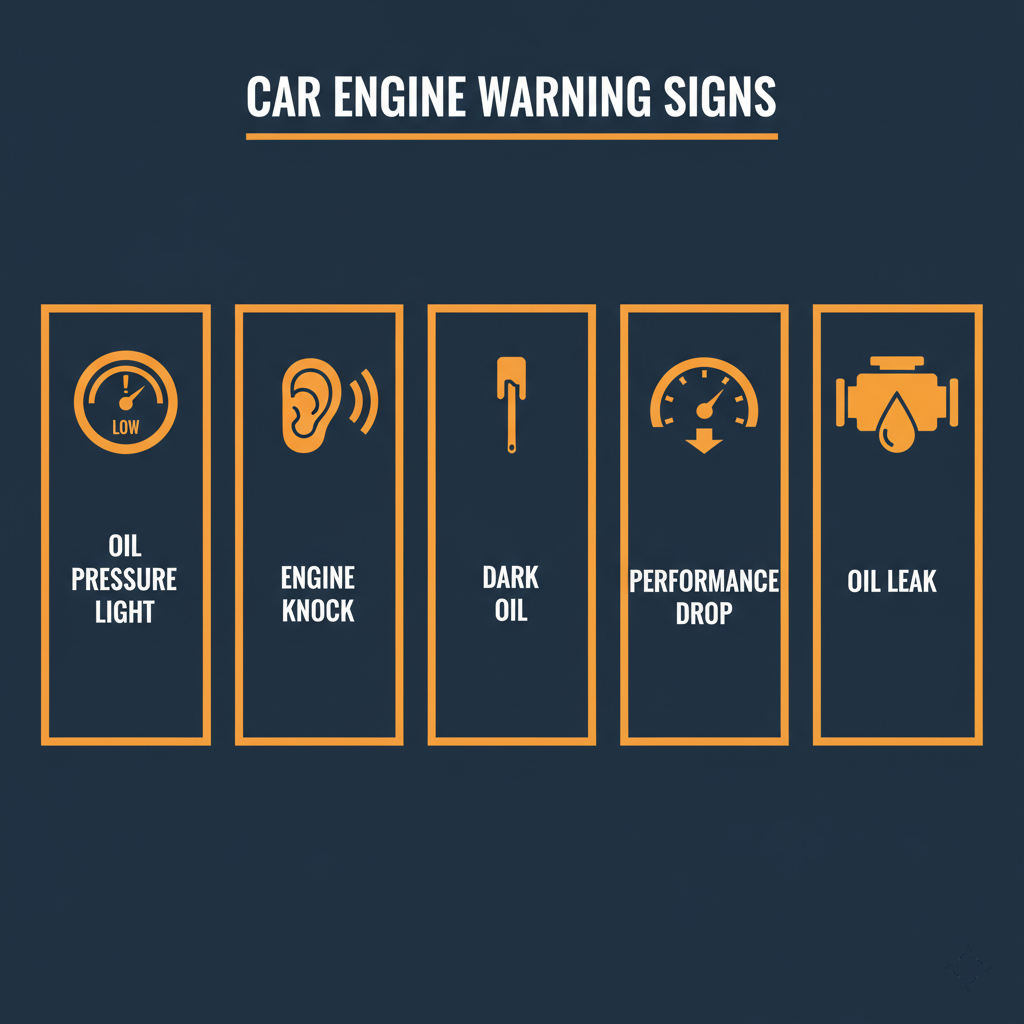
A clogged or failing oil filter usually announces itself in several ways: low oil pressure warning light, engine knocking or ticking sounds, dirty or black oil on the dipstick, reduced engine performance, and visible oil leaks around the filter housing. Any one of these is a signal to stop driving and investigate before serious engine damage sets in.


As an Amazon Associate we earn from qualifying purchases.
Why a Bad Oil Filter Is a Big Deal
Your engine's oil filter is not a passive component. It sits in the path of every drop of oil circulating through your engine. When it clogs or fails, one of two things happens: oil flow starves your engine, or the bypass valve opens and sends unfiltered oil through your bearings and cylinder walls.
Either outcome accelerates engine wear. A clogged filter can cause bearing damage in a matter of miles under the wrong conditions.
This is why knowing the symptoms matters. Catching a bad filter early is cheap. Ignoring it can mean a rebuilt engine.
The Main Signs of a Clogged Oil Filter
Low Oil Pressure Warning Light
The oil pressure warning light is the most urgent symptom. It illuminates when oil pressure drops below the threshold needed to properly lubricate engine components.
A clogged filter restricts oil flow significantly. If the bypass valve has not yet opened, pressure drops and the sensor triggers the warning.
Do not drive with the oil pressure light on.Pull over safely and turn off the engine.
Engine Knocking or Ticking Sounds
Metallic knocking or ticking from the engine often means moving parts are not getting enough lubrication. Oil-starved bearings produce a distinct knocking sound. Valve train components that run dry make a rapid ticking or tapping noise.
Both sounds can indicate that a clogged filter is restricting oil flow to those parts. The sounds typically appear at startup and may fade as the engine warms and the bypass valve opens.
Do not dismiss startup knocking as normal. It is the engine telling you something is wrong.
Dirty or Very Dark Oil on the Dipstick
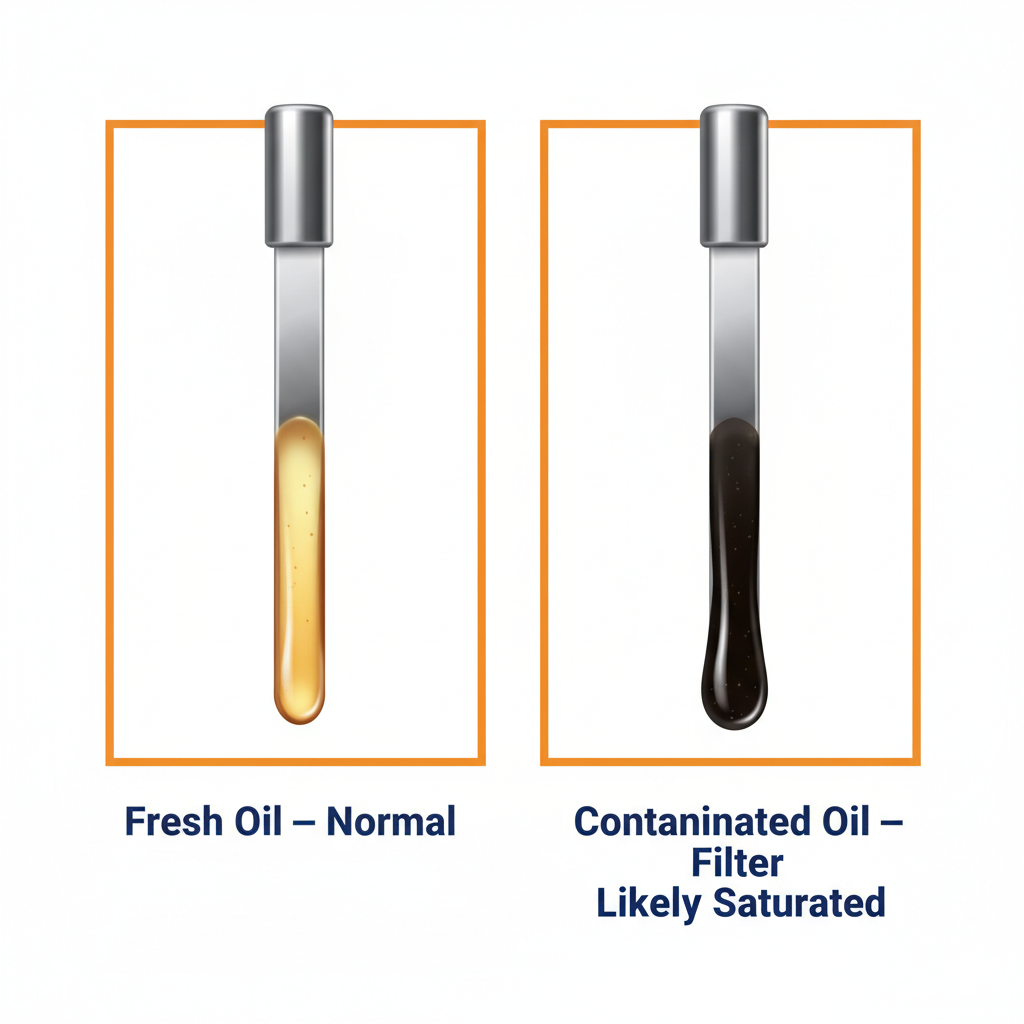
Fresh oil is amber and transparent. Oil that has been cycling through a clogged filter picks up contaminants that the filter can no longer capture. The result is unusually dark or black oil.
Check the dipstick if you suspect a filter problem. If the oil looks pitch black and you changed it recently, the filter is almost certainly saturated and no longer doing its job.
Reduced Engine Performance
A clogged filter restricts oil flow throughout the engine. Less lubrication means more internal friction. More friction means the engine works harder to do the same job.
You may notice sluggish throttle response, reduced power under load, or rough idle. These are not dramatic symptoms on their own. But combined with any of the others on this list, they point directly at the oil filter.
Oil Leaks Around the Filter
A bad oil filter can also leak rather than clog. The most common causes are a cracked housing, a failed gasket, or a filter that was not tightened correctly during installation.
Oil leaks around the filter look like wet, oily residue on the filter itself or on the engine block directly below it. A drip or trail of oil underneath the car is also a sign.
Check the area around the filter and housing after each oil change and during routine inspections.
Metallic Particles in the Oil
This one requires checking the old filter when you remove it. If you cut open a used filter and find metallic shavings or grit in the filter media, internal engine wear is already happening. The filter was capturing debris from worn metal surfaces.
This symptom means the clogged filter problem may have already progressed to actual engine damage. Get a full oil analysis done if you see metallic debris.


As an Amazon Associate we earn from qualifying purchases.
What Happens Inside the Engine When the Filter Clogs
The Bypass Valve Activates
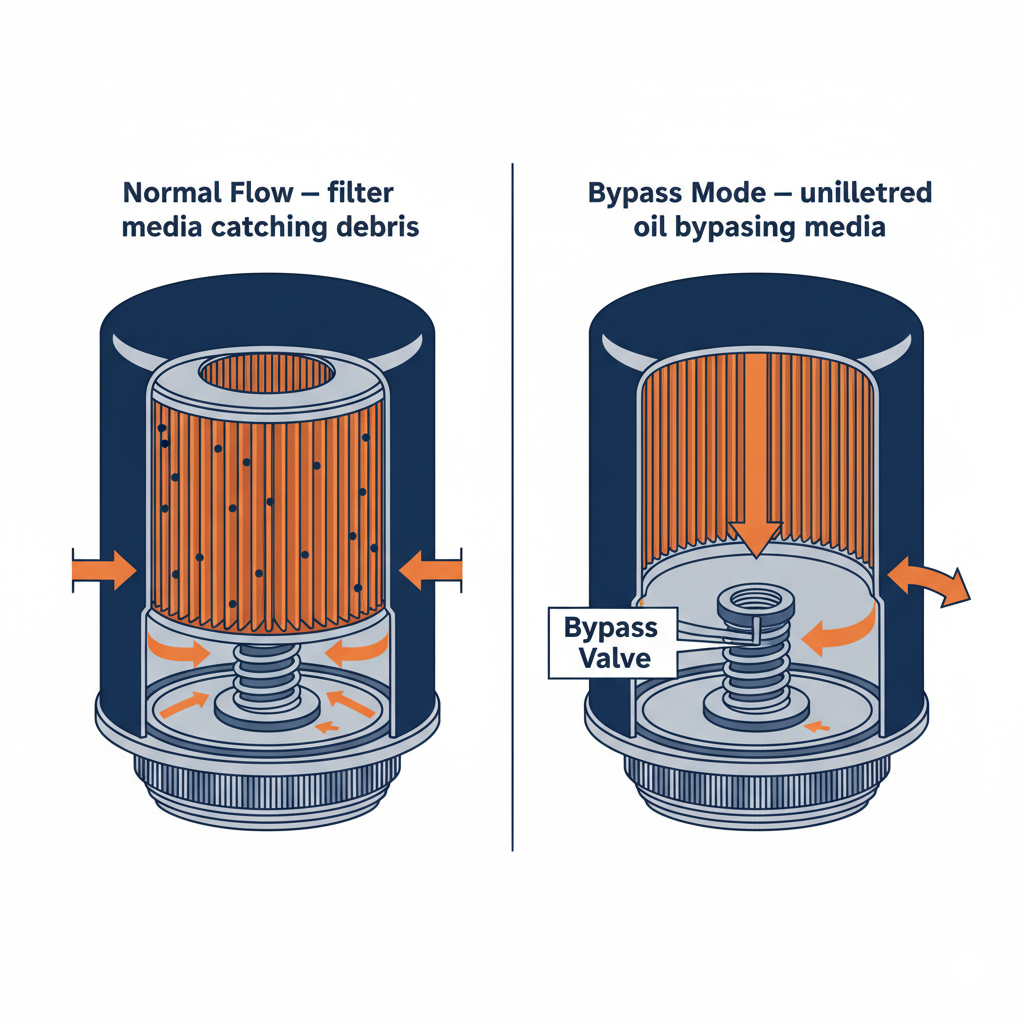
Every oil filter contains a bypass valve. Its job is to keep oil flowing to the engine even when the filter is too clogged to pass oil through normally.
When the filter media becomes saturated with debris, the bypass valve opens. This keeps oil circulating so the engine does not seize. The problem: the oil bypassing the filter is completely unfiltered.
Abrasive particles circulate freely through your bearings and cylinder walls. Every mile you drive in bypass mode accelerates wear.
Oil Pressure Drops Before Bypass Opens
There is a window between "filter getting clogged" and "bypass valve opening" where oil pressure is falling but the bypass has not yet kicked in. This is the most dangerous zone.
During this period, parts of the engine may be oil-starved. The pressure sensor may trigger the warning light here. This is why the oil pressure light is such a critical warning.
Bearing Damage Accumulates Quickly
Engine bearings require a continuous film of pressurized oil to function. When oil pressure falls, that film thins. Metal-to-metal contact begins.
Bearing damage from oil starvation can happen in minutes under high engine load. A highway drive with a severely clogged filter is far more damaging than idling in a parking lot.
How to Tell If the Filter Is the Problem vs. Something Else
Check the Oil Level First
A low oil level causes the same warning light and the same symptoms as a clogged filter. Before blaming the filter, check the dipstick.
If the oil level is normal and the oil pressure light is on, the filter is a prime suspect. If the level is low, top it off and see if symptoms resolve. Then find out why it was low.
How Old Is the Filter?
A filter changed 3,000 miles ago is unlikely to be clogged under normal driving conditions. A filter at 8,000 to 12,000 miles on conventional oil could be saturated, especially if the oil itself was overdue for a change.
Check your last oil change date and mileage. If you are overdue, the filter is a likely culprit.
Perform a Cold-Start Check
Engine knock that appears only at cold startup and disappears within 10 to 15 seconds is different from knock that persists at operating temperature. A clogged filter is more likely to cause persistent knock because the restriction is constant.
Brief cold-start ticking that clears up is more consistent with normal oil drain-back and may not indicate a filter problem.


As an Amazon Associate we earn from qualifying purchases.
What to Do If You Suspect a Clogged Oil Filter
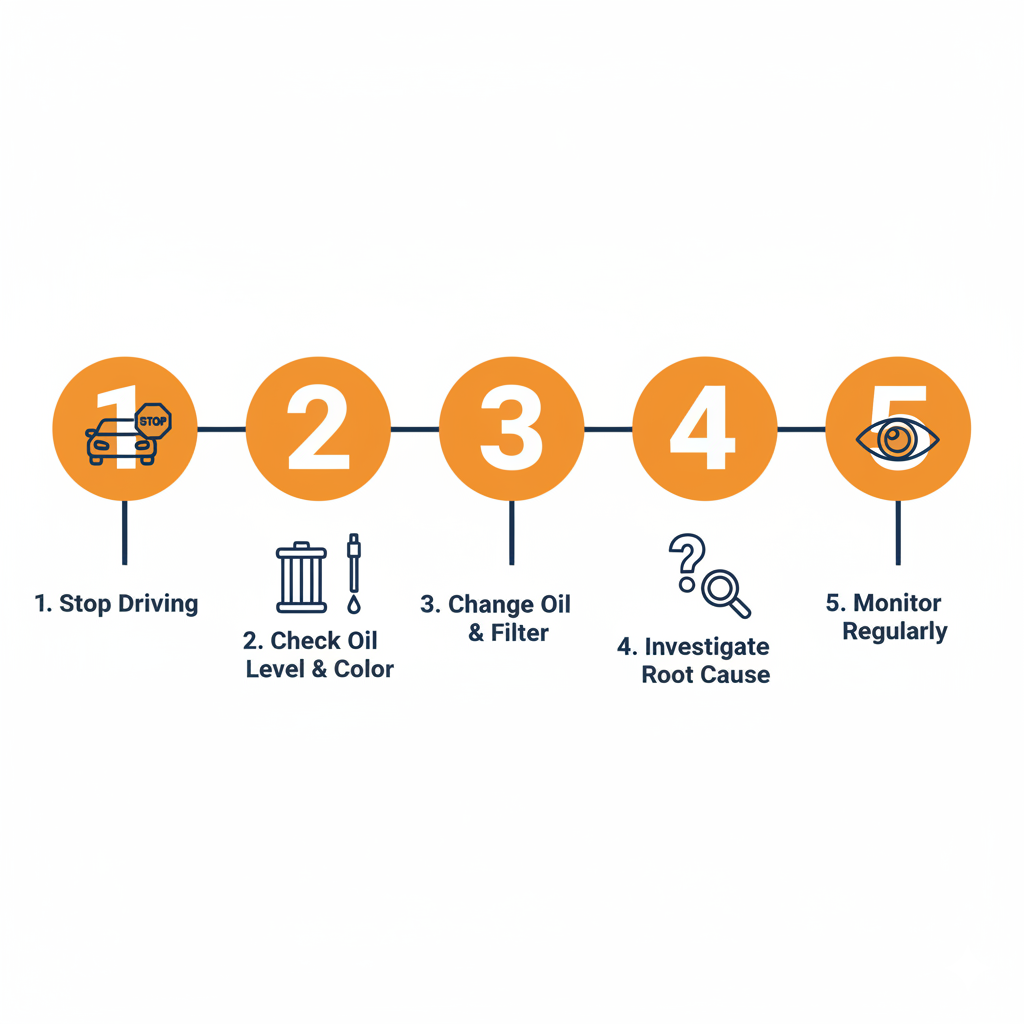
Step 1: Do Not Keep Driving
If the oil pressure light is on or you hear persistent engine knocking, stop the vehicle as soon as it is safe to do so. Turn off the engine.
Driving on low oil pressure is the fastest way to turn a $20 filter problem into a $3,000 engine rebuild.
Step 2: Check Your Oil Level and Condition
With the engine off and cooled down, pull the dipstick. Check the level and look at the color and consistency of the oil. Black, thick, or gritty oil combined with low pressure confirms the filter and oil need immediate attention.
Step 3: Change the Oil and Filter
The fix for a clogged oil filter is straightforward: change the oil and replace the filter. Do not just replace the filter without changing the oil. Old oil saturated with debris will clog a new filter quickly.
Use the correct oil specification for your vehicle and a quality replacement filter.
Step 4: Check for Underlying Causes
If the filter was severely clogged, ask why. Was the oil change interval pushed too far? Is there a coolant leak contaminating the oil? Is there excessive engine wear producing metal particles?
A clogged filter is sometimes a symptom of a bigger issue. Do not just replace the filter and move on without investigating.
Step 5: Monitor After the Change
After the oil and filter change, start the engine and watch for the pressure light. Drive a short distance and check for leaks underneath. If symptoms persist, the problem is not just the filter.
FAQ
Can a clogged oil filter cause the check engine light to come on?
A clogged oil filter typically triggers the oil pressure warning light, not the check engine light. However, if low oil pressure causes secondary issues like a VVT solenoid malfunction or sensor fault, the check engine light can also appear. The oil pressure light is the more direct indicator of a filter problem.
How long can you drive with a clogged oil filter?
Not far. A severely clogged filter puts your engine at risk of bearing damage every mile you drive. If the bypass valve has already opened, you are circulating unfiltered oil through your engine. Even moderate driving distances can cause measurable wear. Change the oil and filter immediately.
Will a bad oil filter make your car burn oil?
A clogged oil filter does not directly cause oil consumption. However, if a bad filter caused engine damage, worn piston rings or valve seals can develop, which do cause oil burning. A filter leak can also produce visible smoke if oil drips onto a hot exhaust component.
What does a clogged oil filter sound like?
The most common sound is a knocking or ticking from the engine, caused by oil-starved bearings or valve train components. You may also hear a slight increase in overall engine noise because friction increases when lubrication is inadequate. The sounds typically worsen under load or at higher RPM.
How often should you change the oil filter to avoid clogging?
Change the filter every time you change your oil. Using a filter for two oil change intervals is a common cause of premature clogging. Most manufacturers design filters to last one oil change interval, not two.


As an Amazon Associate we earn from qualifying purchases.
The Bottom Line
A clogged or failing oil filter shows up in predictable ways: the oil pressure warning light, engine knocking, dark oil, sluggish performance, and visible leaks. The fix is always the same: change the oil and filter immediately and investigate why the filter failed when it did.
The cost of ignoring these symptoms is severe. The cost of catching them early is a quart of oil and a new filter.