How to Remove a Stuck Oil Filter (5 Methods That Work)

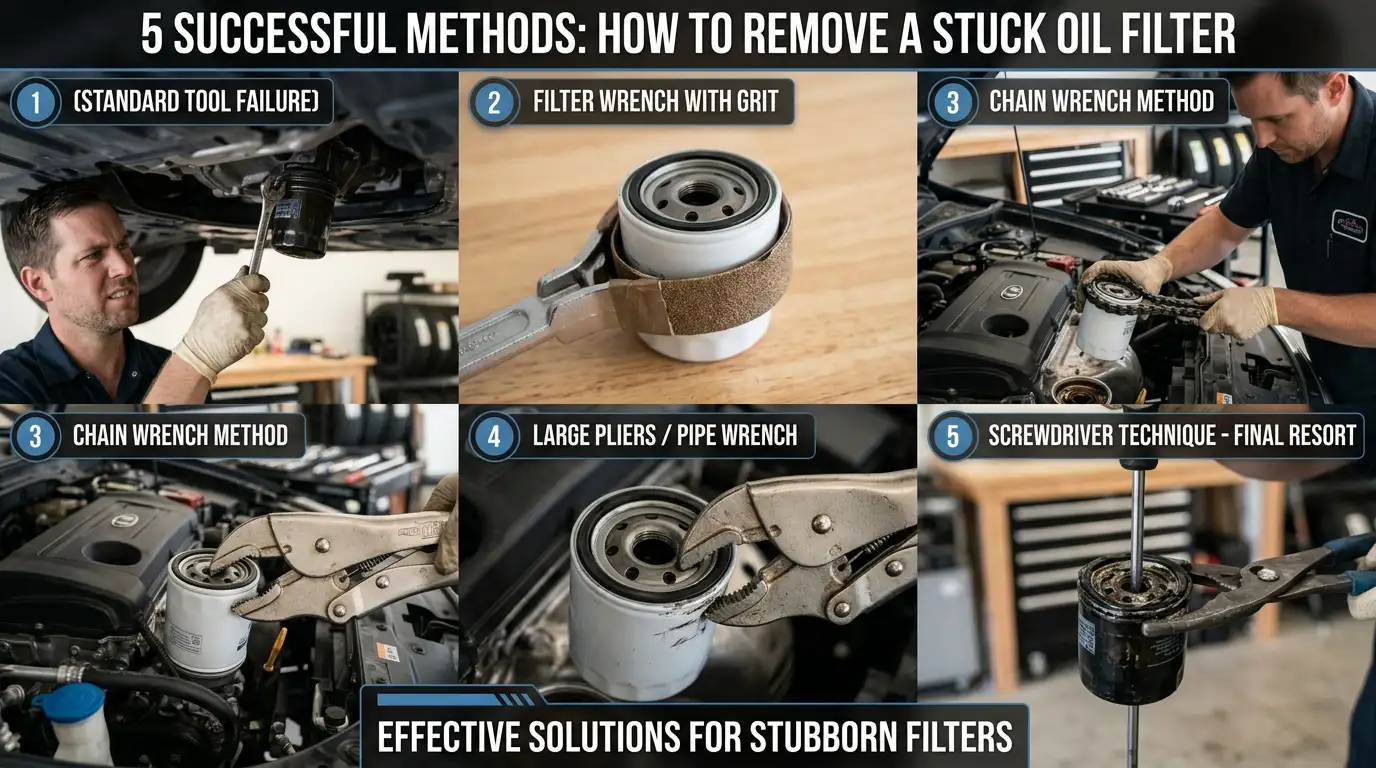


A stuck oil filter almost always comes off with the right technique. The most reliable starting point is a strap wrench or filter pliers applied with steady counterclockwise pressure. If that fails, there are four more methods — including a few that require nothing but what you already have in the garage.


As an Amazon Associate we earn from qualifying purchases.
Why Does an Oil Filter Get Stuck?
Most stuck oil filters trace back to one of three causes.
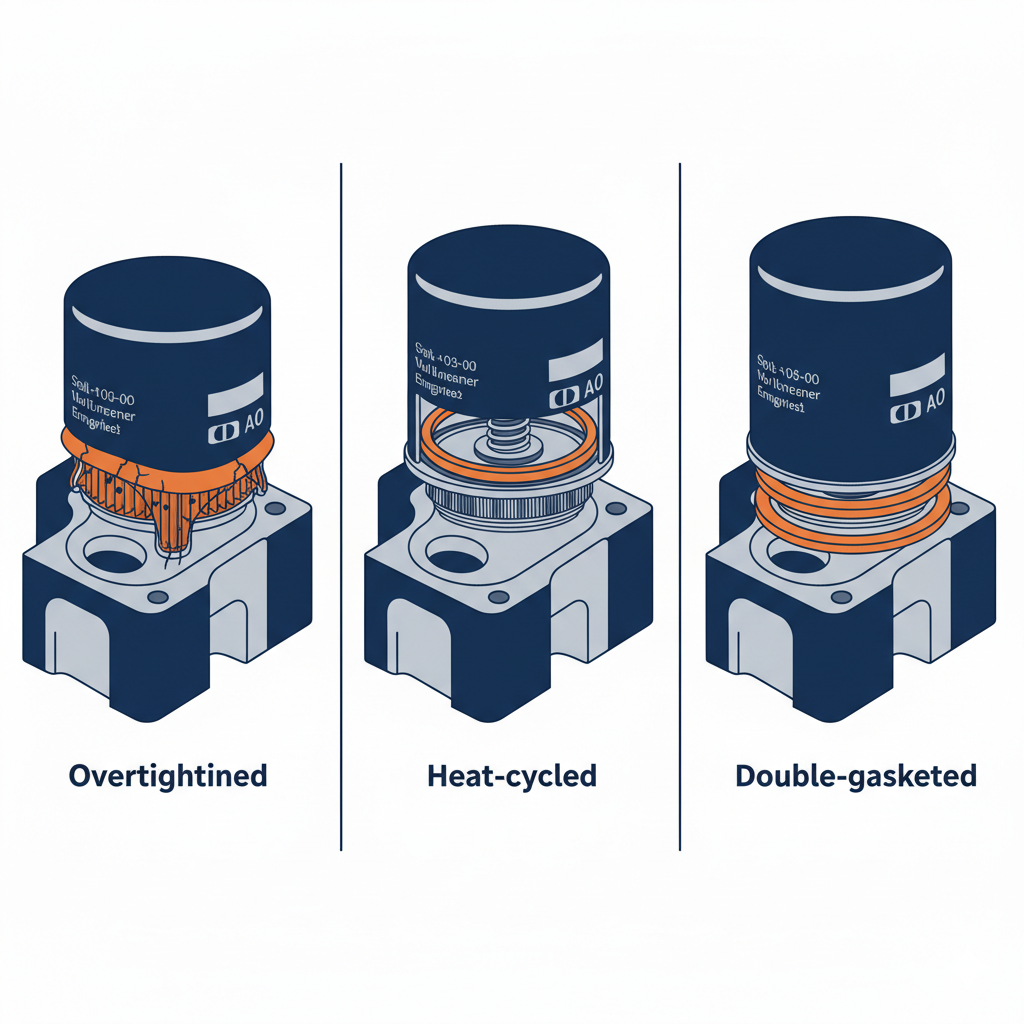
The first is overtightening at the last oil change. Filters are designed to be hand-tightened plus a half to three-quarter turn. When someone uses a wrench to drive them on, the rubber gasket deforms under pressure and bonds to the mounting surface.
The second is heat cycling. The filter expands and contracts with every drive cycle. Over thousands of miles,the gasket hardens and vulcanizes against the block. A filter that went on loosely can still be nearly welded on after 5,000 miles of heat cycles.
The third is a double-gasketed installation. If the old gasket stuck to the block when the previous filter was removed, the new filter was installed with two gaskets stacked on one surface. This creates extra sealing pressure that makes removal very difficult.
What You Need Before You Start
You do not need to buy specialized tools for most stuck filters. Here is what is useful to have on hand:
- Strap wrench or chain wrench — highest grip, no crush damage
- Oil filter pliers — good grip on round surfaces
- Socket-style filter wrench — fast when there is clearance to use it
- Flathead screwdriver and hammer — for the puncture method
- Heat gun or propane torch — for thermal expansion relief
- Rubber mallet — to tap the filter into initial movement
- Rags and an oil drain pan — you will need them regardless of method
Method 1: Strap Wrench or Filter Pliers
This is the correct first attempt on any stuck filter. A strap wrench or filter pliers grips the full diameter of the filter body without crushing it, which gives you more torque with less risk of damaging the filter case.
How to do it:
- Position the strap wrench or pliers around the widest part of the filter body.
- Apply slow, firm counterclockwise pressure.
- Do not jerk or rush. Steady pressure breaks the gasket seal. A quick yank usually just strips the grip.
- If the filter starts to move, keep going at the same pace until it comes free.
Pro tip: Wrap sandpaper or a section of rubber mat around the filter body before using pliers. The extra friction can be the difference between grip and slip.
If the filter pliers keep slipping, the exterior of the filter may be too oily. Wipe it down with a dry rag before trying again.


As an Amazon Associate we earn from qualifying purchases.
Method 2: Socket-Style Filter Wrench
A socket-style filter wrench slides over the end cap of the filter and connects to a ratchet or breaker bar. It applies torque at the base of the filter where the metal is thickest.
This method works best when you have enough clearance above the filter to seat the socket fully. Tight engine bays with limited vertical access make this harder to use.
How to do it:
- Match the socket size to the filter. Most passenger car filters use a 65 mm, 74 mm, or 76 mm cap.
- Seat the socket over the end cap completely — a partial seat will round off the cap.
- Attach a breaker bar for extra leverage. A ratchet alone may not provide enough torque on a badly stuck filter.
- Apply slow counterclockwise pressure.
If the end cap of the filter is already deformed, move to Method 3 or 4.
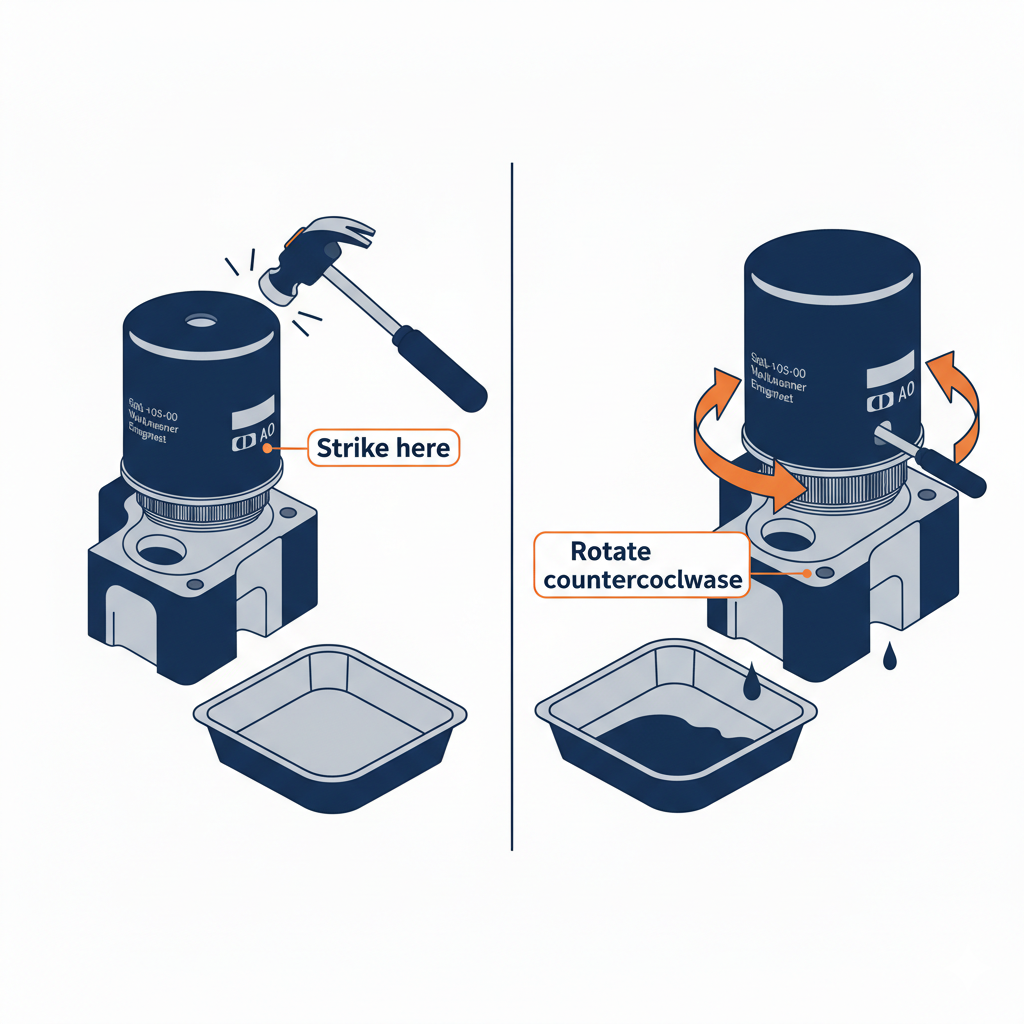
Method 3: The Screwdriver Puncture Method
This is the go-to when no wrench can get a grip and you are prepared to destroy the filter in the process. It works because the screwdriver gives you a lever point directly through the filter body
How to do it:
- Position a large flathead screwdriver against the side of the filter at a slight downward angle.
- Tap the screwdriver all the way through the filter body from one side to the other with a hammer. This creates a T-handle grip — the screwdriver becomes a lever that spans the full diameter.
- Use both ends of the screwdriver as handles to rotate the filter counterclockwise.
- The filter will be destroyed in the process. Have rags ready because oil will pour out of the puncture immediately.
Warning: Never attempt this near the threaded center of the filter. Puncturing too close to the mounting threads on the engine block can damage them — a repair that requires a thread kit or professional rethreading. Keep the screwdriver in the cylindrical mid-section of the filter body.
After the filter comes off, inspect the mounting surface for the old gasket. If the rubber gasket is still on the block, peel it off before installing the new filter.


As an Amazon Associate we earn from qualifying purchases.
Method 4: Heat to Break the Gasket Seal
Controlled heat softens the rubber gasket and briefly reduces the compressive grip on the mounting surface. This method works particularly well on filters that have been on for a long time or have been through extreme heat cycling.
How to do it:
- Use a heat gun set to low or a propane torch held several inches from the filter body.
- Apply heat to the base of the filter near the gasket for 20 to 30 seconds.
- Do not apply heat directly to the engine block, oil lines, or any rubber hoses.
- Immediately try to remove the filter with a strap wrench while it is warm. The window is short — the filter cools quickly.
Caution: The filter and surrounding area will be hot. Use heavy work gloves. Keep heat away from fuel lines and any oil residue on the block, which can ignite.
If the first application of heat does not work, let everything cool fully before repeating. Repeated short heating sessions are safer than one prolonged application.
Method 5: Rubber Mallet Tap
Sometimes a filter is not actually seized — it is just tight enough that the gasket has formed a suction seal. A few firm taps can break that initial resistance and allow a wrench to work normally.
How to do it:
- Position a rubber mallet or the flat of your fist against the side of the filter near the base.
- Strike it at a slight counterclockwise angle — you are trying to impart rotational force, not just impact.
- Follow immediately with your filter wrench or strap wrench while the seal is broken.
This method works best on filters that are overtightened but have not been heat-cycled for a long time.
What to Do If the Filter Tears Apart
On very old or severely overtightened filters, the outer shell can tear during removal, leaving the filter body or internal components still attached to the block.
If this happens:
- Stop applying rotational force immediately.
- Remove as much of the outer casing as possible with pliers.
- Look at what remains on the mounting boss. If the base plate is still on with the gasket, use oil filter pliers directly on the base plate.
- If the mounting threads appear damaged, stop and take the vehicle to a shop. Damaged threads require a thread repair kit or professional rethreading — continuing without addressing them will result in an oil leak immediately after the new filter is installed.


As an Amazon Associate we earn from qualifying purchases.
How to Prevent the Oil Filter from Getting Stuck Again
Prevention takes 10 seconds and saves this entire ordeal next time.
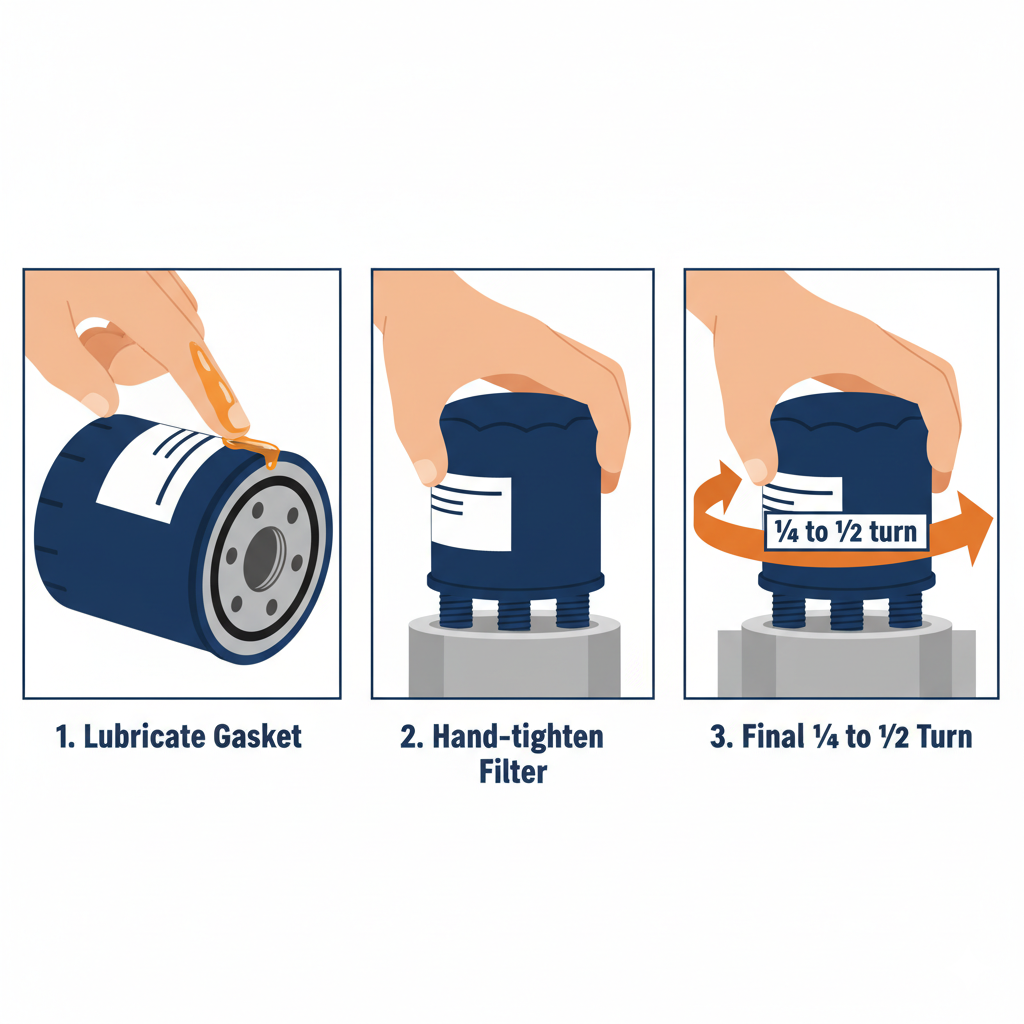
Before installing the new filter:
- Wipe the mounting surface clean and dry.
- Confirm the old gasket came off with the old filter. Run your finger around the rim of the mounting boss.
- Apply a thin film of fresh motor oil to the new gasket.
When installing:
- Hand-tighten until the gasket contacts the surface.
- Add a half to three-quarter turn by hand only. No wrench.
- Write the date and mileage on the filter with a marker so you have a reference for the next change.
Filters installed correctly by hand come off easily every time.
Choosing a Wrench for Stuck Filters
If you do not already own an oil filter wrench, a strap wrench is the most versatile choice. It fits almost any filter diameter, does not crush the case, and works on both spin-on and cartridge housing caps. Chain wrenches function on the same principle and work on larger or oddly shaped filters.
Filter pliers are a close second. They are faster to position than a strap wrench but can slip on very oily filter bodies.
Socket-style wrenches are the fastest option when the clearance exists. They are worth having if you always service the same vehicle.


As an Amazon Associate we earn from qualifying purchases.
FAQ
Can I use WD-40 to loosen a stuck oil filter?
WD-40 will not penetrate a rubber gasket seal effectively. The gasket is compressed against metal, and a penetrating lubricant cannot reach the sealing surface. Your time is better spent on heat or mechanical methods.
How much force should I use before I give up?
There is no safe upper limit that applies universally. If you are applying full body weight through a 2-foot breaker bar and the filter is not moving, try a different method rather than increasing force. Excessive torque can damage the mounting boss or the block threads, which turns a simple filter job into a machine shop repair.
Is it safe to drive if I cannot get the oil filter off?
No. You should not drive the vehicle until the filter is replaced. A stuck filter that you cannot remove may be due to a degraded or cracked housing. Any filter near the end of its service life poses a leak risk, especially under pressure during engine operation.
What if the oil filter wrench keeps slipping?
The most common reason for slipping is an oily filter surface. Wipe the exterior of the filter completely dry, then wrap sandpaper around it before reapplying the wrench. The abrasion gives the wrench a surface to grip. If slipping continues, switch to the screwdriver puncture method.
Does a longer breaker bar actually help?
Yes. Torque is force multiplied by the length of the lever arm. A 24-inch breaker bar applies twice the torque as a 12-inch ratchet at the same force. If your ratchet is not breaking the filter loose, adding a pipe extension to the handle or switching to a longer breaker bar is the right move before escalating to destructive methods.
Replacing the oil filter at every oil change is the best way to ensure you never have to fight a stuck one. A fresh filter installed correctly comes off without drama at the next service.