Does the Oil Filter Brand Matter? OEM vs Aftermarket Explained

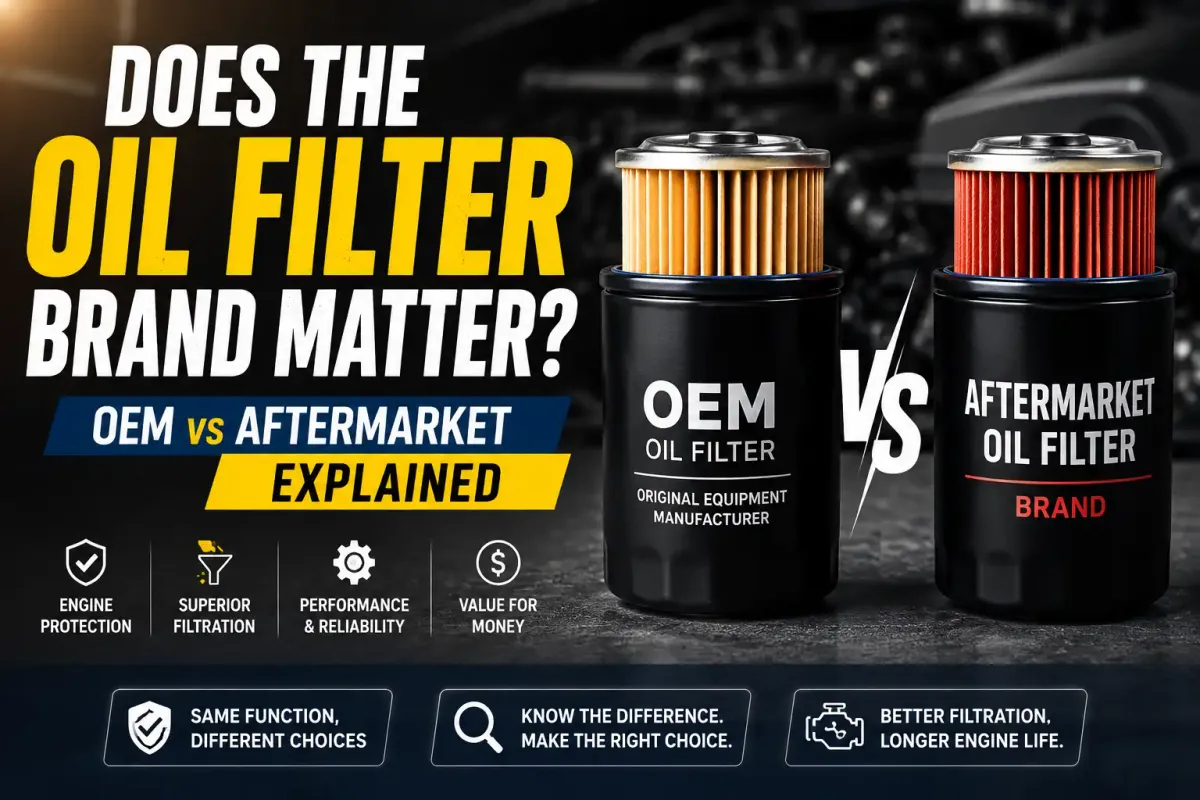
I've gone through spec sheets, owner forum discussions, and engineering comparisons for dozens of oil filters. The question of whether brand matters comes up constantly, and the answer is almost always misunderstood.
The brand name itself does not protect your engine. Toyota and FRAM don't filter oil the same way just because one costs more. What actually matters is the construction inside: the media type, the bypass valve calibration, the anti-drainback valve material, and how much contamination the filter can hold before it gives up.


This article breaks down exactly where the differences are and what they mean for your engine.
Does the Oil Filter Brand Actually Matter?
Yes, but not in the way most people think.


The brand name is a proxy for construction quality. A brand with a strong reputation has typically earned it by using better internal components. A brand selling filters at a steep discount is almost always making trade-offs somewhere inside the canister.
The filter that matters is not the one with the best marketing. It is the one with the best media, the right bypass calibration, and the right anti-drainback valve material for your driving conditions.


The practical answer: a quality mid-tier or premium aftermarket filter from a trusted brand protects your engine just as well as an OEM filter. A rock-bottom budget filter may not.
What Is the Difference Between OEM and Aftermarket Oil Filters?
OEM stands for Original Equipment Manufacturer. An OEM oil filter is made by or for the vehicle manufacturer. It is the filter your dealer installs, and it comes in a branded box: Toyota, Honda, BMW, Ford.


Aftermarket filters are made by independent manufacturers. FRAM, Purolator, Mobil 1, WIX, K&N, Bosch, and Denso are all aftermarket brands.
Here is the part that surprises most people: your car's OEM filter is almost certainly made by an aftermarket manufacturer. Toyota, Honda, and most automakers do not own filter factories. They contract with manufacturers like Denso and Toyo Roki to produce filters to their specifications. Honda OEM filters, for example, are manufactured by Toyo Roki. The OEM box is a branded version of a filter those same manufacturers also sell under their own labels.


Does OEM mean better quality?
Not necessarily. OEM filters are built to the manufacturer's specifications, which are designed to protect the engine under normal driving conditions and standard service intervals. They are not overbuilt for performance or extended intervals.
A premium aftermarket filter from Mobil 1, WIX, or Royal Purple is often built to a higher specification than the OEM version. It uses synthetic media instead of cellulose, a silicone anti-drainback valve instead of nitrile, and a higher dirt-holding capacity. For a driver using full synthetic oil on extended intervals, the premium aftermarket filter is the better choice.
What Makes a Quality Oil Filter Worth Paying More For?
Four things separate a quality filter from a cheap one. They are all inside the canister where you cannot see them.
Filter Media Type
This is the single biggest performance difference between filters.
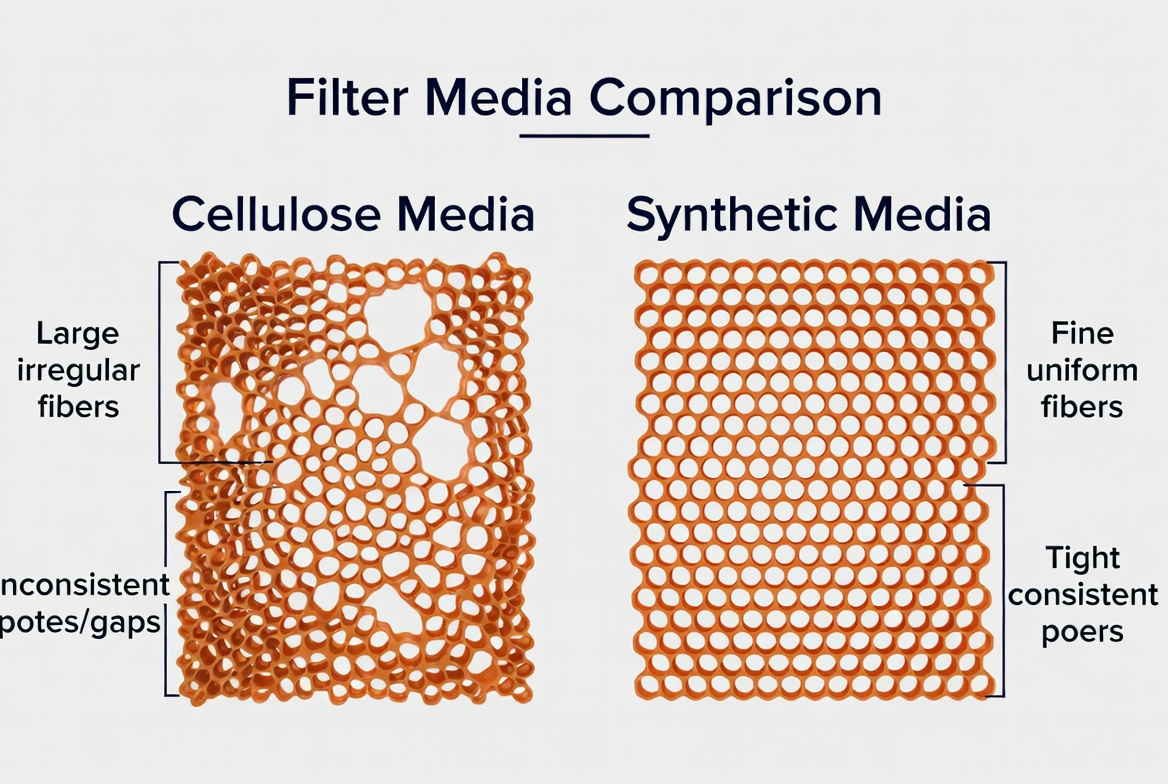
Cellulose media is made from wood pulp. The fibers are large and inconsistent. It is adequate for standard 3,000 to 5,000 mile intervals on conventional oil, but it has limits on efficiency and capacity.
Synthetic media uses fine, consistent glass fibers. The pore size is more uniform, the efficiency is higher, and the dirt-holding capacity is greater. Premium brands like Royal Purple and Purolator Boss use full synthetic media. Others like Mobil 1 Extended Performance and FRAM Tough Guard use a high-quality synthetic blend.
A cellulose filter rated at 85% efficiency at 25 microns and a synthetic filter rated at 99% efficiency at 20 microns are not performing the same job, even if they both fit your engine.
Bypass Valve Calibration
The bypass valve opens when pressure across the filter media exceeds a threshold. If the valve opens too easily, the filter bypasses under normal operating conditions, sending unfiltered oil to your engine. If it opens too late, it can cause oil starvation on cold starts.
Most quality filters are calibrated between 8 and 17 PSI. Budget filters with poorly calibrated bypass valves can open far earlier than they should, allowing contaminated oil to circulate even with a filter that is not yet saturated.
Anti-Drainback Valve Material
The anti-drainback valve keeps oil from bleeding back into the sump when the engine is off. If oil drains out of the filter, the engine runs unlubricated for a few seconds on every cold start until pressure rebuilds.
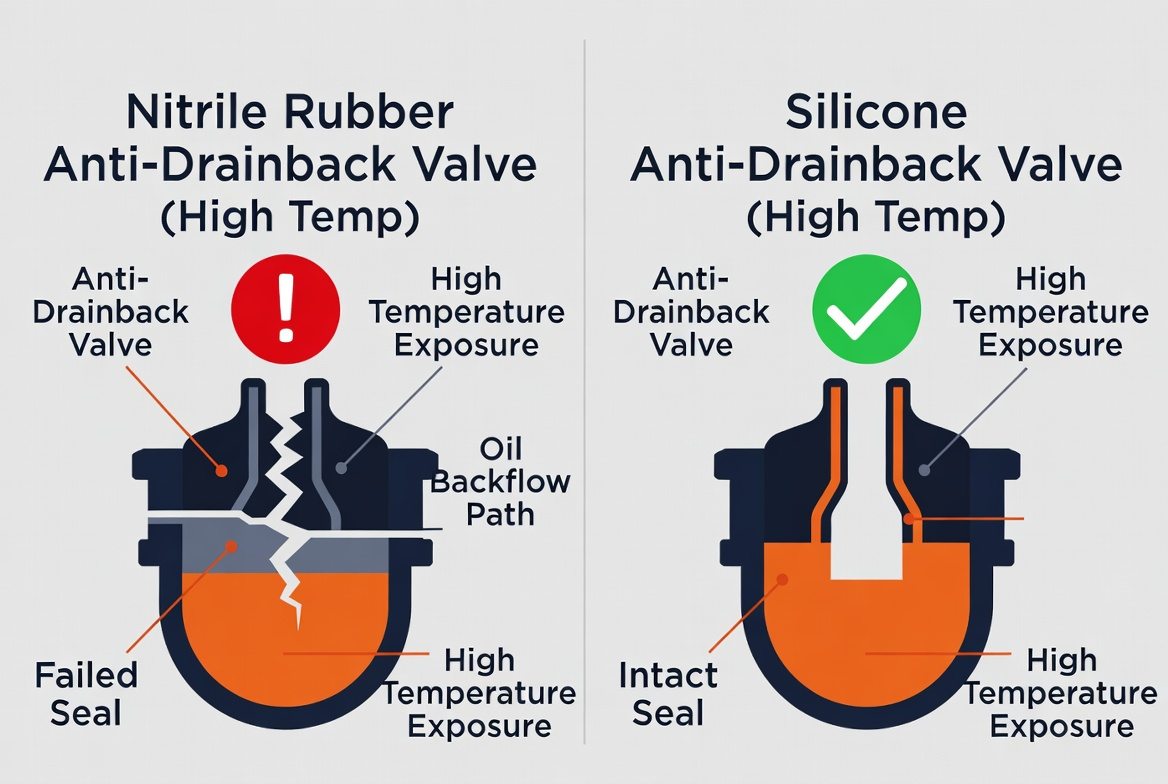
Nitrile rubber is the standard material used in most budget and mid-tier filters. It works adequately at normal temperatures but can become brittle over time, especially in high-heat applications.
Silicone anti-drainback valves resist heat far better. They maintain their seal through more temperature cycles and have a longer functional lifespan. Silicone valves are found in premium filters from brands like Mobil 1, Royal Purple, and WIX.
Dirt-Holding Capacity
A filter's media can only hold so much contamination before it saturates and the bypass valve takes over. Higher dirt-holding capacity means the filter continues working effectively deeper into the service interval.
Filters with more pleating, larger overall media area, and denser synthetic fibers hold more contamination per square inch of media. A small, thin filter and a larger, densely-pleated filter rated for the same application are not equivalent, even if they both carry the same micron marketing claim.
Are Cheap Oil Filters Dangerous?
Cheap filters are not automatically dangerous. For a driver changing oil every 3,000 to 5,000 miles on conventional oil with a filter from a recognizable brand, even a budget option performs adequately.
Where cheap filters become a real risk:
- Extended intervals. If you are running synthetic oil to 7,500 or 10,000 miles, a budget cellulose filter may saturate well before the oil change is due. The bypass valve opens and your engine runs on unfiltered oil for the last portion of the interval.
- High-performance or turbocharged engines. These engines generate higher oil temperatures and faster contamination rates. They need a filter built to handle that stress.
- Extremely cold climates. On a very cold start, oil is thick and slow to flow. A bypass valve that opens too easily in these conditions sends unfiltered oil to the engine during every winter start.
The risk is not that a cheap filter fails dramatically. The risk is that it quietly underperforms over thousands of miles, and the damage accumulates invisibly.
Which Aftermarket Oil Filter Brands Are the Most Trusted?
I spent time reviewing manufacturer specifications, owner forum data from BobIsTheOilGuy, and independent filter teardown analyses to put together a clear picture of how brands tier out.
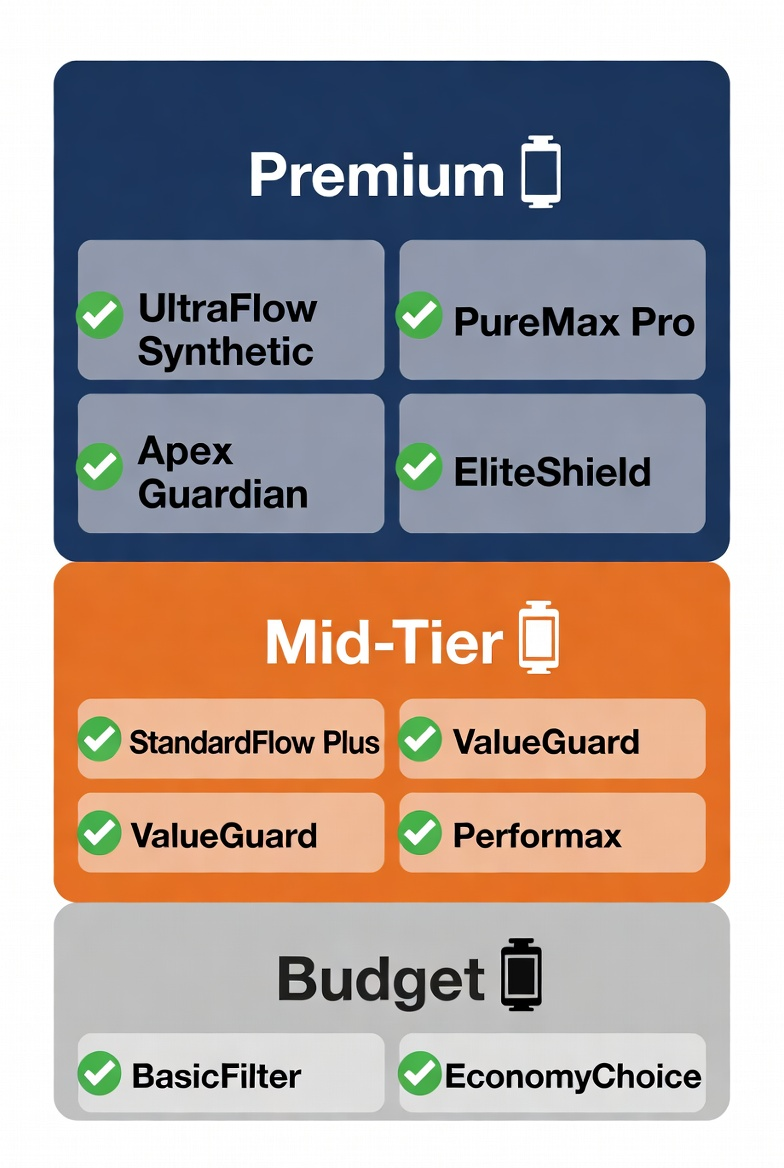
Premium tier:
- Mobil 1 Extended Performance: Synthetic blend media rated for up to 20,000 miles or one year. One of the most tested filters in the enthusiast community.
- Royal Purple Extended Life: 100% synthetic micro-glass media with 99% efficiency at 25 microns and a silicone anti-drainback valve. High capacity with strong extended-interval credentials.
- WIX XP: Cellulose and micro-glass blend media rated for up to 20,000 miles, consistently well-regarded in teardown reviews. WIX supplies OEM filters for several manufacturers.
- Purolator Boss: Full synthetic SmartFUSION media with 99%+ dirt removal at 25 microns, rated to 20,000 miles. Excellent value at the premium tier.
Mid-tier:
- FRAM Tough Guard: Synthetic blend media. Better than cellulose budget options. Suitable for standard and slightly extended intervals.
- Bosch Premium FILTECH: Synthetic blend media, well-regarded for European vehicles.
- K&N HP series: Full synthetic media on most models, but thinner construction than some competitors.
Budget tier:
- FRAM Extra Guard: Cellulose media. Adequate for 3,000 to 5,000 mile conventional oil intervals when changed on schedule. Not appropriate for extended intervals.
- Motorcraft (Ford OEM): Made by Purolator for Ford applications. Solid construction. Often comparable to mid-tier aftermarket at a similar price.
The takeaway: Mid-tier and above from a recognized brand protects your engine effectively. Budget filters work if you are changing oil frequently on conventional oil. For synthetic oil or extended intervals, spend the extra few dollars on a premium option.
Can a Cheap Oil Filter Void My Engine Warranty?
In the United States, the Magnuson-Moss Warranty Act protects your right to use aftermarket parts including oil filters without automatically voiding your manufacturer warranty.
A dealer cannot void your powertrain warranty simply because you used a FRAM or Purolator filter instead of their branded OEM unit. They would need to demonstrate that your specific aftermarket filter caused the damage being claimed.
This protection extends to the EU under similar consumer protection laws.
The practical caveat: if you use a clearly inadequate filter and your engine suffers damage consistent with oil contamination, a warranty claim becomes complicated. The warranty protection is not a blanket excuse to use any filter regardless of quality.
Is OEM Always Better Than Aftermarket?
No. OEM is not always better. It is simply consistent with the manufacturer's baseline specification.
OEM filters are designed to pass the manufacturer's own quality standards. Those standards protect engines under normal driving conditions and standard service intervals. They are not designed to exceed that baseline.
A premium aftermarket filter from WIX, Mobil 1, or Royal Purple often exceeds OEM specifications in media efficiency, dirt-holding capacity, and anti-drainback valve durability. For anyone running extended drain intervals on full synthetic oil, a premium aftermarket filter is a better technical choice than the OEM version.
The one situation where OEM makes the most sense: European luxury vehicles (BMW, Mercedes, Audi) with proprietary cartridge housings and application-specific oil flow requirements. These manufacturers engineer their filtration systems as part of the lubrication circuit, and deviating from specification has a higher risk of introducing compatibility issues.
What Should I Look For When Comparing Oil Filter Brands?
Stop comparing brand names. Compare specifications.
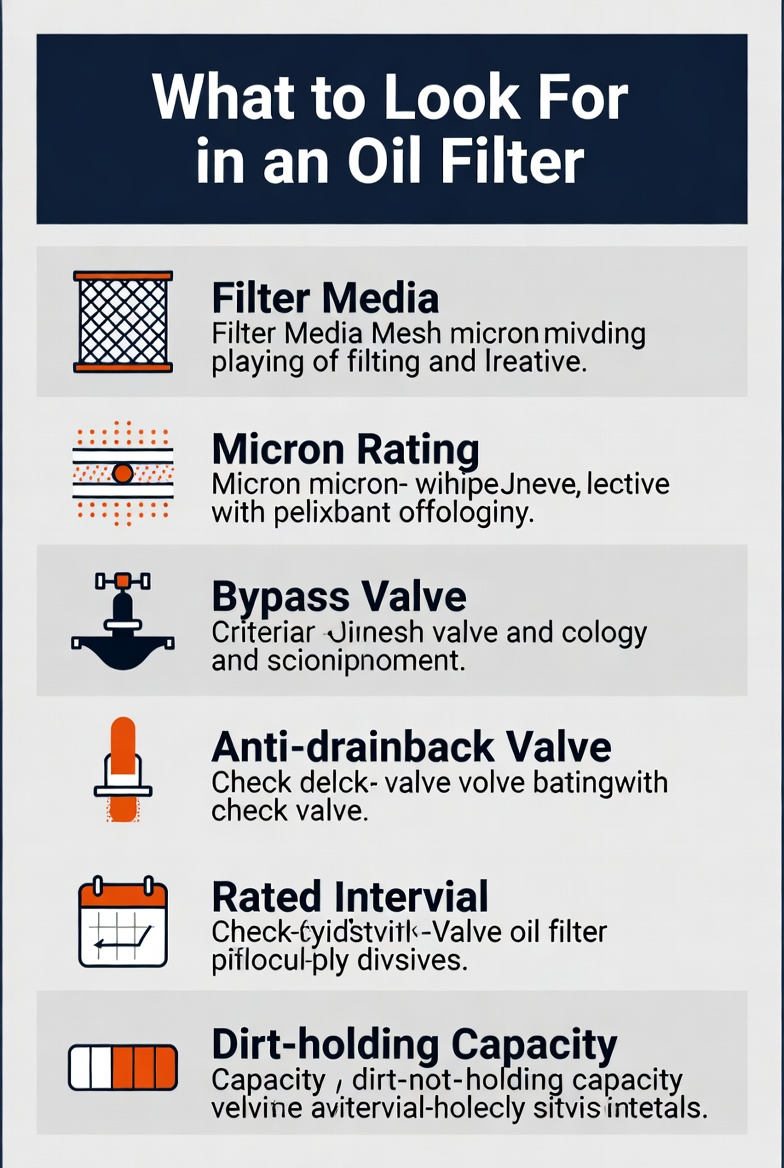
When evaluating two filters side by side, look at:
Most budget and mid-tier filters do not publish detailed specifications. That lack of transparency is itself informative. Premium brands publish their specs because their specs are good.
FAQ
Does the oil filter brand actually matter?
Yes. The internal construction of an oil filter, including media type, bypass valve calibration, and anti-drainback valve material, varies significantly between brands. A premium filter from a trusted brand offers better filtration efficiency, higher dirt-holding capacity, and more durable components than a budget option. For standard intervals on conventional oil, a budget filter from a recognized brand is adequate. For extended synthetic intervals or performance engines, brand and construction quality matter more.
Is OEM oil filter better than aftermarket?
Not necessarily. OEM filters meet the manufacturer's baseline specification. Premium aftermarket filters from brands like Mobil 1, WIX XP, or Purolator Boss often exceed OEM specs in media efficiency, dirt-holding capacity, and component durability. For normal driving on standard intervals, OEM and quality aftermarket are equivalent. For extended intervals on full synthetic oil, a premium aftermarket filter is often the better technical choice.
What is the best oil filter brand?
Mobil 1, WIX, Purolator Boss, and Royal Purple consistently perform at the top tier in filter teardown and testing comparisons. FRAM Tough Guard is a solid mid-tier option. The best filter depends on your oil type, drain interval, and engine. Match the filter's rated interval to your actual service schedule.
Can I use any brand of oil filter on my car?
You can use any filter that fits your engine and is rated for your application. In the US, the Magnuson-Moss Warranty Act protects your right to use quality aftermarket filters without voiding your warranty. Use a filter that matches or exceeds the OEM specification for your vehicle, not the cheapest option that physically fits.
How much should I spend on an oil filter?
Premium filters typically cost $10 to $18. Mid-tier filters run $7 to $12. Budget filters can be under $5. The cost difference between a premium and budget filter is $5 to $13 per oil change. Given that oil changes are typically done once or twice per year, spending a few extra dollars on a quality filter is one of the lowest-cost engine protection decisions you can make.
What to Do Next
Understanding filter construction is step one. Step two is knowing the warning signs that your current filter is failing before it does damage. A clogged or failing oil filter has specific symptoms you can recognize early.