Oil Filter Wrench Guide: Types, Sizes and How to Use Them

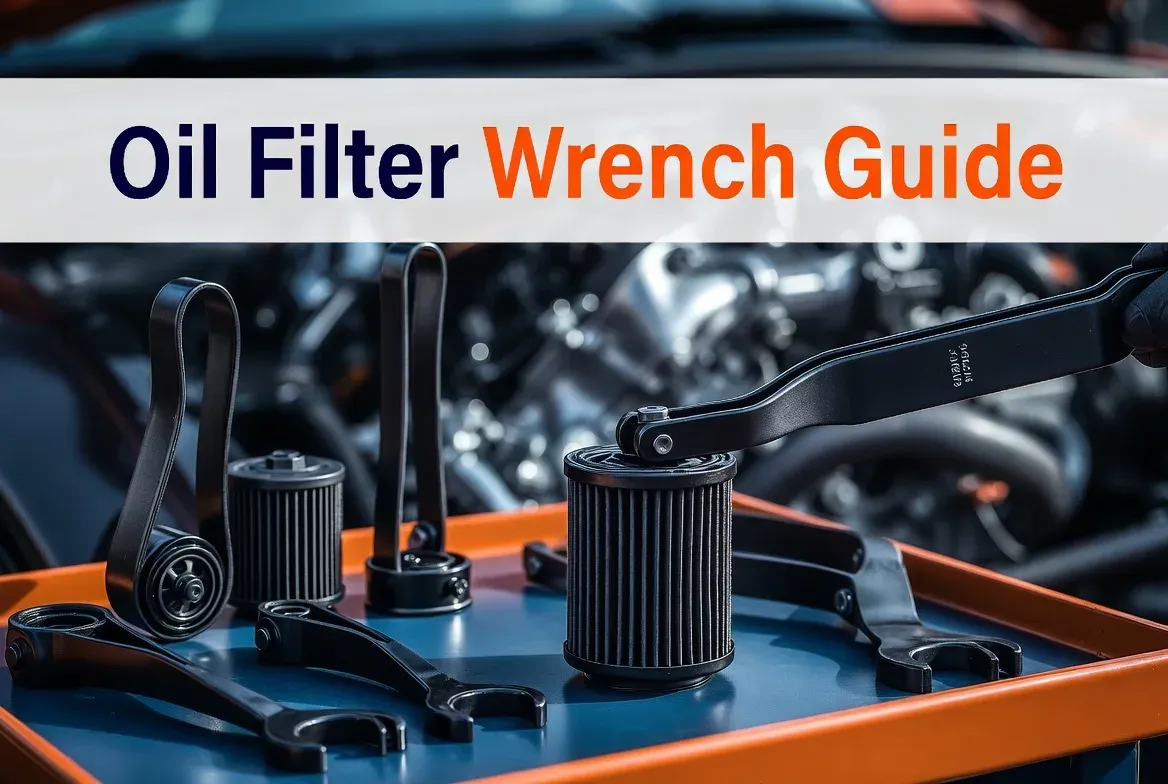


An oil filter wrench is a tool that grips the outside of a spin-on oil filter or the housing cap of a cartridge filter so you can break it loose by hand. Most filters go on hand-tight and then heat-cycle until they feel welded in place. The right wrench makes removal a 10-second job. The wrong one strips the filter and turns a simple oil change into a frustrating afternoon.


As an Amazon Associate we earn from qualifying purchases.
Why You Often Need a Wrench Even If the Filter Went On By Hand
A new oil filter screws on with finger pressure. After your first heat cycle, the gasket compresses, the metal expands, and what was hand-tight is now something completely different.
Hot oil also coats every surface around the filter. When the engine cools, that oil film dries into a thin adhesive layer between the filter body and the engine block mounting surface. The combination of compressed gasket and dried oil film is enough to exceed most people's hand-grip strength.
There is also the geometry problem. A round, oily cylinder gives your hand almost nothing to work with. A wrench converts your torque into a grip around the full circumference of the filter.
The filter does not need to be torqued on with a wrench. It needs to come off with one.
Types of Oil Filter Wrenches
There are four main categories of oil filter wrench. Each works differently and suits different vehicles and access conditions.
Strap Wrenches
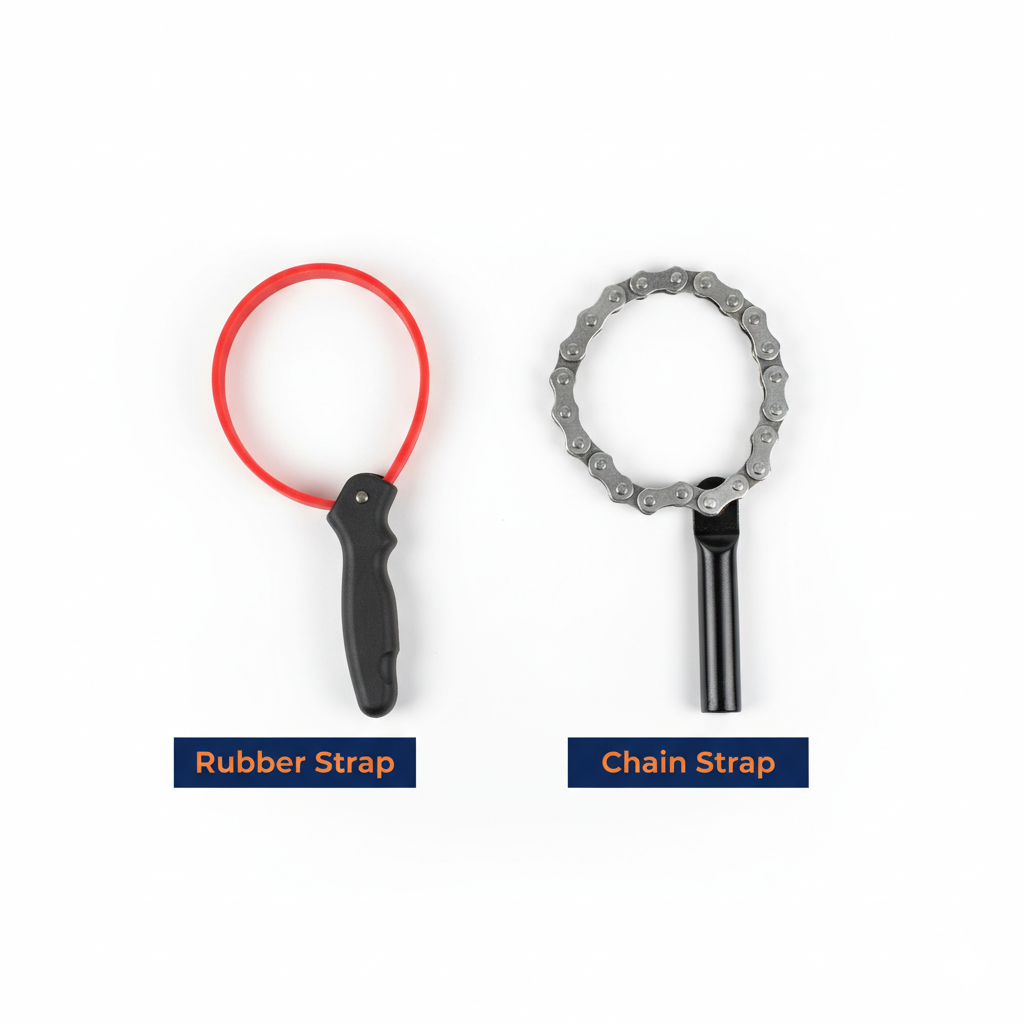
A strap wrench uses a flexible band, either rubber or metal chain, looped around the filter body. As you turn the handle, the band tightens against the filter exterior.
Advantages:
- Works on any size filter without needing a separate size
- The rubber band grips better on an oily surface
- Cannot crush or damage a thin-walled filter
Disadvantages:
- Requires clearance around the full filter to loop the band
- Metal chain versions can scratch or dent the filter body
- Less precise torque control than a cap wrench
Rubber strap wrenches are the best general-purpose choice for most passenger vehicles. They handle a wide range of filter diameters and cost very little.
Cap Wrenches (End Cap / Socket-Style)
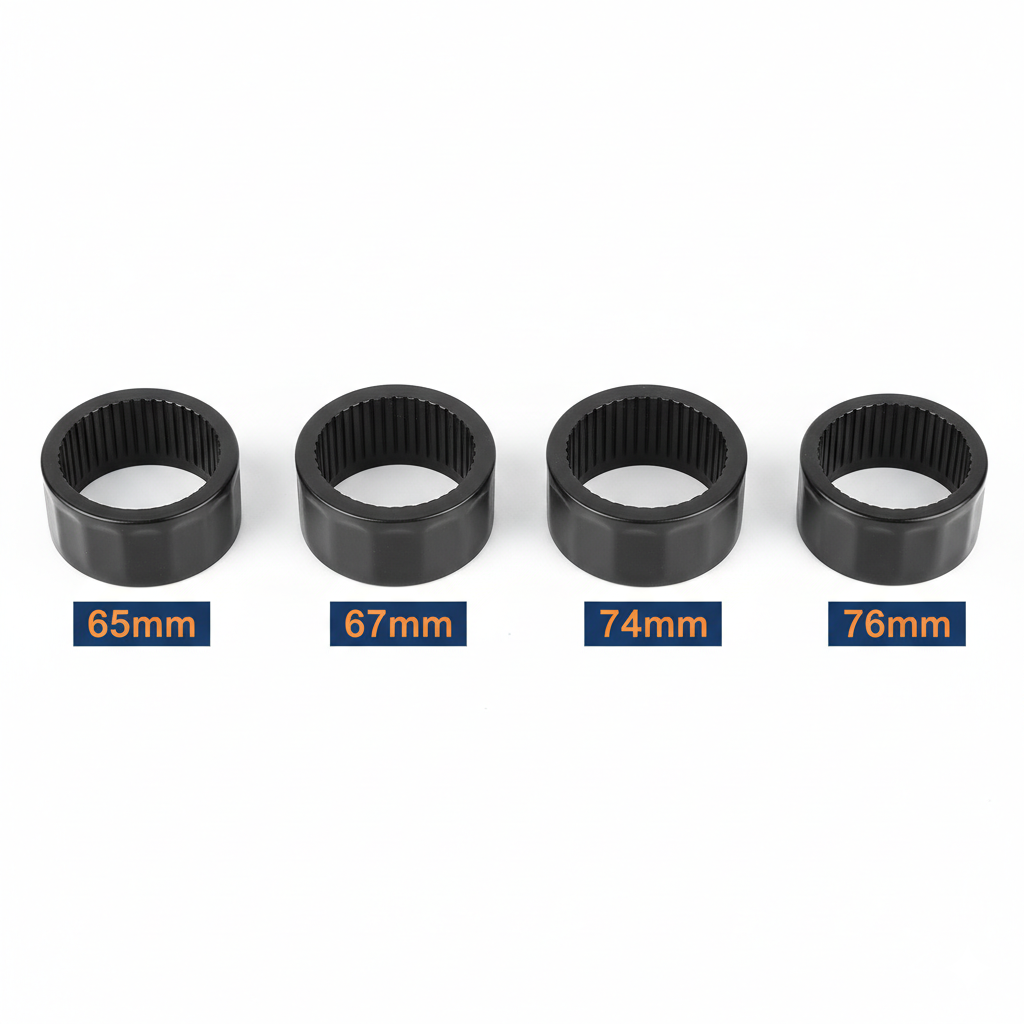
A cap wrench fits over the end of the filter like a socket. It has flutes or splines that match the hex or ribbed end of the filter.
Advantages:
- Very fast to use when access is good
- Can be driven with a ratchet or breaker bar for more torque
- Precise fit eliminates slipping
Disadvantages:
- Vehicle-specific or diameter-specific — you need the right size
- Does not work if the filter has no accessible flat end
- Useless if the filter is recessed and the cap cannot reach it
Cap wrenches are the professional's choice for vehicles where access is good and the filter end is reachable. A set covering 65 mm, 67 mm, 74 mm, and 76 mm handles most common applications.
Plier-Style (Swivel Jaw) Wrenches
Plier-style wrenches use two adjustable jaws that tighten around the filter body as you apply torque. They look like large channel-lock pliers with curved jaws.
Advantages:
- Adjustable to multiple filter sizes
- Strong mechanical advantage for very stuck filters
- Works in tight horizontal spaces
Disadvantages:
- Can crush a thin or damaged filter body
- Requires more access space than a strap wrench for some orientations
- Easy to over-apply force and collapse the filter
Use plier-style wrenches as a rescue tool for a filter that has already resisted a strap wrench. Do not use them as your primary wrench unless access forces it.
Socket Wrenches for Cartridge Housing Caps
Cartridge-style oil filters live inside a plastic or metal housing. The cap of that housing has a hex head and requires a large socket, typically a 24 mm, 27 mm, or 32 mm deep socket, or a dedicated cartridge wrench.
This is technically not a filter wrench but a housing wrench. The cartridge housing is the part being removed, not the filter element itself.
Common cartridge housing socket sizes:
Always verify against your owner's manual. These sizes are representative, not universal.


As an Amazon Associate we earn from qualifying purchases.
What Size Oil Filter Wrench Do I Need?
The answer depends on whether you have a spin-on or cartridge filter.
For Spin-On Filters
Spin-on filter wrenches are sized by the outer diameter of the filter body in millimeters. Common sizes are:
- 65 mm — compact and subcompact vehicles, 4-cylinder engines
- 67 mm — very common size, fits many Toyota, Honda, and Nissan filters
- 74 mm — many domestic V6 and V8 engines
- 76 mm — larger V8 engines, some trucks
- 80 mm and 93 mm — heavy-duty trucks and diesel applications
The safest approach is to buy a set that includes 65 mm through 76 mm. Most passenger car filters fall in that range.
If you want a single wrench instead of a set, measure the outer diameter of your current filter body in millimeters and buy accordingly.
For Cartridge Housing Caps
Check your owner's manual for the specified cap size. If it is not listed, a generic cartridge wrench kit covering 24 mm, 27 mm, and 32 mm covers the majority of vehicles. For European vehicles, 27 mm is the most common single size.
How to Use an Oil Filter Wrench
Using a wrench incorrectly can puncture the filter, strip the threads, or leave you with a worse mess than you started with. Here is the correct approach.
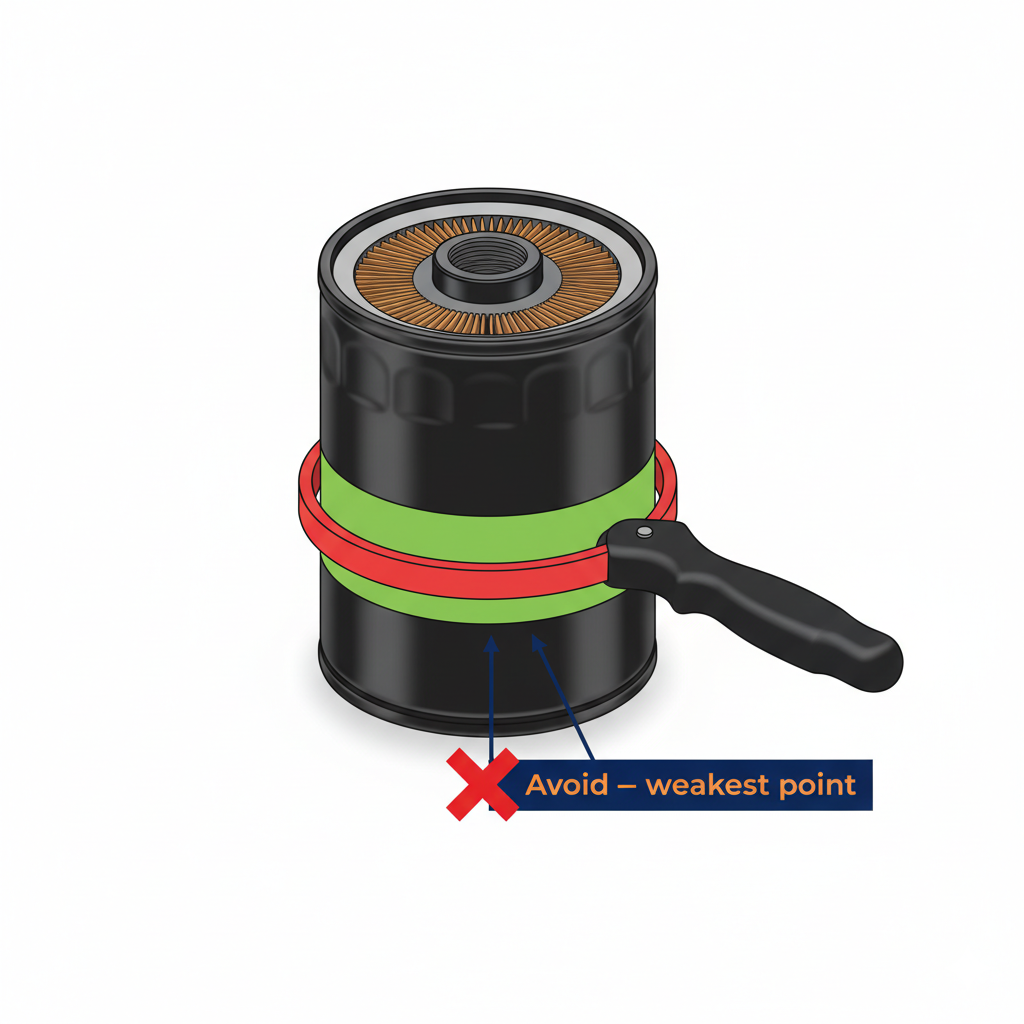
Using a Strap Wrench
- Make sure the engine is warm but not hot. Warm oil drains faster and the gasket has not fully re-hardened. Let the engine cool for 15 to 20 minutes after driving.
- Loop the strap around the filter body. Position it in the middle third of the filter, not near the top or base.
- Orient the handle so turning it counterclockwise (the direction to loosen) will pull the strap tighter against the filter.
- Apply steady pressure counterclockwise. Do not jerk. Slow steady torque breaks the seal better than a sharp snap.
- Once the filter breaks loose, spin it off by hand. Keep a rag under it — it will drip.
Using a Cap Wrench
- Clean off any oil from the filter end and the wrench. A dry grip is a better grip.
- Press the cap firmly onto the filter end.
- Attach your ratchet or breaker bar to the cap wrench. A short extension keeps the ratchet from hitting nearby components.
- Turn counterclockwise with firm steady pressure until the filter breaks free.
- Remove the cap, then spin the filter off by hand.
Using a Cartridge Housing Wrench
- Place the socket over the hex cap of the housing.
- Use a torque wrench or breaker bar. These caps are often torqued to a specific spec — overtightening on installation is a common reason they are hard to remove.
- Turn counterclockwise to remove.
- After replacing the filter element, reinstall the cap to the manufacturer's torque specification. Most plastic cartridge caps torque to around 18 to 25 Nm. Consult your owner's manual for the exact spec.


As an Amazon Associate we earn from qualifying purchases.
Can You Remove an Oil Filter Without a Wrench?
Sometimes, yes. If the filter was installed hand-tight and has not gone through many heat cycles, a strong grip with a dry rubber glove or a wrap of sandpaper around the filter body is enough.
Sandpaper wrapped around the filter gives your hand the friction surface it needs. Grip firmly and twist counterclockwise.
This works maybe 30% of the time on a well-maintained vehicle where the last person did not overtighten the filter. It almost never works on a filter that has been on through multiple oil changes or one that was installed with a wrench.
If your hand method fails once, reach for the strap wrench. Do not keep fighting bare-handed and risk rounding the filter body.
Common Mistakes When Using an Oil Filter Wrench
Positioning the strap too close to the base. The base of the filter is the thinnest and weakest point. If you grip there, you can collapse the filter body. Position the strap in the middle third.
Using a metal chain strap on a thin filter. Metal chain wrenches can dent and pierce thin-walled filters. A rubber strap wrench does the same job without the risk.
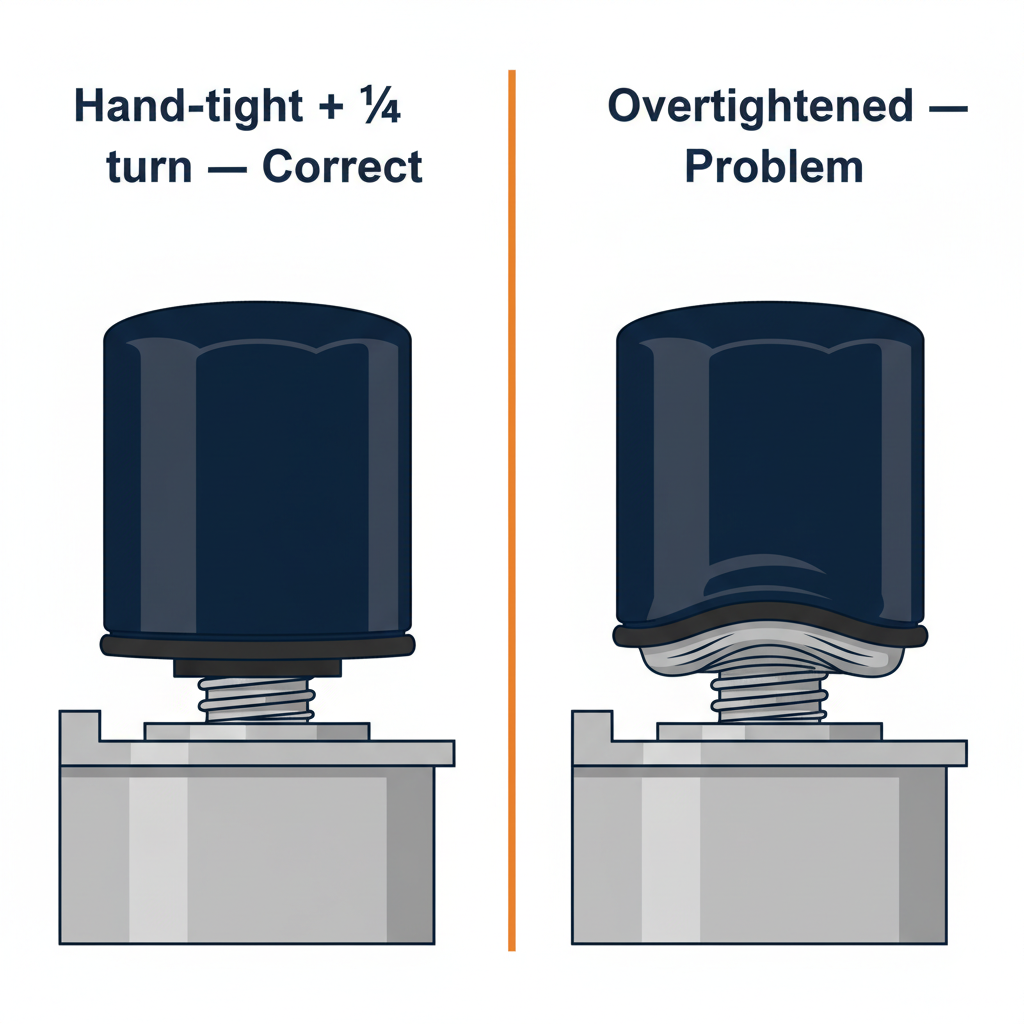
Overtightening the new filter. This is what creates stuck filters. The correct method is hand-tight until the gasket contacts the engine, then ¾ to 1 additional turn. No wrench required during installation.
Not cleaning the mounting surface. If the old gasket stayed behind on the engine block, your new filter will leak from day one. Always inspect the mounting surface after removal.
Using the wrong cap size. A cap wrench that is 1 to 2 mm too large will slip under torque and round the filter end. Check the size before applying force.


As an Amazon Associate we earn from qualifying purchases.
Which Oil Filter Wrench Is Best?
For most people doing DIY oil changes on one or two vehicles, a rubber strap wrench plus a vehicle-specific cap wrench is the combination worth owning.
The strap handles emergencies and odd sizes. The cap wrench handles your regular vehicles cleanly and quickly.
If you work on a range of vehicles or multiple engine types, a cap wrench set covering 65 mm, 67 mm, 74 mm, and 76 mm plus a rubber strap wrench covers virtually everything you will encounter on passenger vehicles.
For cartridge-based vehicles — especially German makes — a dedicated cartridge wrench set is the better investment than a large socket, because the correct wrench engages the housing cap without risk of slipping.
FAQ
What is the most common oil filter wrench size?
The 65 mm and 67 mm cap wrenches cover the largest share of passenger vehicles, including many Toyota, Honda, Nissan, and compact European models. For domestic V8 applications, 74 mm and 76 mm are the more common sizes.
Can I use a strap wrench on a cartridge housing cap?
No. A cartridge housing cap has a hex head designed for a socket. A strap wrench cannot get a reliable grip on a hex head and will slip. Use the correct socket or a dedicated cartridge housing wrench.
How tight should I install the new oil filter?
Hand-tight until the gasket contacts the engine, then ¾ to 1 full turn. This seats the gasket without overtightening. Never use a wrench to install a spin-on filter. Overtightening is the primary reason filters become stuck and require extreme force to remove.
My strap wrench keeps slipping. What should I do?
First, wipe the filter body clean with a dry rag. Oil on the filter surface defeats the rubber strap's grip. If it still slips, try repositioning the strap higher on the filter body. If the filter body is already damaged or collapsed, switch to plier-style jaws for final removal.
Do I need a different wrench for each vehicle?
Not necessarily. A rubber strap wrench is universal within its size range. The cap wrenches are size-specific, so you need a set or the correct single size for your vehicle's filter. Check the filter diameter before buying.


As an Amazon Associate we earn from qualifying purchases.
The Right Tool Makes Oil Changes Faster and Easier
A $10 rubber strap wrench handles most stuck filters on passenger vehicles. A properly sized cap wrench makes the job faster and cleaner when access allows. The combination of both, plus the correct cartridge housing socket if your vehicle needs it, covers virtually every scenario.
The most important thing to remember: use the wrench to remove, not to install. Install hand-tight until the gasket contacts the block, then ¾ to 1 turn more. That keeps your next removal easy.
For the full oil change procedure including filter removal in context, see how to change your oil filter.