Types of Oil Filters: Spin-On vs Cartridge vs Bypass Explained



Most drivers never think about what type of oil filter their car uses. They just buy a filter that fits and change it on schedule. That works fine until you need to understand why your filter looks different from a friend's,or why some cars require a cap wrench and others don't.
The type of filter your engine uses is determined by the manufacturer. You can't swap between types. But understanding each one helps you buy smarter, install correctly, and avoid the mistakes that cause leaks or engine damage.


As an Amazon Associate we earn from qualifying purchases.
What Are the Different Types of Oil Filters?
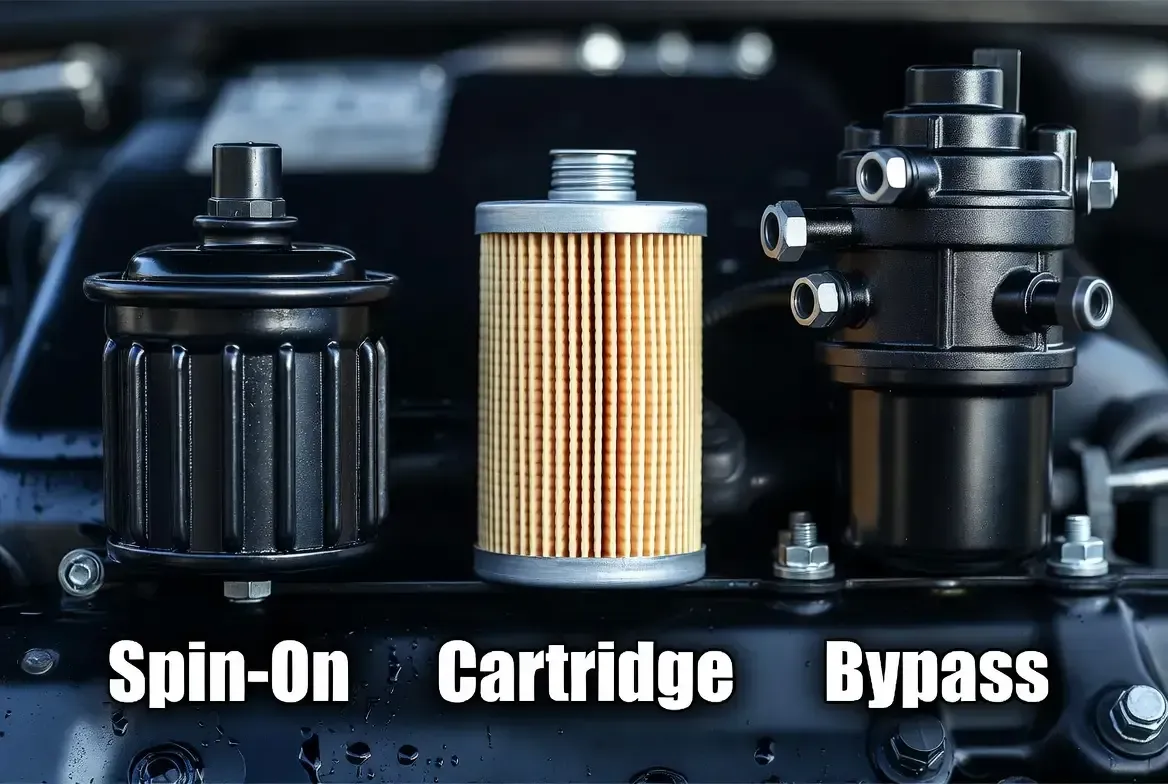
There are three categories. Most passenger vehicles use one of the first two. The third is a specialty addition used in specific situations.
- Spin-on filters: A self-contained unit. The filter element, bypass valve, anti-drainback valve, and metal housing all come as one piece. You unscrew the old one and thread on a new one at every oil change.
- Cartridge filters: The filter element only, with no housing. It installs inside a permanent plastic or metal housing that stays bolted to the engine. You remove the housing cap, swap the element, replace the o-ring, and reassemble.
- Bypass filters: An aftermarket secondary filter that runs in parallel with the primary filter. It processes a small fraction of oil at a time to a much finer level. It does not replace the primary filter.
What Is a Spin-On Oil Filter?
A spin-on oil filter is a compact, self-contained canister that threads directly onto the engine block. Everything inside it is disposable. When you change oil, the entire unit comes off and goes in the bin.
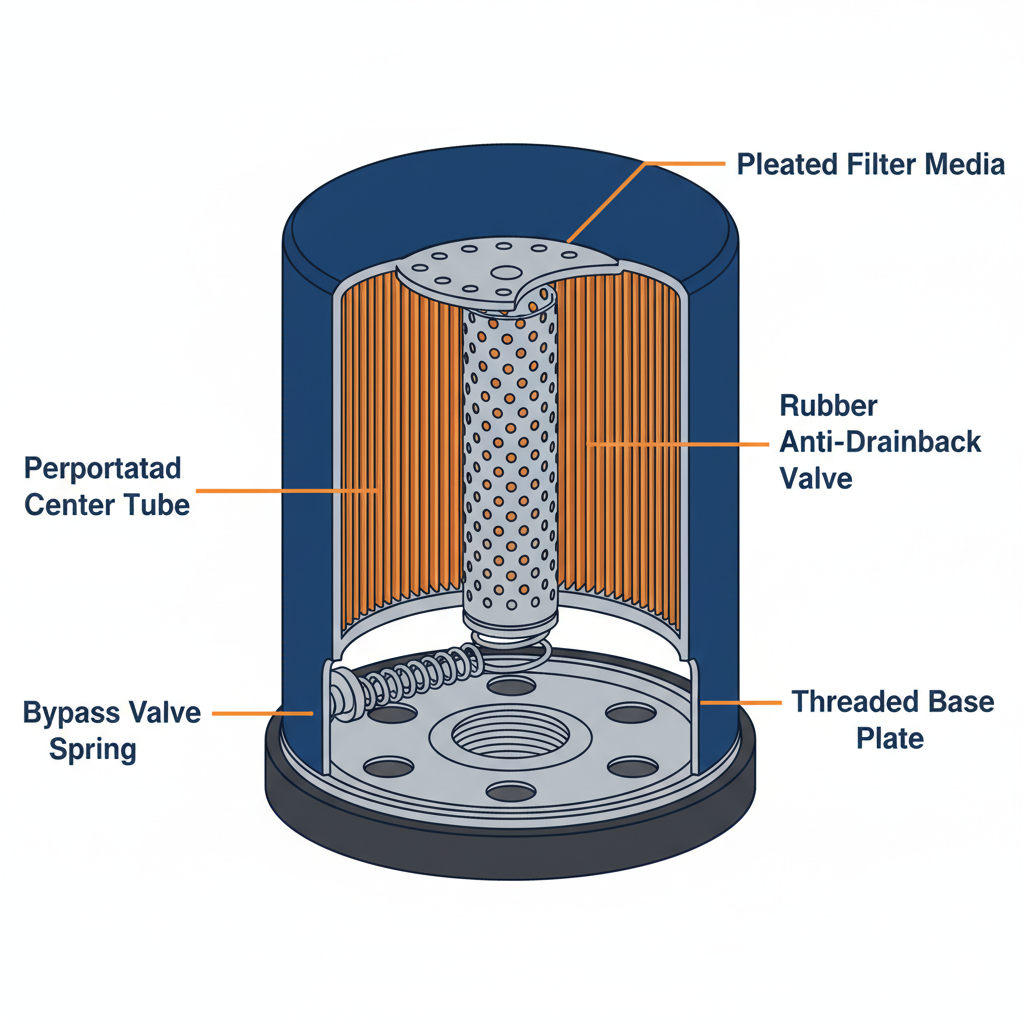
What's inside a spin-on filter
Every spin-on contains the same core components:
- Filter media: Pleated paper (cellulose), synthetic, or blended material that physically traps particles as oil flows through it.
- Center tube: A perforated metal tube at the core. Oil passes through the media and collects here before exiting to the engine.
- Anti-drainback valve: A rubber flap at the base that seals the filter when the engine is off. Without it, oil would drain back into the sump every time you shut down, causing a dry start at the next cold start.
- Bypass valve: A spring-loaded pressure relief valve. If the media gets too clogged to flow freely, or if cold thick oil resists flow at startup, this valve opens and routes unfiltered oil directly to the engine. Oil starvation is worse than unfiltered oil, so this is a safety feature.
- Base plate and gasket: The threaded metal plate that mates to the engine mount, sealed by a rubber gasket.
Why spin-on filters dominate
Spin-on filters are simple. Thread on, tighten, done. No special tools. No o-rings to forget. No housing to strip. That simplicity made them the standard on most North American vehicles through the 1970s, 80s, 90s, and 2000s. They're still found on a large share of vehicles today.
The downside is waste. Every oil change discards a steel housing along with the filter element. Over a vehicle's lifetime, that's a lot of metal going to landfill.
What Is a Cartridge Oil Filter?
A cartridge oil filter is just the filter element itself, with no housing. It fits inside a reusable housing that stays on the engine permanently. At each oil change, you remove the housing cap, pull out the old element, drop in a new one, swap the o-ring, and reinstall the cap.
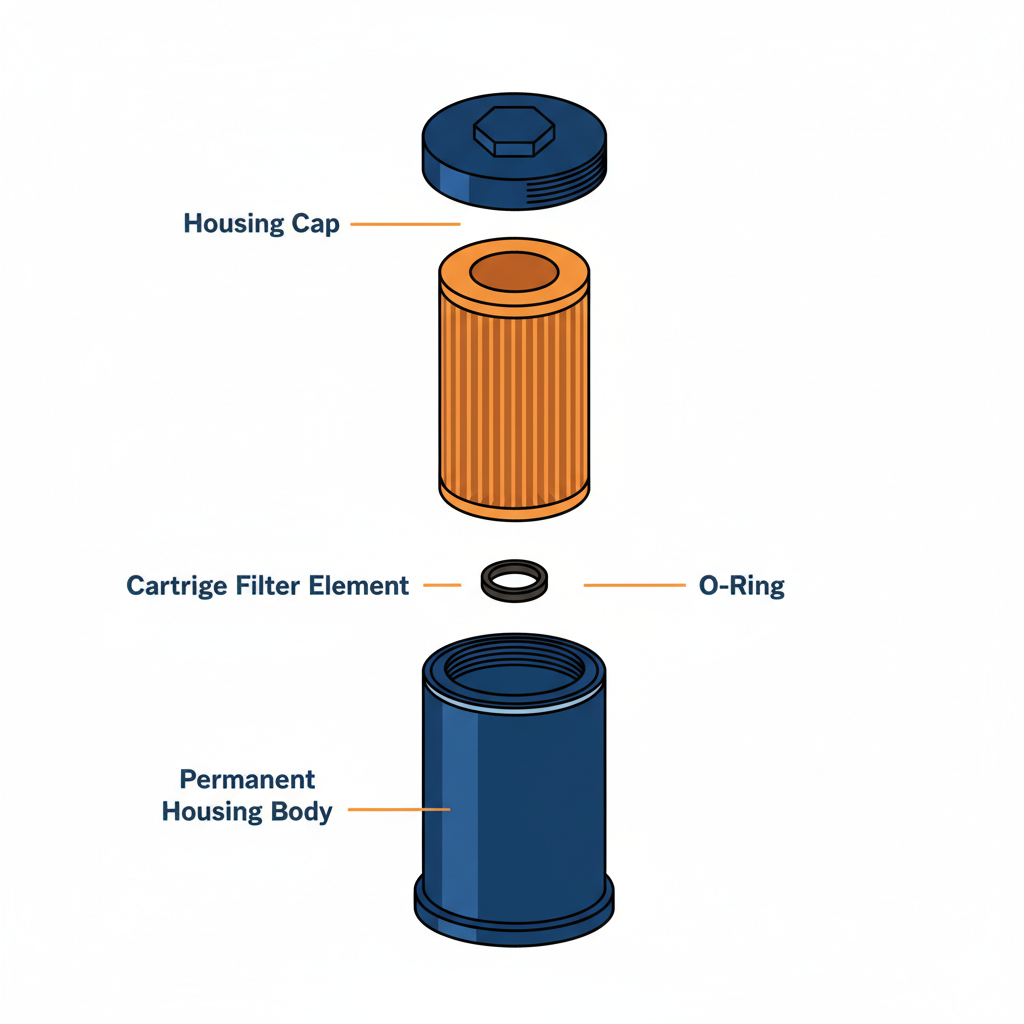
The housing is usually located at the top of the engine on modern vehicles, which makes access cleaner. Oil drips down into the housing rather than out onto your hands when you open it.
How cartridge filters became common
European automakers began shifting back to cartridge-style filters in the 1990s, primarily to reduce the waste generated by each oil change. Only the element gets discarded, and many cartridge elements use no metal components, making them easier to handle as waste.
Japanese and domestic manufacturers followed. Today cartridge filters are standard on most newer Toyota, Honda, BMW, Mercedes, Volkswagen, and many other platforms.
What's different about cartridge filter installation
Because the housing is reusable, the anti-drainback valve and bypass valve are built into the housing rather than the element. They stay on the engine permanently.
This means when you replace a cartridge element, you're only replacing the media and the o-ring. The critical valves stay put. That's actually a more reliable long-term design, because the bypass valve doesn't get swapped in and out with unknown quality components at every service.
The one installation risk is the o-ring. If you forget to replace it, or install it dry, or seat it incorrectly, you'll get an oil leak. Always replace the o-ring, always lubricate it with a thin film of fresh oil before installing, and always torque the cap to spec rather than hand-tight guessing.


As an Amazon Associate we earn from qualifying purchases.
Spin-On vs Cartridge Oil Filter: What's the Difference?
The core difference is what gets discarded at each oil change. With a spin-on, everything goes: element, housing, valves, gasket. With a cartridge, only the element and o-ring go. The housing, valves, and cap stay on the engine.
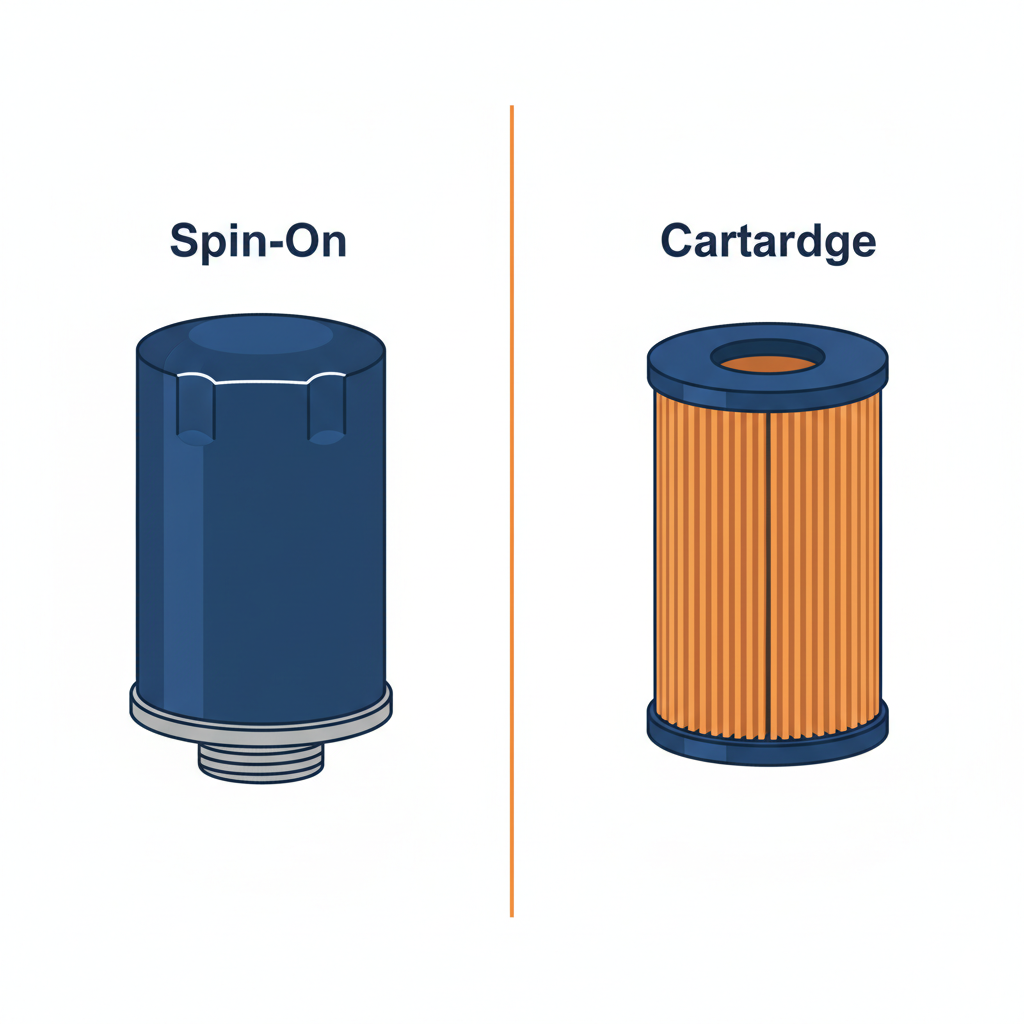
Performance is equal. The housing format does not affect how well the filter cleans oil. A cartridge filter with synthetic media performs the same as a spin-on with synthetic media. The media is what matters, not the housing.
What Is a Bypass Oil Filter and How Does It Work?
A bypass oil filter is a secondary filtration system that runs in parallel with the primary filter. It does not replace the primary filter. It supplements it.
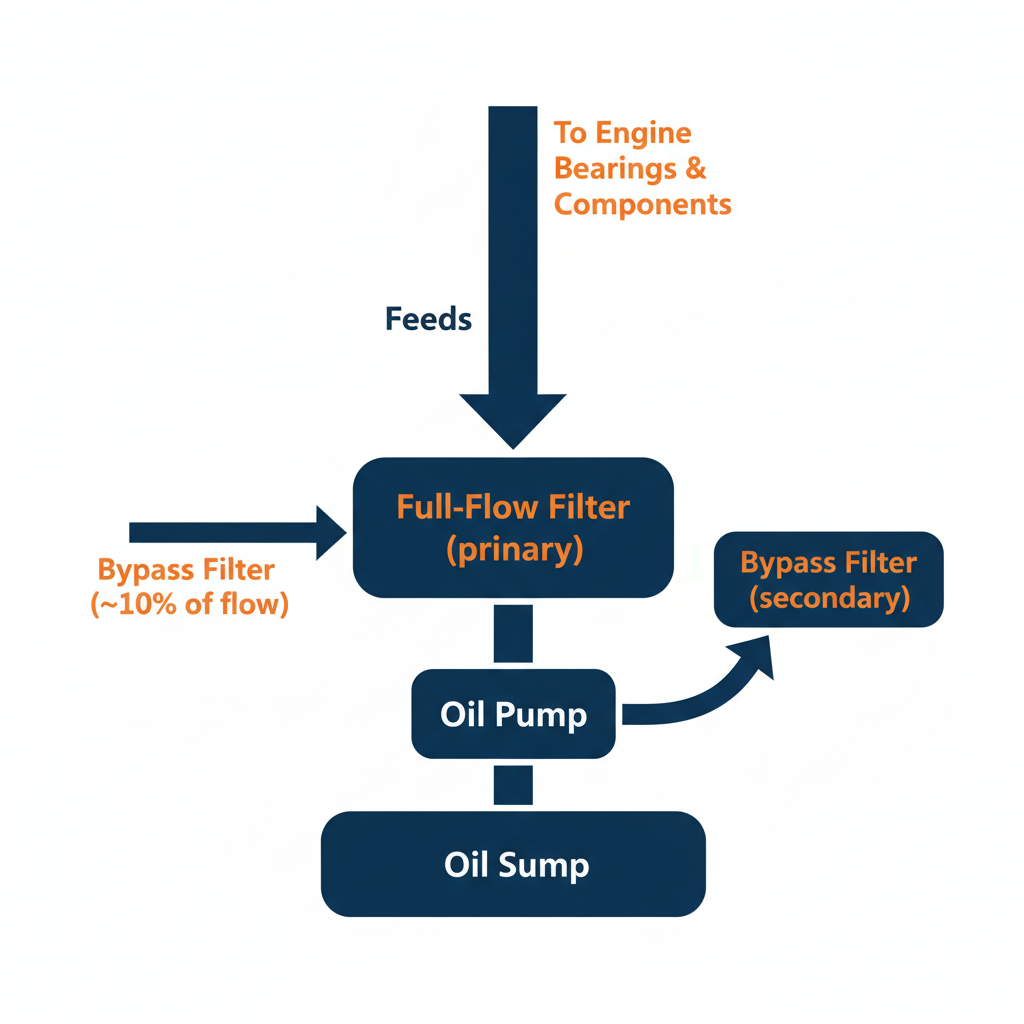
Your engine's primary filter (whether spin-on or cartridge) is a full-flow filter. Every drop of oil passes through it before reaching the bearings. Full-flow filters must handle enormous volume without restricting flow, which limits how fine their filtration can be. Most full-flow filters have an absolute micron rating in the 25 to 30 micron range.
A bypass filter taps off a small portion of oil, roughly 10 percent of flow, filters it to a much finer level (often 2 to 3 microns), and returns it to the sump. It never feeds directly to the bearings. Over time, this continuous fine-filtration cycle cleans the entire oil supply by passing it through repeatedly.
Who actually uses bypass filters
Bypass filters are not factory-installed on standard passenger vehicles. They're an aftermarket addition used in specific situations:
- Extended oil change intervals on diesel trucks and fleet vehicles
- High-mileage engines where oil cleanliness has a measurable impact
- Performance builds where ultra-clean oil reduces wear over time
- Commercial and industrial equipment running long drain intervals
For a typical passenger car on normal oil change intervals, the primary filter is sufficient. Bypass filtration earns its cost when you're trying to push drain intervals significantly beyond the norm, or protect an engine that has accumulated wear over high mileage.


As an Amazon Associate we earn from qualifying purchases.
What Is a Full-Flow Oil Filter?
A full-flow oil filter is any filter where 100 percent of the oil from the pump passes through the filter before reaching the engine bearings. Both spin-on and cartridge filters are full-flow designs.
The term "full-flow" distinguishes the primary filter from a bypass filter. It's not a brand or a performance rating. It just describes the flow path: all the oil goes through the filter, all the time.
Full-flow filtration is non-negotiable for engine protection. At every startup and under every load, the engine needs immediate, unrestricted oil supply. That requirement sets a practical lower limit on how fine a full-flow filter can be. Too fine, and the media restricts flow too much.
This is why full-flow filters typically rate in the 25 to 30 micron range. It's the balance point between effective particle capture and acceptable flow restriction.
What Is the Bypass Valve Inside an Oil Filter?
Every spin-on and cartridge filter contains a bypass valve. This valve is not the same thing as a bypass filter. The names are similar and the confusion is common, but they are completely different components with different purposes.
The bypass valve inside your primary filter is a pressure relief valve. It opens when the pressure difference across the filter media exceeds a threshold, typically between 8 and 17 PSI depending on the filter design. This happens in two situations:
- The filter media is heavily loaded with trapped particles and can no longer pass oil at normal resistance.
- Cold oil at startup is too thick to flow through the pleated media quickly enough.
When the bypass valve opens, unfiltered oil routes directly to the engine. This is intentional. Oil starvation causes immediate bearing damage. Running briefly on unfiltered oil is less damaging than running with no oil pressure at all.
The bypass valve is a safety net, not a normal operating mode. A filter running in bypass constantly is a filter that needs to be replaced.
The bypass valve inside a spin-on filter is part of the disposable unit. The bypass valve inside a cartridge housing stays on the engine permanently. Either way, the function is identical.
Which Type of Oil Filter Does My Car Use?
Your car uses whichever type the engine manufacturer designed it for. Check your owner's manual or look up your vehicle on any filter retailer's website. The filter type is determined by the engine's oil circuit design and cannot be changed without significant modification.
If your vehicle uses a cartridge filter, there is no spin-on alternative. If it uses a spin-on, there is no cartridge alternative. What you can choose is the brand, media type, and quality within your required format.
A practical tip
Before your first oil change on a new vehicle, confirm whether it takes a spin-on or cartridge. If cartridge, also confirm:
- The correct cap wrench socket size for the housing
- Whether the o-ring comes included with the filter element, or must be purchased separately
- The torque spec for the housing cap (check the service manual, not the filter box)
Getting this wrong once is an oil leak and a mess. Getting it right takes two minutes of preparation.


As an Amazon Associate we earn from qualifying purchases.
Filter Media: The Real Performance Variable
Whether your car uses a spin-on or cartridge format, the media inside the filter is what actually determines filtration quality. Three types exist:
Cellulose: Made from wood pulp. The traditional standard. Inconsistent fiber size means pore sizes vary, which affects how evenly particles are captured. Suitable for standard intervals.
Synthetic (glass fiber): Uniform fiber diameter, controlled pore size, higher efficiency at the same flow rate. Better performance at cold temperatures. The right choice for extended drain intervals and turbocharged engines.
Blended: A mix of cellulose and synthetic fibers. A midpoint on both cost and performance.
The housing format (spin-on or cartridge) does not determine media quality. Both formats are available with all three media types. When comparing filters, media type and rated efficiency matter more than whether it has a metal shell.
FAQ
What are the three types of oil filters?
The three types are spin-on, cartridge, and bypass. Spin-on filters are self-contained disposable canisters. Cartridge filters are replaceable elements that install inside a permanent housing on the engine. Bypass filters are secondary aftermarket systems that run in parallel with the primary filter for finer filtration at lower flow rates.
Is a spin-on or cartridge oil filter better?
Neither is better in terms of filtration. Both clean oil equally well when using comparable media quality. Spin-on filters are simpler to install and require no tools. Cartridge filters generate less waste per oil change since only the element is discarded. Your engine's design determines which type you use, not personal preference.
What does the bypass valve in an oil filter do?
The bypass valve is a pressure relief valve inside every full-flow oil filter. It opens when oil pressure across the filter media exceeds a set threshold, typically 8 to 17 PSI. This routes unfiltered oil directly to the engine bearings to prevent oil starvation when the media is clogged or cold oil is too thick to flow freely. It is a safety feature, not normal operation.
Can I switch from a spin-on to a cartridge oil filter?
No. The filter type is determined by the engine manufacturer and built into the engine's oil circuit. The mounting hardware and housing design are part of the engine block. Switching between types would require a major engineering modification and is not a practical option for any standard vehicle.
What is the difference between a bypass oil filter and the bypass valve inside a regular filter?
A bypass oil filter is a complete aftermarket secondary filtration system that processes about 10 percent of oil flow to a very fine level, typically 2 to 3 microns. The bypass valve is a pressure relief valve inside every standard filter that opens to prevent oil starvation when the media is restricted. Same word, completely different functions.
What micron rating do spin-on and cartridge oil filters use?
Both spin-on and cartridge full-flow filters typically have an absolute rating in the 25 to 30 micron range. The exact rating depends on the specific filter product and media quality, not the housing format. Premium synthetic media filters often achieve higher efficiency at lower micron sizes.


As an Amazon Associate we earn from qualifying purchases.
The Right Choice Is the One Your Engine Requires
The filter type your engine uses is not a decision you make. It was made when the engine was designed. Your decision is which brand and media quality to use within that format.
Spin-on or cartridge, both do the same job when you use quality media and change on schedule. The format affects installation complexity and waste. It does not affect how well your engine is protected.
Focus your attention on media type, rated efficiency, and matching the filter's drain interval to your actual change schedule. That's where the difference in engine protection comes from.