Cabin Air Filter Lookup: Find the Right Filter for Your Car

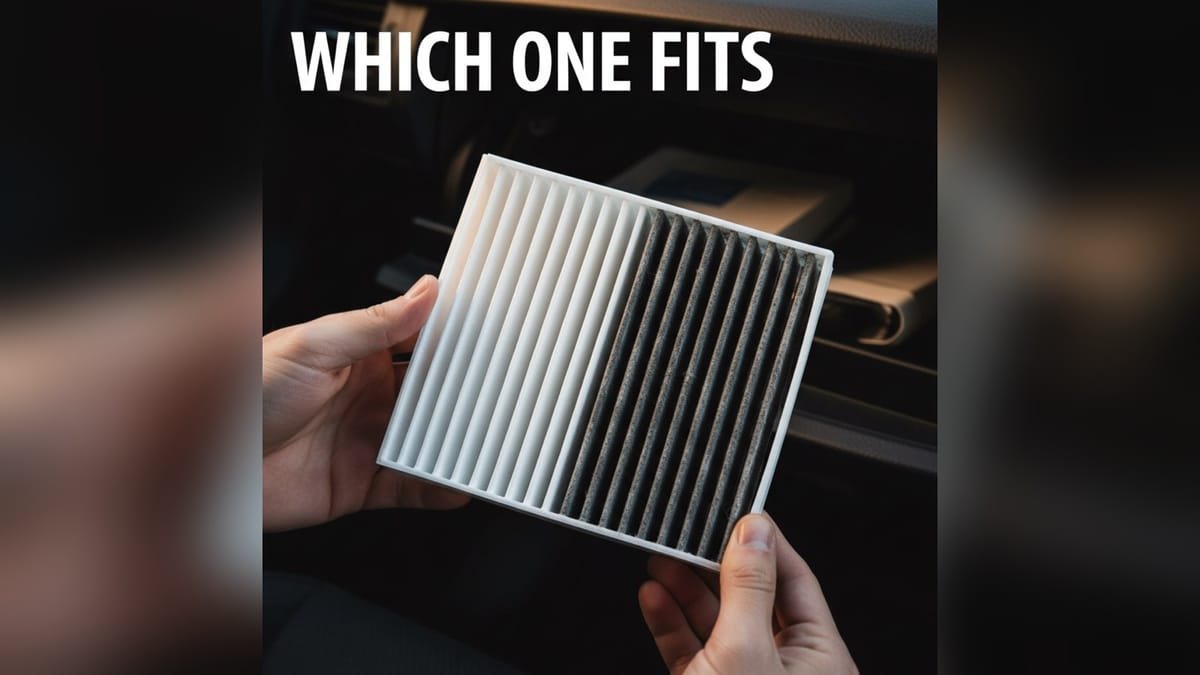
Cabin air filters have no industry-wide numbering system. Every brand numbers its own, so a lookup starts with your vehicle rather than a part number, and the filter that fits is decided by three measurements and the shape of the tray behind your glove box.
Oil filters thread onto a standard fitting, which is why their cross references work so cleanly. A cabin filter slides into a plastic tray moulded into a specific HVAC housing, so the only thing that matters is whether the panel fills that tray in the right orientation.


As an Amazon Associate we earn from qualifying purchases.
Start With the Vehicle, Not the Part Number
Type your year, make, model and engine into a manufacturer's catalogue and take the number it gives you. That is the whole method, and going the other way round causes most of the wrong purchases.
The catalogues worth using are the ones maintained by the people who make the filters. FRAM publishes a cabin air filter search by vehicle make, and Premium Guard runs a product catalogue built around vehicle fitment where each page is a part number tied to a year, make and model.
Your owner's manual is the other primary source, and on most vehicles it names the OE part number outright. If the manual says the car has no cabin filter, believe it before you believe a listing, since not every vehicle has one.
What a Cabin Filter Part Number Does and Does Not Tell You
The number identifies the panel. It does not describe it.
Take FRAM's CF10134, one of the most common numbers in North America. FRAM publishes it at 9.298 inches long, 8.904 inches wide and 1.182 inches high, and lists it against Honda and Acura models from 2003 to 2026, covering the Accord, Civic, CR-V, Odyssey, Pilot and Ridgeline alongside the TL, TSX, MDX, RDX, ILX, TLX and RLX.
That range is the point. One tray size served two brands across more than twenty years of models, which is why a cabin filter lookup returns a short list rather than a unique answer per car.
The CF prefix marks the cabin range, and the digits are an index rather than a description, the same way fuel filter numbering works. Nothing in the number tells you the media, the thickness or which way the airflow arrow points.

As an Amazon Associate we earn from qualifying purchases.
Looking Up a Super Tech Cabin Air Filter
Super Tech is the case that breaks every cross reference tool, and it is worth understanding before you waste an afternoon on it.
Walmart's Super Tech cabin filters carry short in-house numbers such as 7255 or 5535. Those are retail catalogue numbers rather than industry part numbers, so typing one into a filter manufacturer's interchange returns nothing, and there is no published chart mapping them to FRAM, WIX or Bosch equivalents.
The way to shop one is the same as the way to shop any cabin filter: look up your vehicle, note the dimensions the manufacturer catalogues publish, then match those against the Super Tech listing for your year, make and model. The same in-house numbering habit shows up on the oil side, covered in the Supertech oil filter lookup.
Who physically builds Super Tech filters is not publicly established, so treat any page that names a manufacturer with suspicion.
Checking the Filter You Already Have
The fastest lookup is often the old filter itself, because the answer is usually printed on it.
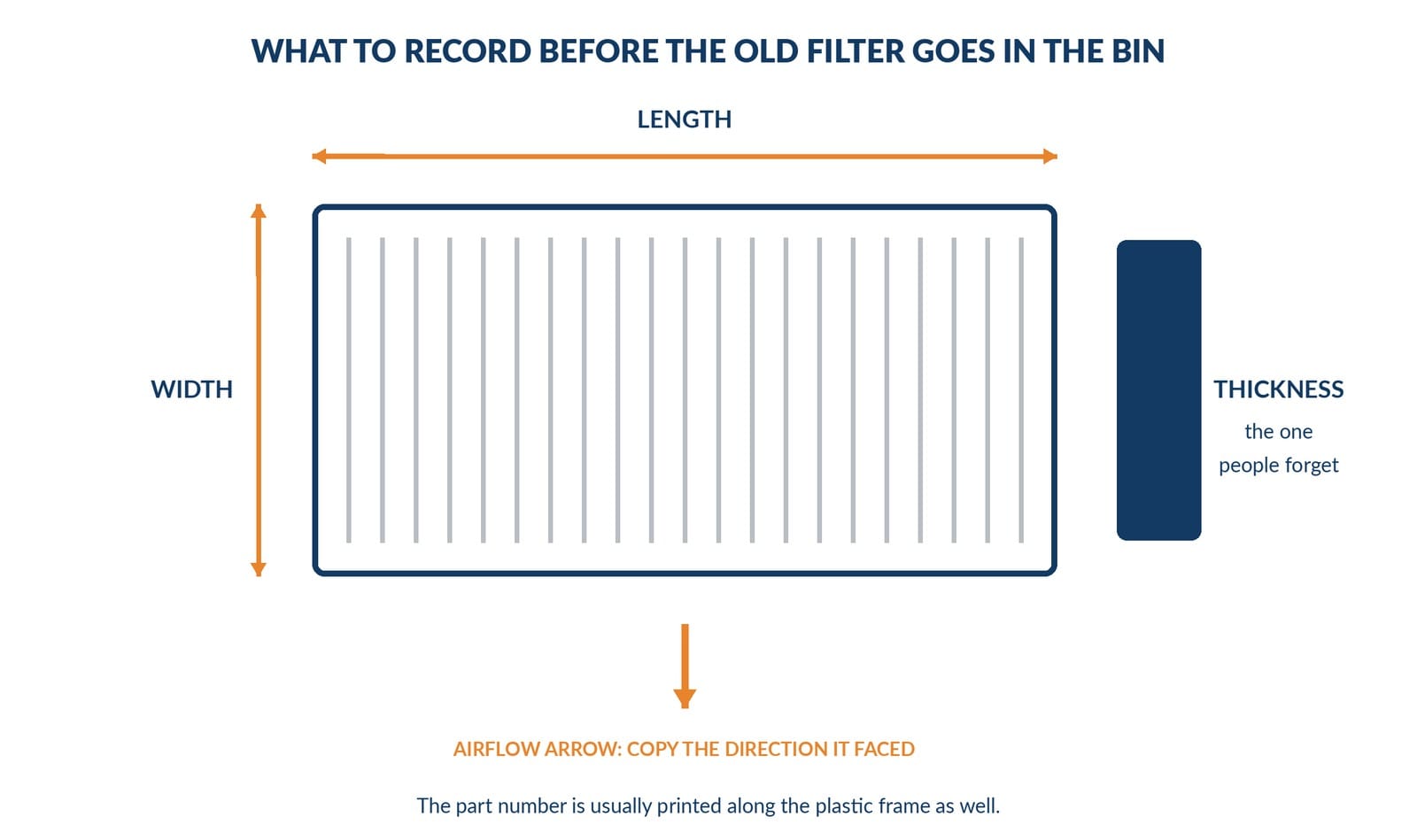
- Pull the filter from the tray behind the glove box, which takes a few minutes on most cars and is covered step by step in how to change a cabin air filter.
- Read the frame. Most filters carry the brand's part number moulded or printed along the plastic edge.
- Measure all three dimensions before you throw it out. Length, width and thickness are what a replacement has to match, and thickness is the one people forget.
- Note the airflow arrow and which way it pointed. FRAM's instructions for the CF10134 application say to fit the new filter with the arrow pointing down, and other vehicles point it toward the back of the car, so copy the old one rather than guessing.
A filter that is a quarter of an inch too thick will not let the tray latch, and one fitted with the arrow reversed still moves air while filtering it in the wrong direction.


As an Amazon Associate we earn from qualifying purchases.
Fitment and Filter Type Are Two Separate Decisions
Once the size is settled, the media grade is a free choice, and the claims attached to each grade are not measuring the same thing.
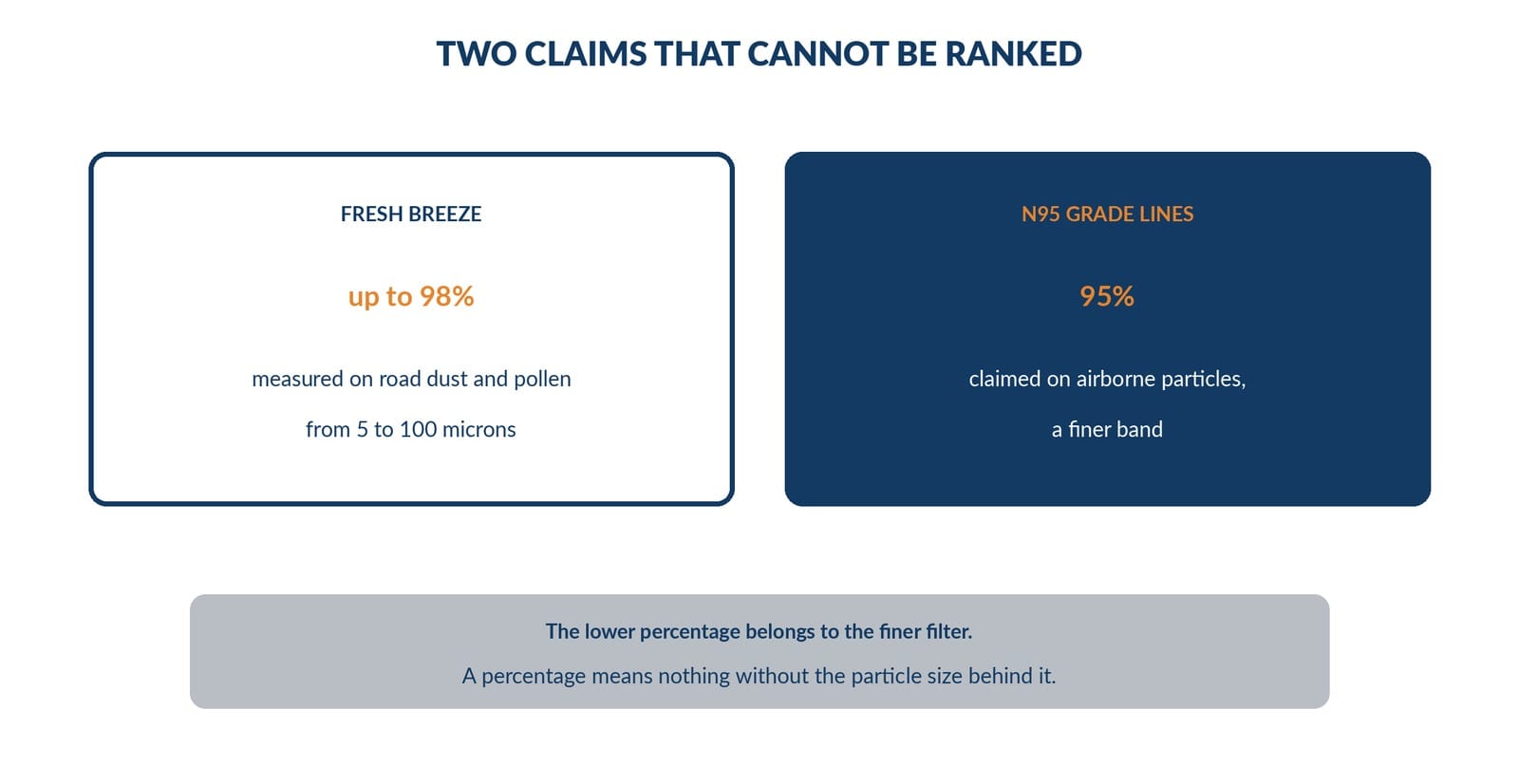
FRAM's Fresh Breeze line states that it filters up to 98% of road dust and pollen particles ranging in size from 5 to 100 microns, and adds baking soda and carbon for odours. Its TrueAir and Titanium lines are described as N95 grade media capturing 95% of airborne particles.
Read those two numbers carefully. A 98% claim measured on particles from 5 to 100 microns is a coarser test than a 95% claim on airborne particles generally, so the lower percentage describes the finer filter. Comparing the percentages alone would lead you to exactly the wrong conclusion.
The percentage means nothing without the particle size it was measured at, which is the same trap that runs through oil and fuel filter ratings.
If the reason you are looking is allergies or city air rather than a routine service, the HEPA versus regular cabin filter comparison is the decision that actually matters.
Frequently Asked Questions
How do I know which cabin air filter fits my car? Look up your year, make, model and engine in a filter manufacturer's catalogue, or read the part number off the filter currently in the car. Cabin filters have no universal numbering, so fitment is decided by the tray dimensions rather than by a thread or a standard size.
Can I look up a cabin air filter by dimensions? Yes, and it is a useful cross-check. Measure length, width and thickness of the old filter and compare them against the catalogue figures, which manufacturers publish to three decimal places. Dimensions alone do not confirm the frame shape, so use them alongside a vehicle lookup rather than instead of one.
What does the CF in a FRAM cabin filter number mean? CF marks FRAM's cabin filter range. The digits after it identify the specific panel rather than describing it, so the number tells you nothing about media type, thickness or airflow direction. Those come from the product page or the filter itself.
How do I find the right Super Tech cabin air filter? Look it up by vehicle. Super Tech uses short in-house numbers such as 7255 that do not appear in any filter manufacturer's interchange, so there is no cross reference to work from. Match the vehicle and confirm the dimensions against a manufacturer catalogue entry for the same car.
Does one cabin air filter fit several different cars? Often, yes. FRAM lists the CF10134 against Honda and Acura models from 2003 through 2026, because the same tray size was used across both brands for years. A lookup returning several vehicles is normal and is not a sign the result is wrong.


As an Amazon Associate we earn from qualifying purchases.
What to Do Next
Pull the old filter before you order anything. It gives you the part number, the three measurements and the airflow direction in one go, and it tells you whether the filter is due at all, which the replacement interval guide puts in context.