Automotive Filters: Complete Beginner's Guide
Most car maintenance schedules list three filters, not four. Here is what each filter does, where it sits, how often to change it, and the extras diesel trucks carry.

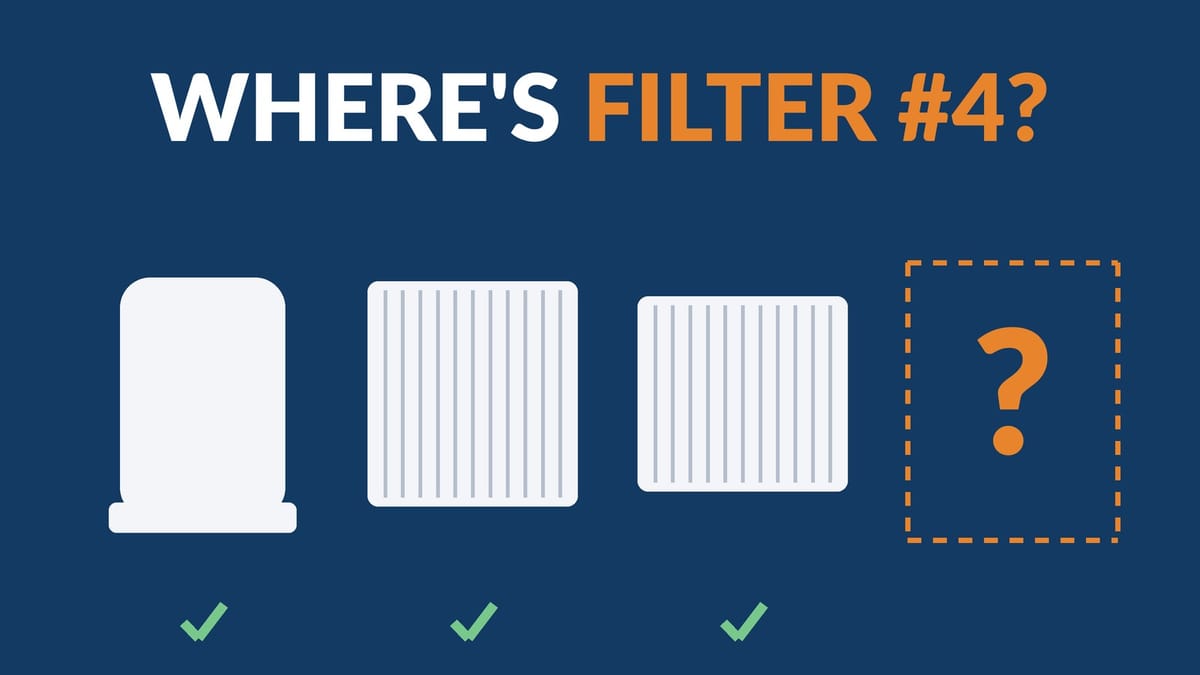


A typical car has four filters an owner needs to know about: oil, engine air, cabin air and fuel. Most modern gasoline cars put only three of them on the maintenance schedule, because the fuel filter now lives inside the tank. Diesel trucks add more, including a second fuel filter, a crankcase filter and an exhaust filter.


As an Amazon Associate we earn from qualifying purchases.
What Filters Does a Car Have?
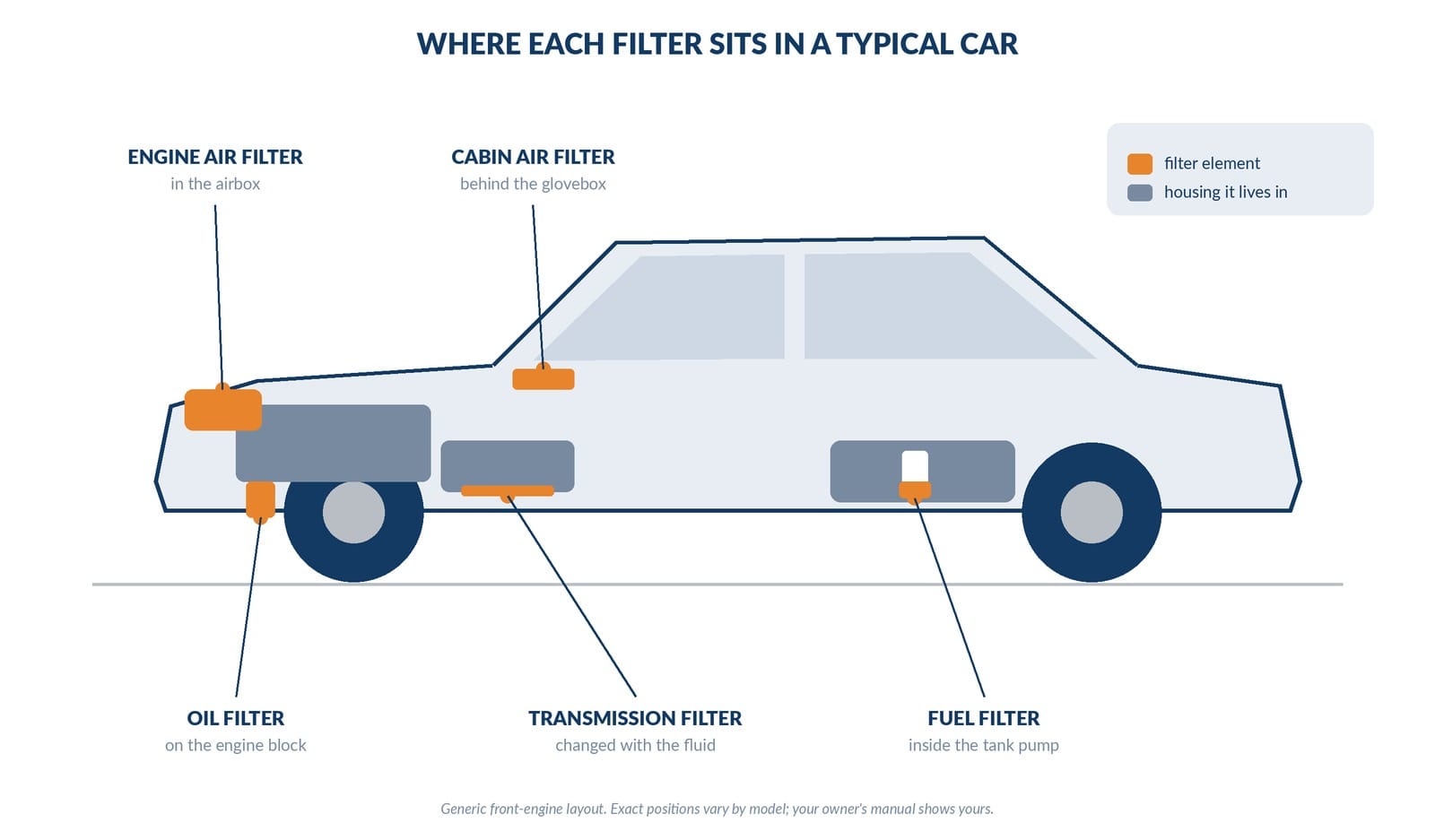
Every combustion car cleans three things before they reach something expensive: the oil that lubricates the engine, the air the engine breathes, and the fuel it burns. A fourth filter cleans the air you breathe. That makes four, and each one protects a different part of the car.
| Filter | What it cleans | What it protects |
|---|---|---|
| Oil filter | Engine oil | Bearings, cams, piston rings |
| Engine air filter | Air going into the engine | Cylinders, rings, airflow sensor |
| Cabin air filter | Air coming out of the dash vents | You, and the AC evaporator |
| Fuel filter | Gasoline or diesel | Injectors and fuel pump |
There is usually a fifth, the transmission filter, but you will rarely hear about it because it sits inside the transmission and is only touched when the fluid is changed. Diesel trucks and emissions-equipped engines add a few more, covered further down.
Why Your Maintenance Schedule Lists Only Three Filters
Open the maintenance guide for a typical modern car and count the filters. I went through Toyota's guide for the 2020 Camry AWD line by line, and it schedules an engine oil and filter change every 10,000 miles or 12 months, a cabin air filter every 10,000 miles, and an engine air filter every 30,000 miles.
That is the whole list. The schedule inspects the fuel lines, the tank band and the fuel cap gasket, but there is no fuel filter anywhere in it. There is no transmission filter either: the automatic transmission fluid is only replaced under towing or extended idling, at 60,000 and 120,000 miles.
Where the Fuel Filter Went
The car still has one. On most gasoline cars built since around 2000 the fuel filter is part of the pump module inside the tank, and the manufacturer treats it as a lifetime part rather than a service item. It gets replaced when the pump does.
So a fuel filter missing from your schedule is not an oversight. Your owner's manual is the quickest way to tell which design you have: if it lists a fuel filter interval, the filter is external and serviceable, and if it lists none, it is in the tank.
The Transmission Filter You Never See
Automatic transmissions have a filter inside the pan or the case, and it is replaced at the same time as the fluid. On many cars that service comes so rarely, or only under severe use, that the filter never appears as its own line item.
Trucks spell it out more often. Ram schedules the filter in its 68RFE automatic, used behind the 6.7 Cummins, at 120,000 miles under normal use and 60,000 miles under severe use.


As an Amazon Associate we earn from qualifying purchases.
The Four Main Filters, One at a Time
Each of the four filters works on a different fluid, at a different pressure, against a different kind of dirt. That is why they look nothing alike and why none of them can stand in for another.
Oil Filter
The oil filter is a sealed metal can, or a paper cartridge in a housing, that strains the engine oil on every trip around the lubrication circuit. It catches metal wear particles, soot and dirt before they reach the bearings. It also carries a bypass valve that keeps oil flowing if the media ever clogs.
It is changed with the oil, which is why most schedules list "oil and filter" as one job.
Engine Air Filter
The engine air filter is a pleated panel or cylinder in a plastic airbox, usually near the front of the engine bay. A gasoline engine mixes roughly 14.7 parts of air with every part of fuel by mass, so this filter handles more volume than any other part on the car.
Dust that gets past it acts like grinding paste on the cylinder walls and rings. A clogged one restricts airflow, and on most modern engines that shows up as lost power before it shows up anywhere else.
Cabin Air Filter
The cabin air filter cleans the outside air that the heating and AC system blows into the passenger compartment. It usually sits behind the glovebox or under the cowl at the base of the windscreen.
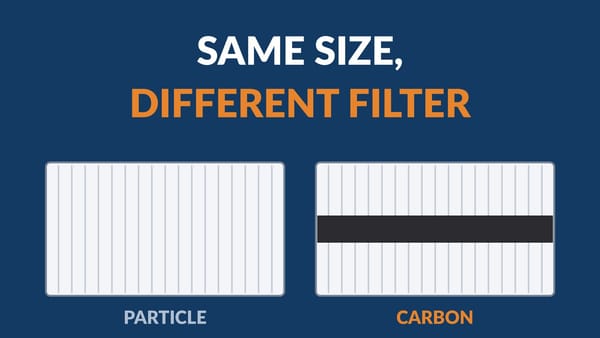
It protects the people inside and the AC evaporator behind it. Some versions add a layer of activated carbon to cut odours and exhaust gases, which is the main difference between a basic and a premium cabin filter.
Fuel Filter
The fuel filter stops rust, dirt and debris from the tank reaching the injectors, which have passages fine enough that a single particle can upset the spray pattern. On diesel engines it also separates water, which diesel fuel picks up easily and which damages high-pressure injection parts.
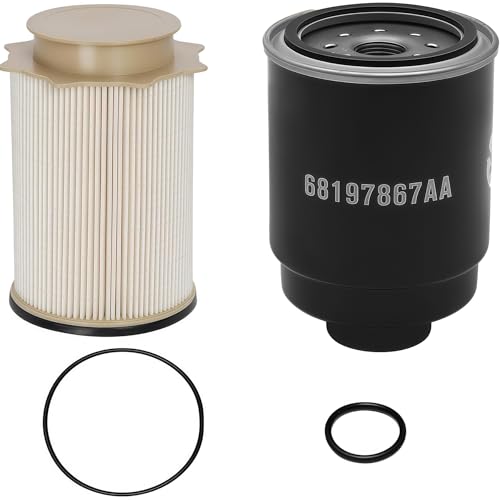
Gasoline cars mostly use the in-tank lifetime design described above. Diesels almost always keep an external, serviceable filter, and often two.
How Often Should Each Filter Be Changed?
There is no universal interval. The right answer is the one in your own owner's manual, because it reflects the engine, the oil and the filter the manufacturer designed together. These two schedules show how much the numbers move between a family car and a heavy pickup.
| Filter | 2020 Toyota Camry AWD | 6.7 Cummins Ram HD |
|---|---|---|
| Oil filter | 10,000 mi / 12 months | 15,000 mi / 6 months (2013 to 2019) |
| Engine air filter | 30,000 mi / 36 months | 30,000 mi / 24 months |
| Cabin air filter | 10,000 mi / 12 months | Not in the published schedule |
| Fuel filter | Not scheduled (in tank) | 15,000 mi / 12 months, two filters |
The Camry figures come from Toyota's own guide; the Ram figures come from the same compiled 2007.5 and later 6.7 Cummins schedule as the transmission interval above.
Dusty roads change everything. Toyota's schedule adds an engine air filter inspection every 5,000 miles for cars driven on dirt or dusty roads, and moves the oil and filter change to every 5,000 miles under any of its special operating conditions.
What Extra Filters Do Diesel Trucks Have?
A diesel pickup carries everything a gasoline car does, plus filters that exist because of how diesels burn fuel and what comes out of the tailpipe.
- Two fuel filters. The 6.7 Cummins Ram uses an engine-mounted and a chassis-mounted filter, both changed every 15,000 miles.
- A crankcase ventilation filter. It strips oil mist out of the blow-by gases the engine vents from its crankcase. On the 6.7 Cummins it is scheduled every 67,500 miles on 2007.5 to 2018 trucks and every 75,000 miles from 2019.
- A diesel particulate filter. The DPF sits in the exhaust and traps soot. EPA says verified DPFs are typically effective at reducing particulate emissions by 85 to 90 percent or more.
The DPF is the odd one out, because nobody changes it like a normal filter. It cleans itself by burning the trapped soot off, either passively when the exhaust is hot enough or actively when the engine adds heat. What cannot burn is left behind as ash, so a DPF eventually needs cleaning off the vehicle.


As an Amazon Associate we earn from qualifying purchases.
Why a "99%" on One Filter Box Doesn't Compare With Another
This trips up almost every beginner. Each filter type is tested to its own international standard, and those standards measure different things in different ways.
| Filter | Test standard | What the efficiency figure measures |
|---|---|---|
| Oil | ISO 4548-12 | Particles counted upstream and downstream, in a multi-pass rig |
| Fuel | ISO 19438 | Particles counted in a multi-pass rig, at 50 to 800 litres per hour |
| Engine air | ISO 5011 | Weight of test dust captured against dust fed in |
| Cabin air | ISO/TS 11155-1 | Capture at each particle size, from 0.3 µm upwards |
Oil filters are rated on ISO 4548-12, a multi-pass test with online particle counting, and fuel filters on its close relative, ISO 19438, a multi-pass test with continuous contaminant injection for filters rated between 50 and 800 l/h. Both report efficiency at a stated particle size, which is where "99% at 20 microns" comes from.
Engine air filters are tested to ISO 5011, which measures dust collection efficiency, dust capacity and airflow restriction. That efficiency is a share of the total dust by weight, with no particle size attached, so a 99% air filter and a 99% oil filter are not making the same claim.
Cabin filters have their own test again. ISO/TS 11155-1 measures fractional filtration efficiency for particles larger than 0.3 µm, and ISO itself warns that filter rankings may change in service because the test cannot reproduce every real-world challenge.
Compare filters only against filters of the same type, tested to the same standard, at the same particle size.
Which Filters Can You Change Yourself?
Two of the four are genuine beginner jobs, one is a beginner job with a mess attached, and one depends entirely on the vehicle.
- Cabin air filter. Usually the easiest job on the car. Most sit behind a glovebox that unclips, and the filter slides out of a slot.
- Engine air filter. Release the clips or screws on the airbox, lift out the old element, and drop the new one in the same way round.
- Oil filter. Simple in principle, but it comes with draining the oil, a filter wrench and the right amount of hand tightening, so it is usually done as part of an oil change.
- Fuel filter. On an in-tank design it is a pump replacement, not a filter job. On an external filter it means relieving fuel pressure first, and on a diesel it means bleeding air out of the system afterwards.


As an Amazon Associate we earn from qualifying purchases.
Does Using an Aftermarket Filter Void Your Warranty?
No. The US Federal Trade Commission states plainly that your warranty stays in effect if you use aftermarket or recycled parts, and that you do not have to use the dealer for maintenance to keep it.
If an aftermarket part fails and damages something covered, the manufacturer or dealer has to prove the part caused the damage before refusing the claim. Keep the receipts and service records for every filter change, whoever does the work.
Frequently Asked Questions
How many filters does a car have?
A typical gasoline car has four main filters: oil, engine air, cabin air and fuel, plus a transmission filter inside the gearbox. Only three usually appear on the maintenance schedule, because most modern fuel filters sit inside the tank as lifetime parts. Diesel trucks add a second fuel filter, a crankcase filter and a particulate filter.
Which car filter needs changing most often?
On most cars it is a tie between the oil filter and the cabin air filter. Toyota's 2020 Camry AWD schedule replaces both every 10,000 miles or 12 months, and the engine air filter every 30,000 miles. Dusty roads, towing and short cold trips all shorten those intervals, so check the special conditions section of your own schedule.
Can I change car filters myself?
Yes, for most of them. The cabin air filter and engine air filter usually need no tools beyond a screwdriver and take a few minutes. The oil filter is straightforward but comes with an oil change. The fuel filter ranges from simple on an older external design to a pump replacement on an in-tank one.
Do electric cars have filters?
An electric car has no engine oil, no engine air intake and no fuel, so three of the four filters disappear. The cabin air filter stays, because the heating and air conditioning still pull in outside air.
Is a fuel filter part of a normal service?
Only if your vehicle has an external fuel filter. Most modern gasoline cars use an in-tank filter with no service interval, so it never appears in a routine service. Diesel trucks are the opposite: their fuel filters are some of the most frequently changed parts on the vehicle, every 15,000 to 22,500 miles on common heavy-duty pickups.


As an Amazon Associate we earn from qualifying purchases.
Where to Start
Find your owner's manual or the manufacturer's maintenance guide and write down every filter it lists, with its interval and its special-conditions interval. That short list is your filter plan. Anything not on it is either a lifetime part or a sign your vehicle has a design worth looking up before you buy parts.