What Is an Oil Filter and How Does It Work?

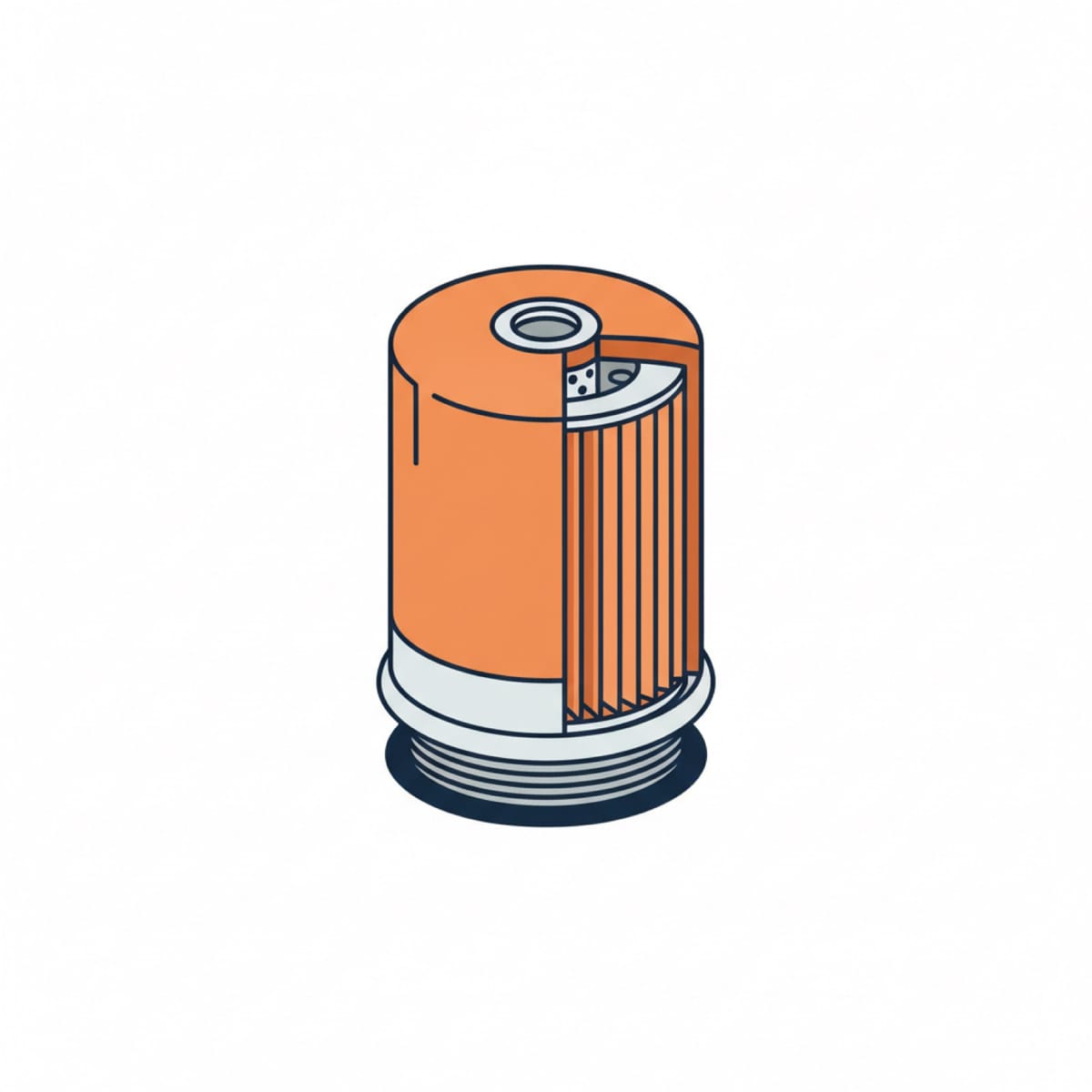
An oil filter is a device that removes contaminants from engine oil as it circulates through the engine. It traps particles like metal shavings, dirt, combustion byproducts, and soot before they can reach engine bearings and other moving parts. Without it, those particles would cause accelerated wear every time you start your car.
Your engine produces tiny destructive particles every time it runs. Metal shavings from bearing surfaces. Soot from combustion. Dirt that sneaks past seals. Left unchecked, those particles grind against precision surfaces and shorten your engine's life.


The oil filter is the only thing standing between those particles and your engine.
I've spent a lot of time digging into how these components actually work, studying manufacturer data sheets and engineering publications. What I found surprised me: most drivers massively underestimate what's happening inside that small canister.


What Does an Oil Filter Actually Do?
The core job of an oil filter is to clean engine oil continuously while the engine runs.
Oil circulates through your engine under pressure. It lubricates bearings, cools components, and picks up contamination along the way. That contaminated oil passes through the filter before returning to the engine. Clean oil goes back to work. Trapped particles stay in the filter.


The most damaging engine particles are invisible to the naked eye. That is exactly why the oil filter exists.
An effective oil filter captures a variety of contaminants including dust, metal shavings, and combustion byproducts before they reach engine components.
What particles are we actually talking about?
The critical size range is 10 to 40 microns. A human hair is about 70 microns in diameter, so these particles are far too small to see.


| Size | |
|---|---|
| Damaging particles | 10 to 40 microns |
| Engine bearing clearance | 20 to 60 microns |
| Human hair, for comparison | about 70 microns |
Why does that size range matter? Engine bearing clearances typically fall between 20 and 60 microns, depending on the engine design. A particle that fits exactly into that clearance gap can bridge across the oil film and scratch the bearing surface.
A Baldwin Filter technical representative, quoted in BobIsTheOilGuy forums, stated that in a full-flow lubrication system, "20 to 35 microns absolute is efficient filtration." That is the target zone where good filtration actually protects bearings.


How Does an Oil Filter Work? (Step by Step)
Here is the path oil takes through a standard spin-on filter:
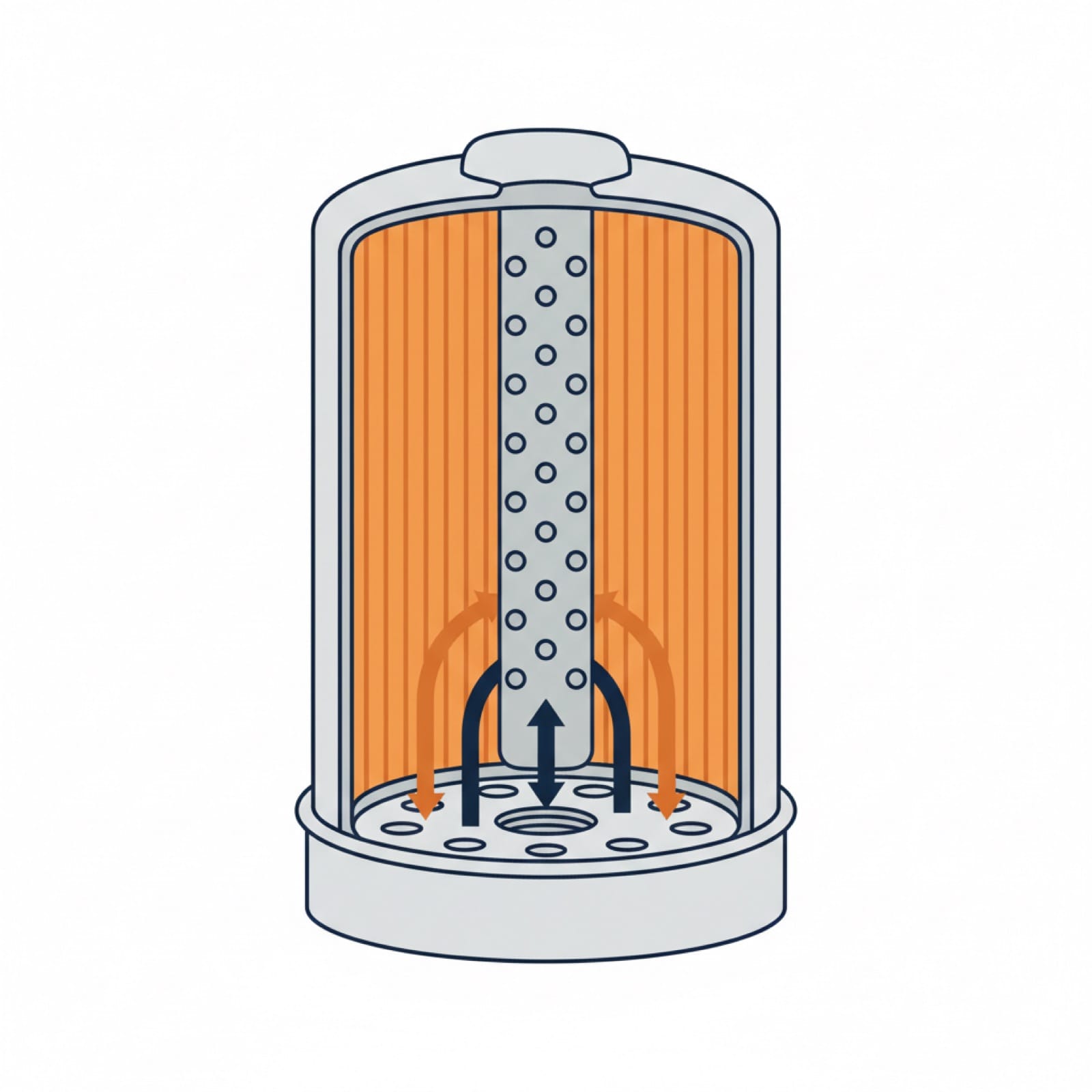
- The oil pump pushes pressurized oil out of the sump toward the engine
- Oil enters the filter through multiple small inlet ports around the base of the filter
- Oil flows outward through the filter media, which traps contaminants
- Clean oil collects in the center tube
- Clean oil exits through the central outlet port and continues to engine bearings
- When the engine shuts off, the anti-drainback valve closes to keep oil in the filter
This happens thousands of times per minute while your engine is running. The filter is always working.
What happens when the filter gets clogged?
Every filter has a bypass valve (also called a relief valve). When the filter media becomes saturated or the oil is too thick to flow through easily (like on a cold start), pressure builds up. At a set differential pressure, the bypass valve opens.
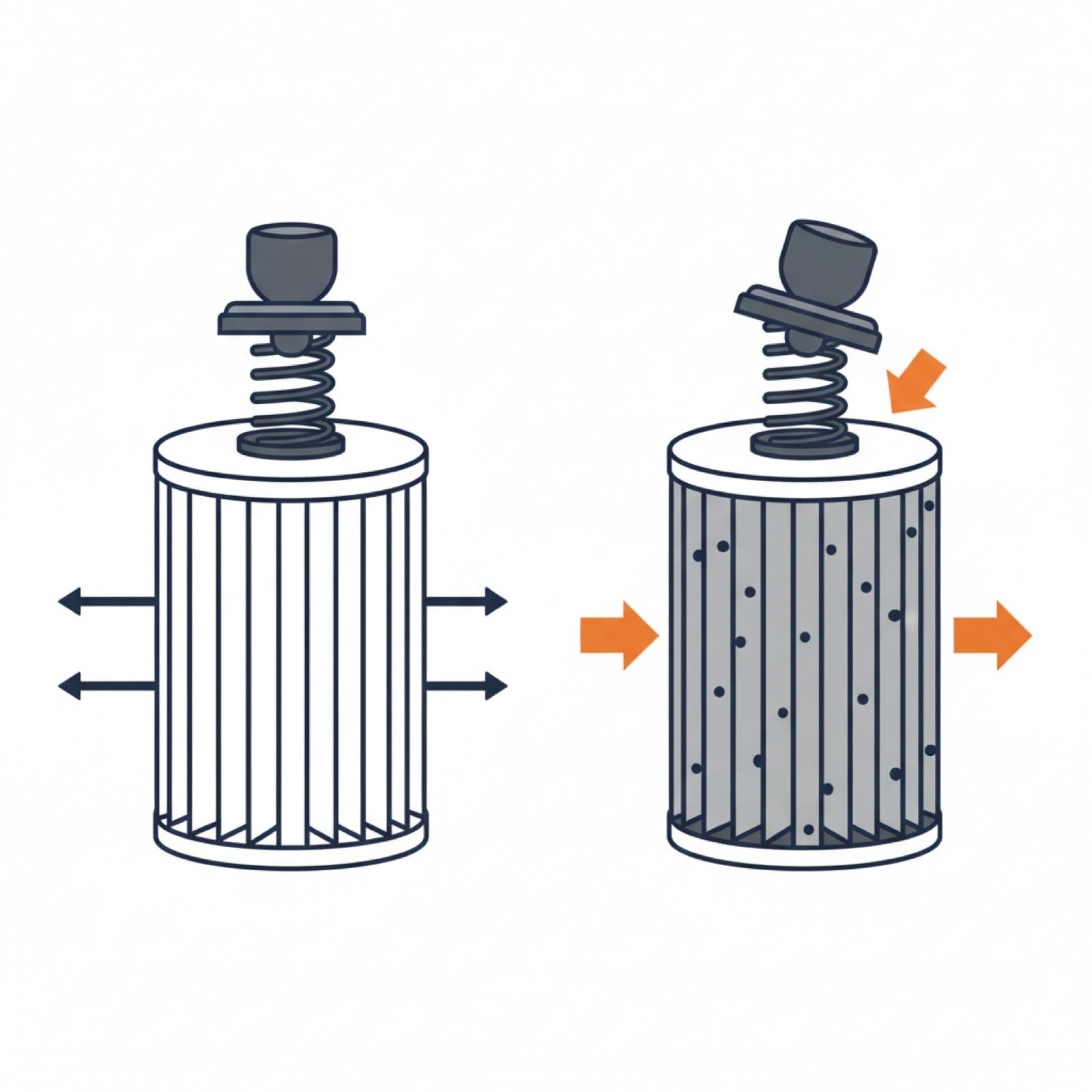
The bypass allows unfiltered oil to flow directly to the engine rather than causing oil starvation. It is better to get unfiltered oil to the engine than no oil at all.
This is also why a severely neglected oil filter is a real risk. If the bypass valve is open frequently, contaminated oil is circulating unfiltered.
What Is Inside an Oil Filter?
A spin-on oil filter contains several components that work together. Each one has a specific job.
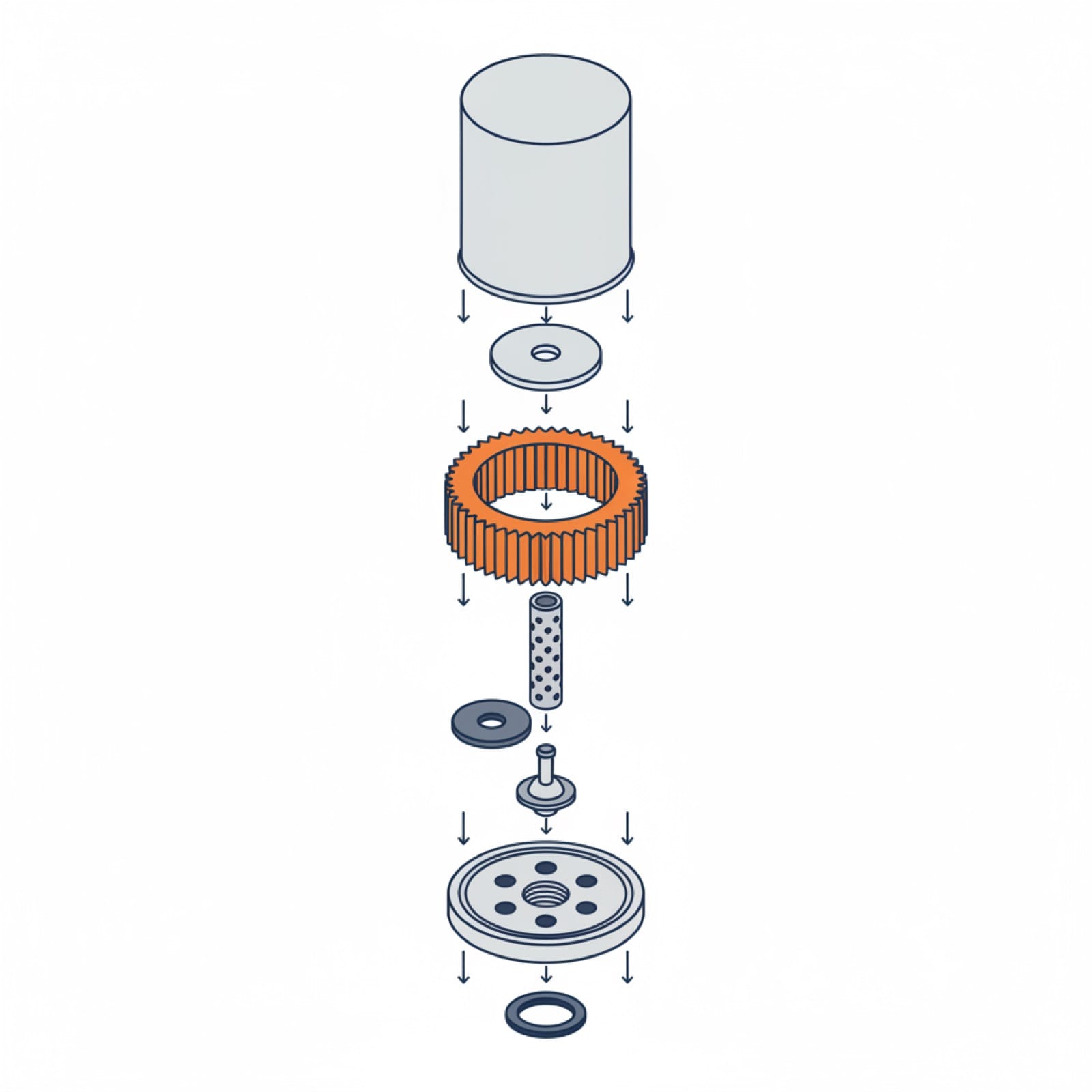
The Steel Shell and Baseplate
The outer metal canister encases everything inside. It handles the pressure and temperature swings of engine operation.
The baseplate at the open end has inlet ports (to let dirty oil in) and a central threaded outlet (to let clean oil out). The threads screw onto the engine block's filter mount.
The Filter Media
This is the heart of the filter. The media is a pleated material that oil flows through while contaminants get trapped.
There are three primary media types:
| Media Type | Fiber Size | Best For |
|---|---|---|
| Cellulose | Large, inconsistent wood pulp fibers | Standard intervals, conventional oil |
| Synthetic Blend | Smaller glass fibers mixed with cellulose | Better efficiency, moderate intervals |
| Full Synthetic | Fine, consistent man-made fibers | Extended intervals, synthetic oil, high-performance engines |
Synthetic media has a more consistent pore size and smaller fiber diameter. This contributes to higher filtration efficiency and longer service life.
The pleated design is not just for show. Pleating increases the total surface area packed into a compact canister, giving the media more contact area to trap particles.
The Bypass Valve
Located near the base of the filter, the bypass valve is a spring-loaded valve set to open at a specific pressure differential. Most automotive filters open somewhere in the range of 8 to 17 PSI, depending on the application.
When oil is cold and thick on startup, temporary bypass is normal. When bypass happens constantly during normal operation, it is a sign the filter is overdue for replacement.
The Anti-Drainback Valve
This one-way valve sits at the base of the filter. It prevents oil from draining out of the filter back into the sump when the engine is off.
Why does this matter? If oil drains out of the filter completely, the engine runs dry for a few seconds on every startup until pressure rebuilds and refills the filter. That is called a dry start, and it causes accelerated wear on cold bearings.
Nitrile anti-drainback valves are common in standard filters but can become brittle at high temperatures. Silicone valves resist heat better and maintain their seal through more temperature cycles.
The Center Tube (Core)
A perforated steel or nylon tube runs through the center of the filter media. It provides structural support so the pleated media does not collapse under oil pressure.
End Caps and Gaskets
End caps seal the top and bottom of the media assembly, channeling oil flow correctly through the filter. The outer gasket seals the filter against the engine block to prevent external leaks.
Full-Flow vs. Bypass Oil Filters
Most passenger cars use a full-flow (or inline) filter. Every drop of oil in the system passes through this filter before reaching the engine bearings. It is the standard design described above.
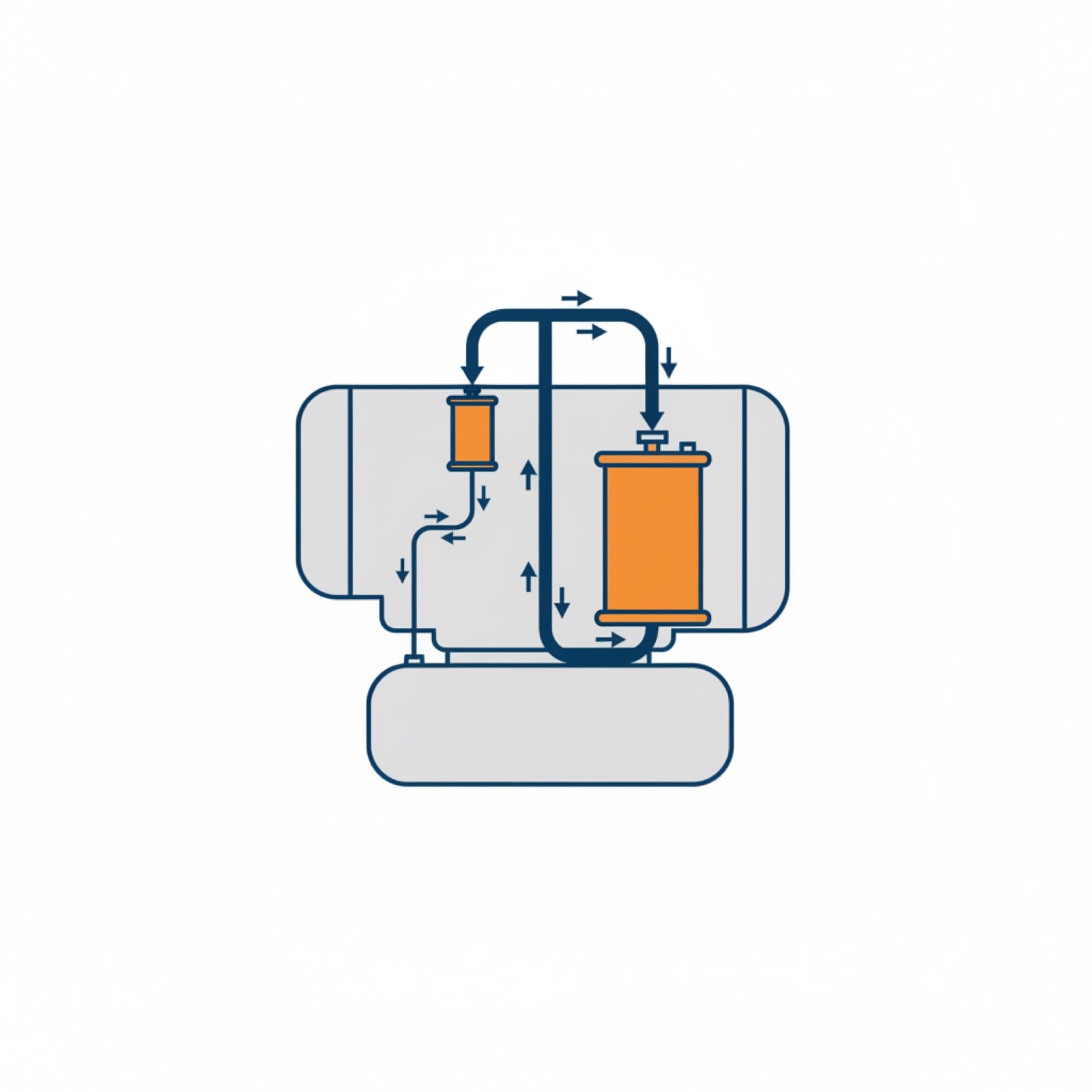
Some vehicles and many heavy-duty applications also use a bypass filter as a secondary system. The bypass filter only processes a small fraction of oil at a time, but it filters to much finer levels, as small as 3 microns. This keeps the oil in exceptional condition over extended intervals.
High-efficiency bypass filters with 3-micron pore sizes have shown reduced engine wear in studies. Some fleets have been able to extend drain intervals by 5 to 10 times using bypass filtration systems.
For most passenger vehicle owners, the full-flow filter is all that is needed when changed on schedule.
Spin-On vs. Cartridge Oil Filters
These are the two formats you will encounter on modern vehicles.
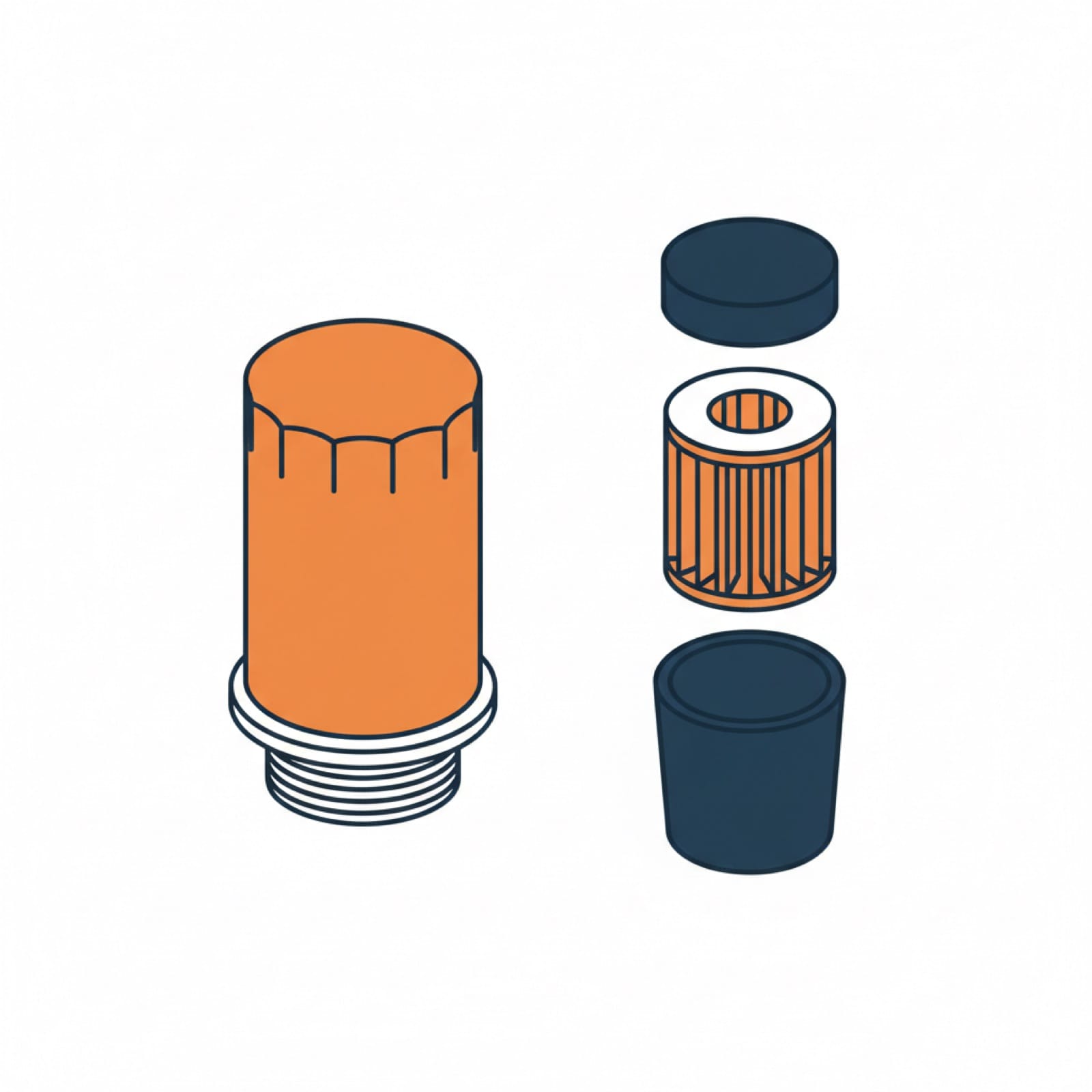
Spin-on filters are self-contained units. The metal canister, media, and all internal components come as one piece. You unscrew the old one and screw on the new one. They were introduced in the mid-1950s and became the dominant design by the early 1970s.
Cartridge filters use a permanent housing bolted to the engine block. Only the inner filter element gets replaced. European and Asian automakers began shifting back to this design in the 1990s because it generates less waste per oil change.
Both designs do the same job. Which one your car uses is determined by the manufacturer.
How Filter Efficiency Is Measured
The industry uses a system called the beta ratio to measure filter efficiency.
The beta ratio is calculated by dividing the number of particles of a given size upstream of the filter by the number of the same size downstream. A beta ratio of 200 at 20 microns means the filter allows only 1 out of every 200 particles of that size to pass through.
Mobil 1's Extended Performance filter is rated at 99% efficiency at 30 microns, tested under ISO 4548-12 and benchmarked against a 95% USCAR minimum standard. Mobil does not publish a separate rating at a finer micron size.
FRAM measures their filters' efficiency at the 20-micron standard. Their top-tier FRAM Synthetic Endurance filter is rated at 99% filtration efficiency for 25,000 miles.
A Machinery Lubrication survey found that 61% of lubrication professionals say filter plugging is the failure mode they see most frequently in oil filters.
When Does an Oil Filter Stop Working?
Three things limit a filter's life:
- Dirt-holding capacity is reached. The media gets saturated with trapped particles and the bypass valve stays open.
- Media damage. High pressure, heat, or incompatible oil can cause filter media to crack or shed fibers (called media migration).
- Antidrainback valve failure. A cracked valve allows oil to drain back on every shutdown, causing repeated dry starts.
For most vehicles on conventional oil, changing the filter at every oil change is the right call. On full synthetic oil with extended drain intervals, use a filter rated for that interval.
FAQ
What is an oil filter? An oil filter is a device that removes contaminants from engine oil as it circulates. It traps metal particles, dirt, soot, and combustion byproducts that accumulate in oil during engine operation. Keeping those particles out of engine bearings is the filter's primary job.
How does an oil filter work? Oil enters the filter through inlet ports in the baseplate, flows through pleated filter media that traps contaminants, and exits through a central outlet port as clean oil. A bypass valve opens if the filter becomes clogged to prevent oil starvation. An anti-drainback valve keeps oil in the filter when the engine is off.
What particles does an oil filter remove? A good oil filter removes particles in the 10 to 40 micron range, including metal wear particles from bearings and cylinder walls, dirt, soot from combustion, and other contaminants. This is the particle size range most damaging to engine bearing surfaces.
What is the difference between cellulose and synthetic filter media? Cellulose media is made from wood pulp with larger, inconsistent fibers. Synthetic media uses finer, man-made glass fibers with a more consistent pore structure. Synthetic media achieves higher filtration efficiency and holds more contaminants before needing replacement, making it better suited for extended oil change intervals.
Do you need to change the oil filter every oil change? On conventional oil with 3,000 to 5,000 mile intervals, yes. On full synthetic oil with extended intervals up to 10,000 miles or more, you should use a filter rated for that interval. Never run a standard-rated filter past its designed capacity.
What does the bypass valve in an oil filter do? The bypass valve opens when oil pressure across the filter exceeds a set threshold, usually due to a clogged filter or very cold, thick oil. It allows unfiltered oil to flow to the engine rather than causing complete oil starvation. A clean, properly-rated filter will rarely trigger bypass under normal driving conditions.
What to Do Next
Now that you understand how an oil filter works, the next step is knowing what separates a high-quality filter from a cheap one. Filter media type, anti-drainback valve material, bypass valve pressure rating, and dirt-holding capacity all vary significantly between brands.
Understanding those differences helps you choose a filter that actually protects your engine for the full interval between changes.