STP Oil Filter Cross Reference Guide (All Part Numbers)

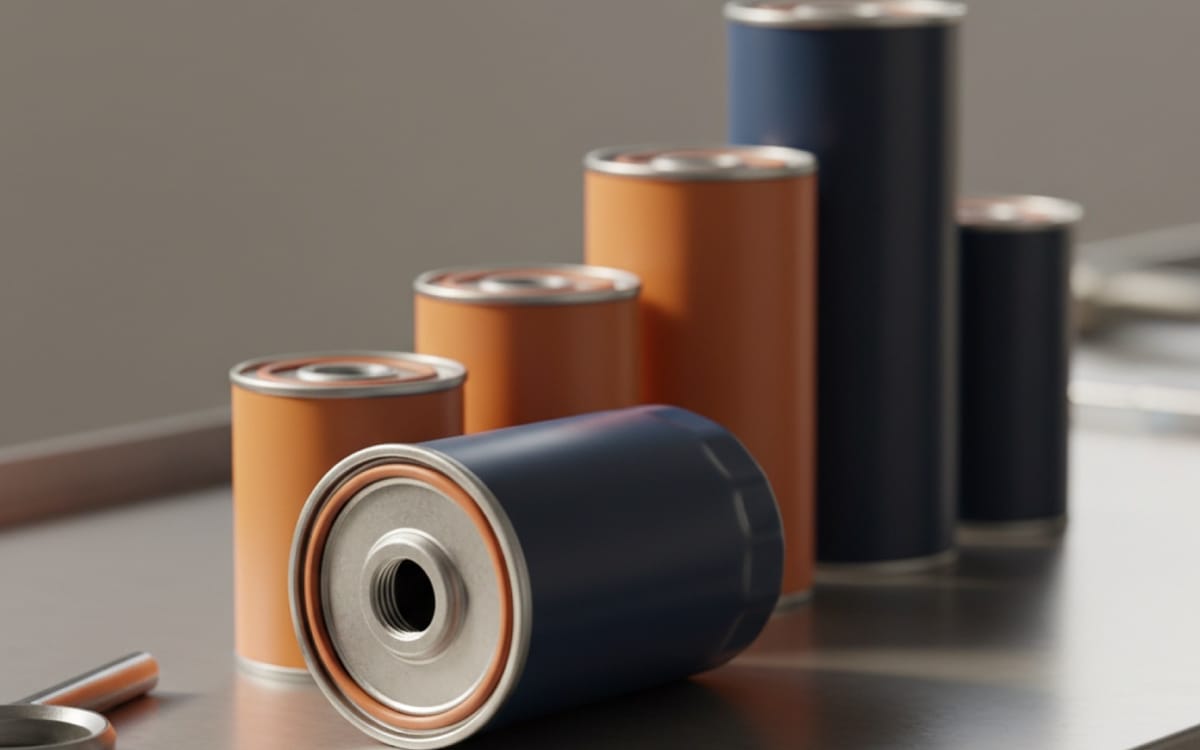


STP oil filter numbers use an S prefix followed by a fitment code that maps directly onto the Champ and Luber-finer catalogs. Many STP numbers also match the FRAM number for the same filter, so STP S3600 crosses to FRAM PH3600 and STP S6607 crosses to FRAM PH6607. Some do not, and those are where cross reference mistakes happen.


As an Amazon Associate we earn from qualifying purchases.
Who Makes STP Oil Filters?
STP is a brand, not a filter factory. The name belongs to Energizer Holdings, which bought STP along with Armor All in 2018 as part of a $1.25 billion auto care acquisition. The filters in the box are built by a contract manufacturer.
That manufacturer has historically been Champion Laboratories. The connection is old and direct: STP Corporation acquired Champion Laboratories in 1970, and Champion has produced the Champ and Luber-finer lines ever since.
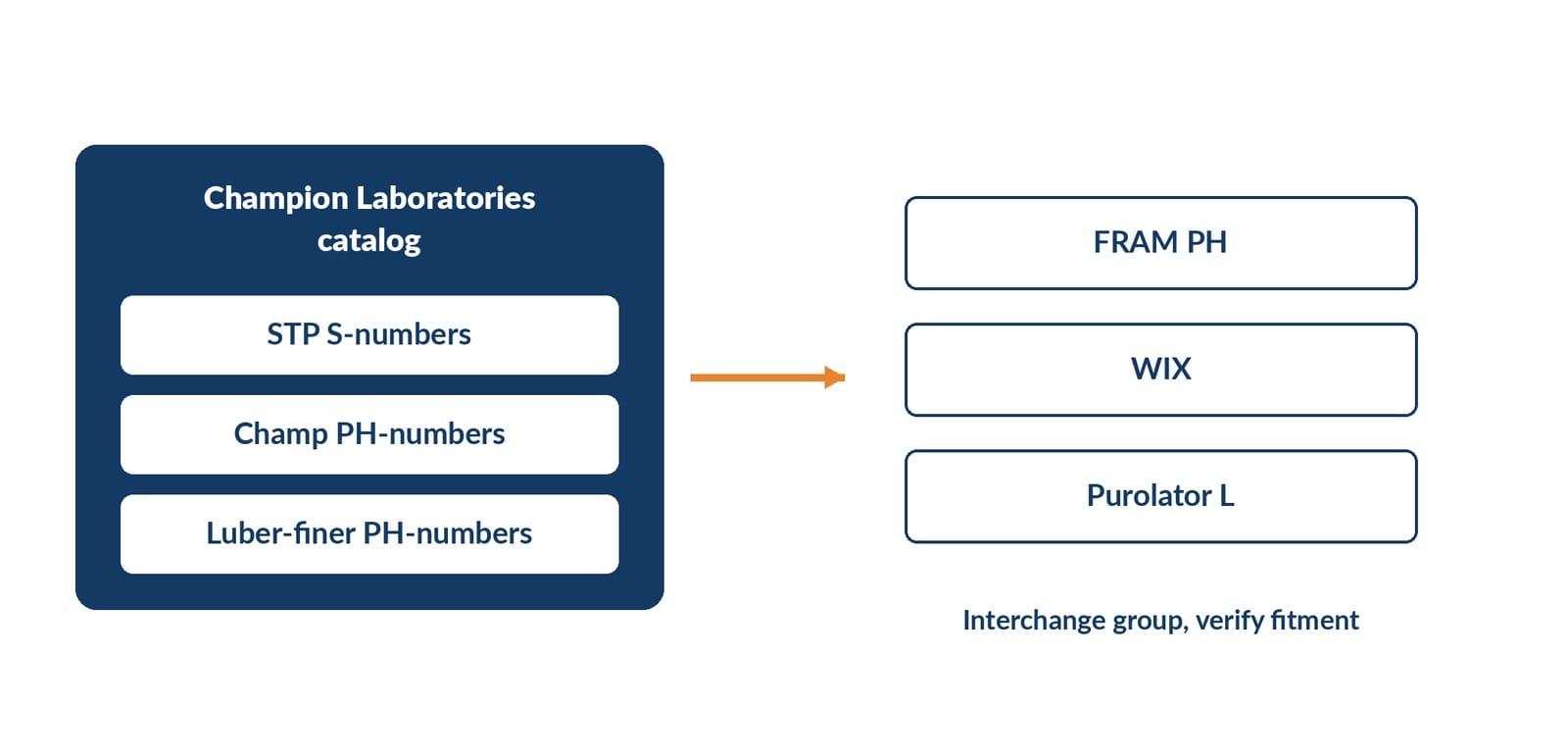
You can see the relationship in the part numbers. STP S8A and Champ PH8A are the same filter. STP S2808 and Luber-finer PH2808 are the same filter. The STP catalog is the Champion Laboratories catalog with a different letter on the front.
Sourcing is not perfectly uniform. Enthusiasts who cut open current stock report that some STP filters come from other suppliers depending on the product line and the region, so the filter in your hand may not match a teardown someone posted three years ago.
For cross referencing, none of that matters. The catalog numbers hold regardless of which plant filled the order.
How STP Oil Filter Part Numbers Work
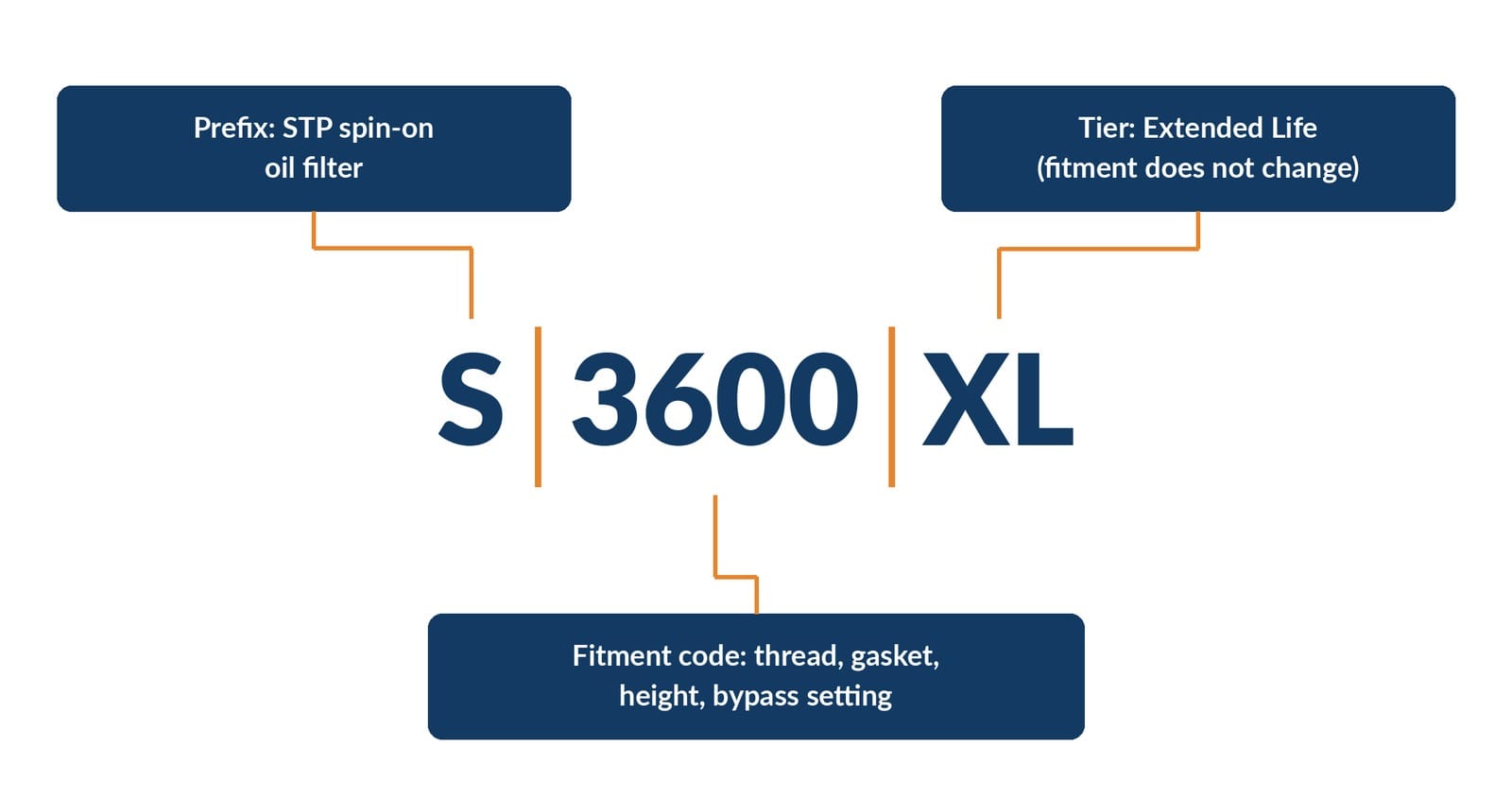
The system is the simplest of any major filter brand. One prefix, one fitment number, and an optional tier suffix.
What does the S prefix mean?
The S identifies the part as an STP spin-on oil filter. It tells you nothing about media, size, or vehicle. The number after it is the fitment code, and that number determines thread size, gasket diameter, height, and bypass valve setting.
Do STP numbers match FRAM numbers?
Often, but not always. This is the single most important thing to understand about the STP catalog.
Where the numbers coincide, the shortcut works perfectly:
- STP S2 is FRAM PH2
- STP S8A is FRAM PH8A
- STP S3600 is FRAM PH3600
- STP S3614 is FRAM PH3614
- STP S4967 is FRAM PH4967
- STP S6607 is FRAM PH6607
Where they do not coincide, the shortcut produces a part number that does not exist or fits the wrong engine. The clearest example is the S2808. There is no FRAM PH2808. The STP S2808 crosses to FRAM PH3593A, because the 2808 number came from the Champ catalog, not FRAM's.
Treat "drop the S, add PH" as a first guess worth checking, not a rule. It resolves most of the catalog and fails on a meaningful minority.
What do the letter suffixes mean?
Suffixes fall into two categories, and mixing them up is a common error.
Fitment suffixes are part of the number itself. The A in S3387A and the A in S8A identify a specific variant within that filter family. An S3387A is not an S3387.
Tier suffixes sit at the end and mark the product line. STP uses ML and XL, and both appear across most of the catalog alongside the base number: S3600, S3600ML, S3600XL.
A tier suffix never changes fitment. If the S3600 fits your engine, the S3600XL fits it too.
STP Oil Filter Cross Reference Chart
This chart covers the highest-volume STP numbers in North America. The Champ and Luber-finer column is the exact catalog twin. The FRAM, WIX, and Purolator columns are the primary equivalents within the same interchange group.
| STP | Champ / Luber-finer | FRAM | WIX | Purolator |
|---|---|---|---|---|
| S2 | PH820 | PH2 | 51372 | L24651 |
| S8A | PH8A | PH8A | 51515 | L30001 |
| S2808 | PH2808 | PH3593A | 51334 | L14459 |
| S3387A | PH47 | PH3387A | 51040 | L10111 |
| S3600 | PH253 | PH3600 | 51516 | L20195 |
| S3614 | PH2835 | PH3614 | 51348 | L10241 |
| S3980 | PH51A | PH3980 | 51036 | L24011 |
| S4967 | PH2840 | PH4967 | 51394 | L14476 |
| S6607 | PH2867 | PH6607 | 57356 | L14610 |
| S9100 | LFP2999 | PH9100 | 57202 | L35399 |
A caution about how to read this table. Cross reference databases group filters that are mechanically interchangeable, not filters that are identical. Several of these numbers sit in wide groups where a second or third WIX or Purolator number is also listed as compatible. The values above are the primary match for each row, and your fitment lookup is still the final authority.
Every number here is a spin-on canister. STP does not compete in the cartridge segment the way FRAM and Purolator do, so many late-model engines that use a cartridge element inside a housing have no STP listing at all. That is a catalog gap, not a lookup failure.


As an Amazon Associate we earn from qualifying purchases.
What Vehicles Does the STP S3600 Fit?
The S3600 is a tall domestic spin-on, and it is one of the most widely applicable numbers in the catalog. Its FRAM twin, the PH3600, covers Ford, Dodge, Jeep, Mazda, Lincoln, Mercury, and Chrysler applications across roughly four decades of production.
Common applications include:
- Ford Ranger, F-150, Taurus, Mustang, Escort, Edge and Flex
- Dodge Dakota, Durango, Ram 1500 and Nitro
- Jeep Liberty, Commander and Grand Cherokee
- Mazda B-series trucks and CX-9
- Kohler, Onan and Kubota small engines
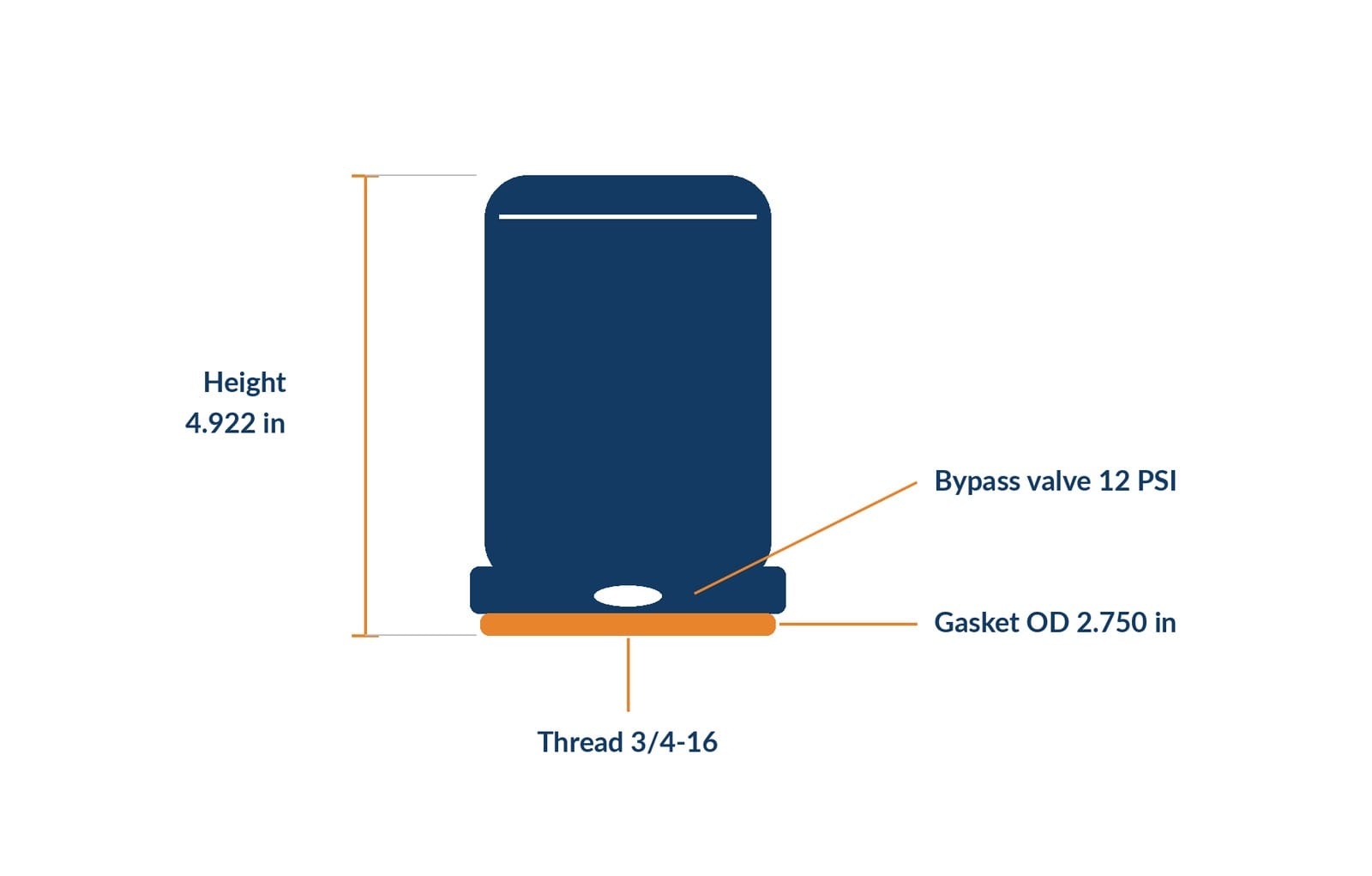
The physical specs come from the FRAM equivalent: 3/4-16 thread, a 2.750 inch gasket outside diameter, 4.922 inches tall, with a 12 PSI bypass valve setting and a 310 PSI burst rating.
The base STP version of this filter is engineered to last up to 5,000 miles. That number is worth noting, because plenty of the vehicles on the list above are now running synthetic oil on intervals well past it.
What Vehicles Does the STP S2808 Fit?
The S2808 is the number most likely to trip up a cross reference, because it does not follow the FRAM naming pattern at all.
It is a mid-size spin-on with an M20 x 1.5 thread, a 2.24 inch gasket inside diameter, and a 15 gpm flow rating. The primary applications are Hyundai and Kia four-cylinder engines, and enthusiasts who have cut the filter open note that it also covers older Honda applications and is the equivalent of the Purolator L14459 and FRAM PH3593A.
If you searched for a FRAM PH2808 and came up empty, that is why. The part you want is the PH3593A.
The same source notes the S2808 is one of the odd sizes in the STP range that uses metal end caps and an internal metal tube rather than the composite core found in much of the current line. It is a serviceable filter on a short interval and not one to stretch.


As an Amazon Associate we earn from qualifying purchases.
STP Filter Tiers: Standard vs XL vs ML
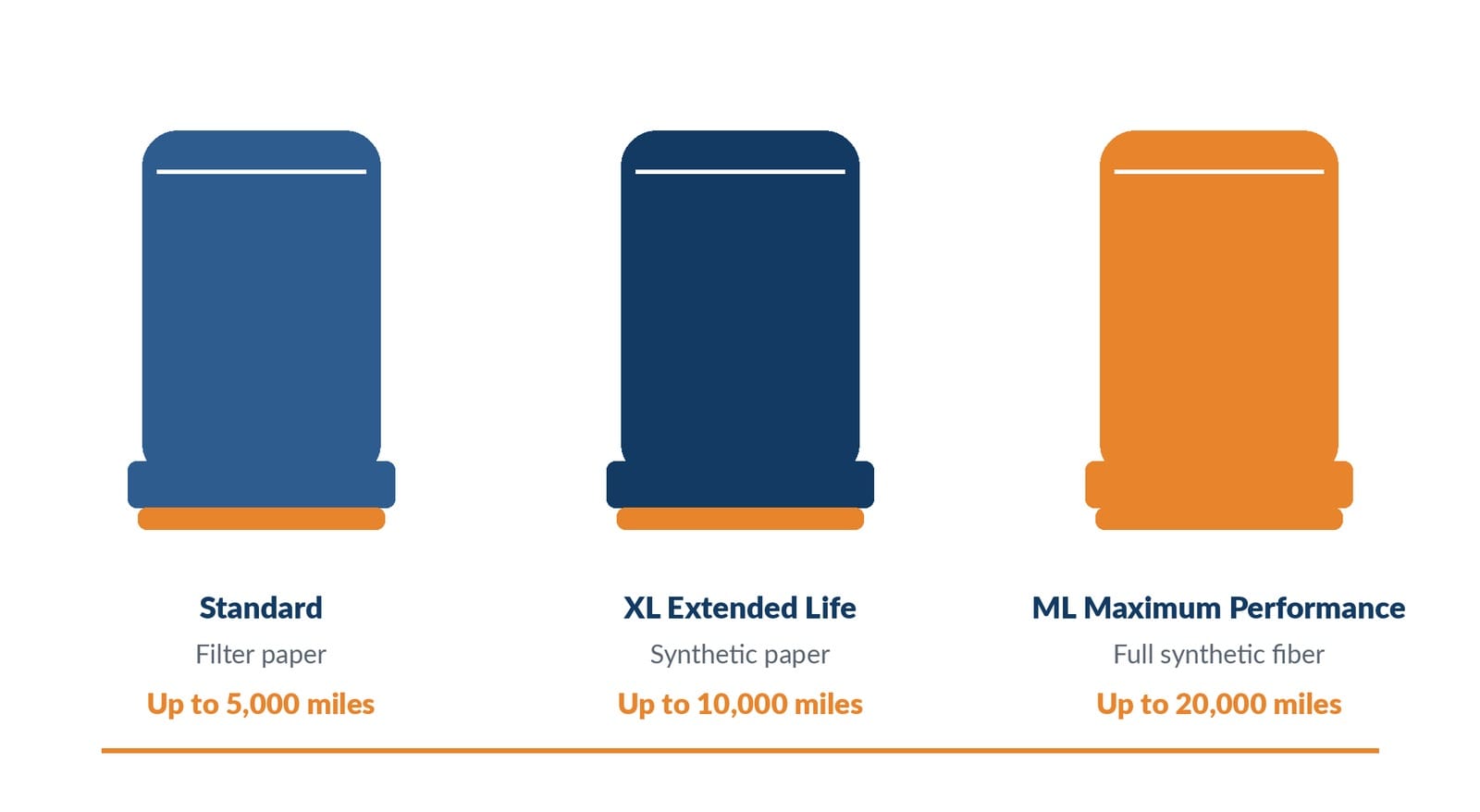
STP sells three tiers of the same fitment. The differences are real and they are larger than the price gap suggests.
| Tier | Suffix | Media | Rated interval |
|---|---|---|---|
| Standard | none | Filter paper | Up to 5,000 miles |
| Extended Life | XL | Synthetic paper | Up to 10,000 miles |
| Maximum Performance | ML | Full synthetic fiber | Up to 20,000 miles |
The base filter is the one most people buy, and it is built for a 3,000 to 5,000 mile replacement interval on conventional oil.
The Extended Life XL steps up to synthetic media and silicone gaskets. STP rates it to capture particles as small as 20 microns at greater than 99% efficiency and to last up to 10,000 miles on full synthetic oil, with gaskets specified from -40°C to 200°C.
The Maximum Performance ML is the top tier. It uses premium full synthetic fiber media rated at 99.5% multi-pass efficiency at 25 microns, with a high-retention silicone anti-drainback valve and a claimed 20,000 mile capability on synthetic oil. It also adds a 1 inch removal nut, which matters more than it sounds like it should on a filter buried behind a subframe.
Match the tier to your drain interval before you argue about brands. A base filter on a 10,000 mile synthetic interval is a worse decision than any brand comparison you could run.
Is STP a Good Oil Filter Brand?
The base STP filter is a competent budget filter and nothing more, which is exactly what it is sold as. Filter paper media, conventional construction, a 5,000 mile rating printed on the box.
For a vehicle on a conventional oil schedule that gets changed on time, that is enough. Filtration failures on modern spin-ons are rare, and the practical spread between filter brands narrows sharply once you are inside a normal service window.
Where the base filter is the wrong pick:
- Extended synthetic drains past 7,500 miles, where the XL or ML tier is the correct product
- High-mileage engines producing more wear debris, where media capacity matters
- Turbocharged engines running high oil temperatures and short heat cycles
The ML tier is a different conversation. Full synthetic fiber media with a stated 99.5% efficiency figure puts it in the same category as FRAM Ultra Synthetic and Purolator Boss rather than in value territory.
How does STP compare to Super Tech?
They are close relatives. Both are value-tier filters historically produced by Champion Laboratories, and both sell primarily through big-box retail. Super Tech numbers use an ST prefix over the same fitment codes, so a Super Tech ST3600 and an STP S3600 point at the same filter.
Between the two, the deciding factor is usually which one is on the shelf. Neither base filter belongs on a 15,000 mile synthetic interval.
How to Look Up an STP Oil Filter for Your Vehicle
Three routes give reliable results.
1. Start from the FRAM number. FRAM's lookup tool is the most complete consumer fitment database in the industry. Enter your year, make, model, and engine, get the PH number, then check whether an S version of that number exists. It usually does.
2. Cross through the Champ or Luber-finer number. This is the route that works when the FRAM shortcut fails. Because the STP catalog is the Champion Laboratories catalog, a Champ number always has an STP twin.
3. Cross from the filter currently on the engine. Read the number off the old filter, run it through a cross reference database, and take the STP result.
Whichever route you use, confirm three physical specs before installing: thread size, gasket outside diameter, and canister height. Those determine whether the filter seals and clears the surrounding hardware.
The bypass valve setting is the fourth spec, and it is the one nobody checks. A filter with the right thread and the wrong bypass pressure will install perfectly and still be wrong for the engine.


As an Amazon Associate we earn from qualifying purchases.
Does Using an STP Filter Void Your Warranty?
No. The Magnuson-Moss Warranty Act prevents a manufacturer from voiding your warranty because you fitted an equivalent aftermarket filter.
A dealer would have to prove that the specific filter caused the specific failure. For a correctly cross referenced filter meeting the same physical specifications, that case is not one anyone can make.
Keep receipts and note the mileage at each change. Documented maintenance is what protects a warranty claim, not the brand name on the can.
FAQ
What is the FRAM equivalent of an STP oil filter? For most numbers, drop the S and add PH: STP S3600 is FRAM PH3600 and STP S6607 is FRAM PH6607. The shortcut fails on numbers inherited from the Champ catalog. STP S2808 is FRAM PH3593A, not a PH2808, because no such FRAM number exists.
Who manufactures STP oil filters? Champion Laboratories has been the historic manufacturer, a relationship dating to STP Corporation's 1970 acquisition of the company. The STP brand itself is owned by Energizer Holdings. Current production varies by product line and region.
What vehicles does the STP S3600 fit? The S3600 covers a broad range of Ford, Dodge, Jeep, Mazda, Lincoln and Chrysler applications, plus Kohler, Onan and Kubota small engines. It is a 3/4-16 thread spin-on standing 4.922 inches tall, equivalent to FRAM PH3600 and WIX 51516.
What is the difference between STP, STP XL and STP ML filters? Fitment is identical across all three. The base filter uses filter paper and is rated to 5,000 miles. The XL Extended Life uses synthetic paper and is rated to 10,000 miles. The ML Maximum Performance uses full synthetic fiber media and is rated to 20,000 miles on synthetic oil.
Is STP as good as FRAM? The base STP filter sits alongside FRAM Extra Guard rather than above it. Both are value filters on conventional media. The ML tier competes with FRAM Ultra Synthetic on media type and stated efficiency.
Does STP make cartridge oil filters? The STP catalog is built around spin-on canisters. If your engine uses a cartridge element in a housing, there is often no STP listing, and you should cross to a brand with a full cartridge catalog instead.


As an Amazon Associate we earn from qualifying purchases.
Before You Buy
Look up the FRAM number for your vehicle first and check whether the S version exists. If it does not, cross through the Champ or Luber-finer number instead, which is where the odd STP numbers like the S2808 come from. Then verify thread size, gasket diameter, and height against the filter you are pulling off before the new one goes on.