Wix Oil Filter Cross Reference Chart (Complete Guide)

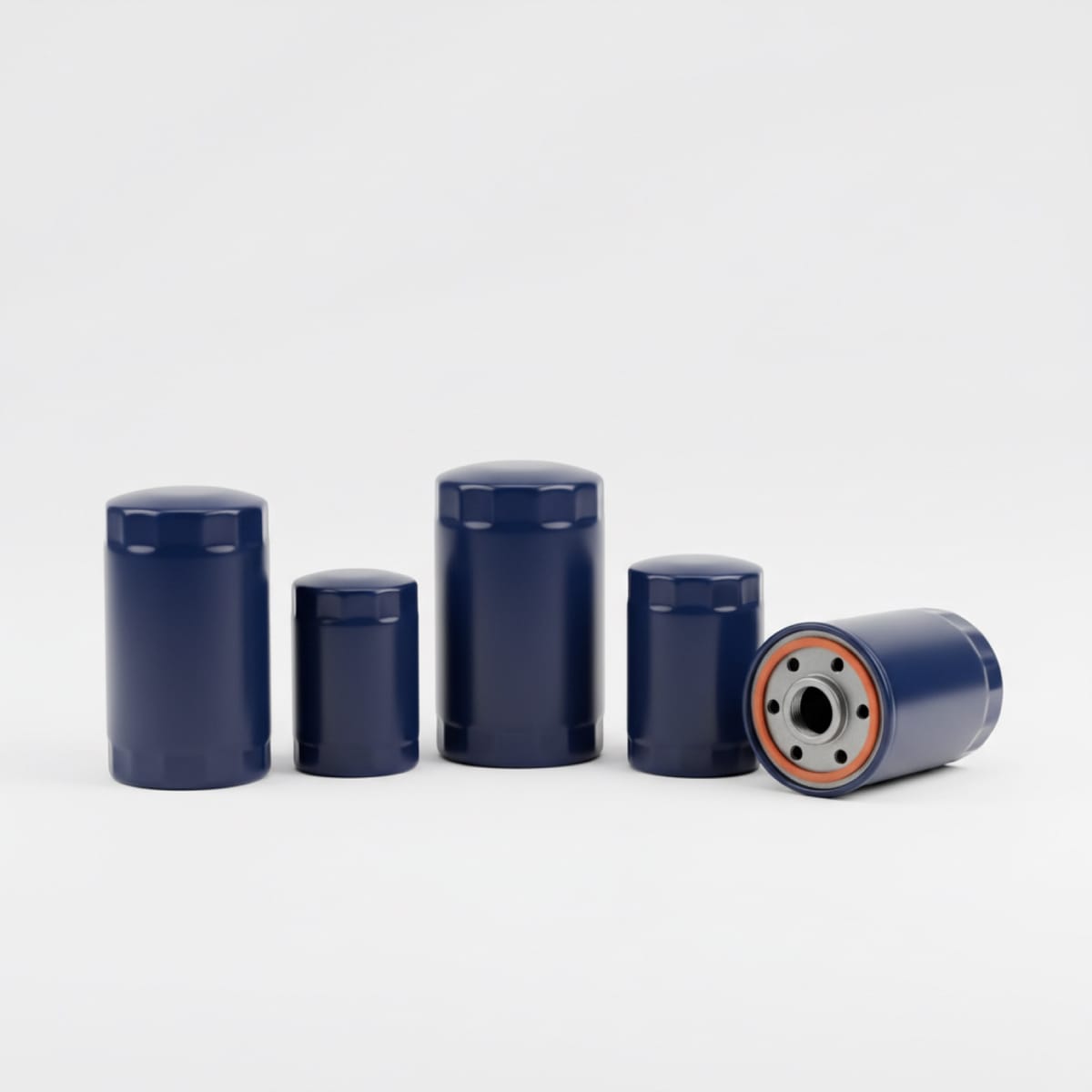


A WIX oil filter cross reference matches a WIX part number to the equivalent FRAM, Purolator, K&N, NAPA, Carquest or OEM number. The reliable method is to start from your vehicle's OEM filter number, not from the aftermarket number you have in your hand. WIX publishes free cross reference catalogs as PDFs and through its own online Filter Finder.


As an Amazon Associate we earn from qualifying purchases.
How WIX oil filter part numbers actually work
WIX oil filters use a five digit number, usually starting with 51 or 57, sometimes followed by a letter suffix.
The digits identify the physical filter and its application. The suffix identifies the product line.
WIX does not publish a public key explaining what each numeric block means. I looked for one across WIX's product pages, catalog portal and support section, and no such document exists. Anyone who tells you the number decodes into a tier or a filter type is guessing.
What can be confirmed is more useful anyway.
What the 51 and 57 series really mean
The 51 and 57 series are not quality grades. They are different baseplate geometries.
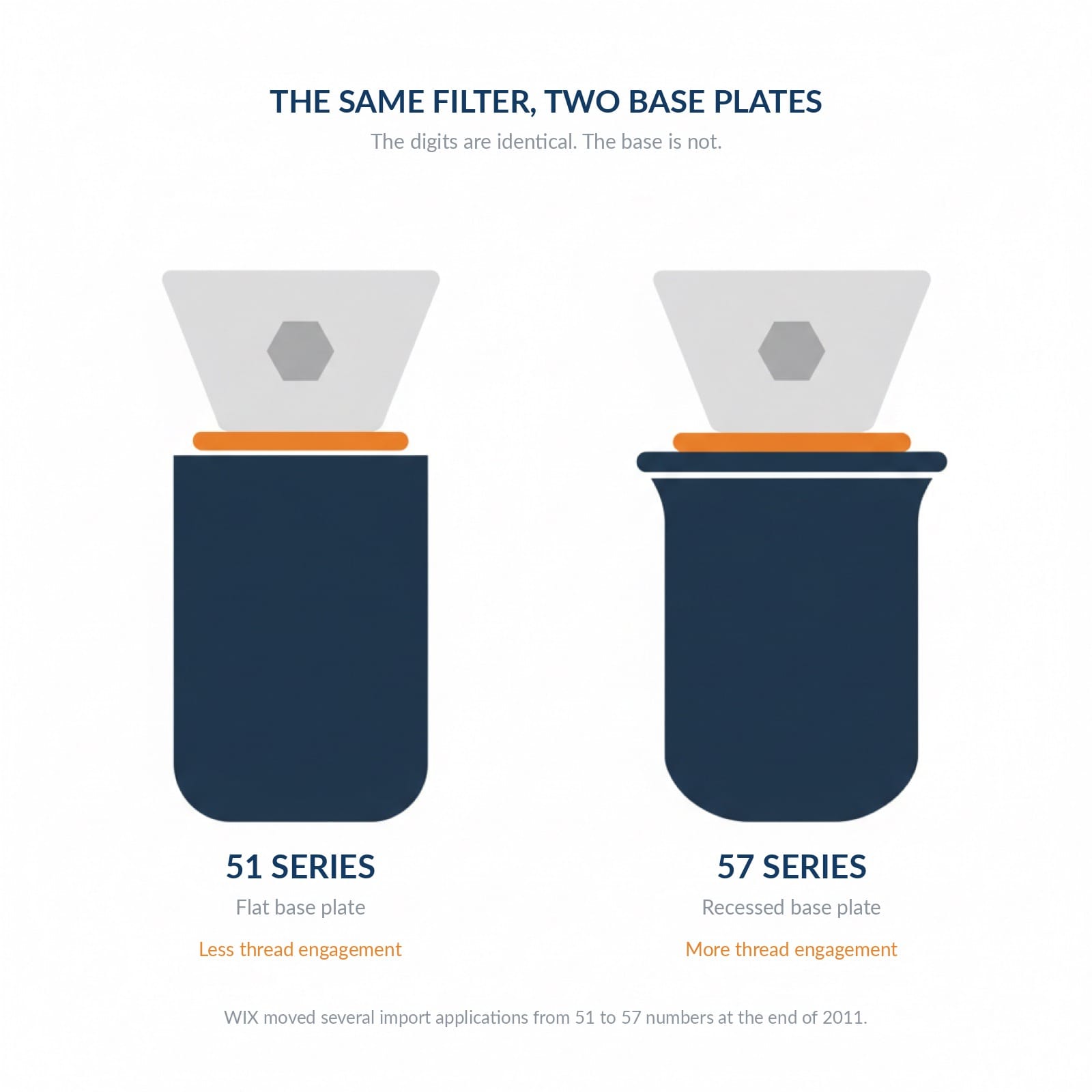
The 57 series has a more recessed baseplate, which allows deeper thread engagement and a better gasket seal. WIX product support confirmed this directly, explaining that the interchange from the 51356 to the 57356 was made at the end of 2011, and that the 51356 stayed in the catalog because it is still specified for other vehicles.
This matters on real cars. On certain Honda applications there is a nut cast into the end of the oil filter mount. A filter with an outward curved baseplate will not thread on far enough to compress the gasket, and the result is a large oil leak.
If your vehicle now calls for a 57 series number and you fit the visually identical 51 series filter, WIX will not warranty it. That is the practical difference, not media quality.
The number does not encode filter type either. The 57 block contains both spin-on canisters and metal-free cartridges. The 57047, for example, is a cartridge element.
What the letter suffixes mean
The suffix is the part of a WIX number that tells you something predictable.
| Suffix | Product line | Example |
|---|---|---|
| No suffix | WIX Premium | 57060 |
| XP | WIX XP, synthetic media, longest interval | 57060XP |
| HM | WIX High Mileage | 57060HM |
| MP | Multi-pack of the same filter | 57060MP |
| XD, XE | Heavy duty lines | Heavy duty catalog |
| WL prefix | WIX Europe numbering | WL7485 |
Because the digits stay the same, a 57060 and a 57060XP fit the same engine. Only the media and the rated interval change.
WIX oil filter cross reference chart
Every row below was checked against interchange catalog data and then pinned using the OEM part number, which is the only value in the row that cannot belong to two different filters.
| WIX | FRAM | Purolator | NAPA Gold | K&N | Carquest | OEM number |
|---|---|---|---|---|---|---|
| 51334 | PH3593A | L14459 | 1334 | HP-1004 | 85334 | ACDelco PF1127 |
| 57047 | CH9972 | L25608 | 7047 | SO-7020 | 84047 | Toyota 04152-YZZA1 |
| 57060 | PH10060 | L12222 | 7060 | HP-1017 | 84060 | ACDelco PF48, GM 89017524 |
| 57145 | PH4386 | L14477 | 7145 | HP-1003 | 84145 | ACDelco PF1234 |
| 57502 | PH10575 | L22500 | 7502 | HP-2011 | 84502 | Motorcraft FL-500S |
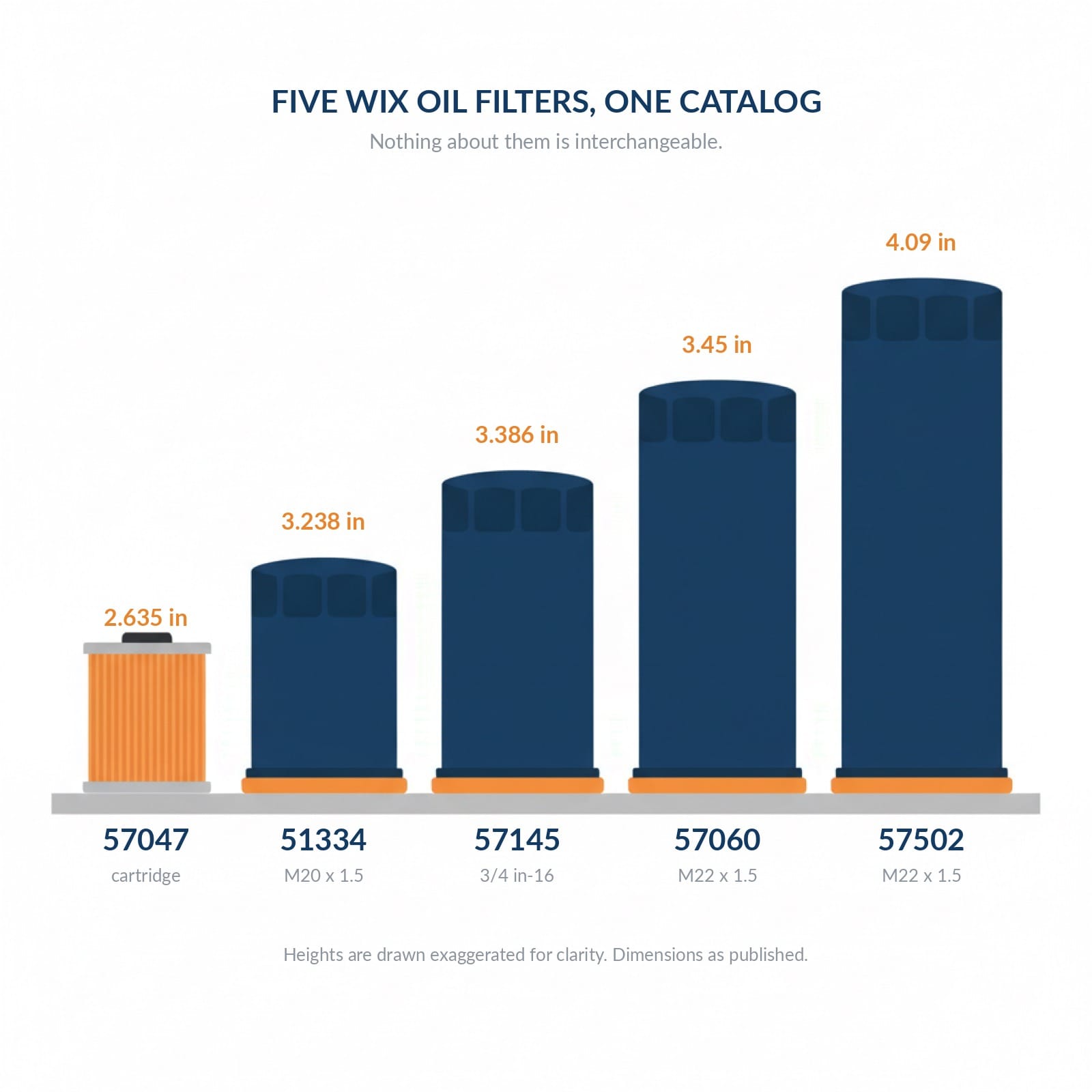
The physical specifications behind those numbers show how little these filters have in common with each other, which is exactly why a cross reference has to be per part and never per brand.
| WIX | Height | Outside diameter | Thread | Bypass relief | Media |
|---|---|---|---|---|---|
| 51334 | 3.238 in | 3.15 in | M20 x 1.5 | 8 to 11 PSI | Enhanced cellulose |
| 57047 | 2.635 in | 2.755 in | Cartridge, metal free | Not applicable | Synthetic blend |
| 57060 | 3.335 in | 2.921 in | M22 x 1.5 | 12 PSI | Enhanced cellulose |
| 57145 | 3.386 in | 2.677 in | 3/4 in-16 | 11 to 14 PSI | Enhanced cellulose |
| 57502 | 4.09 in | 2.942 in | M22 x 1.5 | 22 PSI | Enhanced cellulose |
Note the bypass valve spread. The 51334 opens at 8 PSI and the 57502 holds until 22 PSI. Both are WIX oil filters in the same catalog. Anyone quoting a single bypass figure for the brand is inventing it.
Burst pressure varies too: 280 psi on the 51334, 350 psi on the 57060, 400 psi on the 57145.


As an Amazon Associate we earn from qualifying purchases.
Where to find the official WIX cross reference chart PDF
WIX publishes its catalogs itself, free, with no registration. Most of the charts circulating on parts blogs are scraped copies of these.
The catalogs live on the WIX PDF catalog portal, which serves six separate books:
- Passenger Car and Light Truck. The one most drivers want, and the source of nearly every WIX cross reference chart posted elsewhere.
- Off Highway, Volumes 1 and 2. Agricultural and construction equipment.
- Medium and Heavy Duty Truck and Bus.
- Marine.
- Racing.
- Interchange Product Numeric. The competitor-number-to-WIX-number direction, which now redirects into the live lookup tool.
For a single part number, the online tool is faster than any PDF. WIX's Filter Finder covers over 16,000 filters and is searchable by vehicle or by competitor part number. The full catalog set is also mirrored at MANN+HUMMEL's catalog portal, and there are free WIX catalog apps for iOS and Android.
Use a downloaded PDF for browsing, but confirm the final number in the Filter Finder. Applications get superseded, and a PDF cannot tell you that.
WIX 57060 cross reference: what it crosses to and what it fits
The 57060 is one of the most searched WIX numbers, and it is also one of the most commonly mis-listed.
It is a spin-on filter with synthetic blend media, 3.45 inches tall, 2.921 inches across the top, an M22 x 1.5 thread, a 12 PSI bypass relief valve, a 350 psi burst rating and an anti-drainback valve.
Its main cross references are FRAM PH10060, Purolator L12222, K&N HP-1017, NAPA Gold 7060, Carquest 84060, STP S10060, Valvoline VO88, Baldwin B7401, Donaldson P550794 and Fleetguard LF16242. The OEM numbers that pin it are ACDelco PF48, GM 89017524 and Mopar 04892339AA.
The applications split across two groups that surprise people:
- General Motors V8s, including the 2007 Silverado and Sierra Classic, Suburban 3500 HD and Escalade ESV and EXT.
- A large Stellantis block, including the Jeep Wrangler from 2018, Grand Cherokee from 2017, Ram 1500 Classic, Ram 3500, 4500 and 5500, Dodge Durango, Alfa Romeo Giulia and Stelvio, Fiat 500X and Ram ProMaster City.
Here is the correction worth making. Several cross reference charts list the 57060 as the Ford 5.0 Coyote filter. It is not. No Ford passenger vehicle appears in its application list. The Ford 5.0 filter is the 57502, a taller 4.09 inch canister with a 22 PSI bypass that crosses to Motorcraft FL-500S.
A stray Ford part number does appear in the 57060 interchange data, which is almost certainly how that error spread. That is a merged group artifact, not a fitment.
Is a NAPA Gold filter still the same as a WIX?
The numbering shortcut still works. The manufacturing assumption behind it no longer does.
The number rule: drop the leading digit from the WIX number and you have the NAPA Gold number. It holds on every filter in the chart above. WIX 57060 is NAPA Gold 7060. WIX 51334 is NAPA Gold 1334. WIX 57502 is NAPA Gold 7502.
The rest of the NAPA range keys off the same digits: Platinum 47060, ProSelect 27060, Silver 37060.
What changed: WIX built NAPA Gold filters for decades. Beginning around late 2023 and continuing through 2025, NAPA moved the bulk of its light duty spin-on Gold applications to other suppliers, with Premium Guard Inc widely reported as the main one. Parts counter staff and long-running filter forum threads have been documenting the switch since mid-2025.
I could not find a formal announcement from NAPA, WIX or MANN+HUMMEL confirming the scope of the change, so treat the sourcing detail as strongly reported rather than officially published. The catalog numbers were not renumbered, which is why the old shortcut still resolves.
The practical takeaway: a NAPA Gold number still tells you the right size and thread for your engine. It no longer guarantees a filter built in a WIX plant.


As an Amazon Associate we earn from qualifying purchases.
WIX vs WIX XP: what actually changes
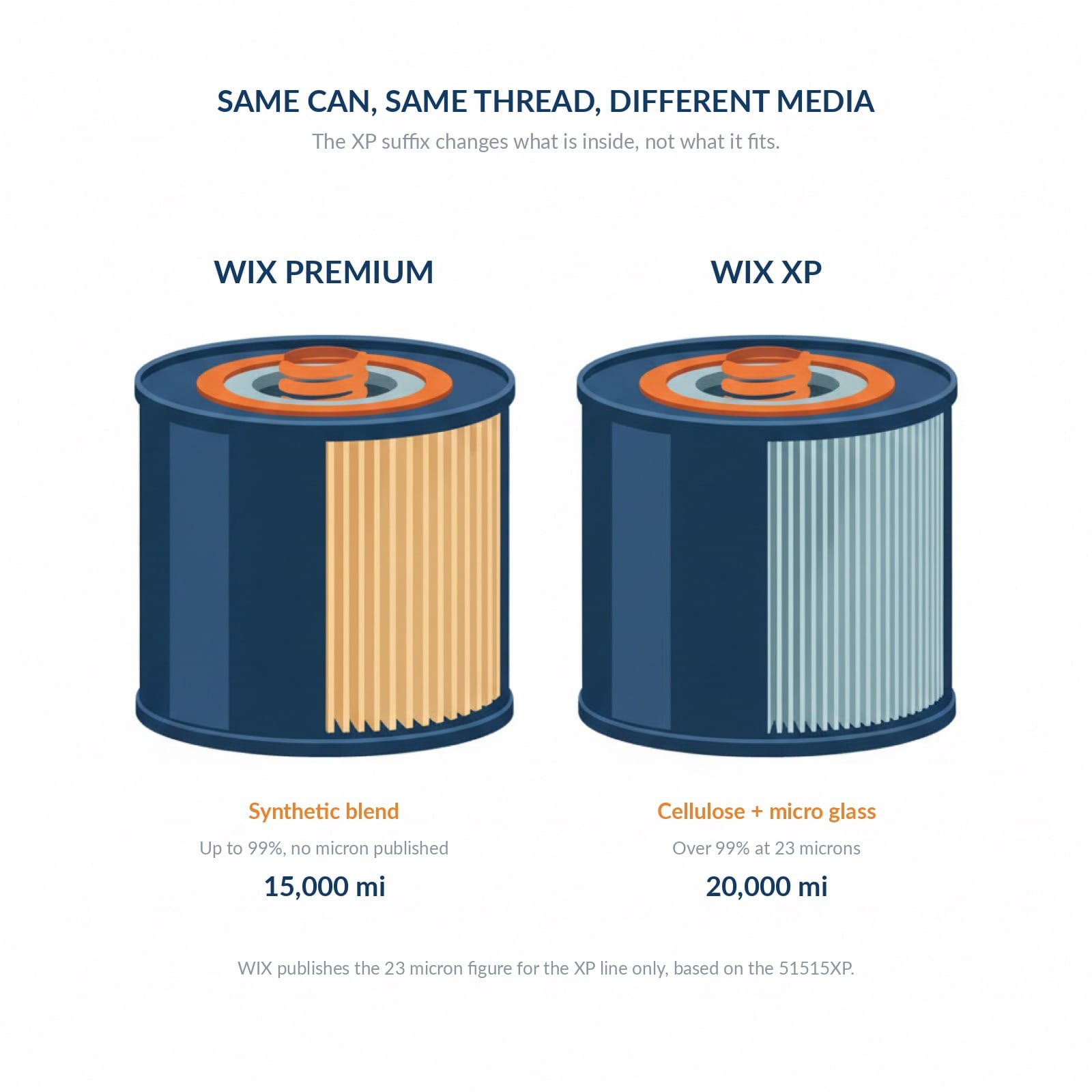
Both filters fit identically. The difference is media and rated interval.
| WIX Premium | WIX XP | |
|---|---|---|
| Media | Synthetic blend | Cellulose fibers plus micro glass |
| Published efficiency | Up to 99%, no micron size given | Over 99% at 23 microns |
| Rated interval | Up to 15,000 miles | Up to 20,000 miles |
| Anti-drainback valve | Silicone | Silicone |
| Gasket | Standard | Ethylene acrylic |
| End caps | Standard | Solid metal |
WIX states that its Premium line uses synthetic blended media and meets or exceeds OE intervals up to 15,000 miles, with "up to 99% dirt trapping efficiency" and no micron size attached to that number.
The XP line is the only WIX oil filter with a published efficiency and micron pair. WIX claims over 99% dirt-holding capacity at 23 microns, and it qualifies that figure as being based on one part number, the 51515XP.
That qualification is doing a lot of work, and it deserves flagging. A single-part test result is not a line-wide specification. Media, pleat count and can size vary across a catalog of thousands of filters.
You will also see 99% at 26 microns quoted for standard WIX filters. That figure appears in retail product listings, not anywhere on WIX's own site, so I am not treating it as a manufacturer specification.
Why a cross reference list is not a list of equivalents
This is the single most useful thing to understand before you use any chart, including the one above.
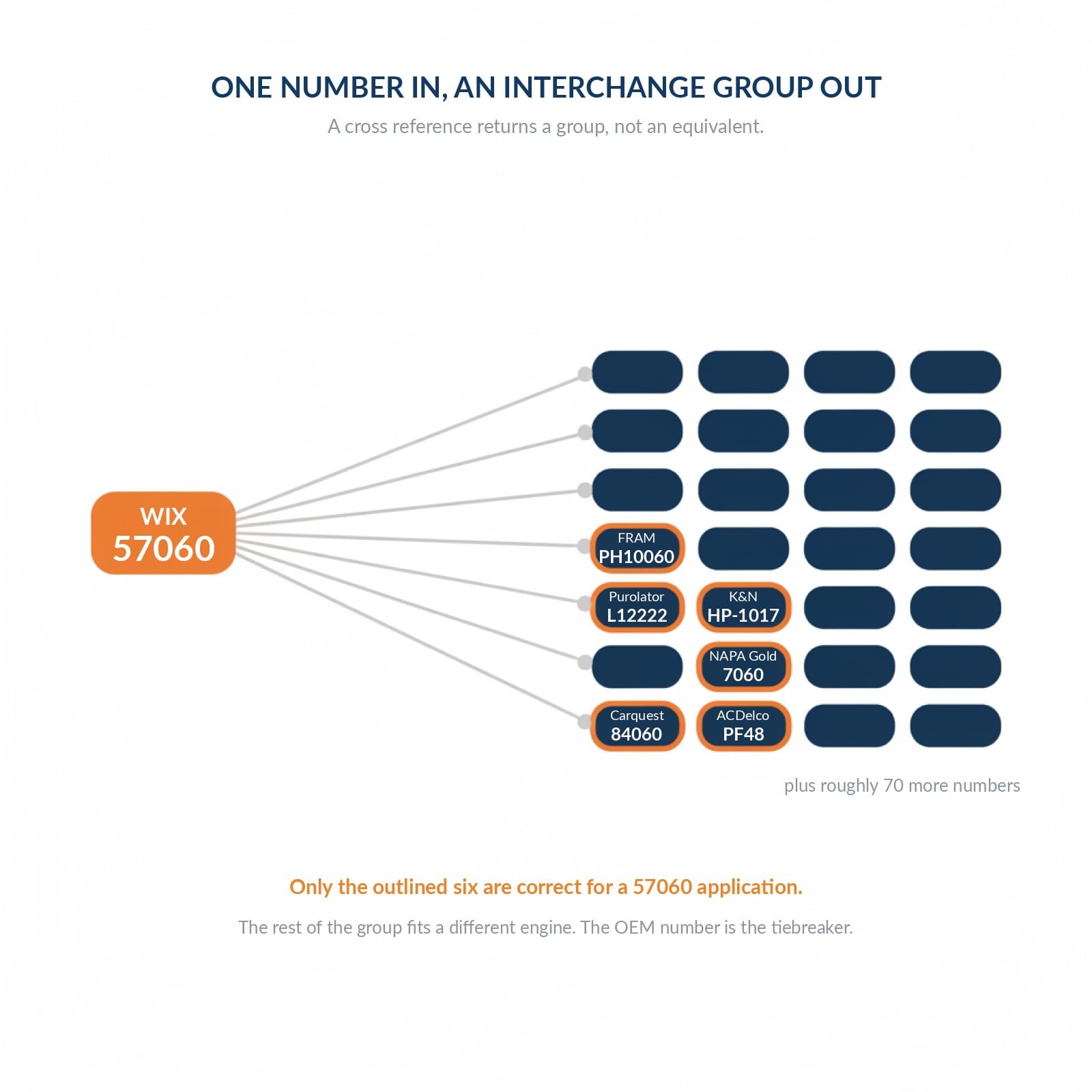
Cross reference databases publish interchange groups, not one-to-one matches. When several filters are close enough in size and thread to be catalogued together, the database returns all of them for any one of them.
The 57060's interchange data spans roughly eighty brands and includes multiple FRAM numbers, multiple ACDelco numbers and at least one Ford number that matches no Ford vehicle in the fitment list. Every one of those is "a cross reference" for the 57060. Only some of them will actually work on your engine.
The three values that fail quietly are the ones to check:
- Thread pitch. An M20 x 1.5 filter will start onto some 3/4 in-16 mounts and cross-thread the housing.
- Bypass relief pressure. A filter with a lower setting than your engine expects will send unfiltered oil around the media under normal cold-start pressure.
- Height. A canister that is too tall will contact a subframe, a driveshaft or an exhaust pipe.
The OEM number is the tiebreaker. It belongs to exactly one filter specification, which no aftermarket number can promise.


As an Amazon Associate we earn from qualifying purchases.
How to confirm the right WIX filter for your vehicle
- Find your OEM filter number first. It is in the owner's manual maintenance section, on the dealer parts counter screen, or printed on the filter currently fitted to the car.
- Search that OEM number in the WIX Filter Finder rather than searching by vehicle. Vehicle searches can return several valid results across trims and engines.
- Confirm three physical values against your old filter: thread size, height and outside diameter.
- Check whether your application calls for a 51 or a 57 number. If it lists a 57 series filter, do not substitute the 51 series number of the same digits.
- Choose the product line last. Add the XP suffix if you run full synthetic oil on a long interval. Leave it off for a standard interval.
- Keep the box. If a warranty question ever comes up, the part number you actually fitted is the first thing anyone will ask for.
Frequently asked questions
What is the difference between WIX 51 and 57 oil filters?
The 57 series has a more recessed baseplate that allows deeper thread engagement and a better gasket seal. It is not a higher quality tier. WIX moved several import applications from 51 to 57 numbers at the end of 2011 and kept both series because each is still specified for different vehicles.
Is there a free WIX oil filter cross reference chart PDF?
Yes. WIX publishes six catalogs free on its own PDF catalog portal, covering passenger car and light truck, off highway, medium and heavy duty truck, marine and racing, plus a numeric interchange book. For a single part number, WIX's online Filter Finder is faster and more current than any downloaded PDF.
What does a WIX 57060 cross reference to?
FRAM PH10060, Purolator L12222, K&N HP-1017, NAPA Gold 7060, Carquest 84060, STP S10060 and Valvoline VO88, pinned by ACDelco PF48 and GM 89017524. It fits GM V8 applications and a wide Stellantis range including the Jeep Wrangler and Ram 1500 Classic. It is not the Ford 5.0 filter.
Are NAPA Gold and WIX oil filters the same filter?
The numbers still match. Drop the first digit from the WIX number to get the NAPA Gold number. The filters themselves are a different story since NAPA moved most light duty Gold spin-on production away from WIX, so the number now confirms fitment rather than a shared factory.
What micron rating do WIX oil filters have?
WIX publishes one efficiency and micron pair on its own site: over 99% at 23 microns for the XP line, qualified as being based on the 51515XP alone. The Premium line is listed as up to 99% efficient with no micron size given. Treat any single figure quoted for the whole brand with suspicion.
Can I use a WIX XP filter instead of a standard WIX?
Yes, if the digits match. The 57060 and 57060XP are the same filter body with different media, so they fit the same engine. The XP is rated to 20,000 miles against 15,000 for the standard filter, which only pays off if you actually run a long interval on full synthetic oil.


As an Amazon Associate we earn from qualifying purchases.
Before you buy the number on the chart
Pull the filter currently on your engine and read the number stamped on the can. Then look that number up in WIX's Filter Finder rather than trusting a chart, including this one.
A cross reference chart tells you where to look. The OEM number tells you what to buy.